If you have ever lost a houseplant and nearly given up, the spider plant is a gentle way to try again. It forgives a late watering, adjusts to a range of light, and rewards ordinary care with fountains of arching leaves. Once it settles in, it sends out long stems carrying tiny plantlets that dangle like spiders on a thread, which is why a spider plant hanging basket is such a familiar sight in homes everywhere.
Those little plantlets are free new plants too. You can pot them up, share them with friends, or keep a few as backups.
In this guide you will learn what the plant is, how the popular types differ, and how to handle light, water, soil, and feeding. You will also find simple steps for propagation and repotting, plus clear fixes for brown tips, yellow leaves, and pests.
At Plant Style Home we share practical plant and flower guides to help you grow with confidence. Let’s get started.
What Is a Spider Plant?
The spider plant is a leafy perennial with the botanical name Chlorophytum comosum. It is native to tropical and southern Africa, where it grows in woodland and shaded spots. That background explains why it copes well with the indirect light found in most homes.
The name comes from its look. Long, narrow leaves arch outward from a central clump, and slender flowering stems trail from the middle with baby plants at the ends. They resemble spiders hanging from silk. You may also see it sold as airplane plant or ribbon plant, and some growers call it spider ivy.
Indoors, a healthy plant usually forms a rounded clump somewhere between 12 and 24 inches across, though pot size and light change that. Leaves commonly reach 12 to 18 inches long. With steady care, many plants live for years, and some outlast the pots they started in.
The secret to its toughness is below the soil. The roots are thick and fleshy, and they store water. That is why the plant shrugs off a missed watering better than most houseplants. It is also why soggy soil is a bigger threat than dry soil, since those storage roots can rot when they stay wet.
Types of Spider Plant
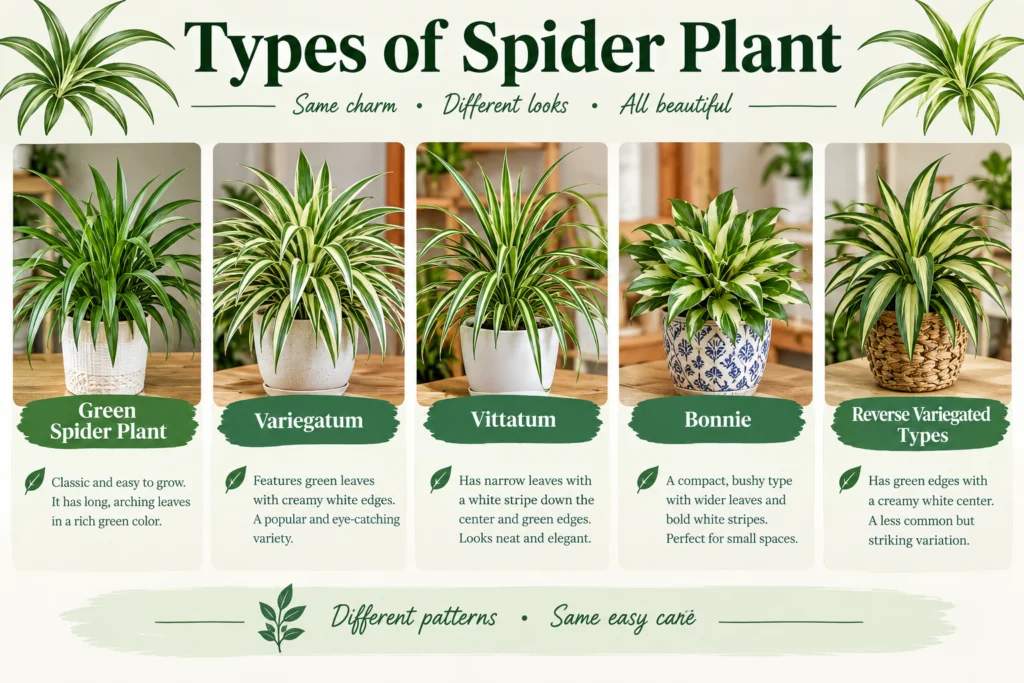
Garden centers sell several looks, and names can vary between sellers. If a label seems vague, trust the leaf pattern over the name.
Green Spider Plant
The plain green form has solid, deep green leaves with no striping. It is the most tolerant of lower light because green tissue makes plenty of energy. If you want the easiest option, start here.
Variegatum
Variegatum has green leaves edged in white or cream. It is a classic and very popular. The pale edges can fade or blur in dim spots, so give it brighter indirect light to keep the contrast crisp.
Vittatum
Vittatum shows a white or cream stripe down the center of each leaf, with green along the edges. It is often confused with Variegatum, and some nurseries use the names loosely. Look at where the pale color sits to tell them apart.
Bonnie
Bonnie is the curly spider plant. Its leaves twist and curl, and the habit is more compact than the straight-leaved types. That makes it a good choice for shelves, desks, and small spaces. Bonnie also produces babies, though sometimes fewer of them.
Reverse Variegated Types
You may find plants sold as “reverse” or similar, where the pale color shifts toward the middle and the margins look darker. Names for these are inconsistent, so judge by the look rather than the label.
Which Type Suits Which Situation
- Low or medium light: green spider plant
- Bright room, statement look: Variegatum or Vittatum
- Small space or desk: Bonnie
- Hanging basket: any type, though the straight-leaved forms trail most gracefully
Spider Plant Care Guide
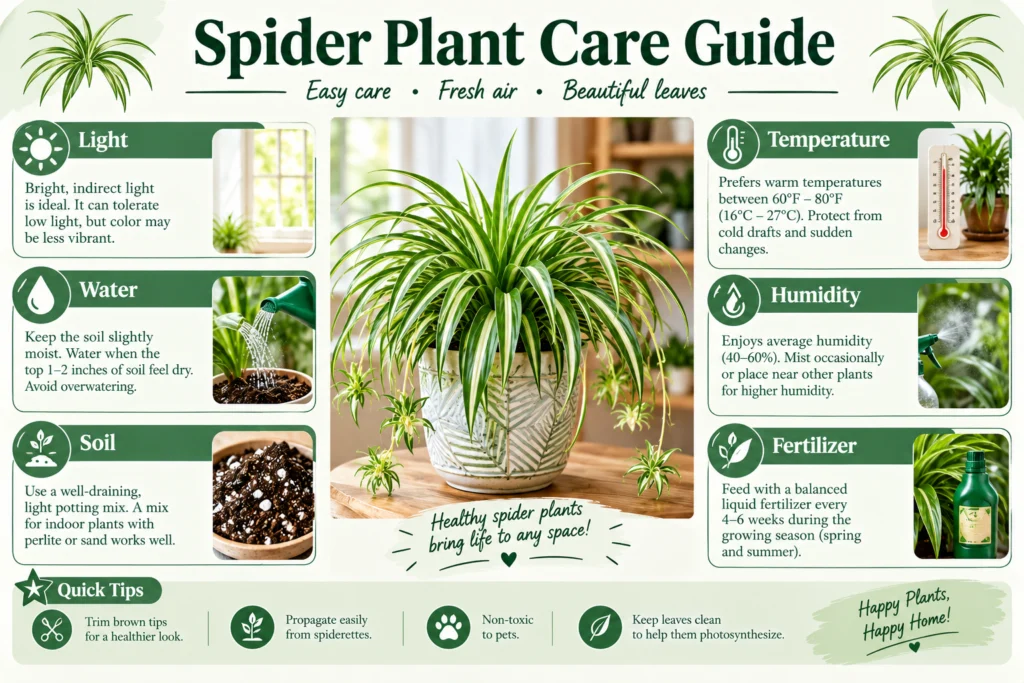
Good spider plant care comes down to five things: light, water, soil, comfortable temperatures, and light feeding. None of them need to be perfect.
Light Requirements
Spider plant light requirements are flexible, which is a big part of its appeal. Bright, indirect light gives the fullest growth and the best color. It will tolerate medium light, though growth slows and variegated types may lose some of their white.
Direct afternoon sun can scorch the leaves and leave pale or brown patches. Gentle morning sun is usually fine.
A simple window guide:
- East-facing: often ideal, with soft morning light
- North-facing: workable, best for green types
- West or south-facing: place the plant a few feet back or behind a sheer curtain
If you enjoy easy-going indoor plants, our guide to Snake Plant covers another great low-maintenance choice.
Watering Spider Plant
Watering a spider plant is simple if you check the soil before you pour. Water when the top 1 to 2 inches feel dry, then drain the excess completely. Never leave the pot standing in water.
In spring and summer, that might mean about once a week, but home conditions change the rhythm. In winter, growth slows and the soil dries more slowly, so water less often.
Overwatering signs:
- Yellowing leaves
- A soft, mushy base
- Soil that stays wet for days
Underwatering signs:
- Curling or drooping leaves
- Crisp brown tips
- Soil pulling away from the pot edge
Spider plants can be sensitive to chlorine and fluoride in tap water, which may cause brown leaf tips over time. If you notice this, use filtered water, or let tap water sit out overnight so some chlorine can dissipate. Resting water does not remove fluoride, so filtered or rainwater is the safer choice if tips keep browning.
Plants that forgive missed waterings, like ZZ Plant, are worth a look if you travel often.
Soil and Pot
Use a well-draining potting mix, such as standard indoor potting soil with a handful of perlite mixed in. Drainage holes are non-negotiable because the roots hate sitting wet.
Choose a pot only slightly bigger than the root ball. Too much extra soil stays damp for too long. This plant is also happy being a little root-bound, and snug roots can even encourage flowering stems and babies.
Temperature and Humidity
Average room temperatures suit it well, roughly 65 to 80°F (18 to 27°C). Keep it away from cold drafts, frosty windows, and heating or cooling vents. It will not survive frost.
It tolerates typical home humidity, but very dry air, especially in winter with heating running, may crisp the leaf tips. A bright bathroom or kitchen can help, though a pebble tray or grouping plants is plenty for most homes.
Fertilizing
Feed lightly. During spring and summer, use a balanced liquid houseplant fertilizer at half the recommended strength, about once a month. Skip feeding in fall and winter.
More is not better here. Too much fertilizer builds up salts in the soil and can cause brown tips. If you suspect build-up, flush the pot with plain water and let it drain thoroughly.
Spider Plant Benefits
Easy to Grow
This is one of the most forgiving houseplants for beginners. It handles a range of light levels, bounces back from a dry spell, and shows you clearly when something is off. Many plant owners find it a confidence builder.
Air Purifying Claims
You may have read that spider plants clean indoor air. That idea traces back to a 1989 NASA study, which tested plants in sealed lab chambers. Homes are not sealed chambers, and a few plants will not noticeably clean a room’s air. Treat any air-purifying effect as a pleasant bonus, not a health claim. Opening a window does far more.
Pet-Friendly Choice
The spider plant is generally listed as non-toxic to cats and dogs, including by the ASPCA. That makes it a popular pick for pet households. Still, chewing on any plant can upset a stomach, and some cats love nibbling the dangling leaves and babies. If a pet eats a lot, call your vet for advice.
Another popular houseplant is the Rubber Plant, but always check pet safety for each plant separately.
Great for Hanging Baskets and Small Spaces
A spider plant hanging from the ceiling or a wall hook frees up shelf space and lets the babies cascade freely. Compact types like Bonnie sit comfortably on desks and bookshelves.
Free New Plants
Each plantlet can become a new plant, so one purchase can turn into a whole collection. It is a budget-friendly way to fill a home with greenery.
Best Places for Spider Plant in Your Home
- Living room shelf or hanging basket: Bright, indirect light and open space let the plant arch and trail. Variegated types look especially nice here.
- Bedroom: A green type does well on a dresser or bookshelf with moderate light.
- Bathroom: Only if there is a window or enough natural light. Humidity helps, but a dark bathroom will leave the plant struggling.
- Kitchen window: An east-facing sill is often a good spot. Keep it clear of hot stovetops.
- Office desk: Bonnie or a green type copes with typical office light, but keep the soil from drying out over long weekends.
Spider plant looks lovely next to trailing plants. Our guide on Pothos Plants is a good companion read.
For a bolder statement piece in the same room, see our guide on Monstera Plants.
Spider Plant Babies and Propagation
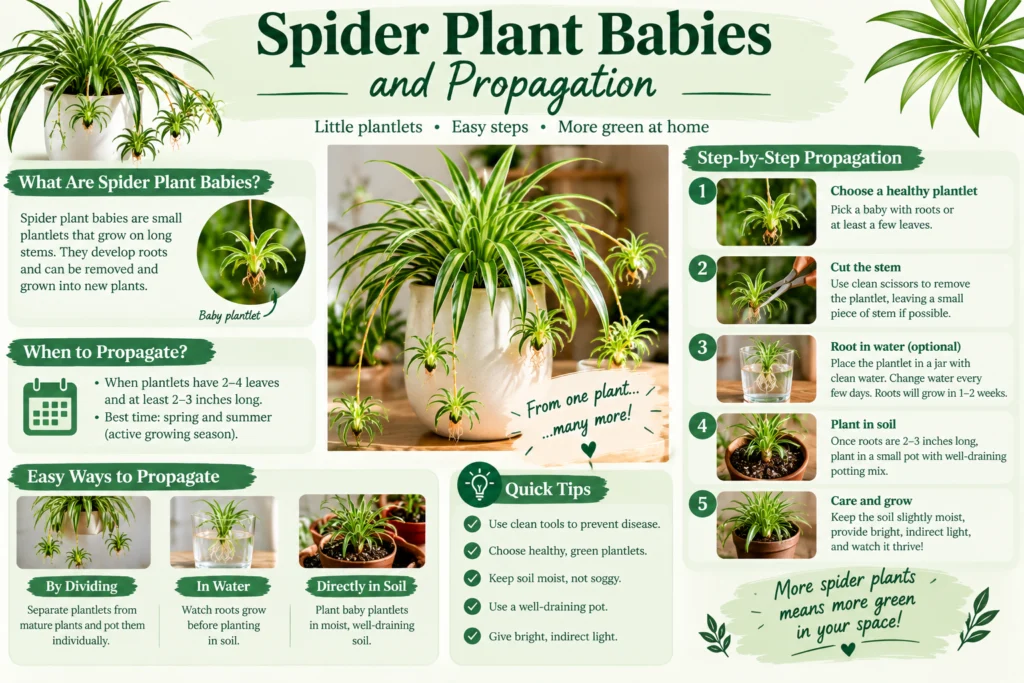
Spider plant babies, also called spiderettes or plantlets, grow on long, arching stems that emerge from the center of the mother plant. Each baby is a miniature clone, and many already show tiny root nubs while still attached.
Why Some Plants Do Not Produce Babies
If yours has not made any, there are a few common reasons:
- The plant is still young
- Light is too low
- The pot is too large, so energy goes into roots
- The plant is stressed from drought, cold, or crowding
Often, patience and brighter light are enough.
Rooting Babies in Water
- Choose a baby with small root bumps at its base.
- Snip it from the stem with clean scissors.
- Place it in a jar so only the base touches water, with the leaves staying dry.
- Set the jar in bright, indirect light.
- Change the water every few days.
- After a few weeks, once the roots are an inch or two long, pot it in soil.
Planting Babies in Soil
- Fill a small pot with moist, well-draining mix.
- Either snip the baby off, or leave it attached and pin it into the soil with a bent wire or paper clip.
- Press the base gently into the soil.
- Keep the soil lightly moist, not wet.
- After a few weeks, tug gently. Resistance means roots have formed.
- Once rooted, cut the connecting stem if the baby is still attached.
Division at Repotting
When you repot a crowded plant, the root clump can be gently pulled or cut into sections. Each section needs healthy roots and a few leaves. Pot each one separately and water lightly.
Spider plant propagation works best in spring and summer, when growth is strong. Rooting usually takes a few weeks, though cooler or darker conditions slow it down.
Common mistakes include submerging the leaves in water, using soggy soil, and moving the baby to a very sunny spot too soon.
Repotting Spider Plant
Because it likes a snug pot, repotting is not needed often. Watch for these signs:
- Roots pushing out of the drainage holes
- Soil that dries out very quickly
- Thick roots crowding or lifting the plant
- A bulging pot
Spring is the best time. Choose a pot about 1 to 2 inches wider than the current one.
- Water the plant a day before to ease it out.
- Tip the pot sideways and slide the plant out.
- Loosen the root ball gently and trim any mushy or dead roots.
- Add fresh mix to the new pot and center the plant at the same depth as before.
- Fill in around the roots and press lightly.
- Water well and let it drain fully.
Common Spider Plant Problems
Spider Plant Brown Tips
Spider plant brown tips are the most common complaint, and they usually come from one of four causes:
- Water quality: switch to filtered or rainwater
- Low humidity: move away from vents and group plants together
- Over-fertilizing: flush the soil and cut back on feeding
- Underwatering: water more consistently
Existing brown tips will not turn green again. Trim them with clean scissors, following the natural leaf shape and leaving a tiny edge of brown so you do not cut into healthy tissue.
Yellow Leaves
Yellowing often points to overwatering, but an occasional yellow outer leaf is normal as old leaves age and shed. Too little light can also cause it. Check the soil moisture before changing anything.
Pale or Faded Leaves
Washed-out color can mean too much direct sun or too little light. Variegated types fade in dim spots, while scorched leaves look bleached and papery. Adjust placement and watch for improvement over several weeks.
Mushy Base or Root Rot
A soft, dark base with a sour smell suggests rot. To rescue the plant:
- Remove it from the pot.
- Cut away all black, mushy roots.
- Repot in fresh, dry mix in a clean pot with drainage holes.
- Water sparingly until new growth appears.
If most of the plant is affected, save any healthy babies and start again.
Spider Plant Not Producing Babies
See the earlier section. Brighter light, a slightly snug pot, and time usually do the trick.
Common Pests
Spider mites, aphids, mealybugs, and scale can occasionally show up. Look for fine webbing, sticky residue, white cottony bits, or small brown bumps. Rinse the plant in the shower, wipe leaves with a damp cloth, and use insecticidal soap or neem oil if needed. Regular inspection and good airflow help prevent them.
Quick Problem Guide
| Problem | Likely Cause | Fix |
|---|---|---|
| Brown tips | Tap water minerals, dry air, over-fertilizing | Use filtered water, boost humidity, feed lightly |
| Yellow leaves | Overwatering or low light | Let soil dry, move closer to light |
| Pale leaves | Too much sun or dim light | Adjust placement |
| Mushy base | Root rot | Trim roots, repot in dry mix |
| No babies | Young plant, low light, big pot | Add light, wait, use a snugger pot |
| Sticky or webbed leaves | Pests | Rinse, wipe, use insecticidal soap |
Frequently Ask Questions
Water when the top 1 to 2 inches of soil feel dry. That is often weekly in warm months and less in winter, but check the soil rather than the calendar.
Usually tap water minerals, dry air, too much fertilizer, or inconsistent watering. Try filtered water first, then review feeding and humidity.
It is generally listed as non-toxic to cats and dogs, but chewing can still upset the stomach. Call your vet if a pet eats a lot.
It can survive in low light, especially green types, but growth will be slower and variegated types may fade. Medium to bright indirect light is better.
Snip a baby with root bumps and place it in water or moist soil, or pin it into soil while still attached. Roots usually form within a few weeks.
You do not have to. Leaving them lets the plant cascade, while removing them can send more energy to the mother plant and gives you new plants to pot up.
Conclusion
The spider plant earns its reputation as a friendly, forgiving houseplant. Give it bright indirect light, water when the top inch or two dries out, and use filtered water if the tips browned before. Results will vary with your light, climate, and water, so adjust gently and give changes a few weeks to show.
Whether you pick a plain green plant or a curly Bonnie, you will likely end up with babies to share before long. Pick one up and give it a try. For more practical guides, explore the rest of the plant library at Plant Style Home.