Cactus plants are the most misunderstood plants on earth. Most of us picture a spiky green column standing alone in a desert, and that picture is about as complete as describing every bird as a pigeon.
The real story is far wilder. Cacti have been evolving for around 35 million years, and today they grow wild on six continents. They range from desk plants the size of a golf ball to saguaros that tower 40 feet over the Arizona desert. Some live in rainforest trees, others hang like green ropes from cliffs, and a few bloom for a single night only.
They are also having a huge houseplant moment right now, and I completely understand why. They forgive busy schedules, they look sculptural on a windowsill, and a flower on a cactus feels like winning a very small, very spiky lottery.
Let me bust the biggest myth before we go any further: overwatering kills more cactus than any other mistake. I killed my first cactus by overwatering it. The irony of drowning the world’s most drought tolerant plant still haunts me. Everything in this guide is written so you can skip that heartbreak.
At Plant Style Home we celebrate every type of plant, from exotic cacti to flowering beauties. Explore our complete plant and flower guides whenever you want to keep growing.
What Are Cactus Plants?
Cacti belong to the plant family Cactaceae, which holds more than 1,750 species. Almost all of them are native to the Americas, stretching from Canada down to Patagonia. The famous exception is Rhipsalis, which also grows wild in Africa, Madagascar and Sri Lanka, most likely after birds carried its sticky seeds across the ocean.
The Areole: What Makes a True Cactus
Look closely at any cactus and you will spot small, cushion-like bumps. These are areoles, and only true cacti have them.
Spines, flowers, pups and new branches all sprout from areoles. No areoles means no cactus, no matter how spiky the plant looks.
Cactus vs Succulent
All cacti are succulents, but not all succulents are cacti. A succulent is any plant that stores water in fleshy tissue, which includes aloe, jade plants and echeveria. The cactus family is one branch of that big group, and areoles are the giveaway.
How Cactus Plants Survive Drought
Cactus plants have survived on earth for 35 million years. They know what they are doing. Here is the toolkit:
- Water storage: Thick, pleated stems swell like accordions after rain and shrink slowly as the plant draws on its reserves.
- Spines: These are modified leaves. They shade the stem, catch dew, and keep hungry animals away.
- Reduced surface area: Round and columnar shapes lose the least water for their volume.
- CAM photosynthesis: Cacti open their pores at night, when the air is cool and humid, and store carbon dioxide. By day the pores stay shut, so very little water escapes.
That last trick explains why a cactus sitting in wet soil is in real trouble. Its whole body is built to hoard water, not to be flooded with it.
Are Cacti Toxic to Pets?
Most cacti are not chemically toxic, but the spines are a genuine physical hazard for curious paws and noses. Keep prickly varieties out of reach of cats and dogs.
Watch out for look-alikes too. Euphorbias often pass as cacti, yet they are not cacti at all and their milky sap irritates skin and mouths.
Types of Cactus Plants
There are enough types of cactus plants to fill a lifetime of collecting. These ten show the full range, from sun-baked giants to soft, spineless trailers.
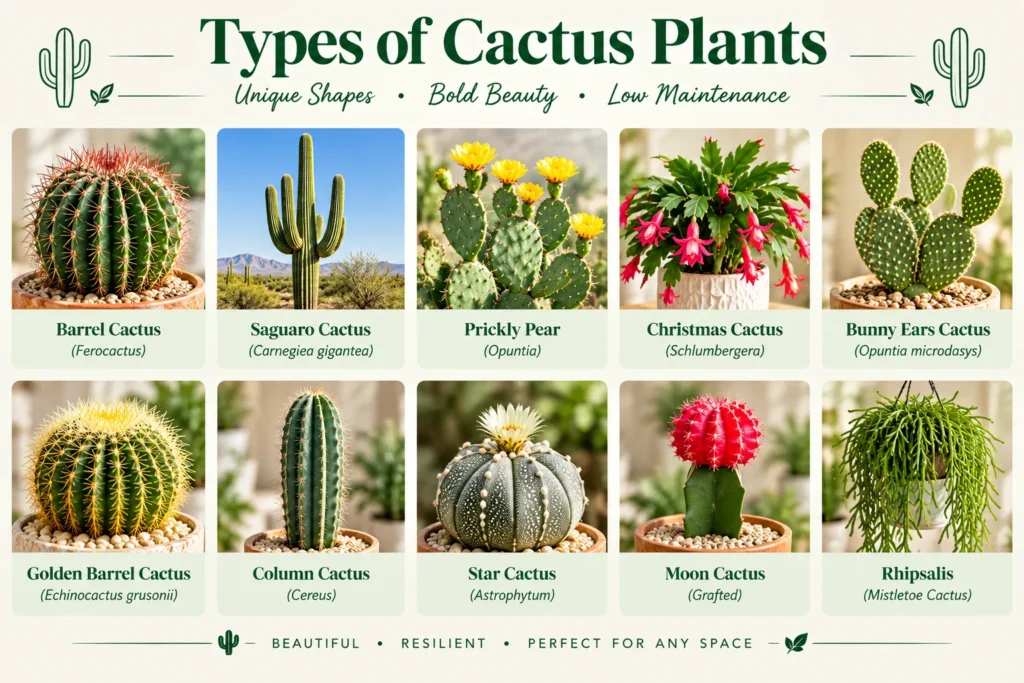
Barrel Cactus (Ferocactus)
The classic round, ribbed cactus with stout yellow to red spines. It grows slowly, shrugs off neglect and rewards plenty of sun, which makes it a lovely choice among cactus plants for beginners.
Saguaro Cactus (Carnegiea gigantea)
The icon of Arizona. Saguaros grow wild only in the Sonoran Desert, can live 150 years and may sprout their first arm at 50 to 75 years old.
They are far too big for indoors. Wild saguaros are protected by law, so buy only nursery-grown seedlings.
Prickly Pear (Opuntia)
Flat, paddle-shaped pads, bright flowers and edible fruit make this an outdoor garden star. Some varieties handle hard frosts, which surprises almost everyone.
Opuntia carries fine, barbed hairs called glochids, so always handle it with tongs.
Christmas Cactus (Schlumbergera)
A rainforest cactus that grows on tree branches in Brazil. It has flat, jointed stems with no spines and blooms in winter.
It wants more water and softer light than desert cacti, so treat it as its own category.
Bunny Ears Cactus (Opuntia microdasys)
Twin paddles that look like a rabbit’s ears, with no long spines at all. Do not be fooled, though.
Each tiny dot on the pad is a cluster of glochids that lodge in skin and itch for days. Pick it up with tongs or folded newspaper, never bare fingers. It is a wonderful beginner plant once you respect it.
Golden Barrel Cactus (Echinocactus grusonii)
A perfect globe covered in golden spines, as architectural as a piece of sculpture. It thrives in a sunny window indoors or a gravel bed outdoors in warm climates.
Column Cactus (Cereus)
Tall, blue-green columns that grow faster than most cacti. Its huge white flowers open at dusk and are gone by morning, so set a reminder to check on it in early summer evenings.
Star Cactus (Astrophytum)
Ribbed, star-shaped and often dotted with white flecks. Among small cactus plants, it is one of the most beautiful, and it fits happily in a pot on a desk. Soft yellow flowers appear on top in summer.
Moon Cactus (Grafted)
Those neon red, pink, yellow and orange tops have no chlorophyll, so they cannot survive alone. Growers graft them onto a green cactus base that feeds them.
Give moon cacti bright light without harsh midday sun, and water lightly. Expect a few years of life, rather than decades.
Rhipsalis (Mistletoe Cactus)
The odd one out. Rhipsalis has trailing, pencil-thin stems, no spines and small white berries, and it is the only cactus group native to Africa.
It tolerates shade and likes slightly more moisture and humidity than desert types, so it is perfect for a hanging basket.
Cactus Plant Care Guide
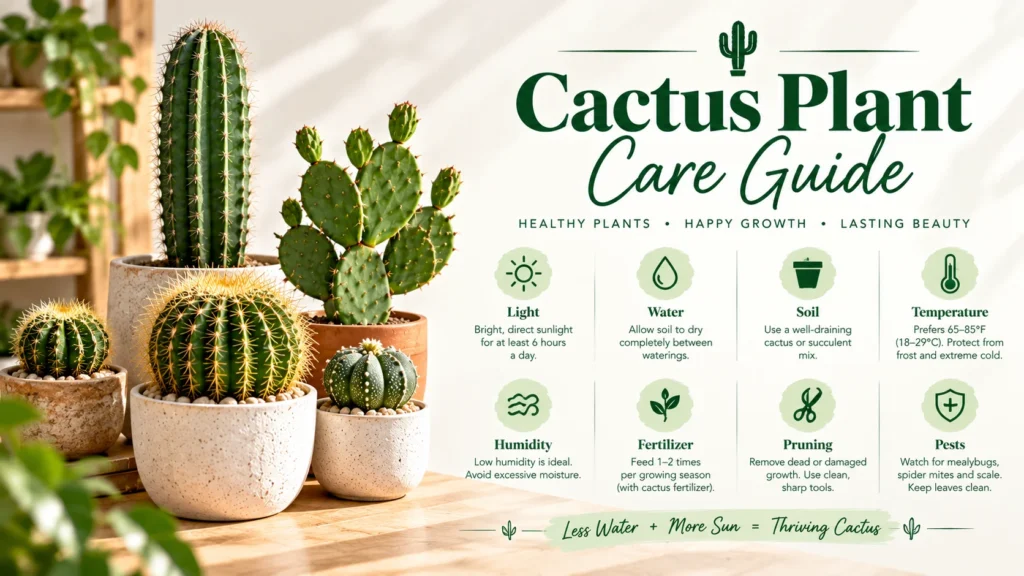
Good cactus plant care comes down to five things: light, water, soil, temperature and restraint. Nail those and your cactus will outlive most of your other houseplants.
Light Requirements
The best spot for cactus plants indoor is the brightest window in the house. Light is the make-or-break factor.
- Desert cacti want at least 6 hours of direct sun. A south-facing window (north-facing in the southern hemisphere) is ideal.
- Dark homes: a full-spectrum LED grow light running about 12 hours a day works beautifully.
- Rainforest cacti such as Christmas cactus and Rhipsalis prefer bright, indirect light.
- Summer outdoors: a few months outside gives sturdier growth and stronger spine color.
Move a cactus into full sun gradually over one to two weeks, or it will scorch.
Cactus and aloe vera share the same sun-loving conditions, so our complete guide on Aloe Vera covers another incredible drought-tolerant plant.
Watering Cactus Plants
Cactus plant watering is where almost all of us go wrong, so this section matters most. Overwatering is the number one killer, and it is far easier to fix a thirsty cactus than a drowned one.
Use the soak and dry method. Water thoroughly until it runs out of the drainage holes, then wait until the soil is completely dry before watering again.
A rough seasonal rhythm:
- Summer: every 2 to 3 weeks, once the soil has dried right through.
- Spring and autumn: every 3 to 4 weeks, easing off as days shorten.
- Winter: once a month or less. Many desert cacti need nothing at all.
Calendars only get you so far, so check the pot itself:
- Push a wooden skewer or chopstick to the bottom. If soil clings to it, wait.
- Lift the pot. A dry pot feels surprisingly light.
- Look for wrinkles. Mild puckering means thirst, while yellow or mushy stems mean too much water.
Bottom watering is a gentle option. Stand the pot in a tray of water for 15 to 30 minutes, let it drain fully, and return it to its saucer. My rule is simple: when in doubt, wait another week.
Soil for Cactus Plants
Cactus plant soil must drain almost instantly. Never use regular potting mix. It stays wet for days, and that is exactly how roots rot.
Buy a ready-made cactus and succulent mix, or make your own:
- 1 part peat-free potting soil
- 1 part coarse sand
- 1 part perlite or pumice
The goal is a mix that is at least half mineral grit. Always choose a pot with drainage holes.
Terracotta wicks moisture out through its walls and forgives heavy-handed waterers. Plastic holds water longer, which suits careful waterers and rainforest types.
Temperature Requirements
Most cacti love summer heat and happily sit anywhere from 70 to 95°F (21 to 35°C).
Winter is the secret. A cool, dry, bright rest at around 50 to 55°F (10 to 13°C) helps many species bloom the following spring. Dry cacti tolerate surprising cold, but cold plus wet soil is a recipe for rot. Keep tender types above 40°F (5°C).
Fertilizing Cactus Plants
Cacti are not hungry plants. Feed once a month from spring to late summer with a cactus fertilizer that is low in nitrogen and higher in phosphorus, diluted to half strength.
Never fertilize in winter or when the soil is bone dry. Too much nitrogen gives soft, weak, floppy growth.
How to Get Cactus Plants to Flower
The moment a cactus blooms for the first time is one of the most rewarding moments in plant keeping. You spend months or years tending a prickly little lump, and then one morning there is a silky, jewel-colored flower sitting on top of it.
Cactus plant flowering is not luck. It is mostly about copying the seasons a wild cactus would experience.
What Triggers Flowering
- A proper winter rest: keep the plant cool, dry and bright from about November to February. This single step does more than anything else.
- An autumn temperature drop: cooler nights signal that the seasons are changing.
- Plenty of light: a cactus that is not getting enough sun will not have the energy to bloom.
- Age: many cacti need 3 to 5 years before the first flower, and big barrels or columns can take far longer.
- Phosphorus in spring: one or two feedings with a cactus fertilizer as growth restarts.
Which Cacti Flower Most Easily
If you want blooms soon, start with Mammillaria, Rebutia, Echinopsis and Gymnocalycium. Many of them flower while still small.
What you see depends on the type:
- Mammillaria: a crown of tiny pink, magenta or cream flowers in spring, lasting one to two weeks.
- Rebutia: masses of orange, red or yellow flowers that cover the whole plant.
- Echinopsis: huge, showy flowers that last only a day or two, so enjoy them while they last.
- Christmas cactus: weeks of pink, red or white blooms in winter.
Cactus plants produce some of the most stunning orange blooms, so explore our complete guide on Orange Flowers for more vibrant warm flower inspiration.
Night-Blooming Cacti
Some of the most dramatic flowers open after dark. Cereus blooms at dusk and is finished by sunrise, and the spectacular dragon fruit does the same.
Dragon fruit is actually a spectacular cactus, and our complete guide on Dragon Fruit Plant covers the most dramatic cactus you can grow at home.
Common Cactus Plant Problems
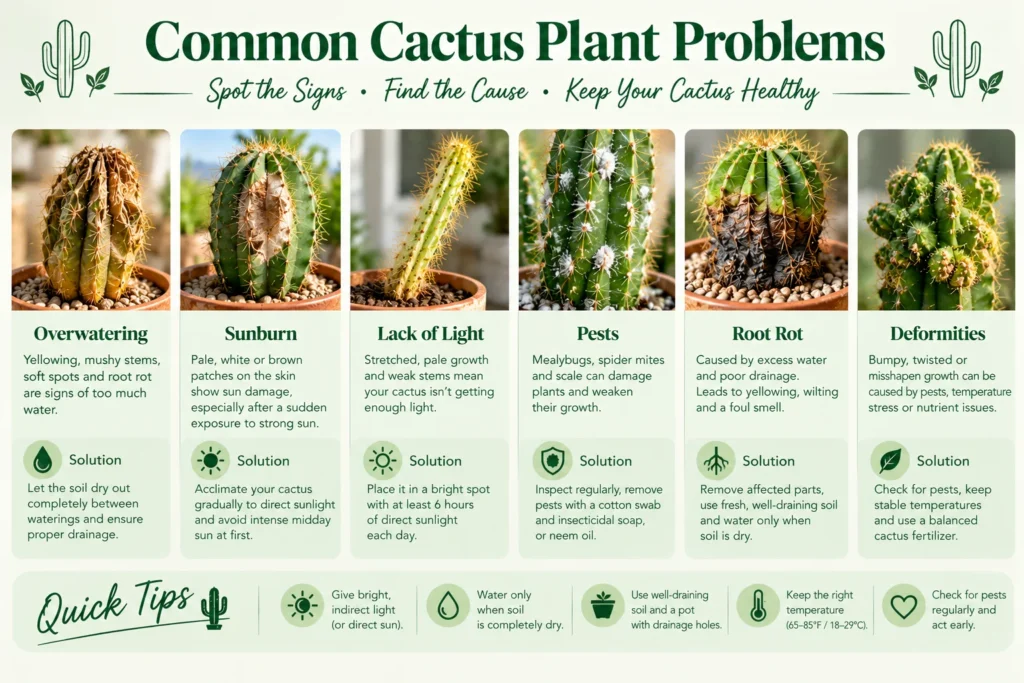
Every collector hits these sooner or later. Most are easy to fix once you read the clues.
Cactus Turning Yellow or Brown
Check the cause before you act, because the fixes are very different.
- Overwatering (most common): yellow, soft or translucent stems. Stop watering, let the soil dry fully, and check the roots for rot.
- Sunburn: dry, tan or white patches after a sudden move into strong sun. The scars are permanent, so acclimatise gradually in future.
- Cold damage: brown, mushy patches after a chilly night or draft. Move it somewhere warmer and keep it dry.
Cactus Rotting at Base
A soft, dark base means root rot, and it can spread fast. Act quickly and you can often save the top. Wear thick gloves and use tongs or folded newspaper.
- Unpot the cactus and rinse away the wet soil.
- Cut with a clean, sharp knife well above the rot until the cut surface looks pale, firm and healthy with no brown or dark rings.
- Dust the cut with a little cinnamon or sulfur powder if you have it.
- Leave the cutting somewhere dry and shaded for 1 to 2 weeks until the cut end forms a dry callus.
- Set it on dry cactus mix and wait for roots, which can take 4 to 8 weeks. Begin watering lightly only once it resists a gentle tug.
Cactus Not Growing
Usually this is normal. Cacti are very slow growers, and a visible change in a month is rare.
- Winter dormancy: growth pauses in the cold months and restarts in spring.
- Too little light: a dim spot means very little energy for growth.
- Time to repot: if roots are circling the pot or poking out of the drainage holes, move up one size in spring.
Cactus Turning Pale or Stretched
This is called etiolation. The cactus is stretching toward light, so the new growth looks thin, pale and leggy.
Move it to a brighter spot or add a grow light. The stretched section will not shrink back, but new growth will come in fuller. To prevent it, give your cactus a south-facing window and turn the pot a quarter turn each week.
Cactus Pests
Mealybugs are the most common pest. They hide in crevices as small, fluffy white cotton-like clumps. Scale insects look like small brown bumps, and spider mites leave fine webbing and a speckled, dull surface.
A treatment that avoids touching spines:
- Dip a cotton swab or soft paintbrush in rubbing alcohol (70 percent) and dab each pest.
- Spray a neem oil or insecticidal soap solution over the whole plant.
- Isolate the plant and repeat weekly until nothing new appears.
Cactus Plant Propagation
Cactus plant propagation is a bit like magic, and it is how a single plant becomes a whole windowsill. Spring and summer are the best seasons, when the plant is actively growing.
Safety first: thick gloves, tongs or a folded strip of newspaper for every step. Glochids and spines find bare skin faster than you would believe.
Offsets (Pups)
The easiest method, perfect for clustering types such as Mammillaria and Echinopsis.
- Choose a pup that is at least a quarter the size of the parent.
- Wearing gloves, twist or cut it away with a clean, sharp knife.
- Let it dry in a shaded spot for several days until the base calluses over.
- Place it on dry cactus mix and wait about two weeks before the first light watering.
Stem Cuttings
This works well for columnar and pad-forming cacti like Cereus and Opuntia.
- Cut a healthy segment with a clean knife.
- Dry the cut end for one to three weeks. This step is crucial, because planting a wet cut invites rot.
- Set the callused end on or just into dry cactus mix.
- Wait about 4 to 8 weeks for roots, then water lightly.
Growing From Seed
Seeds are the slowest route but wonderfully rewarding. Sow them on the surface of moist, gritty seed mix, cover the tray with clear plastic, and keep it warm and bright. Germination takes from a couple of weeks to a few months, and seedlings stay tiny for a long time, so patience is part of the fun.
Grafting
Grafting joins a colorful top, like the moon cactus, to a hardy green base so the two grow as one plant. It is a delicate job with a sharp blade, so most of us buy grafted plants rather than making them.
Cactus Plants Outdoors
Outdoor cactus plants are far more common than most people expect. In the US, gardeners in warm zones (roughly 8 to 10) can grow many cacti in the ground year round. In the UK, most gardeners use pots that move indoors for winter, apart from a few tough varieties.
Cold Hardy Varieties
- Opuntia humifusa (eastern prickly pear): survives deep freezes in cold regions.
- Escobaria species: small, tough and tidy, with pretty pink flowers.
- Some Echinocereus: hardy hedgehog cacti with brilliant spring blooms.
Building a Cactus Garden
Choose the sunniest, most sheltered spot you have. Rock gardens and gravel gardens are ideal, and a raised bed or gentle slope gives water somewhere to go.
Drainage matters outdoors even more than indoors. Mix plenty of coarse grit into the soil, and top the bed with gravel to keep the necks of the plants dry.
Winter Protection
In cold, wet climates it is winter damp that kills outdoor cactus plants, far more than cold itself. Cover them with a clear, raised panel or cloche so rain runs off, and leave the sides open for airflow. Potted plants can go into an unheated greenhouse or porch. Do not water them at all until spring.
Cactus Plants as Gifts
A cactus makes a wonderful gift because it is long-lived, beautiful and hard to overwhelm with care. The best small cactus plants for gifting are star cactus, Mammillaria, bunny ears and little barrels, because they thrive on a sunny desk or shelf.
Moon cactus gift guide: bright, indirect light, very light watering, and a friendly warning that these colorful plants live only a few years.
For arrangement ideas, plant three small cacti of different shapes in a shallow terracotta bowl and top with fine gravel. Wear gloves and use tongs while you plant.
Tuck a simple care card inside:
- Bright light, a sunny window is perfect
- Water deeply every 2 to 3 weeks in summer, rarely in winter
- Dry soil before every drink
- Never leave it standing in water
If you love low maintenance plants, our guide on ZZ Plant covers another virtually indestructible plant perfect for any home.
Frequently Ask Questions
Every 2 to 3 weeks in summer and once a month or less in winter, but always check that the soil is completely dry first. If you are unsure, wait another week.
Overwatering is the most common cause. Other culprits are sunburn from a sudden move into strong light and cold damage. Check the base for softness and the roots for rot.
Give it bright light, a cool dry winter rest, a little phosphorus fertilizer in spring and enough years to mature.
Yes, as long as they get strong light. A south-facing window or a grow light, plus a gritty well-draining mix, keeps most types happy.
Most true cacti are not chemically toxic, but their spines can injure paws and mouths. Euphorbias that resemble cacti have irritating sap, so keep those away from pets.
Barrel cactus, bunny ears and star cactus are forgiving choices. Pair any of them with a sunny window and a light hand with the watering can.
Conclusion
Cactus plants are one of nature’s most remarkable and diverse groups. They store water in pleated stems, bloom in the dead of night, trail from rainforest branches and sit on a desk like living sculpture.
If you take one thing from this guide, let it be restraint with the watering can. Give your cactus plenty of light, fast-draining soil and a cool winter rest, and it will repay you for decades.
Pick one of these cactus plants and try growing it. A year from now you may be waiting by the window for your first flower. Keep exploring, keep growing, and enjoy every spiky, surprising moment.