Aloe vera was the first plant I ever had that I actually kept alive for more than a year, and I have loved it ever since. It forgives a missed watering, tolerates a dusty windowsill and keeps pushing out plump, sculptural leaves while asking for almost nothing in return.
Then it gives back. Nothing beats having fresh aloe gel on hand for a sunburn, a kitchen burn or a patch of dry skin.
People have trusted this plant for around 5,000 years. Ancient Egyptians called it the plant of immortality, and Cleopatra is said to have used it in her beauty routine. Today it turns up in everything from after-sun lotion to hair masks, which makes it the most useful houseplant I know.
Aloe vera is proof that the most useful plants are also the most beautiful. Every home deserves at least one.
In this guide I’ll share what I have learned about growing, caring for and using it, from watering and repotting to harvesting gel safely. At Plant Style Home we celebrate plants that are both beautiful and useful, so explore our complete plant and flower guides here.
What is Aloe Vera?
Aloe vera, known botanically as Aloe barbadensis miller, is a succulent, not a cactus. That is one of the most common misconceptions about it. It belongs to the Asphodelaceae family, alongside plants like haworthia, and it stores water in thick, fleshy leaves to survive long dry spells.
The plant is native to the Arabian Peninsula. Over thousands of years it spread across North Africa, the Mediterranean, India, the Caribbean and Mexico, and it now grows wild in warm, dry regions around the world.
Inside each leaf sits the part everyone wants: a clear, jelly-like gel. It is roughly 99 percent water, with small amounts of vitamins, minerals, amino acids and sugars that give it its soothing reputation.
The history is remarkable too. Egyptians recorded its use about 5,000 years ago, Greek physicians wrote about it, and traditional Chinese and Ayurvedic medicine have long relied on it. Legend credits Cleopatra with using it as a beauty secret.
There are more than 500 aloe species, but Aloe barbadensis miller is the one prized for its gel.
One distinction really matters. The clear gel is generally safe on skin. The thin yellow latex layer just under the rind contains aloin, a strong laxative that can irritate skin and is harmful to cats and dogs. Keep the two apart.
Types of Aloe Vera
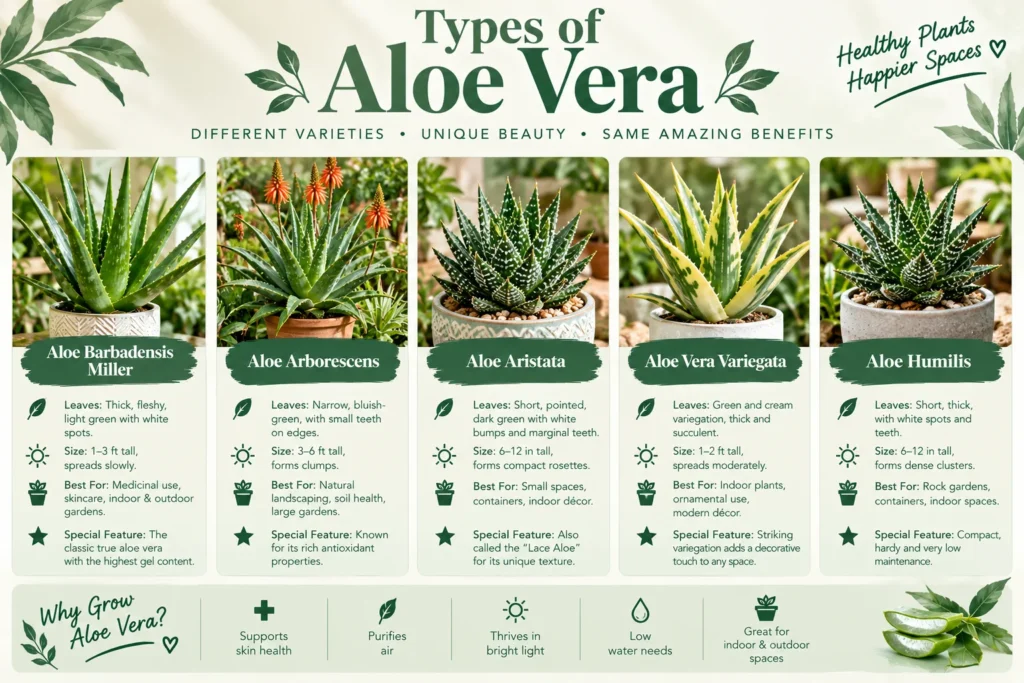
Hundreds of aloes exist, but only a handful turn up in homes. These are the aloe vera varieties I find most rewarding, and what each one is best for.
Aloe Barbadensis Miller
This is the classic healing aloe and the one to buy if you want gel. It forms a rosette of thick, grey-green leaves with soft teeth along the edges, and most garden centres stock it.
Aloe Arborescens
Often called tree or torch aloe, this one grows into a large, shrubby plant with many stems. Some people claim it is more potent medicinally, but the evidence is thin. I grow it for its size and its fiery orange winter flowers.
Aloe Aristata
Lace aloe is small, speckled with white dots and cold hardy for an aloe, handling brief dips below freezing. It makes a charming decorative plant, especially for gardeners in cooler climates.
Aloe Vera Variegata
Tiger aloe is often sold under this name, though it is really a separate species (Aloe variegata). Its pale stripes look like feathers, and the compact shape suits small pots. It is ornamental rather than a gel plant.
Aloe Humilis
Spider aloe forms tight clusters of small blue-green leaves lined with soft white spines. A shallow bowl of it looks wonderful on a desk or shelf.
Which one should you choose? Pick Aloe barbadensis miller for gel, and go for tiger, lace or spider aloe when decoration is the goal. Aloe vera brings stunning sculptural green to any space, so explore our guide on Green Flowers for more beautiful green plant varieties and inspiration.
Aloe Vera Plant Care Guide
Good aloe vera plant care comes down to three habits: lots of light, gritty soil and very restrained watering. If you are wondering how to grow aloe vera as an aloe vera indoor plant, the five basics below cover nearly everything.
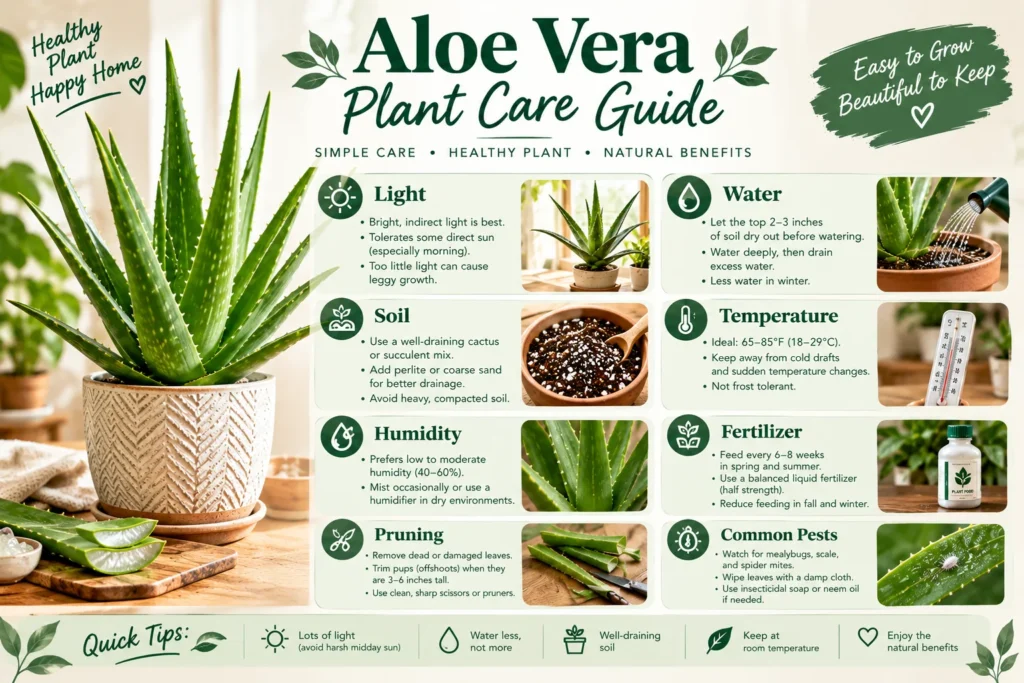
Aloe vera loves the same dry sunny conditions as other succulents, and our guide on Dragon Fruit Plant covers another fascinating sun-loving succulent plant to grow.
Light Requirements
Bright indirect light with a few hours of direct sun suits it best. A south or east-facing window is ideal. In summer you can move it outdoors, but build up to full sun over a week or two so the leaves do not scorch.
- Too much sun: leaves turn orange, brown or bleached.
- Too little light: the plant stretches, leans toward the window and the leaves flatten and splay outward. This is called etiolation.
Watering Aloe Vera
This is the section that matters most. Aloe vera watering follows one rule: soak deeply, then let the soil dry out completely.
- Spring and summer: roughly every 2 to 3 weeks.
- Autumn and winter: every 4 to 6 weeks, or even less in a cool room.
- The test: push a finger two inches into the soil. If you feel any dampness, wait.
Overwatering is the most common killer. It shows up as soft, mushy, translucent or yellowing leaves, sometimes with a sour smell from the soil. Underwatering looks different: thin, wrinkled, curling leaves and crispy tips. A good drink plumps those leaves back up within days.
Soil Requirements
Use a cactus or succulent mix, never regular potting mix alone. Stir in perlite or coarse grit, about one third of the total, for extra drainage.
Terracotta pots are my favourite because the clay breathes and wicks away excess moisture. Drainage holes are non-negotiable.
Temperature & Climate
Aloe is happiest between 65 and 85°F (18 to 29°C). Frost kills aloe vera, so outdoor growing is only reliable in zones 9 to 11. Everywhere else, bring it inside before nights drop below about 50°F (10°C).
Fertilizing Aloe Vera
Aloe is a light feeder. In spring and summer, feed every 6 to 8 weeks with a balanced liquid fertilizer at half strength. Cut back in fall and winter. Too much fertilizer leads to weak, floppy growth and burnt roots.
Aloe Vera Benefits & Uses
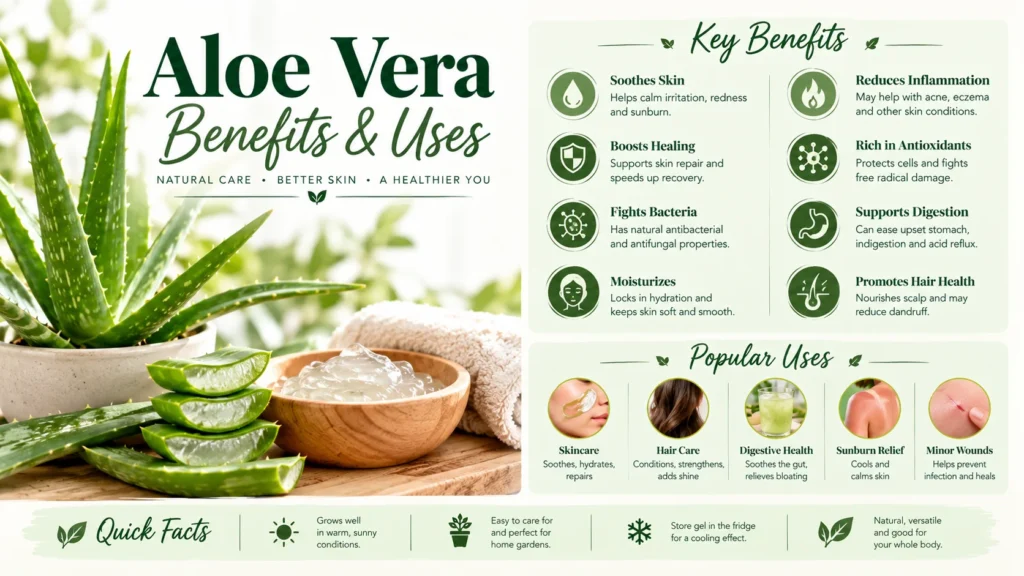
Aloe vera benefits go well beyond good looks. Here is what the plant is genuinely useful for, and where the claims run ahead of the evidence.
Aloe Vera for Skin
Aloe vera gel uses start with skin. The gel is cooling and moisturizing, and research suggests it may help mild burns, including sunburn, heal comfortably. Many people also use it to soothe minor cuts and scrapes. Evidence for acne is limited, though some find it calming alongside their usual routine.
To apply fresh gel:
- Scoop it straight from a cleaned leaf.
- Smooth a thin layer over clean skin.
- Patch test on your inner arm first, since a few people react.
Always consult a healthcare professional before using aloe vera for medicinal purposes. Deep, large or severe burns and wounds need medical care, not home remedies.
Aloe Vera for Hair
Fresh gel can moisturize hair and calm a dry, itchy scalp. A few small studies hint at reduced dandruff, though more research is needed.
For an easy hair mask, mix 3 tablespoons of fresh gel with 1 tablespoon of coconut oil. Work it through your scalp and lengths, leave it for 20 to 30 minutes, then shampoo out.
Always consult a healthcare professional before using aloe vera for medicinal purposes, especially if you have a scalp condition.
Aloe Vera Juice Benefits
People drink aloe vera juice for digestive comfort and for its antioxidants. Small studies on blood sugar are mixed, so treat the headlines with caution.
Always consult a healthcare professional before using aloe vera for medicinal purposes. Speak to your doctor before drinking it, particularly if you take diabetes medication, are pregnant or have a digestive condition.
Commercial versus homemade matters here. Store-bought juice labelled purified or decolorized has had the aloin removed. Homemade juice is risky because traces of latex can slip in.
Like aloe vera, fenugreek is another plant with incredible health benefits, and our guide on Foenegriek covers this powerful medicinal herb plant.
Aloe Vera in Skincare
Aloe is a staple ingredient in moisturizers, after-sun lotions and masks. On labels, look for aloe barbadensis leaf juice near the top of the ingredients list. Be wary of products dyed bright green or packed with alcohol and fragrance.
Fresh gel is unprocessed and short-lived. Store-bought gel lasts longer thanks to preservatives and thickeners, which is a fair trade-off for convenience.
Aloe Vera as an Air Purifier
A well-known 1989 NASA clean air study listed aloe among plants that can remove formaldehyde. To be honest, you would need a lot of plants to see a real effect in a normal room.
Still, aloe is a lovely bedroom companion. It uses a type of photosynthesis that lets it take in carbon dioxide at night, and it asks nothing of you while you sleep.
How to Harvest Aloe Vera Gel
Wait until the plant is at least 3 years old, with leaves 8 inches or longer. Take only outer, mature leaves, and never more than a third of the plant at one time.
- Choose a thick outer leaf and cut it close to the base with a clean, sharp knife.
- Stand the leaf upright in a glass for 10 to 15 minutes so the yellow latex drains out.
- Rinse the leaf thoroughly under cool water.
- Trim off the spiky edges, then slice away the top and bottom ends.
- Slide the knife under the top skin, peel it back and scoop out the clear gel.
- Rinse the gel cubes and blend briefly if you want a smooth texture.
Warning: the yellow latex layer has laxative properties and can irritate skin. Rinse every trace of it away before using the gel.
Fresh gel keeps in a sealed jar in the fridge for up to 1 week. For longer storage, freeze it in ice cube trays. Those cubes are brilliant on a sunburn.
Aloe vera is just one amazing plant with practical uses, and our guide on How to Grow Cilantro covers another incredibly useful plant for every home garden.
Common Aloe Vera Problems
Almost every problem I have seen traces back to water or light. Here is how to read the signs and fix them.
Aloe Vera Turning Brown
An aloe vera turning brown is usually telling you one of three things:
- Too much direct sun (sunscald): the leaves look dry, bleached and then brown. Move the plant to bright indirect light and reintroduce sun slowly.
- Overwatering: the brown patches feel soft and mushy. Let the soil dry fully and check the roots.
- Cold damage: brown, translucent patches after a chilly night. Keep it away from cold windows and drafts, and trim the damaged leaves.
Aloe Vera Turning Yellow
Overwatering is the most common cause. Poor drainage makes it worse, and in serious cases you will find root rot: black, mushy roots with a sour smell.
The fix: unpot the plant, cut away rotten roots, repot into dry gritty mix and wait about a week before watering again.
Aloe Vera Not Growing
If your aloe vera is not growing, check these first:
- Winter dormancy: growth naturally slows from autumn to early spring. Be patient.
- Too dark: move it to a brighter window.
- Root bound: roots circling the pot or poking from the drainage holes mean it needs repotting.
Aloe Vera Leaves Drooping
Drooping can come from thirst or from too much water, so feel the soil first.
- Underwatered: dry soil, thin and wrinkled leaves. Give it a deep drink.
- Overwatered: wet soil, limp and squishy leaves. Stop watering and let it dry out, repotting if the roots are rotten.
Aloe Vera Pests
- Mealybugs: cottony white clusters. Dab with a cotton swab dipped in rubbing alcohol.
- Scale: small brown bumps on the leaves. Scrape off gently, then wipe with diluted neem oil.
- Fungus gnats: tiny flies from soggy soil. Let the soil dry out and add sticky traps.
Aloe Vera Propagation
Aloe vera propagation is easy, and spring is the best time to do it because the plant is actively growing.
Pups (Offsets)
Pups are baby plants that sprout around the base of a mature aloe. This is the easiest and most reliable method. Separate them once they are 3 to 6 inches tall and have several leaves of their own.
- Tip the parent plant out of its pot and brush away soil.
- Gently tease the pup free with its roots, or cut it away with a clean knife.
- Let it sit for a day or two so any cut ends dry.
- Pot it into a small container of cactus mix.
- Wait about a week, then water lightly to encourage rooting.
Pups without roots can still work. Lay them on dry gritty mix and wait for roots to form before watering.
Leaf Cuttings
This method is less reliable, and many cuttings simply rot. If you want to try, cut a healthy outer leaf, let it callus for several days and push the cut end into gritty mix. Water sparingly, and be patient.
Repotting Aloe Vera
Aloe vera likes being slightly snug, so repot only when it genuinely needs it, usually every 2 to 3 years.
- Signs it is time: roots poking out of the drainage holes, a pot that tips over from top-heavy leaves, or a crowd of pups.
- Pot size: choose one only 1 to 2 inches wider. A pot that is too large holds extra moisture and invites rot.
- Best time: spring or summer.
Step by step:
- Let the soil dry for a few days so the plant slides out easily.
- Remove it gently and shake off old soil.
- Trim any dead or mushy roots.
- Set it in a terracotta pot (the porous clay dries out quickly, which is why it suits aloe best) with fresh cactus mix, keeping the base of the leaves just above the soil line.
- Press the soil lightly around the roots.
Aftercare: hold off on watering for about a week, then return to your usual routine. Keep it in bright indirect light while it settles in.
Frequently Ask Questions
Every 2 to 3 weeks in spring and summer, and every 4 to 6 weeks in winter. Always let the soil dry out fully between waterings.
Yes, the clear inner gel is commonly used on skin once the yellow latex is rinsed away. Patch test first, and always consult a healthcare professional before using aloe vera for medicinal purposes.
The usual suspects are too much direct sun, overwatering and cold damage. Check the soil and the light, then adjust.
No. The plant is toxic to pets and can cause vomiting, diarrhea and lethargy. Keep it out of reach and call your vet if your pet chews on it.
When the soil is completely dry two inches down, and the leaves feel slightly less plump than usual. Wrinkled, thin leaves are a clear request for a drink.
With good care, an indoor aloe vera can live 12 years or more, and many reach 20. Pups from your plant carry the line on even longer.
Final Thoughts
I keep coming back to how generous this plant is. It decorates your windowsill, soothes a sunburn, makes a lovely gift and multiplies on its own, all without fuss. Few plants earn their place so completely.
If you do not have one yet, pick one up this week. If yours is struggling, start with the light and the watering, because those two fixes solve most problems.
Aloe vera really is the most useful, beautiful and rewarding plant anyone can own. For more plant and flower guides, explore plant style home and keep growing.