The silver inch plant is one of those houseplants that makes visitors stop and ask what it is. There is something almost unreal about those striped, metallic-sheened leaves, silver-green on top and vivid purple underneath, that shimmer as the light moves across them and trail so beautifully from a shelf or hanging basket.
It is fast enough to be satisfying, forgiving enough for beginners, and striking enough to earn a prominent spot in any home. Stems lengthen week after week, cuttings root in a glass of water, and a tired plant can be reborn in a fortnight.
This guide covers what makes the plant tick, how to handle light, water and feeding, why the colors sometimes fade, and how to propagate it for free.
What Is a Silver Inch Plant?
The scientific name is Tradescantia zebrina. Older books and plant labels may list it as Zebrina pendula, which is simply the previous classification of the same plant. It belongs to the Commelinaceae family, better known as the spiderwort family, and it grows wild across Mexico and Central America, where it spreads over tropical forest floors and shaded hillsides.
You will meet it under several names:
- Silver inch plant: the most common name in the UK
- Inch plant and Zebrina: popular shorthand in garden centres, and the names you will most often see on a plant label
- Spiderwort: the family nickname
- Wandering Jew: an older name now widely considered offensive, and increasingly replaced by “inch plant” or “wandering dude”
Growth habit
This is a trailing plant by nature, and it is happiest when it has room to fall. Stems cascade over the edge of the pot and can reach 60 to 90cm or more. In good conditions each stem adds roughly 2.5cm (1 inch) a week, which is exactly where the name comes from. Wherever a stem touches moist soil, it sends out roots and starts a new colony.
I have lost count of the times a stray stem has quietly rooted into a neighbouring pot while I was not looking. It is a charming habit, and it is also your first hint of how easy this plant is to multiply.
The leaves
The foliage is the whole reason to grow it. The upper surface carries two silver-green metallic stripes on either side of a darker green central stripe, and the effect is iridescent, almost holographic. Flip a leaf over and you find a rich purple underside, one of the most striking of any houseplant. The texture is soft and slightly succulent.
If purple foliage is your weakness, our Purple Flowers guide celebrates more of the most beautiful purple plants and blooms. The stunning purple undersides of these leaves are one of the plant’s most distinctive features, and they pair well with many of the plants in that guide.
Flowers
Small, three-petalled pink or purple flowers appear occasionally. They are pretty, though they are not the main attraction.
Is it toxic?
It is mildly toxic to cats and dogs, and can cause skin irritation and digestive upset if eaten. Some people also get skin irritation from the sap, so wash your hands after handling and pruning. Keep trailing stems out of reach of curious pets.
Inch plant varieties worth knowing
The wider family is full of good-natured trailers. A few inch plant varieties to look out for:
- Tradescantia fluminensis: green and white striped, slightly less striking but very easy to grow
- Tradescantia pallida (Purple Heart): deep purple all over, wonderful in sun and in containers
- Tradescantia ‘Nanouk’: pink, white and green, very popular and more compact
Silver Inch Plant Care: Light, Water and Humidity
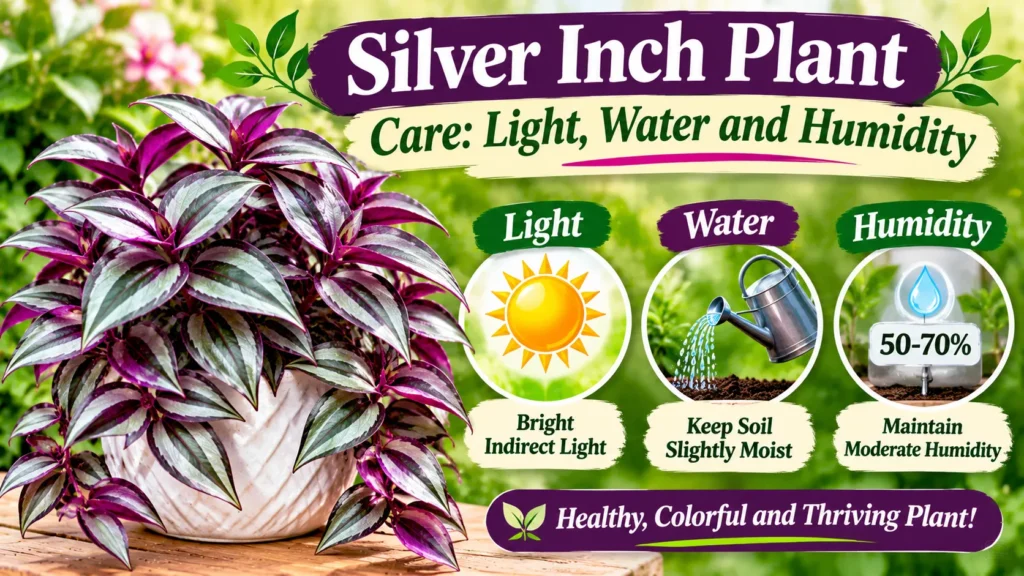
Good tradescantia zebrina care comes down to getting three things right, and the first one matters most.
Silver inch plant light
Bright indirect light is ideal, and this is where the colors look their most vivid. Direct morning sun is fine, so an east-facing window works well. Harsh midday sun is the one thing to avoid, because it bleaches and scorches the leaves.
Here is the key principle to remember:
- More light means more vivid silver and purple
- Less light means duller, greener leaves
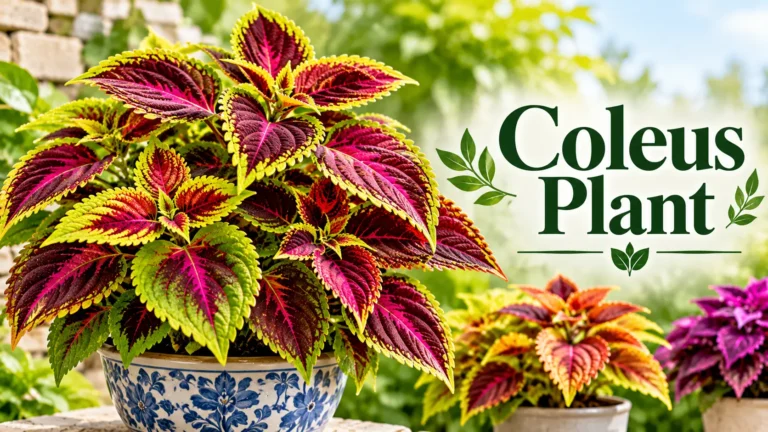
In low light the plant survives, but that stunning coloring fades significantly and the leaves drift back toward plain green. Like the silver inch plant, coleus needs good light to keep its foliage vivid and colorful, and our Coleus Plant guide covers another striking foliage plant that rewards the right conditions.
In summer you can move it outdoors into bright shade or dappled light. Avoid full sun for long stretches.
A simple test helps indoors. If you can read a book comfortably at the plant’s spot without switching on a lamp, the light is probably good enough. If you would squint, the leaves will start to squint too, in their own way, by turning green.
Silver inch plant watering
Let the top 2 to 3cm of soil dry slightly between waterings, then water thoroughly. This plant is not as drought-tolerant as a succulent, so do not let the soil turn bone dry. At the same time, overwatering is the most common way to kill it, because soggy soil leads quickly to root rot.
A few habits make this easy:
- Water less in winter, when growth slows right down
- Use room-temperature water, since cold water can cause minor leaf spotting
- Try bottom watering: stand the pot in water for 20 to 30 minutes, then let it drain fully
- Test with a fingertip rather than a calendar, because the right interval changes with the season, the pot and the room
Soft, slightly limp stems are the plant’s way of asking for a drink. Mushy, translucent stems at the base mean the opposite, so check the soil before you reach for the watering can.
Humidity
A tradescantia zebrina indoor setup is refreshingly easy on this front. It tolerates average household humidity better than most tropical plants, though 50 to 70% is the sweet spot. Very low humidity brings brown leaf tips and dull coloring.
If your air is dry, try a pebble tray, group your plants together, or mist occasionally (skip the misting in cold conditions). It is far less fussy than ferns or calatheas.
Temperature
Aim for 15 to 25°C (60 to 77°F). The minimum is 10°C (50°F), and cold drafts or sudden drops should be avoided. It can spend summer outdoors as long as nights stay above 13°C (55°F).
Soil, Pot and Feeding
Soil
Choose a well-draining mix. Standard houseplant compost with 20 to 30% added perlite works perfectly. A slightly acidic pH of 6.0 to 6.5 suits it nicely. Steer clear of heavy, moisture-retaining mixes, which raise the risk of root rot.
Pot
Drainage holes are essential. Plastic pots are fine, and terracotta works too, though it dries a little faster. Small to medium pots are best because a slightly root-bound plant often looks fuller and more lush.
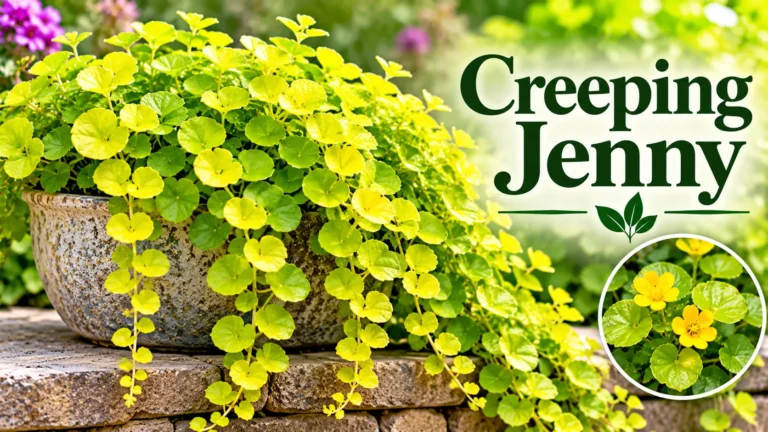
This is a plant that shows off its silver inch plant trailing habit best when it is raised up, so think hanging baskets, high shelves and the tops of bookcases. For another beautiful cascading plant that trails effortlessly from containers and shelves, our Creeping Jenny guide covers one of the most versatile ground cover and spiller plants available.
Repot when roots fill the pot completely, usually every one to two years. Move up only one pot size at a time, since a huge pot holds extra wet soil that the roots cannot use.
Feeding
- Spring and summer: feed every 2 to 4 weeks with a balanced liquid fertilizer at half strength
- Autumn: reduce to monthly
- Winter: stop feeding
Go gently, and always water before you feed so the fertilizer does not burn dry roots. Too much nitrogen produces lush but pale, less colorful growth. A light feed beats a heavy one when you want to keep the silver and purple looking vivid.
Why Is My Silver Inch Plant Losing Its Color?
This is the most common complaint, so let us answer it head on. When the silver and purple fade to plain green, one of four things is usually going on.
Insufficient light (the most common cause). The silver and purple pigments need good light to develop. Without it the plant reverts to green. The fix is to move it to a significantly brighter spot, such as a south or east-facing windowsill. You should see color recovering within 2 to 4 weeks.
The plant is too old or leggy. Older stem sections naturally lose their vivid coloring, and the base of the plant often turns green while the new growth stays bright. Propagate from the colorful new tips and start fresh. Regular pruning and propagation is the secret to a perpetually vivid plant.
Too much nitrogen. Heavy feeding promotes lush green growth at the expense of silver and purple. Cut back on fertilizer or switch to a lower-nitrogen formula.
Natural variation. Some stems are simply greener than others. Remove the all-green ones and propagate from the most colorful stems.
How to Propagate Silver Inch Plant
Silver inch plant propagation is about as easy as houseplant life gets. It is almost impossible to fail, and cuttings root year-round in warm conditions, though spring and summer are best.
The silver inch plant and spider plant are two of the easiest trailing houseplants to grow and share, and our Spider Plant guide covers this classic in full detail.
Water propagation (easiest)
- Take 10 to 15cm stem tip cuttings, choosing the most colorful, healthy stems.
- Remove the lower leaves and keep only the top 2 to 3 pairs.
- Place the cuttings in a glass of water with the nodes (leaf joints) submerged and the leaves above the surface.
- Set the glass in bright indirect light.
- Roots appear within 7 to 14 days, often faster in warm rooms.
- Pot up once the roots reach 2 to 3cm.
Soil propagation
- Take cuttings as above.
- Insert them directly into moist potting mix.
- Cover with a clear plastic bag or propagator lid to hold in humidity.
- Keep warm in bright indirect light.
- Roots form in 2 to 3 weeks. A gentle tug that meets resistance tells you they have rooted.
Pro tip for fuller pots
Plant 5 to 7 cuttings per pot instead of one or two. A single stem looks sparse, while a generous bunch gives you an instantly full, lush display.
Pinch the tips once the new plants are established. Each pinch encourages two stems to grow where there was one, and the pot thickens up beautifully within a month or two.
Refresh the plant regularly
These plants get leggy and lose color as they age. Every 6 to 12 months, take cuttings from the new growth, pot them up fresh and retire the old parent plant. That one habit keeps your display vibrant and full all year. Spare cuttings make lovely gifts, and a jar of rooting stems on a windowsill is a pleasure to watch in its own right.
If you enjoy fast-growing, easy-to-propagate trailers, our Pothos Plants guide covers another brilliantly forgiving and versatile trailing houseplant.
Common Silver Inch Plant Problems and Solutions
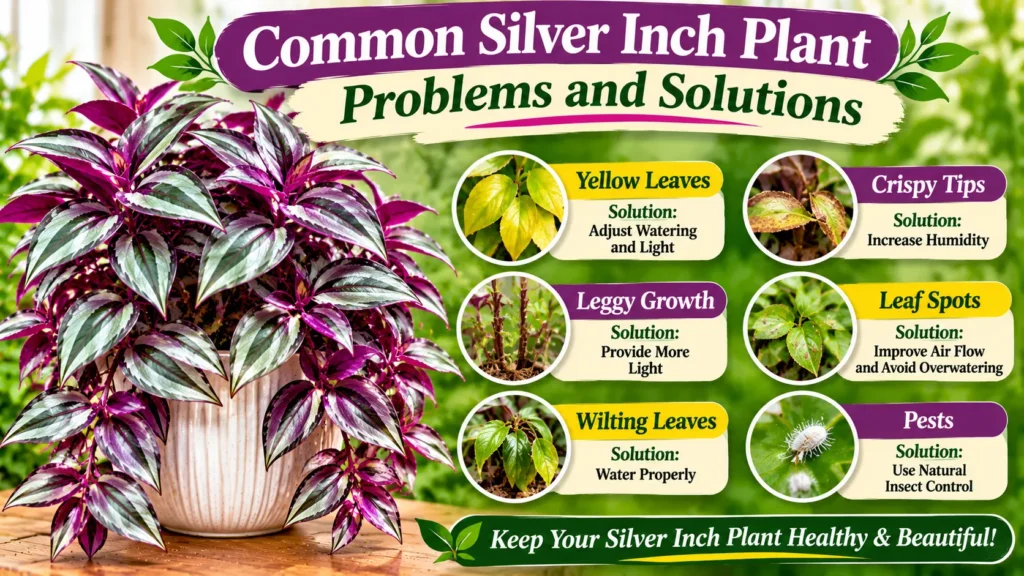
Leggy, sparse growth. The cause is usually too little light or simple aging. Move it somewhere brighter, pinch stem tips regularly to encourage branching, and propagate fresh cuttings.
Brown leaf tips. Low humidity, fluoride in tap water or underwatering are the usual suspects. Switch to filtered or rainwater, raise humidity and check your watering routine.
Yellowing leaves. Overwatering is the most common cause, followed by poor drainage or cold exposure. Check the soil. If it is soggy, let it dry out before watering again, and make sure the drainage holes are clear.
Root rot. Consistently waterlogged soil is to blame. Look for mushy stems at the base, yellowing that creeps upward and an unpleasant smell from the soil. Lift the plant out, cut away all brown or mushy roots, repot in fresh, well-draining mix and water far less.
Pests. Three culprits turn up now and then:
- Spider mites: fine webbing and pale, stippled leaves. Treat with neem oil and raise humidity.
- Fungus gnats: larvae living in the soil. Let the soil dry out more between waterings and use sticky traps.
- Aphids: clustered on new growth. Spray with insecticidal soap.
Stems turning green. Old stems lose their color naturally. Remove the green ones and propagate from colorful new growth, which is the permanent fix.
Final Thoughts
The silver inch plant is one of the most visually rewarding houseplants you can own, and one of the easiest to multiply. Give it bright light, let the soil dry a little between drinks, and take fresh cuttings every year or so to keep those metallic stripes and purple undersides looking their best.
Once you have one silver inch plant, you will find yourself giving cuttings to everyone you know. It is that easy and that rewarding to share. When you are ready for your next green obsession, explore more houseplant and flower guides at PlantStyleHome.