Purple flowers have always felt like nature’s royalty to me. Long before crowns were made of gold, they were made of amethyst, violet, and the deepest imperial dye ever pressed from a living thing. Walk into any garden and your eye will find purple first, settling on it the way it settles on candlelight in a dark room.
There is something mysterious and magical about purple in a garden. It is the one color that can whisper and shout in the same breath, pale as a morning mist or dark as midnight velvet. From the softest lavender to the richest violet, purple flowers carry a quiet authority that no other color quite manages.
This guide brings together everything you could want to know about purple flowers: the best varieties to grow, what each shade means, how to design with them, and which ones will draw bees and butterflies to your garden all season long. At Plant Style Home we have now explored every flower color, and this is our grand finale. Explore our complete collection of color guides and plant inspiration at plantstylehome.com.
Why Purple Flowers Are Nature’s Most Regal Color
Purple has worn a crown for thousands of years, and flowers wearing that same shade seem to know it. Ancient Roman emperors, Egyptian pharaohs, and Byzantine royalty all reserved purple for themselves, since the dye was so rare and costly that ordinary people were forbidden from wearing it. Purple flowers carry that same inherited dignity into every garden bed they occupy.
Bees and butterflies agree with the emperors. Studies on pollinator preference consistently show that purple and violet blooms attract more pollinator visits than almost any other color, largely because bees see ultraviolet light and purple sits right in the wavelength range their eyes are built to notice. A garden planted generously with purple flowering plants is, quietly, a garden working overtime for the local ecosystem.
Purple also refuses to be limited to one style. It settles beautifully into a cottage garden beside roses and delphiniums, yet it looks just as striking in a sleek, modern border of grasses and salvia. Few colors move this effortlessly between the wild and the tailored.
No other flower color offers such a wide range of shades either. Purple stretches from the faintest lavender-grey to a violet so dark it reads as black in low light. That range means gardeners can build entire compositions using nothing but purple, layering pale and deep tones the way a painter builds depth with a single palette.
There is a psychological gift here too. Purple is widely associated with calm, introspection, and a kind of gentle luxury. Gardens heavy with purple flowers tend to feel restful rather than loud, even when they are blooming in abundance.
Best Purple Flowers: Complete List
Before diving into detail, here is a quick overview of the purple flowering plants covered in this guide.

Top Purple Flowers: Detailed Guide
Lavender (Lavandula)
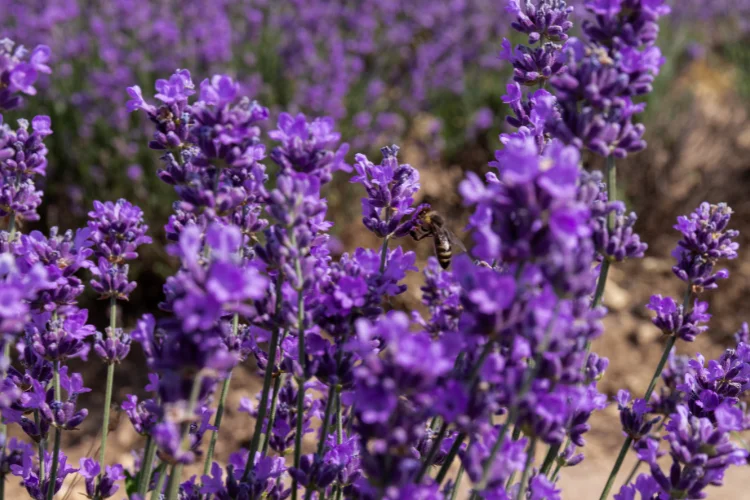
If purple flowers had a monarch, it would be lavender. This is the most iconic purple flower in the world, and for good reason. The fragrance alone has built entire industries around it, and lavender is one of the most fragrant purple flowers you’ll ever grow. If scent is what draws you into a garden, our guide on Jasmine Flowers covers another intensely fragrant bloom worth knowing.
Lavender is a Mediterranean herb that thrives on neglect, poor soil, and blazing sun, which makes it forgiving for beginners despite its elegant reputation. A field of lavender in full bloom, all silver-green foliage and purple spires stretching to the horizon, is one of life’s great experiences. Provence built a tourism industry on that single view.
Care tips for lavender:
- Plant in well-drained, slightly alkaline soil
- Water sparingly once established, since soggy roots kill it faster than drought
- Prune hard after flowering to keep the plant compact and woody-free
- Choose English lavender for cold hardiness or French lavender for a longer bloom season
Wisteria
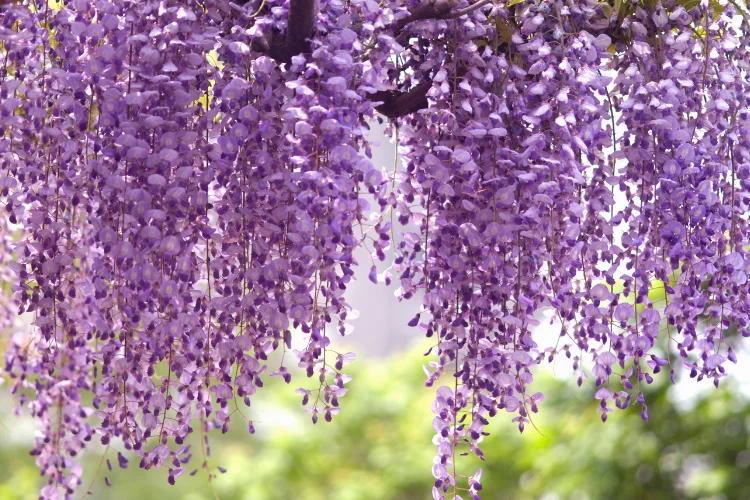
Few plants command a garden the way wisteria does. This is cascading purple glory on a scale that dwarfs almost anything else you can grow, with blooms that drip from pergolas and old brick walls like something out of a fairy tale.
Wisteria is the most dramatic climbing plant among purple flowering plants, and it rewards patience. It can take several years to bloom from a young plant, but a mature wisteria in full flower stops traffic.
Care tips for wisteria:
- Plant in full sun for the heaviest bloom
- Give it strong, permanent support, since mature vines become incredibly heavy
- Pruning is essential twice a year, in summer and again in late winter, or the plant will produce foliage instead of flowers
- Be patient with young vines; established wisteria is worth the wait
Allium (Ornamental Onion)
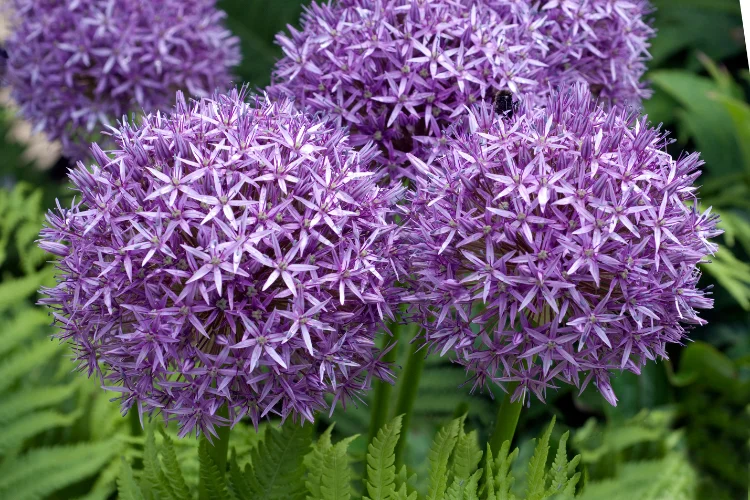
Allium brings architecture to the garden in the form of giant purple globes perched on tall, slender stems. Few purple flowers names carry as much instant recognition as this one, largely thanks to its unmistakable silhouette.
These are true bee magnets, blooming from late spring into early summer when many other flowers have not yet started.
Care tips for allium:
- Plant bulbs in autumn for spring to early summer blooms
- Choose full sun and well-drained soil
- Let foliage die back naturally after flowering to feed the bulb
- Combine with later-blooming perennials to hide the fading leaves
Iris (Purple Varieties)
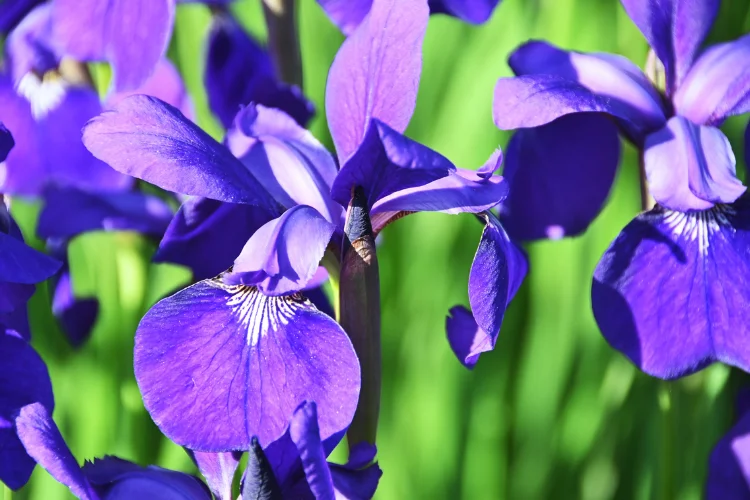
The iris has always struck me as the most regal of all purple flowers for garden borders, with blade-like leaves that stand upright like guards and blooms shaped like unfurled banners.
Bearded iris and Siberian iris both offer superb purple varieties, and the color range within the species is extraordinary, spanning from the palest lilac to near-black velvet.
Care tips for purple iris:
- Plant rhizomes just at or slightly above soil level
- Full sun produces the strongest bloom
- Divide clumps every three to four years to keep them vigorous
- Avoid overly rich soil, which can encourage rot
Salvia (Purple Sage)
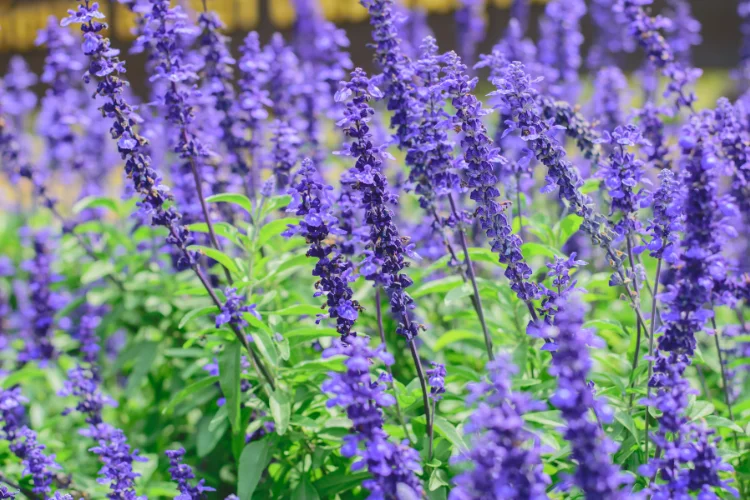
Salvia offers some of the longest-blooming purple flower spikes you can plant, often flowering from early summer straight through to the first frost. It is a genuine butterfly and bee magnet, humming with activity on warm afternoons.
Drought tolerance makes salvia a smart pick for gardeners who want reliable color without constant watering.
Care tips for salvia:
- Full sun and well-drained soil suit it best
- Deadhead regularly to encourage repeat flowering
- Cut back hard in early spring for fresh new growth
- Varieties like ‘Caradonna’ and ‘May Night’ offer particularly deep purple tones
Verbena
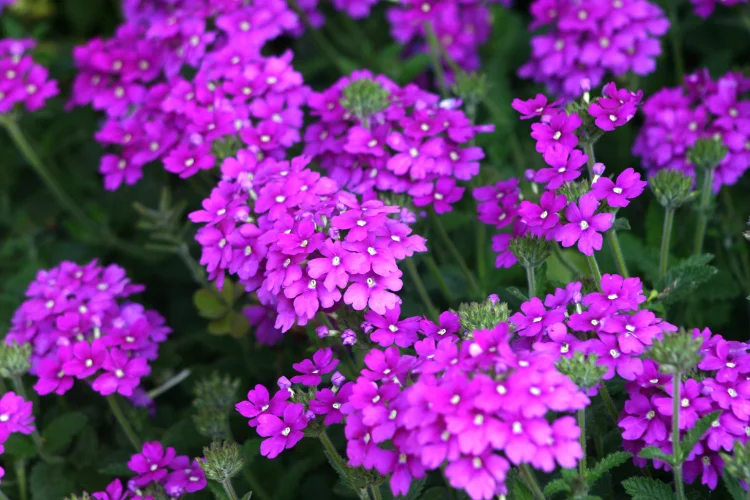
Verbena comes in both trailing and upright forms, making it a container favorite for gardeners who want purple flowers spilling over the edges of pots and hanging baskets. It blooms for a remarkably long stretch of the season.
Butterflies find verbena almost impossible to resist, drawn in by its flat clusters of small, vivid blooms.
Care tips for verbena:
- Plant in full sun with sharp drainage
- Deadhead spent blooms to keep flowering going
- Water regularly in containers, since pots dry out fast
- Pair with silver foliage plants for contrast
Catmint (Nepeta)
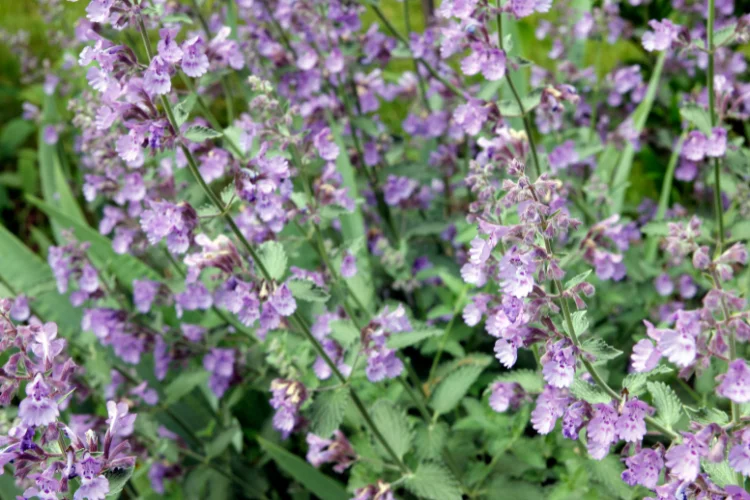
Catmint carries silvery, aromatic foliage beneath soft blue-purple spikes, and it asks for almost nothing in return. This is one of the easiest purple flowering plants to grow, thriving in poor soil and full sun with minimal fuss.
True to its name, cats do adore it, and it has earned a permanent place as a cottage garden staple.
Care tips for catmint:
- Plant in full sun for the densest, most compact growth
- Shear back after the first flush of bloom to encourage a second round
- Tolerates poor, dry soil beautifully
- Excellent edging plant along paths and borders
Delphinium (Purple)

Delphinium delivers tall, dramatic spires of blue-purple that feel almost too vivid to be real. It is a true cottage garden icon, the kind of flower that anchors an entire border with its height and saturation of color.
Care tips for delphinium:
- Staking is essential, since the tall stems snap easily in wind
- Rich, well-drained soil and full sun bring out the best bloom
- Watch for slugs, which target young growth
- Cut back after flowering for a possible second bloom in early autumn
Clematis (Purple Varieties)
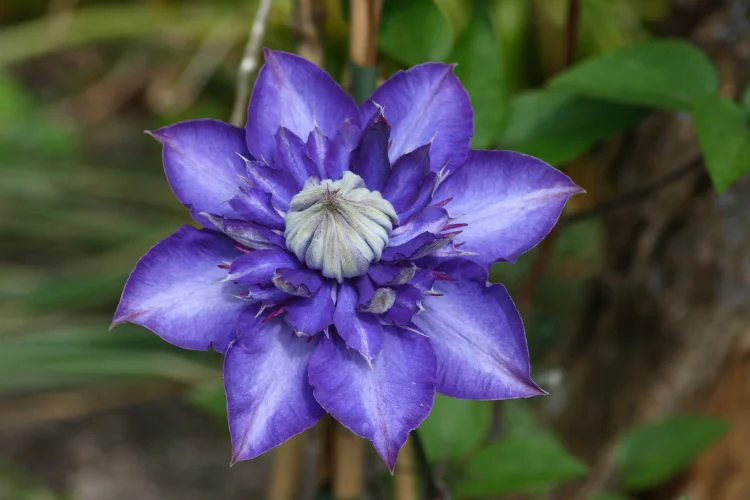
Clematis is often called the climbing flowering queen, and its many purple varieties live up to that title completely. Few climbers cover a wall or trellis with as much stunning coverage in as short a time.
Care tips for purple clematis:
- Keep roots cool and shaded while the top growth reaches for sun
- Learn your variety’s pruning group, since incorrect pruning removes next season’s blooms
- Provide sturdy support for the twining stems to climb
- ‘Jackmanii’ remains one of the most reliable deep purple performers
Echinacea (Purple Coneflower)

Echinacea brings a wilder, prairie energy to purple flowering plants, with its daisy-like petals swept back from a bold central cone. It is a genuine wildlife star, drawing butterflies through summer and seed-eating birds through autumn and winter.
This plant also carries a long medicinal history among Indigenous peoples of North America, who used it for centuries before it became a garden staple.
Care tips for echinacea:
- Plant in full sun with well-drained soil
- Leave seed heads standing through winter for birds
- Divide every few years to maintain vigor
- Extremely drought tolerant once established
Agapanthus (Purple)
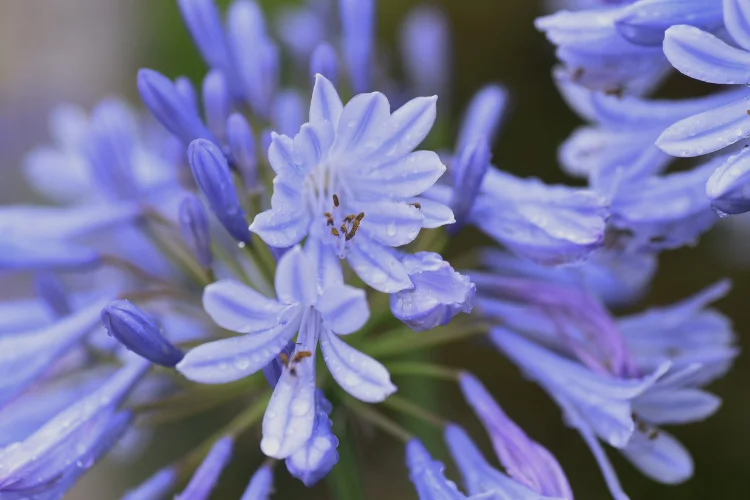
Agapanthus produces globe-shaped clusters of purple flowers atop tall, elegant stems, giving it an architectural drama that few perennials can match. Native to southern Africa, it has become a beloved container growing choice worldwide.
Care tips for agapanthus:
- Grows well in pots, making it ideal for patios
- Full sun brings the strongest flowering
- Water generously through summer, then reduce in winter
- Protect from hard frost in colder climates
Buddleja (Butterfly Bush)
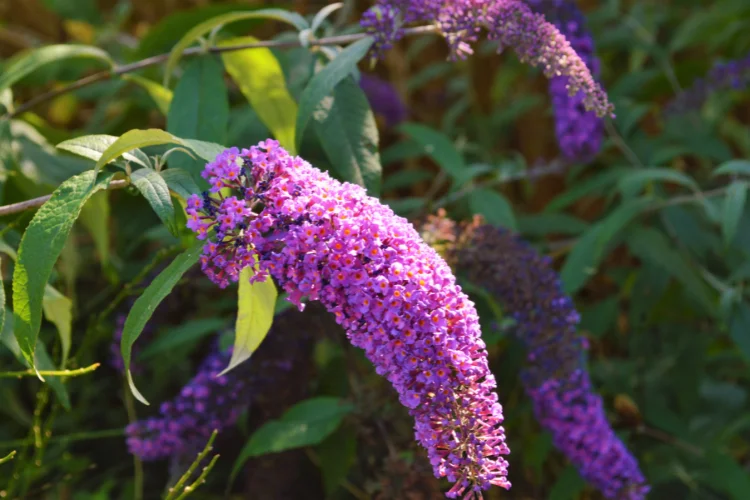
Buddleja earns its common name honestly. This shrub produces fragrant purple plumes that act as a butterfly magnet par excellence, often drawing a dozen or more butterflies to a single bush on a sunny afternoon.
Care tips for buddleja:
- Prune hard in spring to keep growth compact and encourage more blooms
- Full sun brings the heaviest flowering
- Deadhead through summer to extend bloom time
- Tolerates poor soil and urban conditions well
Hebe (Purple Varieties)
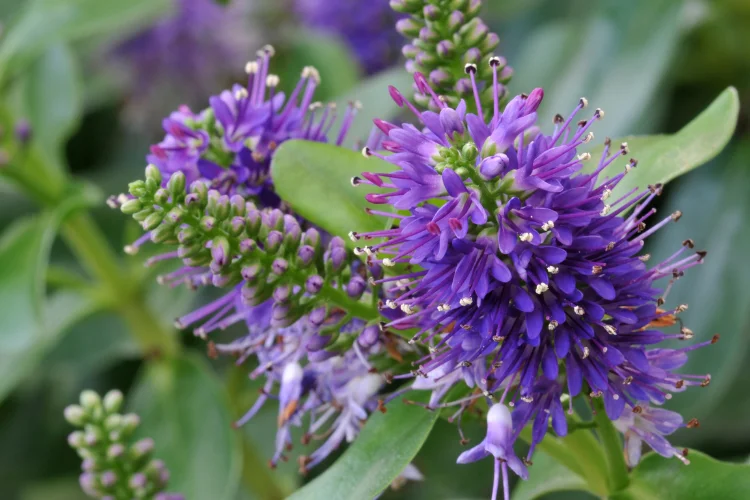
Hebe is an evergreen shrub that offers structure in the garden year round, with long-blooming purple flower spikes appearing through summer. It has become a favorite coastal garden choice thanks to its tolerance for salt spray and wind.
Care tips for purple hebe:
- Plant in full sun to light shade
- Well-drained soil prevents winter rot
- Light trimming after flowering keeps the shape neat
- Excellent low hedge or border filler
Violet (Viola)
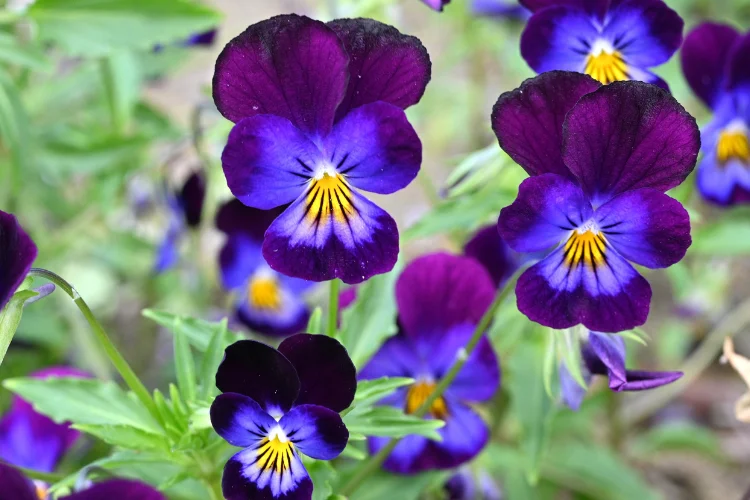
Violet is the February birth flower, and it carries a woodland charm that few other purple flowers names can match. It thrives tucked beneath trees and along shaded borders, where its low, spreading habit fills gaps beautifully. Our complete guide on February Birth Flowers explores violet’s meaning and gifting traditions in full, if February holds significance for you or someone you’re gardening for.
Many varieties produce edible flowers, which have long been used to decorate cakes and salads with their delicate purple petals.
Care tips for violet:
- Part shade and moist, humus-rich soil suit it best
- Deadhead regularly for continued blooming
- Divide clumps every couple of years
- Self-seeds readily, so expect volunteers nearby
Liatris (Blazing Star)
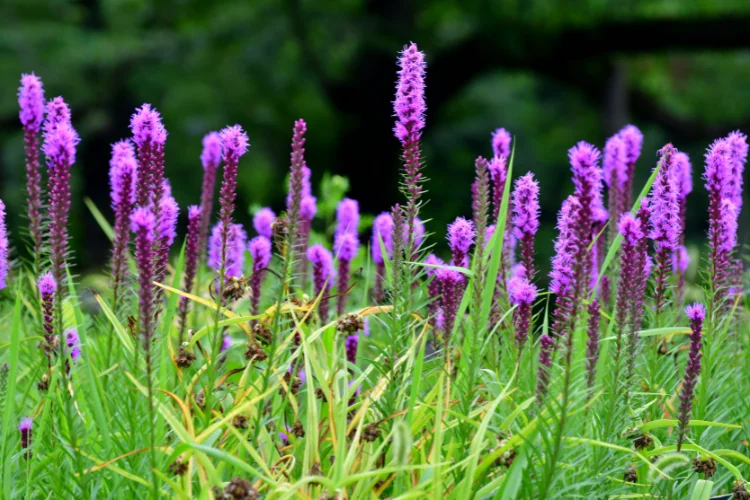
Liatris breaks all the usual rules by blooming from the top of the spike downward rather than bottom to top, an unusual habit that makes it instantly recognizable. It is a prairie wildflower at heart, and both bees and butterflies flock to it.
Care tips for liatris:
- Plant corms in full sun
- Tolerates poor, dry soil once established
- Excellent as a cut flower, lasting well in a vase
- Group in clusters for the strongest visual impact
Purple Flowers by Shade
Pale Lavender Purple Flowers
Soft, whispering tones that bring calm to any bed. Lavender, catmint, wisteria, and agapanthus all offer this gentler side of purple, ideal for pairing with white or silver foliage.
Bright Vivid Purple Flowers
Bold and unmistakable, these varieties demand attention. Allium, salvia, verbena, and delphinium deliver saturated purple that anchors a border from across the garden.
Deep Rich Purple Flowers
Dark, velvety, almost mysterious. Iris, clematis, buddleja, and violet all reach into the deepest end of the purple spectrum, sometimes edging toward black in low light. Gardeners drawn to this darker, moodier register will want to see our guide on Gothic Flowers, which explores the darkest and most dramatic blooms you can grow.
Blue-Purple Flowers
Sitting right between blue and violet, catmint, salvia, delphinium, and agapanthus all lean cooler, giving borders a soothing, watery quality. Purple and blue are the most enchanting garden combination, and our complete guide on Blue Flowers is a natural next stop if this cooler side of purple appeals to you.
Mauve Dusty Purple Flowers
Muted and antique in feeling, lavender, hebe, and liatris offer a dusty, faded purple that pairs beautifully with rust, terracotta, and warm neutrals.
Purple Flowers by Season
Spring’s Purple Flowers
Spring opens the year with allium, iris, wisteria, violet, and early clematis varieties, filling beds and walls with purple just as the garden wakes.
Summer Purple Blooms
Summer is the season of true abundance for purple flowering plants. Lavender, salvia, verbena, echinacea, agapanthus, buddleja, and liatris all reach peak bloom under the summer sun.
Purple Autumn Flowers
As the season cools, echinacea and salvia continue flowering, joined by asters and late-blooming clematis varieties that carry purple tones right up to the first frost.
Winter’s Purple Blooms
Even winter has its purple moments. Violet, purple hellebore, and heather all bring color to the garden during the coldest months, proving purple never truly disappears.
Purple Flowers for Different Garden Situations
- Best purple flowers for containers: agapanthus, verbena, catmint
- Top purple flowers for shade: violet, hellebore, hebe
- Best purple flowers for sunny beds: lavender, salvia, delphinium
- Ideal purple flowers for wildlife: buddleja, echinacea, liatris
- Great purple flowers for cutting: iris, liatris, delphinium
- Favorite purple flowers for beginners: catmint, salvia, lavender
- Outstanding purple flowers indoors: African violet, purple orchid, violet
- Best purple flowers for fragrance: lavender, wisteria, buddleja
Purple flowers indoors deserve a special mention here. African violets remain one of the most popular houseplants for a reason, blooming reliably on a bright windowsill with minimal fuss, while potted violet and mini orchids bring that same regal purple indoors without needing a garden at all.
Purple Flower Meaning and Symbolism
Purple flower meaning runs deep, touching on royalty, luxury, mystery, spirituality, wisdom, admiration, and dignity all at once. Few colors carry this much symbolic weight in a single petal.
The history of purple as a royal color traces back to Tyrian purple, a dye extracted from thousands of sea snails along the Mediterranean coast. It was so labor intensive to produce that only emperors and the wealthiest elite could afford garments dyed in it. Roman emperors and Byzantine royalty wore it as a mark of absolute status, and that association has never really faded.
Giving purple flowers as a gift traditionally communicates admiration, respect, and dignity. They suit occasions where you want to honor someone rather than simply charm them, which sets purple apart from the more romantic language of red or pink.
Purple flowers also move comfortably between sympathy and celebration. Deep, dark purple often appears in sympathy arrangements as a symbol of dignity and respect for the departed, while lighter lavender tones show up at celebrations and graduations, representing pride and accomplishment.
Cultural purple flower meanings vary around the world. In parts of Europe, purple flowers historically signaled mourning, while in other traditions they represent spiritual awakening and higher consciousness. Context always matters more than a single fixed meaning.
Lavender specific symbolism deserves its own mention. Beyond its royal purple cousins, lavender carries meanings of calm, devotion, and grace, tied closely to its centuries-old use in relaxation and healing practices.
Purple Flowers That Attract Wildlife
Bees seem to love purple most of all the flower colors, and the science backs up the folklore. Their eyes are especially sensitive to the blue-violet end of the spectrum, which makes purple flowering plants some of the most visited blooms in any garden.
Among the best purple butterfly flowers, buddleja stands alone as the ultimate butterfly magnet. A single mature bush in full bloom can host swarms of painted ladies, monarchs, and swallowtails feeding at once, making it one of the single best additions for a wildlife-focused garden.
Purple wildflowers for meadows include liatris, wild violet, and native asters, all of which support pollinators without demanding any special care once established.
Creating a wildlife purple garden simply means layering bloom times so something purple is always flowering, from early violet in late winter through echinacea and salvia in autumn, ensuring pollinators have a reliable food source across the whole year.
Designing With Purple Flowers
Purple color combinations open up some of the most striking pairings in garden design. Understanding a few basics of color theory transforms a good border into an unforgettable one.
Purple with yellow uses complementary color theory to dramatic effect, since the two sit opposite each other on the color wheel. Pairing purple salvia or allium with yellow rudbeckia or yarrow creates genuine visual electricity.
Purple with white produces an elegant, cool effect that reads as refined rather than loud. White cosmos or shasta daisies threaded between purple delphinium or iris create breathing room and let each color shine.
Purple with silver grey is a classic pairing, best seen in lavender planted alongside silvery lamb’s ear or stachys. This combination has anchored Mediterranean and cottage gardens for generations.
Purple with pink leans romantic, softening purple’s regal edge into something warmer and more playful. Verbena and catmint both pair beautifully with pink roses or cosmos.
An all-purple monochrome garden is a genuinely striking choice for confident gardeners, layering pale lavender against deep violet and vivid blue-purple to create depth using tone alone rather than contrasting hues.
Cottage garden purple style leans informal and layered, mixing delphinium, foxglove, iris, and catmint in loose, overflowing drifts. Modern purple border ideas take the opposite approach, favoring bold blocks of salvia or allium repeated in clean, architectural lines against neutral hardscaping.
Purple Flowers Frequestly Ask Questions
Lavender, iris, wisteria, allium, and salvia consistently rank among the most popular purple flowers, thanks to their striking color, reliability, and versatility across garden styles.
Purple flowers as a gift traditionally represent admiration, respect, and dignity, making them ideal for honoring achievements, expressing gratitude, or marking a milestone occasion.
Purple summer flowers include lavender, salvia, verbena, echinacea, agapanthus, buddleja, and liatris, offering months of continuous purple color from early June through early autumn.
Buddleja is the standout choice, alongside echinacea, verbena, and liatris, all of which draw butterflies reliably throughout the growing season.
Catmint, salvia, and lavender are excellent choices for beginners, all tolerating poor soil, minimal watering, and general neglect once established.
Lavender is the most fragrant purple flower by far, followed closely by wisteria and buddleja, both of which fill the air with sweet, distinctive scent when in bloom.
The Grand Finale of Purple Flowers
Purple flowers close out our color journey in the only way they know how, with drama, dignity, and just a touch of mystery. No other shade moves so effortlessly between the palest lavender whisper and the deepest violet shadow, and no other color has worn a crown for quite so long.
Whether you plant a single pot of African violet on a windowsill or fill an entire border with delphinium and iris, purple flowers bring something no other color quite manages: the unmistakable feeling of garden royalty. From the palest lavender whisper to the darkest violet shadow, this is a color that rewards a gardener’s patience and admiration in equal measure.
With this guide, our full color series is complete. Every shade, from the boldest red to the most enchanting purple, now has a home on Plant Style Home, and purple stands as the crowning finish to that entire collection. Let it become the crowning finish to your own garden story too.