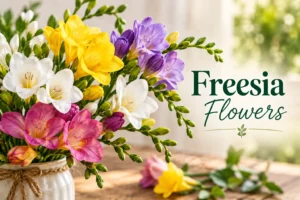
If you have ever walked into a room and been stopped by a scent you could not immediately place, sweet, citrusy, floral but never heavy, there is a good chance freesia was somewhere nearby. That fragrance is the reason freesia flowers have a devoted following among florists, perfumers, gardeners and anyone who loves giving a thoughtful gift.
Their trumpet-shaped blooms are lovely, of course. They open along arching stems in a long, graceful sequence, and they come in nearly every color you could want.
This guide covers what freesia means, how it smells, which colors and varieties to look for, how to grow it, and how to make the most of it in a bouquet. It deserves far more attention than it gets.
Freesia Flower Meaning and Symbolism
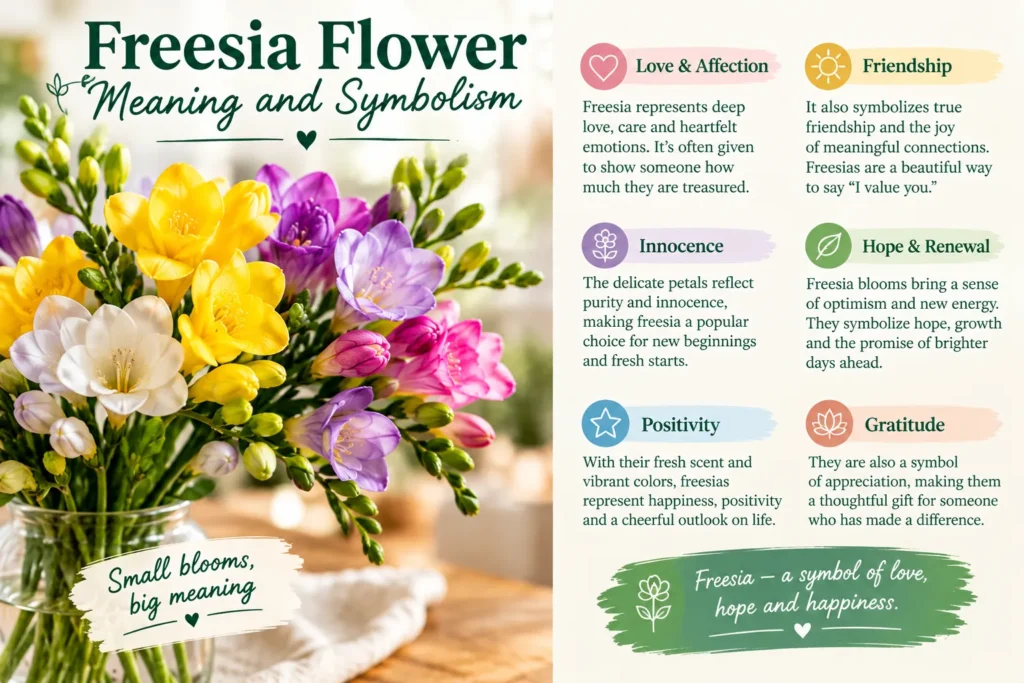
Freesia belongs to the genus Freesia in the Iridaceae family, the same family as irises and gladioli. Its roots are in the Cape region of South Africa, which makes it a South African native that went on to conquer the world’s flower markets.
The name honors Friedrich Heinrich Theodor Freese, a German physician and botanist. His friend Christian Ecklon, who named the genus, chose it as a tribute.
Freesia symbolism centers on warmth between people. The general meanings are:
- Innocence and purity
- Friendship and trust
- Thoughtfulness
- Lasting bonds between friends
That last one is why freesia makes such a good gift when words feel inadequate. It says “I am glad you are in my life” without any fuss.
What Each Color Means
The freesia flower meaning shifts a little with color:
- White freesia: innocence, purity, new beginnings
- Yellow freesia: joy, warmth, friendship, cheerfulness
- Pink freesia: femininity, gentleness, motherly love
- Red freesia: passion, romance, deep love
- Purple freesia: admiration, dignity, charm
- Orange freesia: enthusiasm, creativity, energy
- Blue or lavender freesia: trust, loyalty, calmness
Freesia in Celebrations and Perfume
Freesia is the traditional flower for a 7th wedding anniversary. Seven years of marriage tends to build exactly what freesia stands for: trust and deep friendship.
It is also a wedding favorite, especially in white and pink, because it looks refined and the scent carries through a ceremony space beautifully.
Perfumers have borrowed the fragrance for decades. Freesia notes appear in hundreds of commercial perfumes, which tells you something about how universally pleasing the scent is.
What Do Freesia Flowers Smell Like?
This is the question people ask most, and it deserves a proper answer. The scent of freesia is among the most distinctive and beloved in the flower world.
Here is the profile:
- Sweet but never cloying. It lacks the sugary heaviness of some blooms.
- Citrus undertones. Think lemon and grapefruit peel lifting the sweetness.
- A touch of honey. There is a soft warmth underneath.
- Fresh and clean. Unlike some lilies, it never overpowers a room.
Many people describe it as a blend of vanilla, citrus and gentle florals. The best description, though, is the way it makes a space feel lighter and more awake.
Which Colors Smell Strongest?
Color plays a role in how much fragrance you get:
- White and yellow: typically the most fragrant
- Red and pink: moderately fragrant
- Purple: some highly fragrant varieties exist, so check the variety description
- Orange: fragrant, though lighter than white or yellow
A Note on Modern Varieties
Here is something worth knowing before you buy. Many commercially grown freesias are bred for appearance, long stems and shipping hardiness. In the process, fragrance has sometimes been reduced by accident.
If scent is what you are after, look for named heirloom or heritage varieties from specialist bulb suppliers. Single-flowered types are also generally more fragrant than double-flowered forms.
Freesia in Perfumery
Freesia is one of the most widely used floral notes in fine perfumery. It appears in Calvin Klein Eternity and in various Jo Malone formulations, along with dozens of others. Perfumers classify it as a “fresh floral” note, the kind that smells like clean air after rain.
Freesia Flower Colors: A Complete Visual Guide
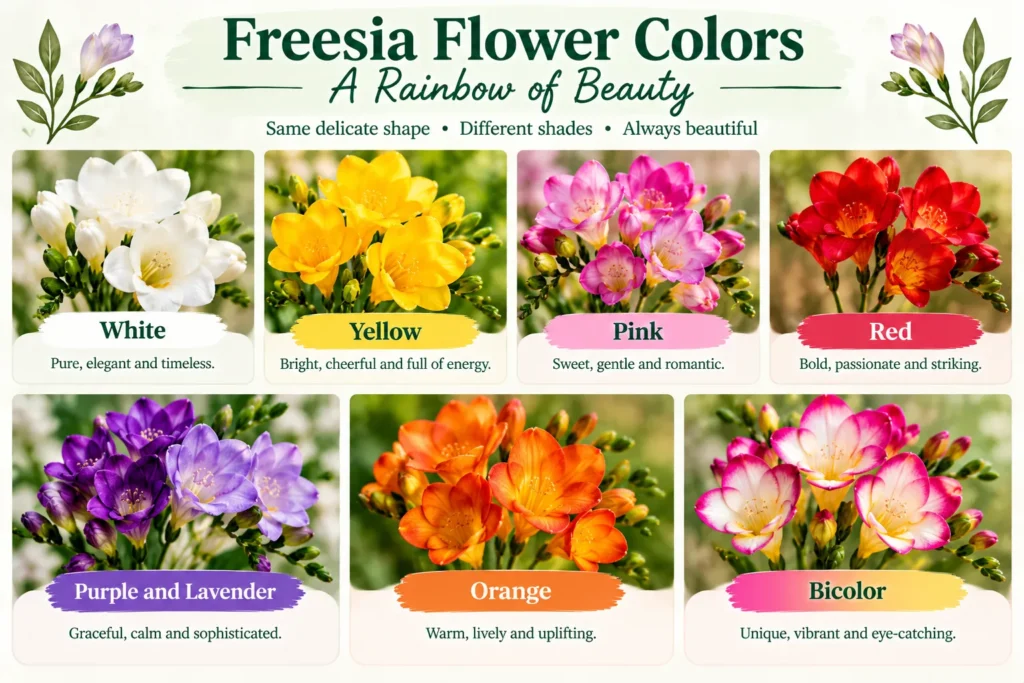
Few flowers match the color range of freesia. Whatever palette you are working with, there is a freesia that fits.
White Freesia
The classic bridal flower, and the most strongly scented of all the colors. It symbolizes innocence and new beginnings. Look for ‘Alba’ and ‘White Swan’.
White freesia is a bridal bouquet classic, and our White Flowers guide celebrates the most elegant and meaningful white blooms for weddings and beyond.
Yellow Freesia
Yellow stands for warmth, happiness and friendship. It is a cheerful addition to spring bouquets and one of the most widely available colors. Good varieties include ‘Yellow River’ and ‘Golconda’.
Yellow freesias bring pure sunshine to any arrangement, and our Yellow Flowers guide is full of the most cheerful and uplifting yellow blooms you can grow or gift.
Pink Freesia
Delicate, feminine and gentle, pink freesia is hugely popular in wedding flowers. Try ‘Pink Passion’, ‘Stockholm’ (a deep pink) or ‘Ballerina’ (a soft blush).
Red Freesia
This is the boldest color statement of the group, and it is less common than pink or white. ‘Red Lion’ and ‘Amadeus’ are the names to know.
Purple and Lavender Freesia
Rich, sophisticated and elegant. Some of the most fragrant purple varieties come from this group. Look for ‘Blue Heaven’, ‘Purple Rain’ and ‘Castor’.
Orange Freesia
Energetic, vibrant and warm. Orange pairs wonderfully with yellow and red in autumn-inspired arrangements. ‘Orange Favourite’ is a reliable pick.
Bicolor Freesia
Two-tone petals, often white with a pink or purple center, look striking in mixed bouquets. They bring a little drama without needing a second flower to share the stage.
Types of Freesia Flowers: Single, Double and Species
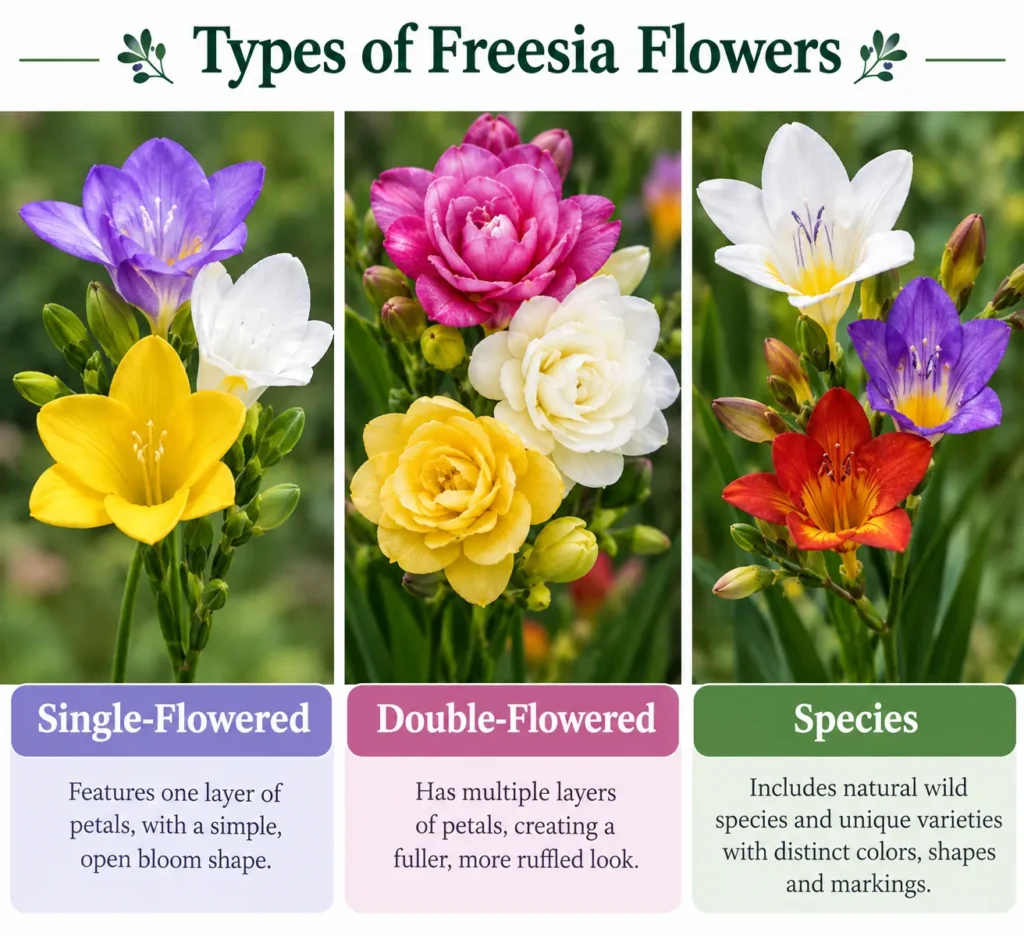
Freesias fall into three main groups. Knowing the difference helps you choose well, whether you are buying stems or planting corms.
1. Single-Flowered Freesia
This is the classic form: individual trumpet-shaped blooms arranged along an arching stem. It is the traditional florist’s freesia, the most widely available, and it has a long vase life. It is also the most fragrant form.
2. Double-Flowered Freesia
Double types have ruffled, layered petals that give them a peony-like look. They are showier and fuller, and they are increasingly popular in modern floral design.
The trade-off is scent. Doubles are often slightly less fragrant than singles. Varieties include ‘Double White’ and ‘Double Elegance’.
3. Species Freesia
The wild forms are rarer, yet worth tracking down for their extraordinary fragrance:
- Freesia refracta: the original species, with small cream and yellow flowers and an intense scent
- Freesia alba: a white species with exceptional fragrance
- Freesia corymbosa: a South African species with larger flowers
Popular Named Varieties to Grow
- ‘Oberon’: deep yellow and very fragrant
- ‘Stockholm’: deep pink and reliable
- ‘Ambassador’: a purple and white bicolor
- ‘Castor’: rich purple and fragrant
- ‘Marianne’: golden yellow, a classic
- ‘Fantasy’: salmon-pink and graceful
How to Grow Freesia Bulbs: Complete Growing Guide
Growing freesia bulbs is more approachable than most people expect. Strictly speaking they are corms, but everyone calls them bulbs, and the planting rules are similar. The main requirements are good drainage, plenty of light and cool conditions.
When to Plant
Timing depends on your climate and on when you want the freesia flower season to happen in your home.
- Outdoors in mild climates: plant corms in autumn, from September to November, for blooms in late winter through spring.
- In frost-prone areas: plant in spring, from March to May, for summer flowers. You can also start corms indoors in late winter and move them outside after the last frost.
- Indoors in pots: plant from August onwards for winter flowers. Freesias make excellent winter-flowering pot plants.
Where to Plant
- Full sun or very light partial shade
- Shelter from strong wind, because the elegant stems can snap
- Well-draining soil, since corms rot in waterlogged conditions
- Slightly sandy or gritty soil is ideal
- Raised beds, borders and pots all work well
How to Plant
- Plant corms 5cm (2 inches) deep.
- Set them with the pointed end facing up.
- Space them 5 to 8cm apart for a good display.
- In pots, plant 6 to 8 corms in a 20cm pot for a full show.
- Water in after planting.
- Hold back on watering until shoots appear.
Freesia Care After Planting
Good freesia care comes down to a few habits:
- Water sparingly until shoots emerge, then water regularly without letting the soil turn soggy.
- Feed with a balanced liquid fertilizer every two weeks once the plant is in active growth.
- Stake as needed, because the stems are delicate and can flop.
- Deadhead spent flowers to encourage the remaining buds to open.
After Flowering
Let the leaves die back naturally. It looks untidy for a few weeks, but this is how the plant feeds the corm for next year.
In frost-free climates, leave the corms in the ground. They naturalize well.
In colder climates, lift the corms once the foliage has died, dry them out and store them somewhere cool and dry. Replant the following season.
Growing Freesia in Pots
Freesias are excellent container plants. Pot them up in late summer for winter and spring flowers indoors.
- Use a free-draining potting mix with added grit.
- Aim for cool conditions, ideally 10 to 15°C (50 to 60°F).
- Keep the pot on a cool, bright windowsill rather than in a warm, centrally heated room.
That cool windowsill is where the magic happens. A warm room tends to give you leaf and very little bloom.
This is one of the highlights of the spring flower season, and our Spring Flowers guide covers all the most beautiful blooms to look forward to as the year warms up.
Freesia Flowers in Bouquets and Arrangements
Freesia is one of those flowers that earns its place in a bouquet not just for how it looks but for how it makes an entire room feel. These flowers in bouquets works on two levels at once, visual and fragrant.
Why Florists Love Freesia
- A long vase life of 7 to 14 days
- Multiple buds per stem that open progressively, so the display lasts longer than a single-bloom flower
- Extraordinary fragrance
- Every color you could need for any palette
- Elegant, arching stems that add movement and lightness
Making Freesia Last
A few small habits add days to the vase life:
- Cut stems at a 45° angle.
- Change the water every two days.
- Add cut flower food.
- Keep the vase away from heat and direct sunlight.
- Keep it away from fruit, because ethylene gas shortens vase life.
- Remove any leaves below the waterline.
Flowers That Pair Well With Freesia
- White freesia, ranunculus and eucalyptus: a classic bridal combination
- Yellow freesia, white tulips and greenery: spring freshness
- Pink freesia, peonies and garden roses: romantic luxury
- Purple freesia and white lilies: elegant simplicity
- Mixed freesia and jasmine: the maximum fragrance bouquet
Freesia pairs beautifully with ranunculus in bouquets, and our Ranunculus Flower guide covers everything about this layered, luxurious florist favourite.
If you love flowers as much for their scent as their appearance, our Jasmine Flowers guide covers one of the most powerfully fragrant blooms in the world.
Freesia at Weddings
Freesia turns up in bridal bouquets, buttonholes and table arrangements. White and blush pink are the most popular choices.
The scent drifts through a ceremony space gently. It never becomes overwhelming, which is a rare quality in a fragrant flower.
Frequently Asked Questions
Freesia smells sweet and fresh, with citrus notes of lemon and grapefruit and a soft honey warmth. It is light, clean and never heavy.
Freesia symbolizes innocence, friendship, trust and thoughtfulness, with each color adding its own shade of meaning, from white purity to red passion.
Outdoors, freesias bloom in late winter through spring in mild climates, or in summer when planted in spring. Indoors, potted corms flower in winter.
Each corm flowers once per season, but it returns the next year if you let the leaves die back naturally.
Cut freesias last 7 to 14 days in a vase with fresh water, cut flower food and a cool spot away from fruit.
They prefer full sun or very light partial shade, with shelter from wind and well-draining soil. Indoors, choose a cool, bright windowsill.
Why Freesia Flowers Deserve a Place in Your Life
Freesia is beautiful, fragrant, versatile, easy to grow and meaningful as a gift. Few flowers manage all of that, and fewer still do it so quietly. It has never needed to shout to be remembered.
If you have been curious, try growing freesia bulbs this season. The moment your first freesia opens indoors in late winter and fills the room with that unmistakable scent, you will wonder why you waited so long.
For more flower guides packed with care tips and inspiration, visit PlantStyleHome. Whether you grow your own or simply bring home a bunch from the florist, freesia flowers are a small, lasting pleasure well worth discovering.