Japan has one of the most intimate relationships with flowers of any culture on earth. These blooms aren’t just beautiful, they carry centuries of meaning. Traditional japanese flowers appear in woodblock prints and Heian-era poetry, on silk kimono and lacquered boxes, and on the nation’s coins and imperial crest.
The calendar itself bends around the seasons, and a walk through any Japanese town in spring shows how closely the two are woven together. Hanakotoba, the traditional language of flowers, gives each bloom a message, while ikebana, the art of flower arranging, turns a single stem into a quiet meditation.
This guide covers the most iconic and meaningful blooms, what they symbolise and how to grow them. To go further, discover more flower guides and plant inspiration at PlantStyleHome.
Cherry Blossom (Sakura): The Most Iconic of Japanese Flowers
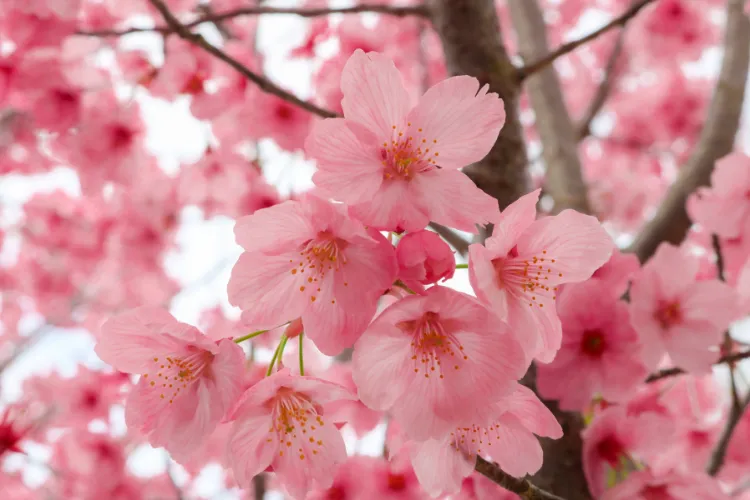
Few things in the natural world stop you in your tracks quite like a Japanese cherry tree in full bloom. That blizzard of pale pink petals feels like nature showing off.
When Does Japanese Cherry Blossom Bloom?
Most of these trees belong to Prunus serrulata and related Prunus species. The japanese cherry blossom arrives in waves, from January in Okinawa to late March and April across the main islands, then May in Hokkaido. Follow it north and you can stretch spring across four months.
Mono No Aware: The Meaning Behind Sakura
Beneath every tree sits the idea of mono no aware, the bittersweet awareness that beautiful things pass. The petals last barely a week, and that brevity is exactly why people gather. Cherry blossom also means new beginnings, which is why the school year and the financial year both start in April, just as the petals fall.
Hanami: The Tradition of Flower Viewing
Hanami, the custom of flower viewing, is one of Japan’s most beloved traditions, with roots in the 8th century. Friends spread tarps under the branches, share food and stay until the lanterns come on. Samurai saw their own code in the blossom, a life beautiful and brief. Today the flower sits on the 100-yen coin and in countless emblems.
What a photograph rarely captures is the hush. On a spring evening, a crowded park goes quiet as the wind lifts a fresh wave of petals, and strangers look up at the same moment. Nobody needs to explain what the tree is saying.
Best Places to See Cherry Blossom in Japan
For the best viewing, head to Ueno Park in Tokyo, Maruyama Park in Kyoto, or Hirosaki Castle in Aomori, where petals drift across the moat. The soft pink of cherry blossom is one of nature’s most breathtaking colours, and our Pink Flowers guide celebrates the most beautiful pink blooms from around the world.
How to Grow Cherry Trees at Home
Cherry trees are hardy in USDA zones 5 to 8 and want full sun and well-draining soil. They make a stunning ornamental garden tree. Popular varieties include ‘Somei Yoshino’, the classic of the parks, deep pink ‘Kanzan’, white ‘Shirofugen’ and ‘Autumnalis’, which flowers through autumn and winter.
Cherry blossom season is the ultimate spring moment in Japan, and our Spring Flowers guide covers all the best blooms to celebrate the season wherever you are.
Chrysanthemum (Kiku): The Imperial Flower of Japan
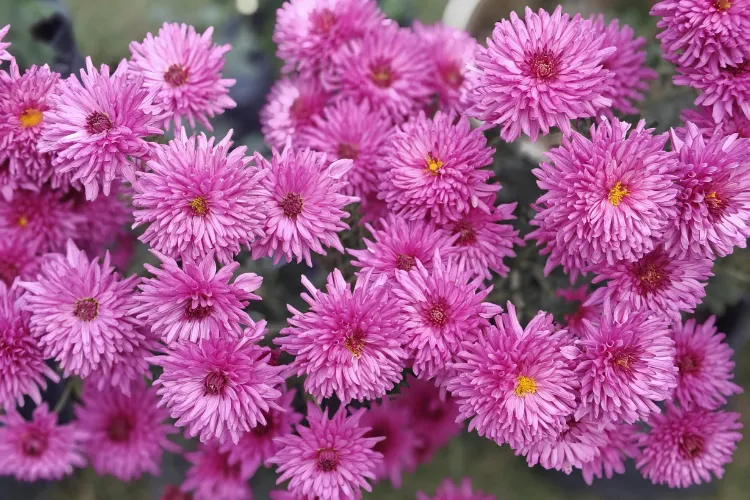
If sakura belongs to the people, the chrysanthemum belongs to the throne. Japan’s Imperial seal is a 16-petal kiku, and the monarchy itself is known as the Chrysanthemum Throne.
Chrysanthemum Season and Origins
Botanically it is Chrysanthemum morifolium, which arrived from China over a thousand years ago and was embraced so fully that few would call it anything but Japanese. It flowers from September to November. Alongside the cherry, it ranks among the most famous flowers in Japan, and among traditional japanese flowers it is the most formal.
Kiku Symbolism and the Chrysanthemum Festival
Its radiating petals have long been linked with the sun, and with longevity, rejuvenation and nobility. On September 9th, Kiku no Sekku, the Chrysanthemum Festival, celebrates that wish for a long life. The flower still appears at formal ceremonies and state occasions.
Varieties and Exhibition Blooms
Growers have developed hundreds of forms, from tight pompoms to spidery quills and giant exhibition blooms. One plant may be trained to carry hundreds of flowers at once. Autumn chrysanthemum shows in temples and parks are well worth seeking out.
How to Grow Chrysanthemums
This one is easy in most gardens. Give it full sun and fertile, well-drained soil, and enjoy excellent autumn colour in borders and pots. Pinch the tips back in early summer for bushier plants and more flowers.
Japanese Wisteria (Fuji): Cascading Purple Magnificence
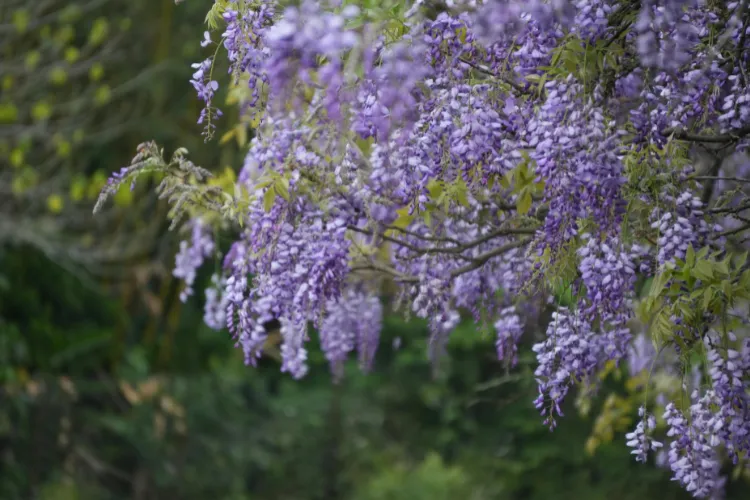
Step into a wisteria tunnel at peak bloom and the light turns violet. Long clusters hang overhead, and the scent is sweet and heavy. Even on a busy day, people tend to walk slowly and speak softly, as though the flowers had asked them to.
Fuji Season and Symbolism
Wisteria floribunda is one of the flowers native to Japan, and it blooms from April to June as spring tips into summer. Fuji stands for romance, sensitivity, devotion and luck. Its trailing form has made it a favourite in classical paintings and Heian-era poetry, and the powerful Fujiwara clan took its name from the flower.
Famous Wisteria Tunnels
Wisteria tunnels are pilgrimage sites in their own right. Ashikaga Flower Park is the most famous, and visitors arrive early to beat the crowds. In any japanese flower garden, a pergola draped in fuji marks the moment spring becomes summer.
How to Grow Wisteria
Wisteria is a vigorous climber that needs a strong support, and it flowers best in full sun. Patience matters, because plants grown from seed can take 3 to 7 years to bloom. Buy a grafted plant for quicker flowers, and prune twice a year, in summer and winter, to control growth and encourage blooms.
Japanese wisteria and iris bring some of the most stunning purple tones in the flower world, and our Purple Flowers guide explores the most beautiful purple blooms you can grow.
Camellia (Tsubaki): The Winter Rose of Japan
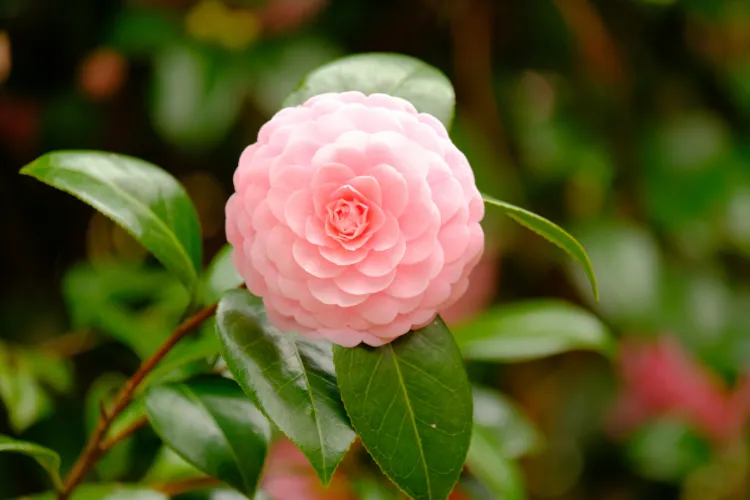
When most of the garden has gone quiet, camellias are just getting started. Camellia japonica flowers from January to April, its glossy leaves framing blooms that glow against the cold.
Camellia Symbolism by Colour
Japanese flower symbolism often shifts with colour, and the camellia shows it well:
- Red: love, passion and deep affection
- White: purity, waiting and an adorable charm
- Pink: longing and modesty
Camellia in Art and the Tea Ceremony
The camellia has decorated samurai armour, textiles and pottery for centuries. In the tea ceremony, chado, a single bloom often sits in the tokonoma, the display alcove, as the seasonal heart of the room. Tsubaki oil, pressed from the seeds, was traditionally used for skin and hair.
The flower falls whole, head intact, instead of shedding petals. Some saw an ominous echo of a lost head. Others read it as a warrior’s clean, unflinching end. That tension tells you a lot about how comfortably Japanese symbolism holds contradictions.
How to Grow Camellias
Camellias make excellent garden shrubs or wall-trained specimens. Acidic, well-drained soil is essential, and partial shade to full sun suits them. Protect the plant from cold winds and early morning sun, which can damage frosted buds. They are long-lived, and some Japanese camellias are hundreds of years old.
Japanese Iris (Hanashōbu): Elegant Summer Beauty Among Japanese Flowers
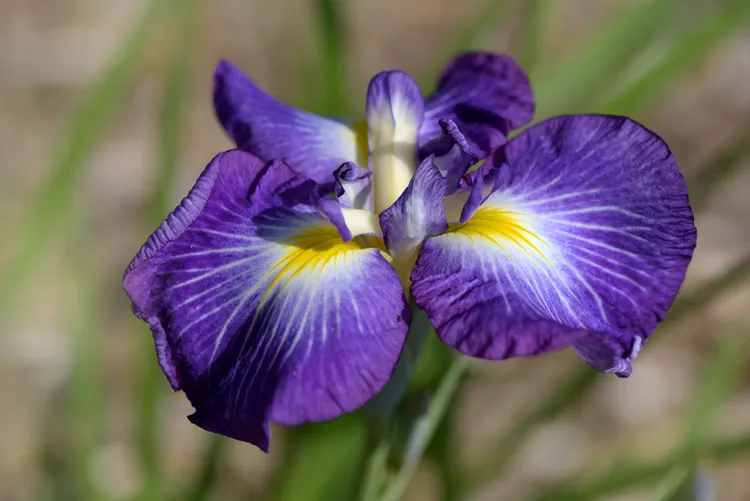
In the rainy weeks of June and July, iris gardens turn into rivers of violet, white and blue. Iris ensata is the flower behind it, tall and graceful with sword-shaped leaves.
Iris Symbolism and Boys’ Day
The iris stands for good news, courage and warrior spirit. It is tied in the popular imagination to Tango no Sekku, Boys’ Day on May 5th. The festival traditionally uses sweet flag, or shōbu, a different plant with similar blade-like leaves, so the two often blur together in stories of strength.
Famous Iris Gardens
Famous iris gardens draw crowds each summer, and Meiji Jingu Gyoen in Tokyo grows around 1,500 plants. Walking its wooden paths in the damp air of early summer, with blooms reflected in still water, feels like stepping into a painting. Hiroshige and other masters of the woodblock print captured iris beds in all their drama.
How to Grow Japanese Iris
Japanese iris loves boggy, wet conditions, which makes it perfect for pond edges. Plant it in full sun to light shade and rich, moisture-retentive soil. Divide the clumps every 3 to 4 years to keep them vigorous.
Plum Blossom (Ume): Japan’s Harbinger of Spring
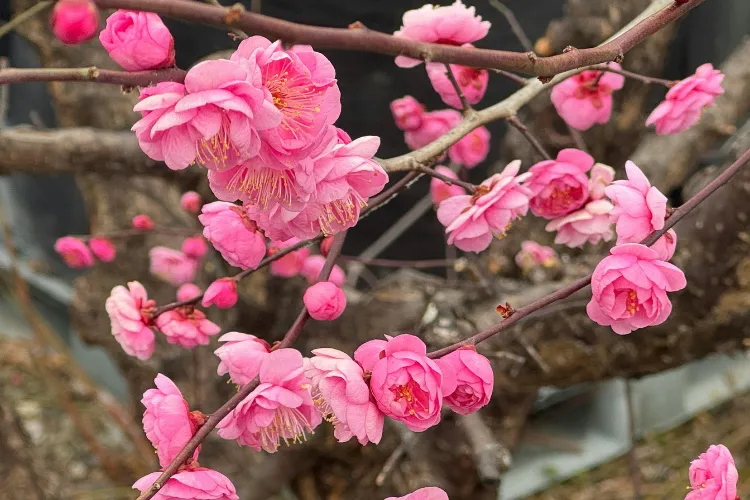
Before the cherry trees stir, the plum is already in flower. Prunus mume blooms from January to March, its fragrance drifting through cold air while frost still lingers.
Plum Blossom Symbolism
Ume stands for perseverance, hope and endurance, the strength to bloom through adversity. Heian-era poets praised it long before sakura took centre stage. Like the chrysanthemum, it came from China, so it is not strictly one of the flowers native to Japan, yet it feels entirely at home there.
Ume Matsuri and Umeboshi
Ume Matsuri, the plum blossom festivals, run from January to March across the country. Dazaifu Tenmangu shrine in Fukuoka has around 6,000 trees, and a visit in late winter, when the air still bites, makes the fragrance feel like a small miracle. The fruit becomes umeboshi, the tart pickled plum that sits in the middle of countless rice balls.
Many of Japan’s most revered flowers bloom in pure white, and our White Flowers guide covers the most elegant white blooms for gardens and arrangements.
How to Grow Plum Trees
Plum trees take cold well. Give them full sun and well-draining soil, and plant them near a path or window to enjoy the fragrance. They also produce edible fruit.
More Japanese Flowers Worth Knowing
Some of the most famous flowers in Japan sit just beyond the headline acts. These five japanese flowers round out the picture, and each has a story. Learning japanese flower names such as hasu, ajisai and botan is half the pleasure.
Lotus (Hasu)
Lotus (Hasu, Nelumbo nucifera) is tied closely to Buddhism. It rises spotless from muddy water, so it stands for purity and enlightenment. It blooms from July to August, and Shinobazu Pond in Ueno, Tokyo, fills with leaves and pink flowers.
Hydrangea (Ajisai)
Hydrangea (Ajisai) belongs to June, the rainy season known as tsuyu. It means sincere emotion and gratitude, and also apology. The colour shifts with the soil, blue in acidic ground and pink in alkaline. Meigetsu-in Temple in Kamakura, nicknamed the Hydrangea Temple, is the place to see it in the rain.
Japanese Anemone (Shumeigiku)
Japanese anemone (Shumeigiku) blooms from September to October with delicate white and pink flowers. It is thought to have come from China long ago, and it is now beloved in autumn gardens.
Narcissus (Suisen)
Narcissus (Suisen) blooms from December to February and stands for self-love, respect and good fortune in the New Year. The Echizen daffodil fields in Fukui Prefecture are the famous sight.
Peony (Botan)
Peony (Botan) flowers from April to June and is called the King of Flowers. It speaks of wealth, honour and romance, and it features in traditional artwork and many Japanese tattoos.
Japan also has a deep love for magnolia blooms, and our Magnolia Flowers guide explores the history, varieties and meaning of this elegant flower.
Japanese Flowers and Their Meanings: Understanding Hanakotoba
Hanakotoba is Japan’s traditional flower language, similar to Victorian floriography in Europe but distinctly Japanese in meaning. Each name carries its own message, so learning japanese flower names opens a second layer of the culture. Japanese flower symbolism is never rigid, because colour, season and context all change the sense, so treat this list as a gentle guide:
- Cherry blossom: the beauty of life and new beginnings
- Red camellia: love
- White camellia: waiting
- Chrysanthemum: joy and longevity
- Iris: good news and a pure heart
- Lotus: purity and enlightenment
- Hydrangea: gratitude, but also apology and a fickle heart
- Wisteria: devotion and longing
- Plum blossom: perseverance
- Peony: bravery and honour
Ikebana: The Art of Flower Arranging
Ikebana, meaning living flowers, is Japan’s ancient art of flower arranging. It is closer to a spiritual practice than decoration, and it cares as much about space, line and form as about the flowers themselves. In spring, a single branch of japanese cherry blossom in a plain vase can hold an entire room.
The Ikenobo school, with roots reaching back more than five centuries, is the oldest. Ohara and Sogetsu are two other key schools. A single branch and one bloom can say more than a bouquet.
Frequently Asked Questions
The cherry blossom (sakura) is Japan’s most famous flower, celebrated every spring with hanami picnics. The chrysanthemum (kiku), the imperial flower, comes a close second.
Cherry blossom, wisteria, camellia, Japanese iris and hydrangea all grow wild in Japan. Chrysanthemum, plum and peony arrived from China centuries ago.
Informally, yes: the cherry blossom and the chrysanthemum. Neither is legally designated, but sakura speaks for the people and kiku for the Imperial family.
“Flower” is hana, and no single list covers them all. Key names include sakura, ume, kiku, fuji, tsubaki, ajisai, hasu and botan.
Why These Blooms Stay With You
Flowers have a way of slowing us down. In Japan that pace is built into the year: plum in the cold, sakura in the first warm weeks, hydrangea in the rain, chrysanthemum as the leaves turn gold. Each asks the same quiet thing, which is to notice this moment before it passes.
That idea travels well. Plant a camellia by the door, a wisteria over a sturdy pergola or irises at the edge of a pond, and a small japanese flower garden of your own begins to take shape. A plum or a japanese cherry blossom tree will do the same job for a larger plot.
Or simply look for these flowers the next time you meet Japanese art, cuisine or design, such as a plum on a tea-shop wrapper or a chrysanthemum on a sake label. The more you learn about japanese flowers and their meanings, the more the world seems to speak in blossoms.