There is nothing quite like the moment you spot the first crocus pushing through cold soil, or catch the scent of hyacinths drifting through an open window. Spring flowers are nature’s way of throwing open the curtains after a long grey winter, and honestly, no other season delivers colour quite this fast. One week the garden is bare and brown, and the next it is a riot of yellow daffodils, pink cherry blossom against a clear blue sky, and drifts of blue muscari along the border. That first daffodil of the year never gets old no matter how many springs you have seen, and if you are reading this, you probably already know exactly the feeling I mean.
Spring flowers are nature’s most joyful announcement that the hard part of winter is over. At Plant Style Home we help you grow beautiful flowers in every season, from the first snowdrop to the last autumn bloom, and this guide covers everything you need to plan, plant, and fall completely in love with your own spring garden, whether you have three acres or a single windowsill pot.
Why Spring Flowers Are the Most Exciting of All
Every gardener has a favourite season, but spring flowers hold a special kind of magic that summer blooms simply cannot match. Here is why.
The garden’s greatest comeback story. Nothing beats watching a border that looked completely lifeless in January suddenly burst into growth. Tulips shove their way up through frozen ground. Snowdrops appear while there is still frost on the lawn. It is drama, resilience, and pure theatre, all rolled into one flower bed. If you are still deep in the cold months, our guide on Winter Flowers is a lovely way to bridge the gap while you wait for spring to properly arrive.
Spring flowers represent hope and renewal. After months of short days and bare branches, colour returning to the garden feels genuinely emotional. Gardeners talk about this a lot, and it is not an exaggeration. Seeing that first bulb break the surface is a little reminder that good things come back around.
This is the most diverse season for flowers. Between bulbs, blossom trees, biennials, and woodland natives, spring offers more variety in a few short months than almost any other season. You get delicate fritillaries and bold tulips, shy primroses and showy magnolias, all blooming within weeks of each other.
Spring flowers feed the first pollinators of the year. Bees waking from hibernation need nectar immediately, and early bloomers like crocus, muscari, and primrose are often their very first meal. Planting spring flowers is not just about beauty, it genuinely supports your local wildlife when it needs help most.
The emotional impact after winter is real. Ask any gardener why they love spring and you will hear some version of the same answer: it simply feels good. I start planning my spring garden in January, long before anything is in bloom, because the anticipation is half the joy.
Best Spring Flowers Complete List
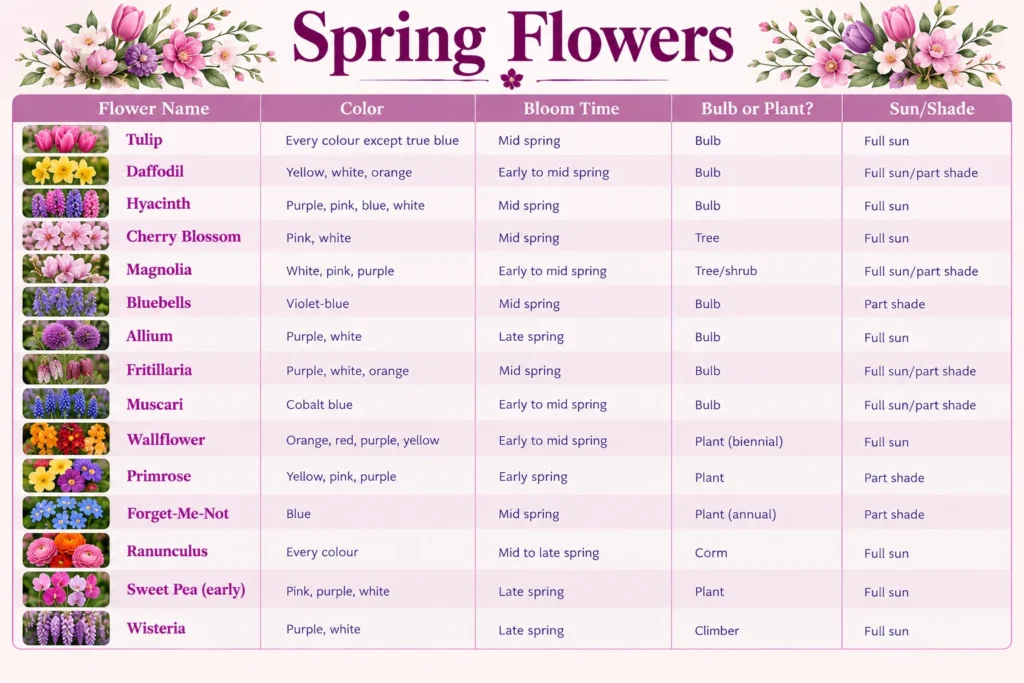
Here is a quick overview of the season’s standout spring flowering plants before we dig into each one in detail.
Top Spring Flowers Detailed Guide
Tulip
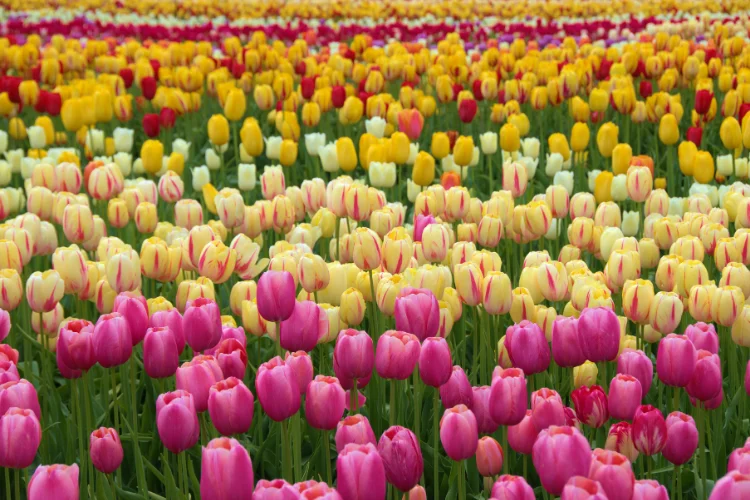
The tulip is the most iconic spring flower there is, and with thousands of varieties available, there is genuinely one for every taste, from sleek single colours to ruffled parrot types.
Planting depth matters more than most people realise. Plant tulip bulbs around 15 to 20 centimetres deep, pointy end up, in a sunny, well drained spot.
Care tips:
- Plant bulbs in October or November once the soil has cooled
- Choose free draining soil, since soggy bulbs rot quickly
- Deadhead after flowering but leave the foliage to die back naturally
- For indoor forcing, chill bulbs for around 12 weeks before bringing them into warmth
Daffodil (Narcissus)
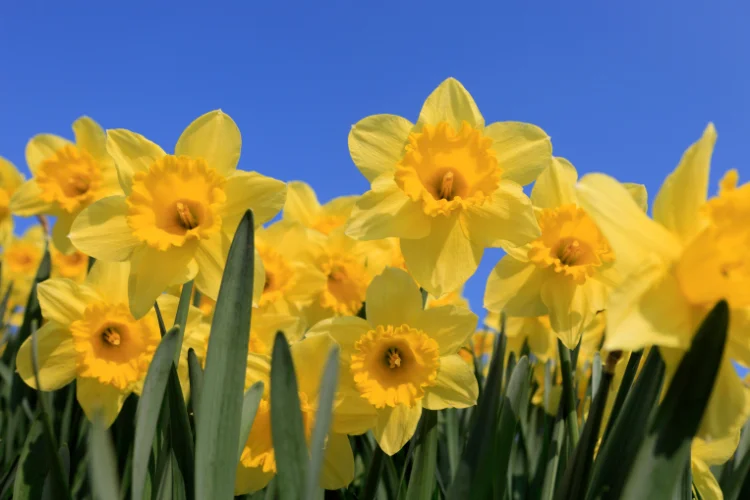
Daffodils are the true herald of spring, often pushing through while frost still lingers on the lawn. They naturalize beautifully, spreading and multiplying year after year with almost no effort from you.
Care tips:
- Plant bulbs in early autumn, roughly three times their own depth
- Choose a sunny or partly shaded spot with decent drainage
- Let the foliage yellow and die back completely before cutting it, since this feeds next year’s bloom
- Keep in mind that daffodils are toxic to pets, so plant with that in mind if you have curious cats or dogs
Hyacinth
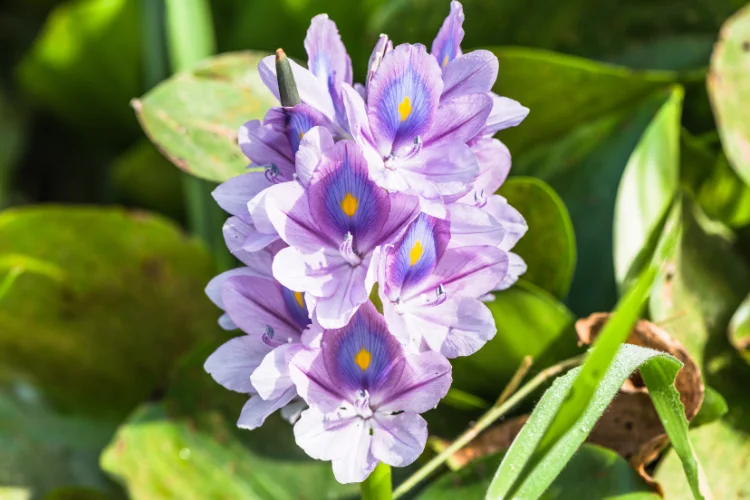
If spring flowers had a signature scent, it would be hyacinth. This is the most fragrant spring flower by a wide margin, and a single pot near a doorway can perfume an entire garden path.
Care tips:
- Plant bulbs 10 to 15 centimetres deep in autumn
- Choose single varieties for a more relaxed look or double varieties for extra drama
- For forcing in a hyacinth glass, keep bulbs cool and dark until roots develop, then move into light
- Stake tall stems if flowers grow heavy, since they can flop in wind
Cherry Blossom (Prunus)
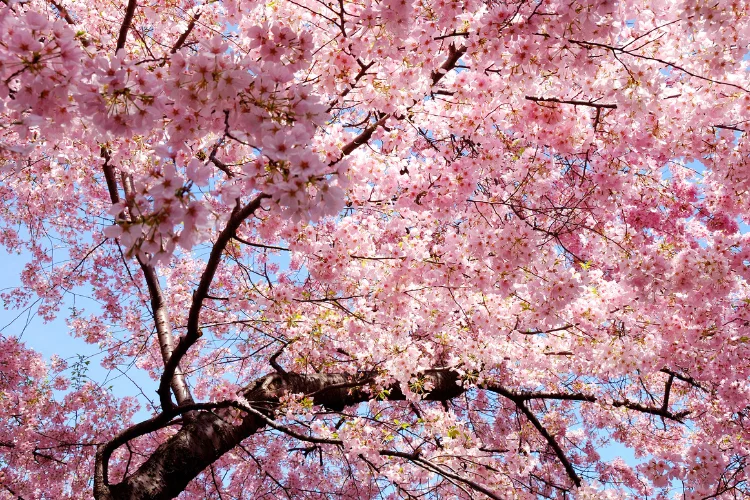
Few sights compare to Japanese sakura in full bloom. Cherry blossom is famous for its fleeting beauty, often lasting only one to two weeks, which somehow makes it even more special.
Care tips:
- Plant in full sun with well drained soil
- Choose from dozens of varieties, from weeping types to upright forms
- Prune only after flowering, and only if necessary
- Cherry blossom carries deep cultural significance in Japan, symbolising the beauty of impermanence, and watching it fall feels genuinely moving
Magnolia
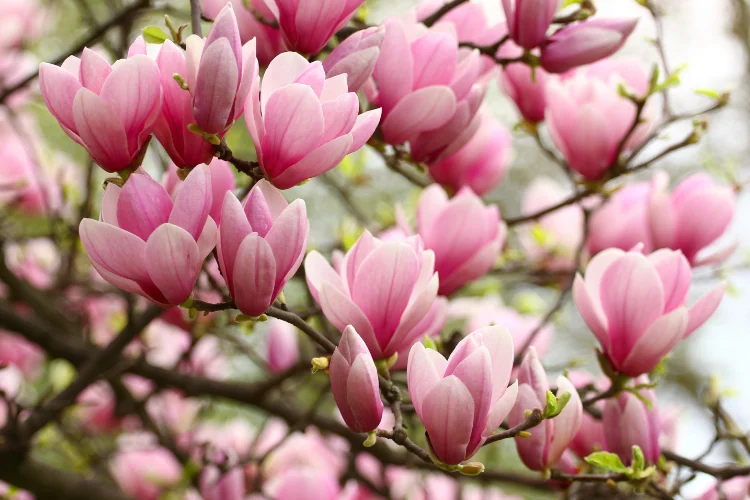
Magnolia produces some of the most spectacular spring flowering plants around, with enormous goblet shaped blooms that often appear before the leaves do. For a full breakdown of varieties and seasonal care, our dedicated guide on Magnolia Flowers is worth bookmarking.
Care tips:
- Plant in a sheltered spot, since late frosts can damage early blooms
- Choose a variety suited to your space, since some magnolias reach tree size while others stay compact
- Avoid heavy pruning, as magnolias generally dislike it
- Feed in early spring for a stronger flush of blooms
Bluebells
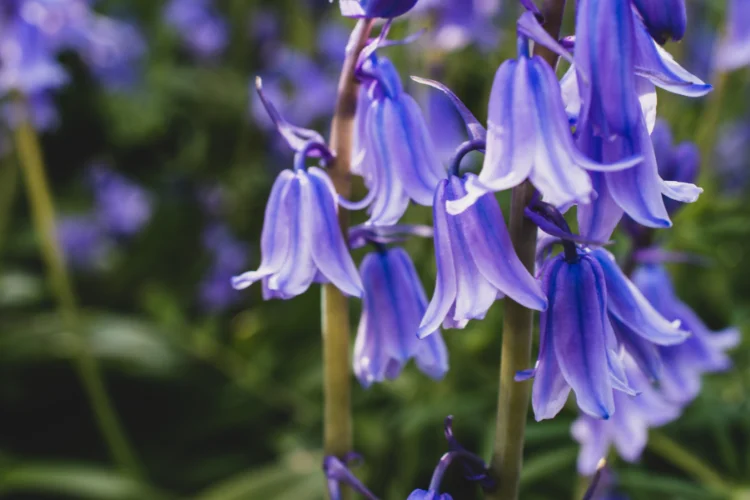
An English woodland carpeted in bluebells is one of the most magical spring wildflowers scenes anywhere. Native bluebells have a graceful, drooping shape and a sweet scent, quite different from the more upright Spanish variety.
Care tips:
- Plant bulbs in autumn, in dappled shade under deciduous trees
- Choose native bluebells over Spanish ones where possible, to support local ecosystems
- Leave undisturbed to naturalize and spread over the years
- Avoid picking wild bluebells, since many native populations are protected
Allium
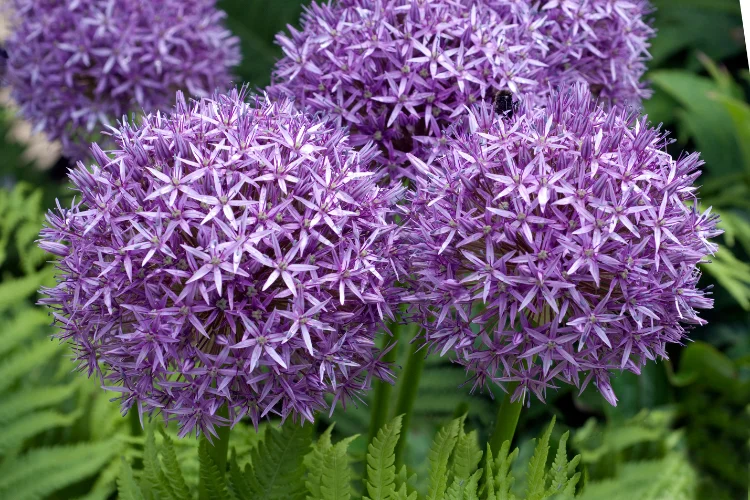
With their architectural purple globes on tall, slender stems, alliums bridge the gap beautifully between spring and summer. They are long lasting and give a border real structure.
Care tips:
- Plant bulbs in autumn, 15 to 20 centimetres deep, in full sun
- Choose varieties by size, since some grow small and delicate while others tower impressively
- Leave the seed heads standing after flowering for extra interest
- Bees adore alliums, making them a genuine magnet for early summer pollinators
Fritillaria
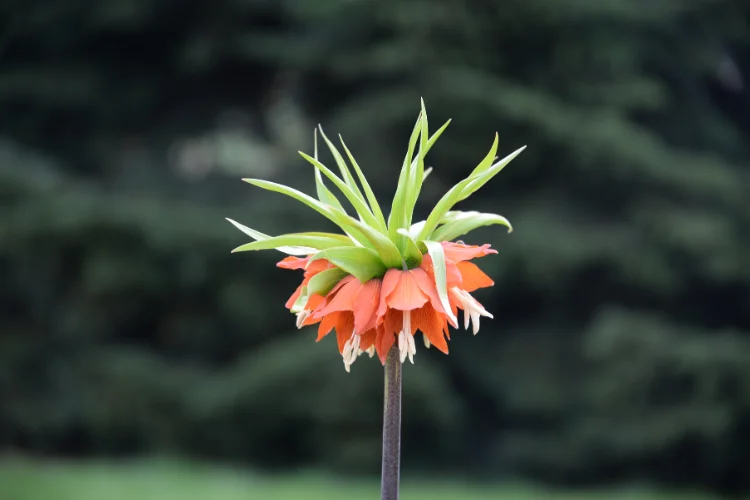
Fritillaries offer something genuinely different among spring flowers, with their nodding, chequered bells in deep purple or soft orange.
Care tips:
- Plant bulbs on their side to prevent water pooling in the hollow top
- Choose a partly shaded, woodland style spot for the best naturalizing
- Avoid disturbing established clumps, since fritillaries dislike being moved
- Pair with bluebells and wood anemones for a wild, romantic look
Muscari (Grape Hyacinth)
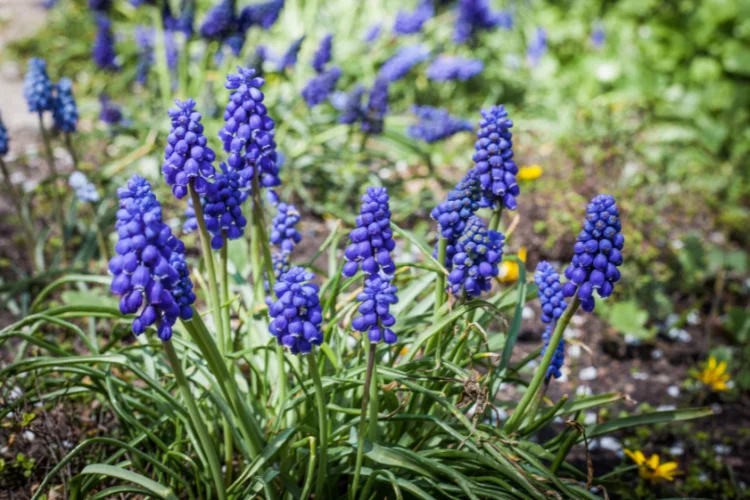
Few spring flowers names roll off the tongue as easily as muscari, better known as grape hyacinth. Their cobalt blue spikes create a stunning carpet effect when planted in large drifts.
Care tips:
- Plant bulbs in autumn, in sun or light shade
- Choose a generous quantity, since muscari looks best in bold sweeps rather than scattered singles
- Allow to naturalize freely, as they multiply readily
- Combine with daffodils for a classic yellow and blue spring pairing
Wallflower (Erysimum)
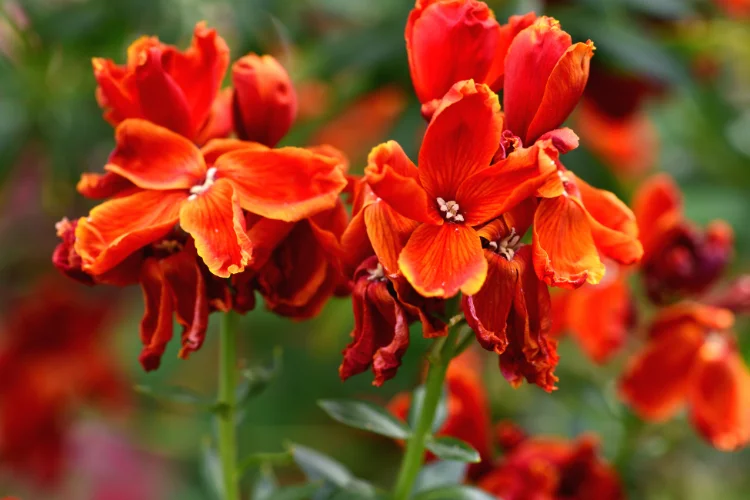
Wallflowers bring old fashioned cottage garden charm and a rich, warm fragrance that carries beautifully on a mild spring evening.
Care tips:
- Sow or plant in late summer for flowers the following spring, since wallflowers are typically grown as biennials
- Choose a sunny spot with decent drainage
- Deadhead regularly to keep the display going
- Pair bright orange or red varieties with blue forget-me-nots for striking contrast
Primrose (Primula)
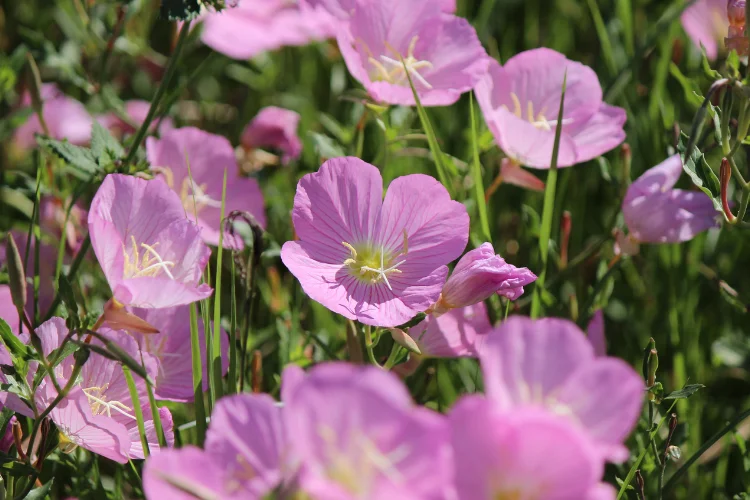
Spotting the first primrose tucked into a hedgerow is one of the quiet joys of early spring. Primroses bring gentle cottage garden charm and come in an enormous range of colours.
Care tips:
- Plant in part shade with moist, humus rich soil
- Choose native yellow primroses for a woodland look or vibrant hybrids for pots and borders
- Deadhead spent flowers to encourage more blooms
- Divide clumps every few years to keep plants vigorous
Forget-Me-Not (Myosotis)
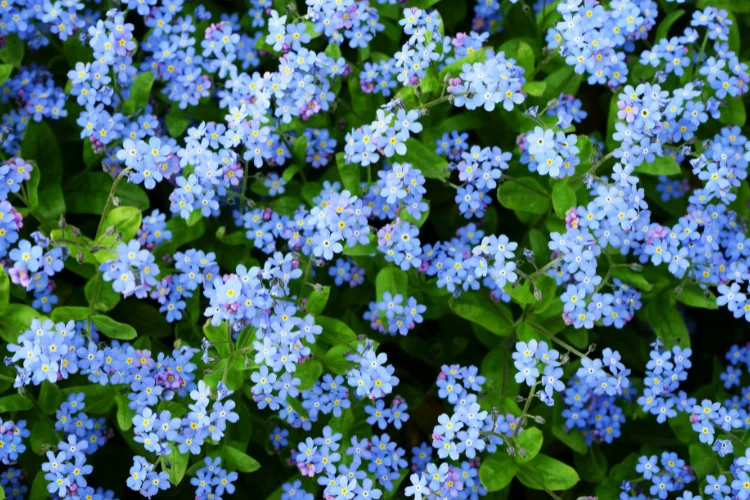
A cloud of tiny blue forget-me-nots is one of spring’s softest, most romantic sights. This self seeding annual returns reliably once established.
Care tips:
- Sow seed in late summer or let existing plants self seed naturally
- Choose a spot in part shade with reliably moist soil
- Allow some seed heads to remain for next year’s display
- Pair beautifully with pink or white tulips for a classic cottage combination
Ranunculus
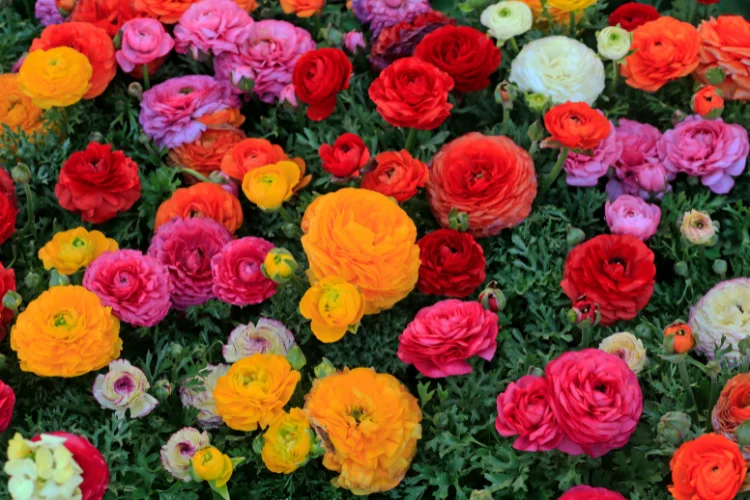
Few flowers rival the ranunculus for sheer layered petal perfection. It is a florist’s spring favourite for good reason, with blooms that look almost too perfect to be real. For everything you need to know about growing this stunning bloom, see our full guide on the Ranunculus Flower.
Care tips:
- Soak corms before planting to encourage stronger growth
- Choose a sunny, sheltered spot with rich, well drained soil
- Plant claws facing downward, about 5 centimetres deep
- Cut regularly for vases, since ranunculus rewards frequent picking with more blooms
Sweet Pea (Early Varieties)
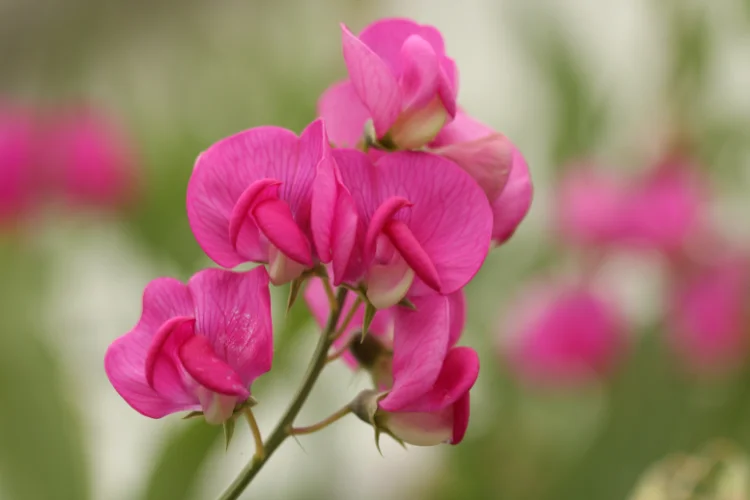
Few climbers deliver fragrance like sweet peas. Early varieties, sown in autumn, give you a head start on this climbing vine and its abundant flowers.
Care tips:
- Sow seed in autumn for the earliest possible spring flowers
- Choose a sunny spot with support for climbing
- Pinch out growing tips early to encourage bushier plants
- Cut flowers often, since picking encourages continuous flowering
Wisteria
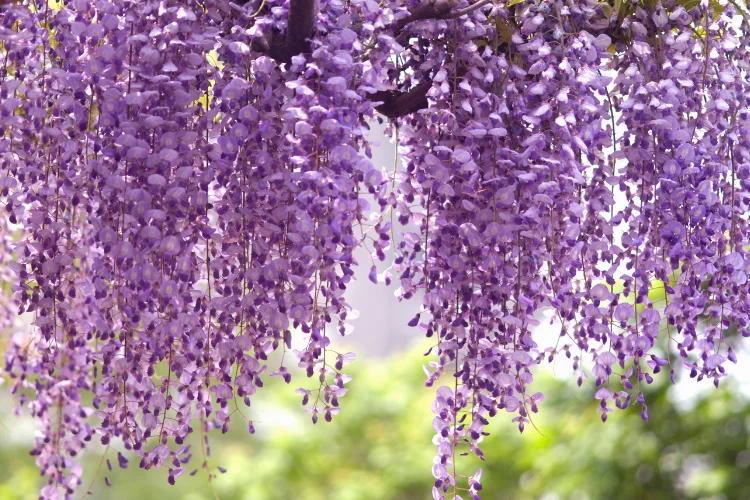
A wisteria in full bloom, cascading in purple glory over a pergola or archway, is one of the most spectacular spring flowering plants a garden can offer.
Care tips:
- Plant in full sun against a strong support structure
- Choose a named variety for reliable flowering, since seed grown wisteria can take years to bloom
- Prune twice yearly, in summer and again in late winter, for the best flower display
- Be patient, since wisteria often takes several years to establish before flowering well
Spring Flowers by Month
Early spring flowers (March)
As the last snowdrops fade, the season properly begins. Look for daffodils, primroses, muscari, and wallflowers starting their show. March is also a lovely time to think about symbolism in the garden, and our piece on March Birth Flowers covers the meaning behind daffodils and jonquils along with spring gift ideas.
Mid spring flowers (April)
This is peak spring flowers season. Tulips, hyacinths, bluebells, magnolia, cherry blossom, and forget-me-nots all overlap for the garden’s most colourful weeks.
Late spring flowers (May)
As the season winds toward summer, allium, wisteria, fritillaria, sweet pea, ranunculus, and lilac take over, offering a gentle bridge into warmer months.
Spring Flowers for Different Situations
Best spring flowers for containers and pots
Tulips, muscari, hyacinths, and ranunculus all perform brilliantly in pots, making them ideal spring flowers for pots on balconies, doorsteps, or small patios.
Best spring flowers for shade
Primroses, bluebells, and fritillaria thrive in dappled shade under trees or along a shaded border.
Best spring flowers for sunny beds
Tulips, allium, wallflowers, and ranunculus all need full sun to give their best performance.
Best spring flowers for wildlife
Muscari, primrose, crocus, and single flowered daffodils provide vital early nectar for pollinators.
Best spring flowers for cutting
Ranunculus, tulips, sweet peas, and daffodils all make stunning cut flowers for the home.
Spring flowers that come back every year (perennials)
Daffodils, muscari, bluebells, and allium reliably return and multiply, making them some of the best spring flowers that come back every year with minimal effort.
Best spring flowers for beginners
Daffodils, muscari, and tulips are famously forgiving, needing little more than a sunny spot and well drained soil.
Best fragrant spring flowers
Hyacinth, wallflower, and sweet pea bring genuine scent to the spring garden, turning a simple walk outside into something memorable.
How to Plan Your Spring Flower Garden Now
When to plant spring bulbs
Autumn is key. Most spring flowering plants, including tulips, daffodils, and hyacinths, need a period of winter cold to trigger proper flowering, so bulbs go in the ground between September and November.
Layering spring bulbs for succession planting
A technique often called bulb lasagne involves planting bulbs in layers within one container, largest and latest flowering at the bottom, smallest and earliest at the top. This gives weeks of continuous colour from a single pot.
Spring flower colour combinations
Blue muscari with yellow daffodils, pink tulips with blue forget-me-nots, or purple allium against white wallflowers all create effortlessly beautiful pairings.
Spring container planting guide
Choose pots with good drainage, use fresh compost, and layer bulbs generously for a full, abundant look rather than a sparse one.
Forcing spring bulbs indoors, step by step
- Choose healthy, firm bulbs such as hyacinth, daffodil, or tulip
- Chill bulbs in a cool, dark place for 10 to 14 weeks
- Pot up once shoots appear, using free draining compost
- Move into gentle light as growth develops
- Bring into warmth once buds show colour for indoor spring flowers weeks ahead of the garden
Common spring planting mistakes
Planting bulbs too shallow, skipping drainage, and waiting too long into winter to plant are the mistakes that trip up most beginners.
Spring Flowers and Wildlife
First pollinators of the year
Bumblebee queens emerging from hibernation rely almost entirely on early spring flowers for their first meals of the season.
Best spring flowers for bees
Crocus, muscari, primrose, and single flowered daffodils are particularly rich in accessible nectar and pollen.
Best spring flowers for butterflies
Wallflowers, primroses, and forget-me-nots draw in early butterflies as temperatures rise.
Supporting overwintered insects
Leaving some leaf litter and seed heads through late winter gives overwintering insects shelter until spring flowers provide their first food source.
Spring wildlife garden design
Grouping nectar rich spring flowers together, rather than scattering them, makes it far easier for pollinators to find and use them efficiently.
Frequently Ask Questions
Tulips, daffodils, hyacinths, bluebells, magnolia, cherry blossom, muscari, and allium are among the most popular spring flowers, with blooming spread across March, April, and May.
Tulips, muscari, hyacinths, and ranunculus are among the best spring flowers for pots, offering strong colour and reliable performance in containers.
Most spring bulbs go into the ground during autumn, ideally September to November, so they experience the winter chill they need before flowering.
Daffodils, muscari, bluebells, and allium are reliable perennials that naturalize and return stronger each year.
Hyacinth, wallflower, and sweet pea are widely considered the most fragrant spring flowers, each bringing a distinct scent to the garden.
Crocus, muscari, primrose, wallflower, and single flowered daffodils are especially good at supporting early pollinators.
Final Thoughts on Growing Spring Flowers
Spring flowers are proof that patience pays off. Every bulb planted in the cold, muddy days of autumn becomes a promise, and watching that promise unfold across March, April, and May never stops feeling like a small miracle. Whether you are drawn to the boldness of tulips, the fragrance of hyacinths, or the quiet charm of a woodland carpeted in bluebells, there has never been a better time to start planning.
Spring flowers reward you generously for a little early effort, and few gardening experiences match the joy of watching your own garden wake up. Start planning your own spring flowers garden today, because the soil is waiting, and so is spring.