True blue is nature’s most elusive color. Walk through any garden, any meadow, any florist’s cooler, and you will notice something strange. Reds are everywhere. Pinks spill from every hedge. Yellows practically shout at you from the roadside. But blue? Blue hides.
Only a small fraction of the world’s flowering plants, often cited at around ten percent, produce blooms that lean toward blue at all, and true, unmistakable blue is rarer still. Most of what we call “blue” in the plant world is actually a clever trick of light, chemistry, and our own eager eyes.
The first time I saw a field of cornflowers stretching toward the horizon, I was speechless. It was not just the color that stopped me. It was the realization that I was looking at something plants had worked incredibly hard to achieve, bending pigments and light in ways no other color demands.
That rarity is exactly why blue flowers have captivated gardeners, poets, and scientists for centuries. Blue flowers have a calming magic that no other color can match, and once you understand how rare and special they truly are, you will never look at a delphinium spike or a forget-me-not the same way again.
At Plant Style Home we explore every flower color and variety to help you create the most beautiful garden possible, and this guide walks through everything worth knowing about blue flowers: why they are so uncommon, the best blue flowering plants for your own garden, how to read their symbolism, and where to find the rarest blue blooms on earth.
Why Blue Flowers Are So Rare
Here is the surprising truth. There is no true blue pigment in plants. Not one. Every blue flower you have ever admired is the result of plants working around this limitation, not solving it directly.
The Science of Blue Pigment in Plants
Flower color mostly comes from a group of pigments called anthocyanins, and on their own, these pigments actually lean red or purple. To shift toward blue, a flower needs several things working together at once.
The petal’s cellular pH has to be less acidic. Certain metal ions, particularly aluminum, need to bind with the pigment molecules. And the plant often needs to layer multiple pigment types, plus tiny structural tricks in the cell walls, just to bend light toward the blue end of the spectrum.
It is a genuinely delicate balancing act, and very few plant species have evolved the exact combination required to pull it off convincingly.
How Plants “Fake” Blue Color
Some flowers cheat the system beautifully. The petals of certain species contain flat, layered cell structures that scatter light in a way similar to how the sky appears blue, even though the underlying pigment is not blue at all.
Cornflowers are a wonderful example. Their pigment is technically the same reddish anthocyanin found in many red flowers, but a co-pigment and specific pH conditions inside the petal cells shift the visible color dramatically toward a rich, saturated blue.
True Blue vs Purple-Blue: The Ongoing Debate
Ask ten gardeners to define a “true blue flower” and you will likely get ten slightly different answers. Many beloved “blue” flowers, including plenty on this list, actually sit somewhere between blue and violet on the color wheel.
Delphiniums and cornflowers are usually considered the closest things to a genuine, pure blue in the garden. Others, like agapanthus or bearded iris, drift toward blue-purple depending on the variety, the light, and even the soil they grow in.
This blurry boundary is not a flaw. It is part of what makes the hunt for blue flowers feel like a genuine treasure hunt rather than a simple shopping list.
Why This Makes Blue Flowers Extra Precious
Once you know how much biochemical effort goes into a single blue petal, the color takes on new weight. A patch of true blue delphiniums is not just pretty. It is a small miracle of plant chemistry, achieved by only a tiny slice of the flowering world.
That rarity is exactly why so many gardeners chase blue flowering plants with something close to devotion.
Best Blue Flowers: Complete List
Before diving into details, here is a quick overview of the most reliable and beloved blue flowers, organized so you can scan for what fits your space.
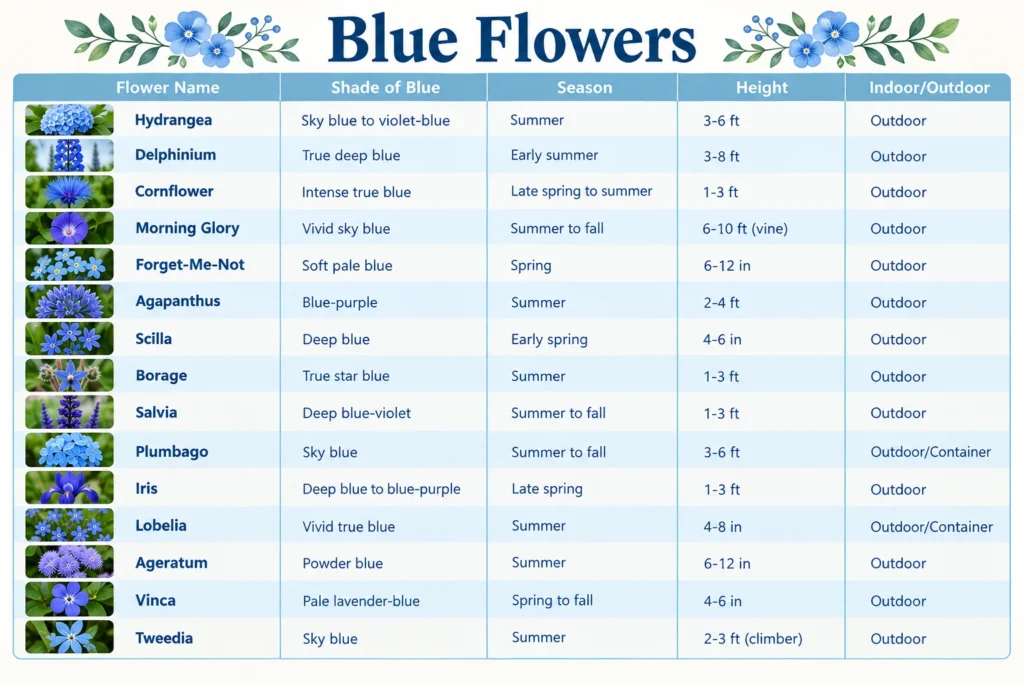
Top Blue Flowers: A Detailed Guide
Now let’s slow down and spend real time with each of these blue flowering plants, because every one has its own personality, quirks, and small rewards.
Hydrangea
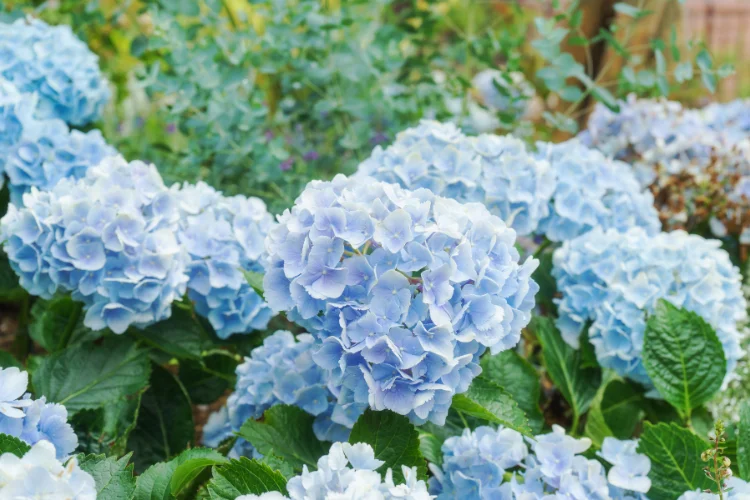
Few plants demonstrate the strangeness of blue pigment quite like the hydrangea. The same variety can bloom pink in one garden and blue in another, purely because of the soil.
Acidic soil makes aluminum available to the plant’s roots, and that aluminum is what shifts the mophead or lacecap blooms toward a dreamy, saturated blue.
Care tips:
- Keep soil pH between 5.0 and 5.5 for the bluest blooms
- Water deeply and consistently; hydrangeas wilt fast in dry heat
- Add aluminum sulfate in early spring if you want to encourage blue tones
- Give afternoon shade in hot climates to protect the flower color
The wow factor here is almost theatrical. A mature blue hydrangea in full bloom looks like a cloud that decided to settle into your border.
Delphinium
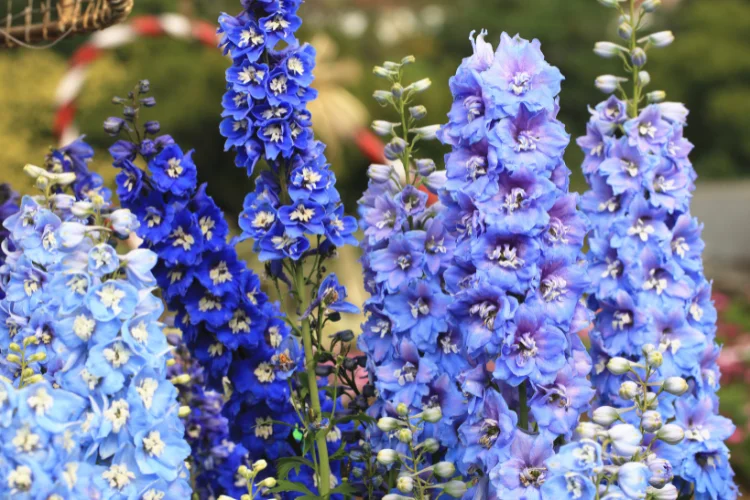
If cornflowers are the wildflower champion of blue, delphiniums are the cottage garden champion. Their tall flower spikes, sometimes reaching eight feet, produce some of the most convincing true blue blooms in the entire plant kingdom.
Care tips:
- Stake tall varieties early, before wind and rain do damage
- Plant in rich, well-drained soil with full sun
- Deadhead after the first flush for a possible second bloom
- Protect young shoots from slugs, which find them irresistible
Delphiniums are not the easiest flower to grow, but the payoff is a wall of blue that no photograph quite captures.
Cornflower (Centaurea)
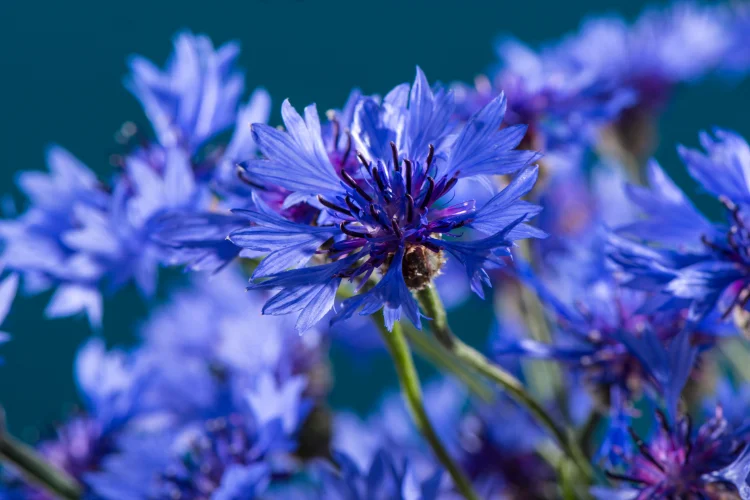
This is the flower that started my own fascination with blue. Cornflowers grow easily from seed, spread generously through meadows and borders, and produce a blue so intense it almost looks unnatural.
Care tips:
- Direct sow in early spring; cornflowers dislike being transplanted
- Choose a sunny spot with average, well-drained soil
- Deadhead regularly to extend the blooming season
- Leave a few seed heads for birds in late summer
Beyond their beauty, cornflowers are genuinely valuable for pollinators, drawing bees and butterflies throughout the season.
Morning Glory
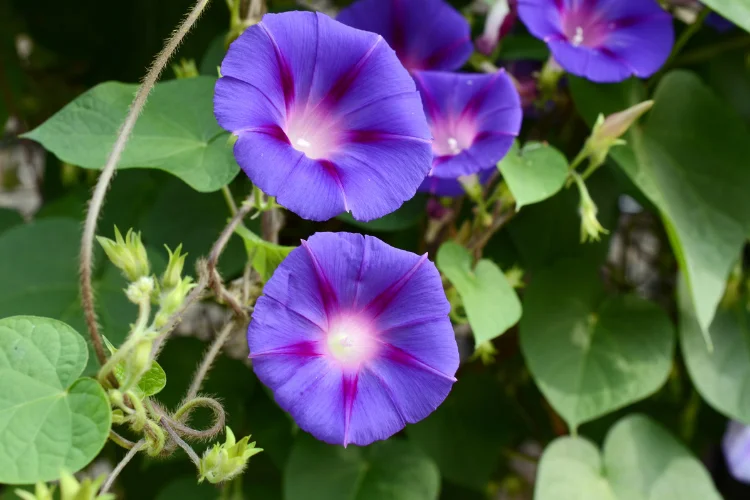
The Heavenly Blue variety of morning glory earns its name. Each flower opens fresh every morning in a saturated sky blue, then fades by afternoon, only to be replaced by new blooms the next day.
Care tips:
- Provide a trellis or fence; this vine climbs quickly and eagerly
- Soak seeds overnight before planting to speed germination
- Plant in full sun for the most vivid color
- Water regularly but avoid overly rich soil, which favors leaves over flowers
Watching a morning glory vine unfurl its blue trumpets at dawn is one of the small daily joys of a summer garden. If you love that magic of a flower tied to a moment of the day, the Night Blooming Jasmine offers a twilight version of the same wonder.
Forget-Me-Not (Myosotis)
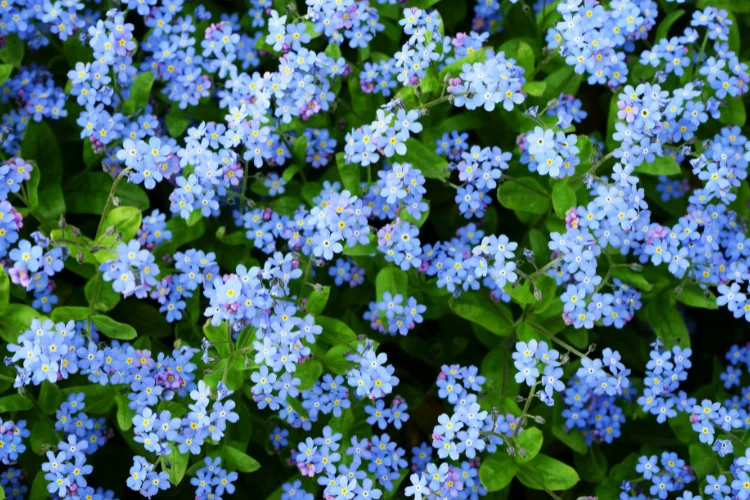
Forget-me-nots do not shout for attention. Instead, they arrive in soft clouds of tiny pale blue flowers, often self-seeding into woodland edges and shady borders year after year.
Care tips:
- Plant in partial shade with moist, humus-rich soil
- Allow self-seeding for a naturalized drift over time
- Cut back after flowering to keep growth tidy
- Divide clumps every few years to maintain vigor
Their romantic meaning, tied closely to remembrance and enduring love, has made them a garden favorite for generations.
Agapanthus (African Lily)
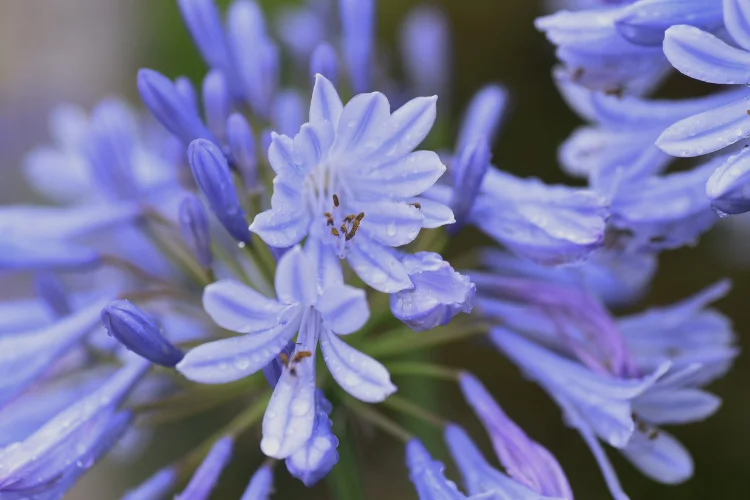
Agapanthus brings architecture to the blue flower world. Its globe shaped flower heads sit atop tall, elegant stems, and while many varieties drift toward blue-purple, the effect is undeniably dramatic.
Care tips:
- Plant in full sun with well-drained soil
- Allow roots to become slightly crowded; agapanthus blooms best when a bit pot-bound
- Water regularly during the growing season, then reduce in winter
- Protect from hard frost in colder climates
A mature clump of agapanthus in bloom can anchor an entire border with quiet confidence.
Scilla (Siberian Squill)
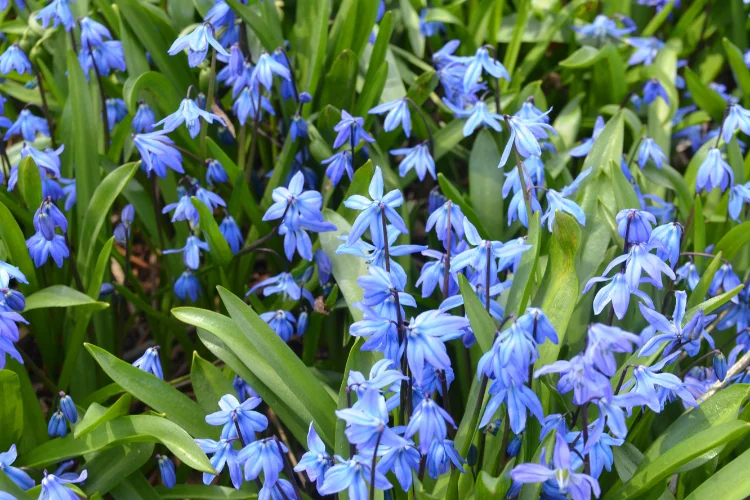
Scilla is one of the earliest signs that spring has truly arrived. This small bulb produces a carpet of deep blue flowers that can naturalize under trees and across lawns with almost no effort.
Care tips:
- Plant bulbs in fall, about three inches deep
- Choose a woodland-style setting with light shade
- Allow foliage to die back naturally after blooming
- Leave undisturbed to encourage spreading over the years
Few sights rival a lawn or woodland floor suddenly transformed into a sea of early blue.
Borage
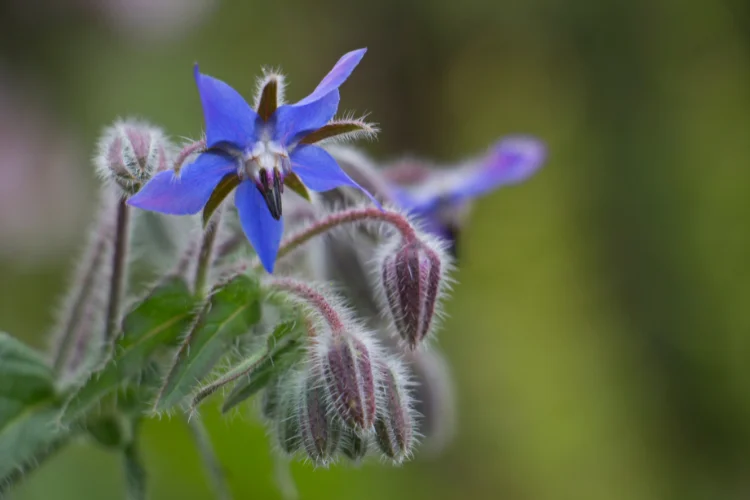
Borage might be the most surprising entry on this list. Its star shaped blue flowers are not just beautiful, they are edible, often used to garnish drinks and salads with a mild cucumber-like flavor.
Care tips:
- Direct sow in full sun after the last frost
- Water moderately; borage tolerates average soil well
- Harvest flowers in the morning for the best flavor and freshness
- Allow some plants to self-seed for next year’s crop
Bees adore borage, and a patch of it humming with pollinators is one of the great pleasures of an herb garden.
Salvia (Blue Sage)
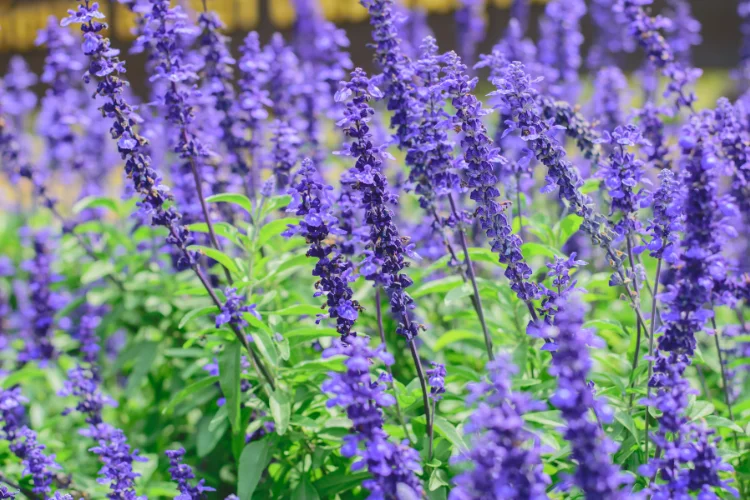
Salvia is the reliable workhorse of blue flowering plants. It blooms for months, tolerates drought once established, and comes in an enormous range of blue and blue-violet varieties.
Care tips:
- Plant in full sun with well-drained soil
- Water deeply but infrequently once roots are established
- Deadhead spent spikes to encourage continuous blooming
- Cut back in early spring to promote fresh, bushy growth
Butterflies and hummingbirds treat salvia like a favorite restaurant, returning to it again and again through the season.
Plumbago
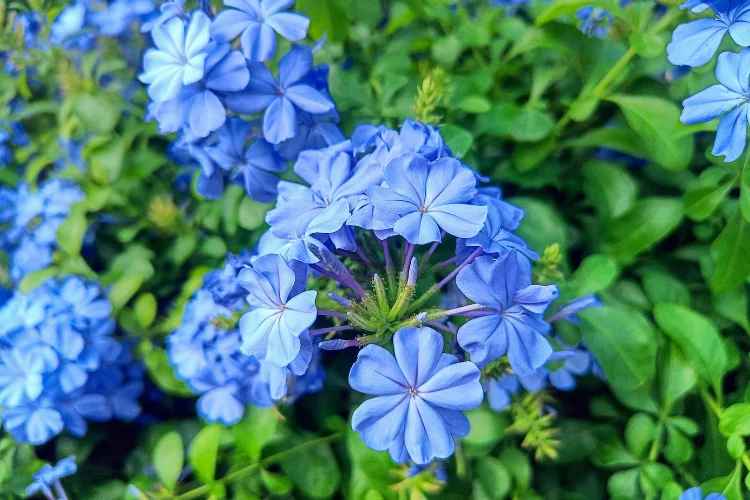
Plumbago produces clusters of sky blue flowers over an unusually long season, sometimes from late spring all the way through the first frost. Depending on how it is trained, it can act as either a climbing vine or a rounded shrub.
Care tips:
- Plant in full sun to light shade
- Water regularly during hot weather
- Prune in late winter to control shape and encourage new blooms
- Protect roots with mulch in cooler climates
Its long blooming season makes plumbago one of the best value plants for consistent blue color.
Iris
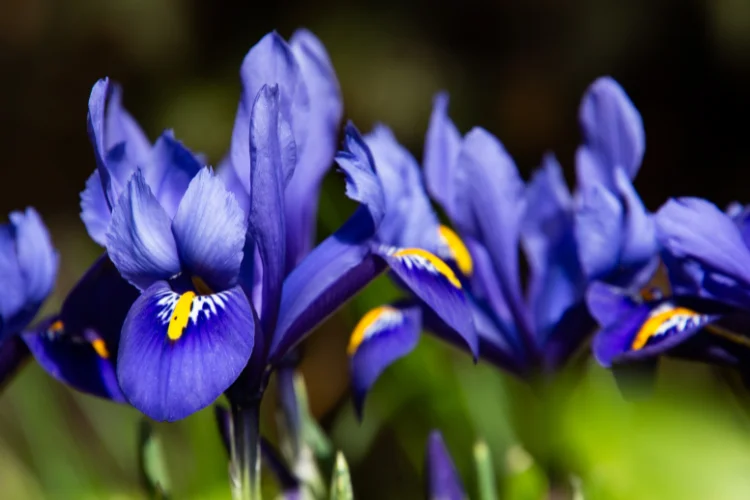
The bearded iris offers some of the deepest, most velvety blues found in any garden flower, while Japanese iris varieties bring a more delicate, watercolor-like blue to pond edges and moist borders.
Care tips:
- Plant rhizomes shallowly, with the top just visible above soil
- Provide full sun for the strongest blooms
- Divide clumps every three to four years to maintain vigor
- Avoid overwatering bearded varieties, which prefer good drainage
An iris in full bloom has a dramatic, almost sculptural quality that few other blue flowers can match.
Lobelia
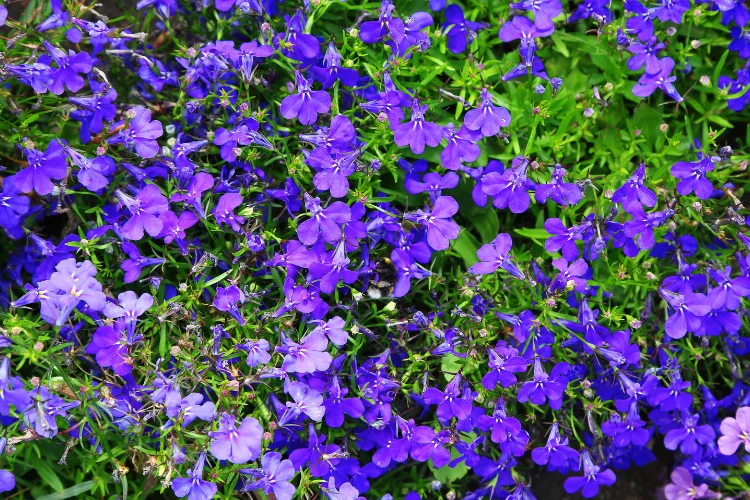
Lobelia comes in both trailing and upright forms, and both deliver an intensely saturated true blue that container gardeners rely on constantly.
Care tips:
- Keep soil consistently moist; lobelia dislikes drying out
- Provide partial shade in hot climates
- Trim back mid-season if plants become leggy
- Feed lightly through the growing season for continuous blooms
Few flowers pack this much vivid blue into such a small package.
Ageratum
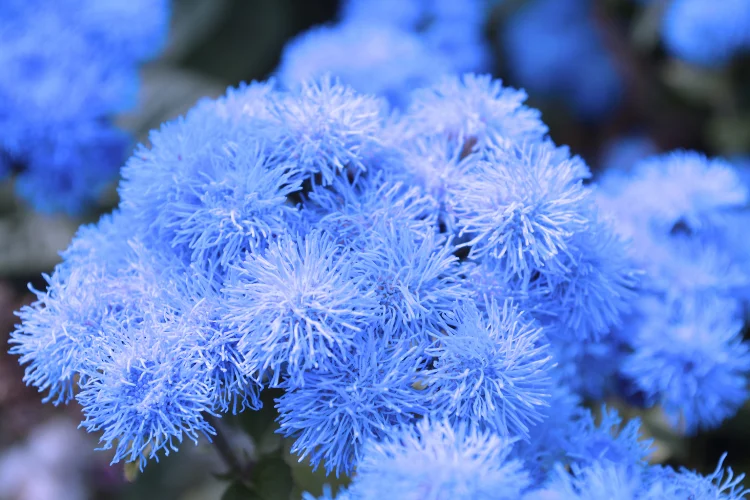
Ageratum produces fluffy, powder blue flower clusters that make an excellent edging plant along paths and borders.
Care tips:
- Plant in full sun to partial shade
- Water regularly, especially during dry spells
- Deadhead to keep the display tidy and encourage rebloom
- Space plants properly to allow good air circulation
Its long blooming habit means ageratum often carries color from early summer well into fall.
Vinca (Periwinkle)
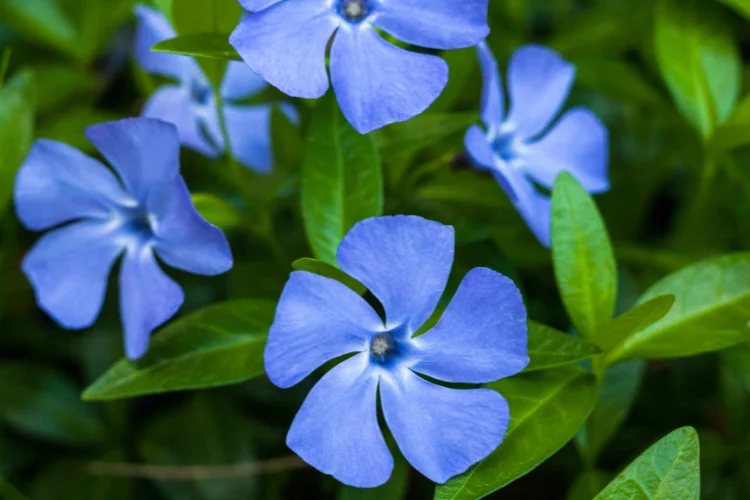
Vinca is a ground cover with glossy evergreen leaves and pale, lavender-blue flowers that appear reliably from spring through fall, even in shaded, difficult spots.
Care tips:
- Plant in partial to full shade
- Water moderately; established vinca tolerates some drought
- Trim occasionally to prevent it from spreading beyond its bounds
- Use as a low-maintenance solution for tricky shady areas
For gardeners battling shade, vinca offers one of the easiest routes to consistent blue color.
Tweedia
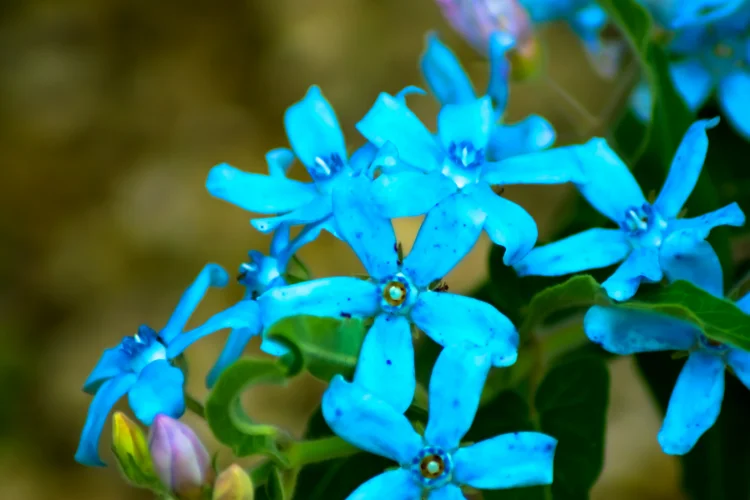
Tweedia is a genuine rarity, a climbing plant that produces small, star shaped flowers in a soft, true sky blue that seems to glow in soft light.
Care tips:
- Plant in full sun with well-drained soil
- Provide light support for its gentle climbing habit
- Water regularly but avoid soggy soil
- Bring indoors or treat as an annual in colder climates
These Tweedia rewards patient gardeners with a color that feels almost impossible in nature.
Blue Flowers by Shade
Not all blue is created equal. Understanding the different shades helps you design a garden with real depth and intention.
True deep blue flowers
- Delphinium
- Cornflower
- Borage
Light sky blue flowers
- Forget-me-not
- Tweedia
- Plumbago
Blue-purple flowers
- Agapanthus
- Salvia
- Iris
Pale lavender-blue flowers
- Hydrangea
- Vinca
- Scilla
Mixing shades from each group, rather than relying on a single tone, tends to create the most natural and layered effect in a border.
Blue Flowers for Different Garden Situations
Every garden has its own personality, and thankfully there is a blue flower suited to almost every setting.
Best blue flowers for containers: Lobelia, salvia, and ageratum all thrive in pots and window boxes, offering long seasons of color in compact spaces.
Top choices for shade: Vinca and forget-me-not tolerate low light beautifully, making them ideal for woodland gardens and shaded borders.
Best blue flowers for sunny borders: Delphinium, salvia, and agapanthus reward full sun with their strongest, most vivid blooms.
Ideal picks for cutting: Delphinium, cornflower, and iris all hold up well in a vase and bring that rare blue indoors.
Best blue flowers for wildlife: Borage, salvia, and cornflower are pollinator magnets, drawing bees and butterflies throughout the season.
Easiest options for beginners: Cornflower and lobelia are forgiving, fast growing, and nearly foolproof for new gardeners.
Best blue flowers indoors: Growing true blue flowers indoors is genuinely challenging, since most need strong direct sun. Hydrangea can be kept as a potted plant briefly, and tweedia can be grown indoors in a bright, sunny window before moving it outside for the warmer months.
Blue Flower Meaning and Symbolism
Blue flowers carry a weight of meaning that goes far beyond decoration.
General Blue Flower Meaning
Across cultures and centuries, blue flowers have consistently symbolized tranquility, trust, loyalty, wisdom, and serenity. There is a quiet mystery to blue as well, a sense of something just slightly out of reach.
Historical Blue Flower Symbolism
During the Romantic era, the image of the “Blue Flower” became a powerful literary symbol of longing, unattainable desire, and spiritual searching, most famously through Novalis and his unfinished novel Heinrich von Ofterdingen.
In Victorian flower language, different blue blooms carried specific messages. Forget-me-nots represented true and lasting love, while other blue flowers signaled devotion, calm, or quiet admiration between friends.
Blue Flowers as Gifts: When and What They Mean
Giving blue flowers works beautifully for occasions centered on trust, comfort, and steadiness rather than passion or excitement. They suit gestures of sympathy, congratulations for calm milestones, or simply a message of reassurance to someone going through a difficult time. Blue aster is also a September birth flower, so if you are shopping for someone born that month, our guide to September Birth Flowers covers aster meaning and gift ideas in more depth.
Blue Flowers in Different Cultures
In many cultures, blue is associated with the divine, the infinite, or the sky and sea, and blue flowers often appear in spiritual and ceremonial contexts as symbols of protection or higher wisdom.
How to Get More Blue Flowers in Your Garden
Designing with blue takes a little thought, since this color behaves differently than warm tones like red or orange.
Color Theory: Blue With Other Colors for Maximum Impact
Blue naturally recedes in a garden bed, making spaces feel deeper and larger. Pairing it thoughtfully with contrasting or complementary tones brings out its full richness.
Blue and White Combination Tips
Blue and white together create a classic, calming palette. Forget-me-nots paired with white tulips, or blue salvia alongside white cosmos, produce a fresh, serene look that never feels overdone.
Blue and Yellow Contrast Ideas
Blue and yellow sit opposite each other on the color wheel, and the contrast is genuinely striking. Delphiniums against golden yellow achillea, or cornflowers mixed with yellow rudbeckia, create energy without clashing.
Blue Border Design Inspiration
Layer heights for the best visual effect. Place tall delphiniums or agapanthus toward the back, mid-height salvia and iris in the middle, and low-growing lobelia or ageratum along the front edge.
Soil pH Tips for Bluer Hydrangeas
To push hydrangea blooms toward blue, keep soil pH around 5.0 to 5.5 and ensure aluminum is available in the soil. Aluminum sulfate, applied in early spring, is the most common and reliable method.
Rare and Unusual Blue Flowers
Some blue flowers exist on the edge of possibility, requiring patience, the right climate, or simply good luck to grow.
Himalayan Blue Poppy (Meconopsis)
This is often considered the holy grail of blue flowers. Its papery, luminous petals produce one of the purest blues in the plant world, but it demands cool summers, consistent moisture, and acidic soil that few gardens can naturally provide.
Blue Lotus (Nymphaea caerulea)
Native to the Nile and parts of East Africa, the blue lotus has been treasured since ancient Egyptian times for both its beauty and its cultural symbolism. Its pale blue petals open with the morning sun and close again by afternoon.
Blue Daisybush (Felicia)
Felicia produces cheerful, daisy-shaped flowers in a clear, soft blue, offering a more accessible taste of true blue for gardeners who want something a little unusual without extreme growing demands.
Why These Are Harder to Find
Many rare blue flowers require very specific climate conditions, particular soil chemistry, or slow propagation methods, which limits their availability at typical garden centers.
Tips for Sourcing Rare Blue Flowers
Specialty nurseries, botanical garden plant sales, and seed exchanges focused on unusual perennials are often the best places to track down these harder-to-find blue flowering plants.
Frequently Asked Questions
Delphinium and cornflower are generally considered among the closest to a genuine, pure blue, though most other “blue” flowers lean slightly toward purple or violet.
Keep soil acidic, around pH 5.0 to 5.5, and ensure aluminum is available in the soil, often with an aluminum sulfate treatment applied in early spring.
The Himalayan Blue Poppy is widely considered the rarest and most difficult true blue flower to grow successfully outside its native cool, moist climate.
Blue flowers generally symbolize tranquility, trust, loyalty, wisdom, and a touch of mystery, with specific meanings varying by flower and culture.
Some, like cornflower and lobelia, are quite easy and forgiving, while others, like delphinium and Himalayan blue poppy, require more attention and specific conditions.
Borage, salvia, and cornflower are especially popular with bees and other pollinators throughout the growing season.
A Final Word on Blue
There is something quietly humbling about growing a color that nature almost refuses to give us. Every blue petal in your garden represents a small triumph of chemistry, light, and patience.
Once you understand just how rare true blue really is, even a single delphinium spike or a scattering of forget-me-nots starts to feel like a gift rather than an ordinary bloom.
Blue is only one part of a much larger story, and if you are drawn to bold, unexpected choices, our complete guide on Black Flowers offers a completely different kind of drama for your garden.
May your garden hold a little more blue this year, and may it bring you the same quiet wonder it has always brought me.