September babies are born as the world turns golden. The last warm afternoons of summer stretch a little longer, the light softens to amber, and somewhere between the final harvest and the first cool morning, a new season quietly begins. It feels fitting that the September birth flowers capture that exact moment: one bloom still clinging to summer’s warmth, the other already reaching toward autumn’s quieter beauty.
If you were born this month, you share your birthday with a season caught in the middle of becoming something new. That in-between energy shows up in your flowers too. The Aster carries the star-bright optimism of late summer, while the Morning Glory whispers of new beginnings with every sunrise. Together, they tell the story of September better than any single bloom ever could.
There is something magical about autumn’s first breath, and it lives inside these two flowers. Whether you’re a September baby yourself, shopping for one, or simply curious about the blooms tied to this transitional month, this guide covers everything worth knowing.
What Are the September Birth Flowers?
September actually claims two official birth flowers, and once you understand why, it makes perfect sense.
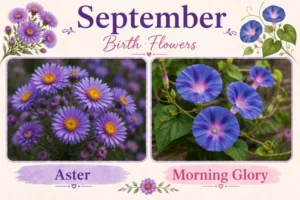
The Aster is September’s primary birth flower, a daisy-shaped bloom with a starburst of narrow petals surrounding a golden center. It flowers in late summer and holds strong well into fall, making it the perfect emblem for a month that refuses to belong entirely to one season.
The Morning Glory is September’s secondary birth flower, a climbing vine with trumpet-shaped blossoms that open fresh each dawn and fade by afternoon. It represents the fleeting, precious nature of beauty, a gentle reminder that even brief moments can hold real meaning.
Most birth months are assigned a single flower, but a handful of months, September included, come with two. This tends to happen when a month spans a noticeable seasonal shift, and few months shift as dramatically as September does. The Aster leans into summer’s final bloom, while the Morning Glory leans toward autumn’s quiet renewal.
The tradition of birth flowers stretches back centuries, with roots in Roman times and a major revival during the Victorian era, when flowers became a coded language for emotions people couldn’t always say aloud. Each month’s flower was chosen for qualities that mirrored the character of that time of year, and September’s pairing has always stood out as one of the most poetic. Just joining us? Start with our guide on June Birth Flowers for Rose and Honeysuckle meanings and perfect summer birthday gift ideas.
Aster, September’s Primary Birth Flower
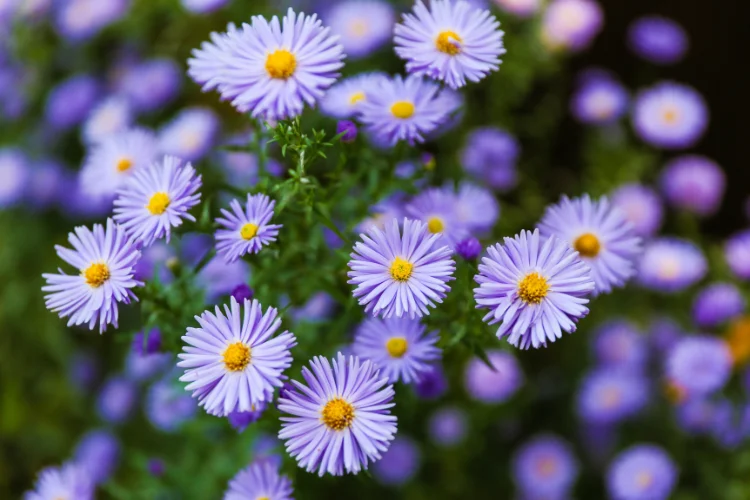
Few flowers wear their symbolism as visibly as the Aster. Its very name comes from the Greek word for “star,” and one glance at its shape explains why.
Aster Appearance & Varieties
The Aster’s daisy-like, star-shaped blooms open in shades of purple, blue, pink, and white, each petal fanning out around a bright golden-yellow center. It typically blooms from late summer into the heart of autumn, often lasting until the first frost.
Two varieties stand out among gardeners and florists alike:
- New England Aster, tall and hardy, with rich purple or pink blooms and a wild, cottage-garden charm
- China Aster, more compact and often grown as an annual, prized for its full, ruffled petals and long vase life
Both varieties share that unmistakable star shape, but each brings its own personality to a September birthday bouquet. Asters bring stunning autumn color, and if you’d like to see more blooms in the same family, our guide on Flowers That Start With A covers plenty of beautiful A flower varieties worth knowing.
Aster Meaning & Symbolism
As a birth flower for September, the Aster carries a beautiful cluster of meanings: love, wisdom, faith, and valor. In Victorian flower language, giving someone an Aster was a quiet way of saying “I trust you” or “you inspire me.”
The star connection runs deep here. Aster flowers were long believed to hold a kind of celestial magic, a bloom that seemed to have fallen from the night sky. That mythology adds a layer of patience and elegance to its meaning, qualities that feel especially fitting for anyone born as summer eases into fall.
Aster History & Origins
Greek mythology offers one of the loveliest origin stories in the flower world. Legend says that Astraea, the goddess of innocence and purity, wept when she looked down and saw no stars left on earth. Where her tears touched the ground, Aster flowers bloomed, each one a small echo of the night sky she missed.
Beyond myth, Asters have a long practical history too. Ancient healers used the plant to treat everything from insomnia to skin irritation, and Native American communities incorporated Aster root into remedies for headaches and fevers. It’s a flower that has always done double duty, beautiful to look at and useful to have on hand.
How to Grow Asters
Asters reward gardeners who give them a little sun and room to spread. Here’s what they need to thrive:
- Full sun for at least six hours a day to produce the fullest blooms
- Well-drained soil enriched with compost for steady, healthy growth
- Division every 2 to 3 years to keep clumps vigorous and prevent overcrowding
- Fall blooming timing, so plant in spring for flowers by late summer
- Container growing works well too, just choose a pot with good drainage and consistent moisture
Asters are forgiving plants, which makes them a wonderful choice even for beginner gardeners looking to add late-season color.
Aster as September Gift
An Aster bouquet feels like autumn captured in a vase, and there are countless ways to gift one.
- A mixed autumn bouquet pairing purple and pink Asters with sunflowers or dahlias
- A single-variety arrangement of New England Asters for a bold, rustic statement
- A potted Aster plant that keeps blooming for weeks after the birthday has passed
- Asters paired with chrysanthemums for a fuller, textured autumn display
Because Asters symbolize love and wisdom, gifting them tells someone you see their depth, not just their birthday.
Morning Glory, September’s Secondary Birth Flower
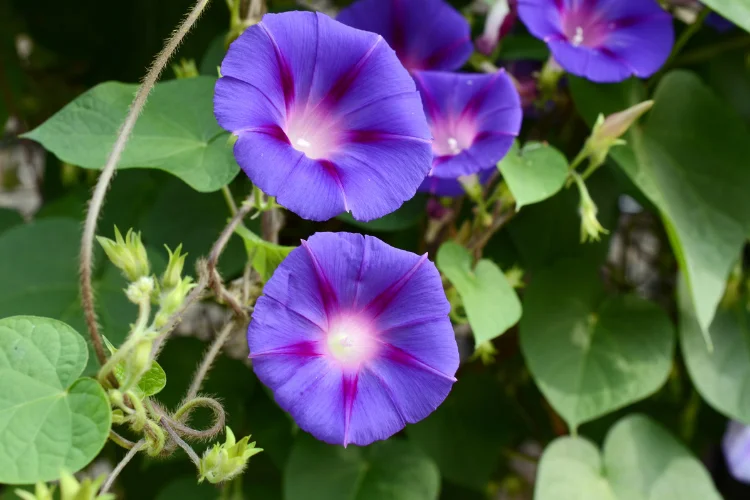
Where the Aster is bold and star-bright, the Morning Glory is soft, fleeting, and full of quiet hope.
Morning Glory Appearance & Colors
Morning Glory vines are easy to recognize by their heart-shaped leaves and trumpet-shaped blossoms that unfurl in vivid blue, purple, pink, and white. What makes this flower truly special is its daily rhythm: each bloom opens with the morning light and gently closes by afternoon, only for a new flower to open the very next day.
That daily bloom-and-fade cycle is exactly why this flower carries such tender symbolism.
Morning Glory Meaning & Symbolism
As a birth flower for September, the Morning Glory represents love, affection, and new beginnings. Its traditional meaning of “love in vain” speaks to devotion that asks for nothing in return, while its daily renewal speaks to hope, the idea that every single morning offers a fresh start.
For September babies, this is a beautiful thing to carry. Life doesn’t need to be permanent to be meaningful, and the Morning Glory reminds us that brief, precious moments matter just as much as lasting ones.
Morning Glory History & Folklore
The Morning Glory’s story spans continents and centuries. The Aztecs valued the plant for both medicinal and ceremonial purposes long before Europeans encountered it. In Japan, the flower became known as Asagao, and it holds a beloved place in Japanese garden tradition, celebrated in summer festivals and depicted in centuries of poetry and art.
By the Victorian era, Morning Glory had become a garden favorite across Europe, prized for exactly the trait that makes it so poetic: its refusal to last past midday. That daily disappearing act only made people love it more.
How to Grow Morning Glory
Morning Glory is one of the easiest climbing vines to grow from seed, though a few tricks make all the difference.
- Direct sow seeds outdoors after the last frost, since the vine dislikes being transplanted
- Soak seeds overnight before planting to soften the tough outer coating and speed up germination
- Provide climbing support like a trellis, fence, or arbor right from the start
- Fences and trellises work beautifully, giving the vine plenty of vertical space to spread
- Water consistently but avoid overly rich soil, which encourages leaves over flowers
Once established, Morning Glory grows quickly and often reseeds itself, returning year after year like a small, dependable gift.
Morning Glory as September Gift
A Morning Glory gift feels personal precisely because it isn’t instant, it grows into something over time.
- A seed packet gift, paired with a handwritten note about new beginnings
- A potted Morning Glory vine already trained onto a small trellis
- A pressed-flower keepsake capturing a single bloom before it fades
- A garden-starter kit for the September baby who loves to grow things
Gifting Morning Glory says something quietly powerful: that you believe in fresh starts, and in this person’s next chapter.
September Birth Flowers by Zodiac Sign
September holds two zodiac signs, and interestingly, each one pairs beautifully with one of the month’s birth flowers.
Virgo (September 1 to 22) aligns naturally with the Aster. Virgos are known for their thoughtful, detail-oriented, almost perfectionist nature, and the Aster’s precise, star-shaped symmetry mirrors that same careful attention to beauty and order.
Libra (September 23 to 30) pairs with the Morning Glory. Libras are famous for seeking balance and harmony, and the Morning Glory’s daily rhythm, opening and closing in perfect time with the sun, reflects that same instinct for graceful equilibrium.
So which flower suits which personality best? If you’re a structured, meticulous Virgo, the Aster’s wisdom and steadiness will feel like home. If you’re a harmony-seeking Libra, the Morning Glory’s gentle renewal will resonate more deeply. Either way, both flowers belong to you as a September birthday flower, so there’s no wrong choice.
September Birth Flower Colors & Their Meanings
Color adds another layer of meaning to both September birth flowers. Here’s what each shade represents:
- Purple Aster: wisdom and royalty
- Pink Aster: sensitivity and love
- White Aster: purity and innocence
- Blue Aster: trust and loyalty
- Blue Morning Glory: love and trust
- Purple Morning Glory: royalty and admiration
- Pink Morning Glory: gentle, tender love
- White Morning Glory: a pure and honest heart
Choosing a color isn’t just about aesthetics, it’s a small, thoughtful way to say something specific to the person receiving it.
Best September Birth Flower Gift Ideas
Looking for the most meaningful September birthday gift? These ideas lean into the September birth flowers’ natural beauty and symbolism.
- Autumn Aster bouquet with warm seasonal accents like berries or wheat stems
- Morning Glory seed packet tied with twine and a personal note
- September birth flower basket combining both Aster and Morning Glory blooms
- Birth flower jewelry featuring engraved Aster or Morning Glory motifs
- Pressed flower art preserving both blooms side by side in a frame
- Potted Aster arrangement that keeps growing long after the celebration ends
Any of these gifts carries something a store-bought card simply can’t offer, a direct connection to the person’s birth month and everything it represents.
Growing September Birth Flowers in Your Garden
If you’d rather grow these blooms than buy them, September’s birth flowers make a stunning addition to any late-season garden.
Design a late-summer Aster border along a walkway or fence line, layering purple and pink varieties for depth. Let Morning Glory vines climb a fence or arbor nearby, where their blue and purple trumpets will contrast beautifully against the Aster’s star shape below.
When planning an autumn color garden, think in layers: Asters for structure and steady color, Morning Glory for vertical movement and daily surprise. Together they capture that same transitional beauty found throughout this whole guide, summer’s warmth giving way, gently and gracefully, to autumn’s arrival. If you want your whole garden glowing this season, our guide on the Autumn Blaze Maple covers one of the most spectacular autumn trees you can plant alongside these blooms.
For gardeners drawn to this seasonal shift, a few transitional season tips go a long way: plant both flowers in spring, mulch well before the first cold snap, and let the Asters take center stage once the Morning Glory vines begin to fade in October.
Frequently Asked Questions
September has two official birth flowers: the Aster and the Morning Glory. The Aster is considered the primary flower, while the Morning Glory serves as the secondary bloom.
The Aster symbolizes love, wisdom, faith, and valor. Its star-shaped bloom is also tied to Greek mythology and represents patience and elegance.
Morning Glory blooms daily throughout summer and into early fall, with each flower opening at sunrise and closing by early afternoon before the next bud takes its place the following day.
Plant Asters in spring in a spot with full sun and well-drained soil. Divide the clumps every 2 to 3 years, and they’ll reward you with blooms from late summer straight through the first frost.
Yes, Morning Glory grows well in containers as long as it has a trellis or support structure to climb and consistent watering throughout the growing season.
Celebrating the Beauty of September Birthdays
September babies carry something rare: a birthday that sits right at the hinge between two seasons. The Aster holds onto summer’s last warmth with its star-bright bloom, while the Morning Glory greets each new day with quiet, hopeful renewal. Together, these September birth flowers tell a story of wisdom, love, and fresh beginnings, all wrapped into one beautifully in-between month.
Whether you’re planning the most meaningful September birthday gift, planting a garden that captures this golden transition, or simply learning more about the blooms tied to your own birth month, we hope this guide left you with a deeper appreciation for what September truly represents.
Explore the rest of our birth flower series at Plant Style Home for more monthly guides just like this one.