Pothos was my very first houseplant, and fifteen years later I still love them more than ever. If you’re standing in a garden center right now wondering which plant won’t die under your care, let me save you the guesswork. Pothos plants are the answer.
They trail beautifully off shelves and bookcases. They come in varieties so stunning you’ll want to collect them all. And they have earned a reputation for being nearly indestructible, which is exactly what a nervous first-time plant parent needs to hear.
Here’s the truth that nobody tells beginners: pothos plants forgive you. They forgive the missed watering, the low light corner, the vacation you forgot to plan for. Every home deserves at least one, and by the end of this guide, you’ll understand exactly why plant lovers everywhere consider it the greatest starter plant in existence.
If you want more inspiration for filling your home with easy, beautiful greenery, our team at Plant Style Home has put together complete plant and flower guides to help growers of every level succeed.
What Are Pothos Plants?
Pothos plants belong to the species Epipremnum aureum, though older gardening books may list it under its former name, Scindapsus aureus. Don’t let the botanical name confuse you. It’s the same plant with a heart-shaped leaf and a trailing habit that has made it a houseplant staple for decades.
This plant is native to the Solomon Islands, where it grows as a climbing vine in warm, humid rainforest conditions. In the wild, pothos leaves can grow enormous, sometimes reaching well over a foot long as the vine climbs up tree trunks toward the canopy. Indoors, the leaves stay small and manageable, which is part of what makes this plant so easy to live with in an apartment or office.
You may also hear pothos called devil’s ivy, and there’s a good reason for the nickname. This plant stays green even in dim corners where other houseplants would fade and die, and it is remarkably hard to kill outright. That reputation is well earned, but it doesn’t mean pothos is invincible, and we’ll cover exactly how to avoid the common mistakes later in this guide.
One important note before we go further: pothos plants are toxic to cats, dogs, and humans if ingested. The leaves contain calcium oxalate crystals that can cause mouth irritation, drooling, and digestive upset. Keep it out of reach of curious pets and small children, and you’ll have nothing to worry about.
Types of Pothos Plants
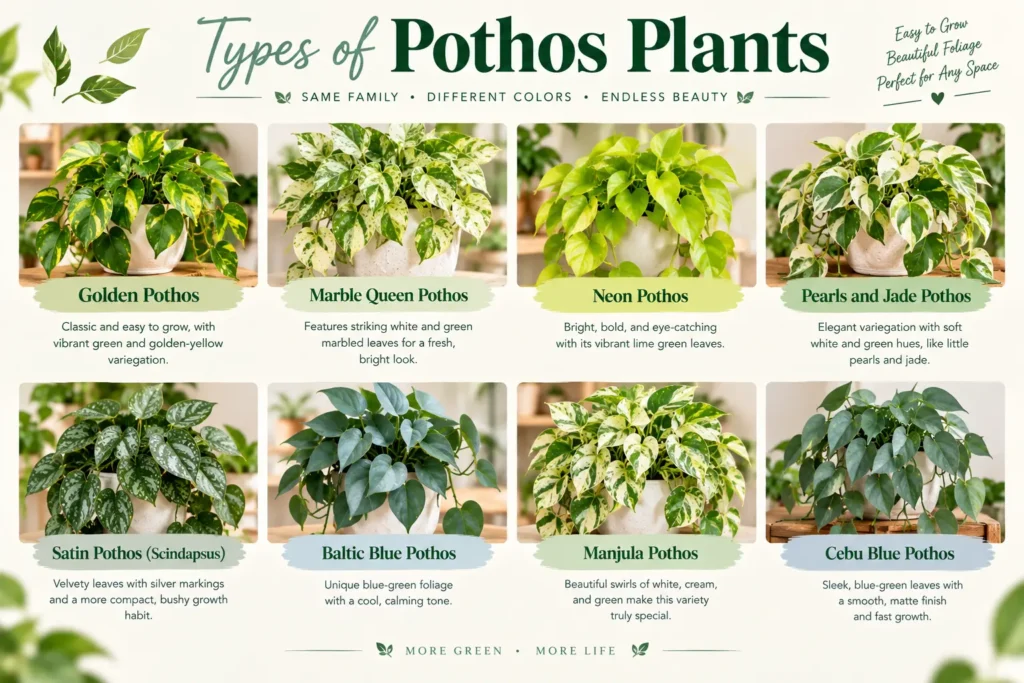
Part of the fun of growing pothos is discovering just how many gorgeous varieties exist. Once you fall for one, it’s almost impossible not to want them all.
Golden Pothos
Golden pothos is the classic, the variety most people picture when they hear the word pothos. Its heart-shaped leaves are splashed with yellow variegation over deep green, and it is by far the most tolerant of the bunch. If you’re brand new to plant care, start here.
Marble Queen Pothos
Marble queen pothos features creamy white and green variegation that looks almost hand painted on every leaf. It grows more slowly than golden pothos, largely because the white portions of the leaf contain no chlorophyll, but the visual payoff is absolutely worth the patience.
Neon Pothos
Neon pothos is unmistakable, with bright chartreuse yellow-green leaves that practically glow. This variety holds its vivid color even in lower light, making it one of the best choices if you want a bold pop of color in a dim room.
Pearls and Jade Pothos
Pearls and jade pothos is a compact grower with small leaves marked in white and green. Because it grows more slowly and stays smaller, it’s a lovely pick for desks, shelves, and tight spaces where a sprawling vine wouldn’t fit.
Satin Pothos (Scindapsus)
Satin pothos has a beautiful silvery shimmer across its dark green leaves, and it often gets lumped in with true pothos varieties. It shouldn’t be. Satin pothos actually belongs to a different genus, Scindapsus pictus, and while its care needs are similar, it isn’t technically a true pothos plant at all.
Baltic Blue Pothos
Baltic blue pothos is a newer arrival in the houseplant world, prized for its blue-green leaves and elongated shape. Given a moss pole and some patience, mature Baltic blue leaves can develop natural splits, called fenestration, that make the plant look almost tropical and exotic.
Manjula Pothos
Manjula pothos stands out with wide, wavy leaf edges and creamy white variegation that swirls unpredictably across each leaf. No two leaves look quite the same, which is part of what has made this variety so popular in recent years.
Cebu Blue Pothos
Cebu blue pothos has narrow, arrow-shaped leaves with a striking blue-silver sheen. As the vine matures and climbs, the leaves can develop splits similar to Baltic blue, rewarding patient growers with a plant that looks nothing like the small cutting they started with.
If you love the look of bold, dramatic foliage, pothos and monstera plants make a wonderful pairing. Our complete guide on Monstera Plants covers the ultimate statement plant to grow alongside your pothos collection.
Telling Pothos From Philodendron
Before we move into care, it’s worth addressing the confusion that trips up nearly every beginner. Pothos and philodendron look similar enough at the nursery that mislabeling happens constantly, and we’ll break down the exact differences in detail later in this guide.
Pothos Plant Care Guide
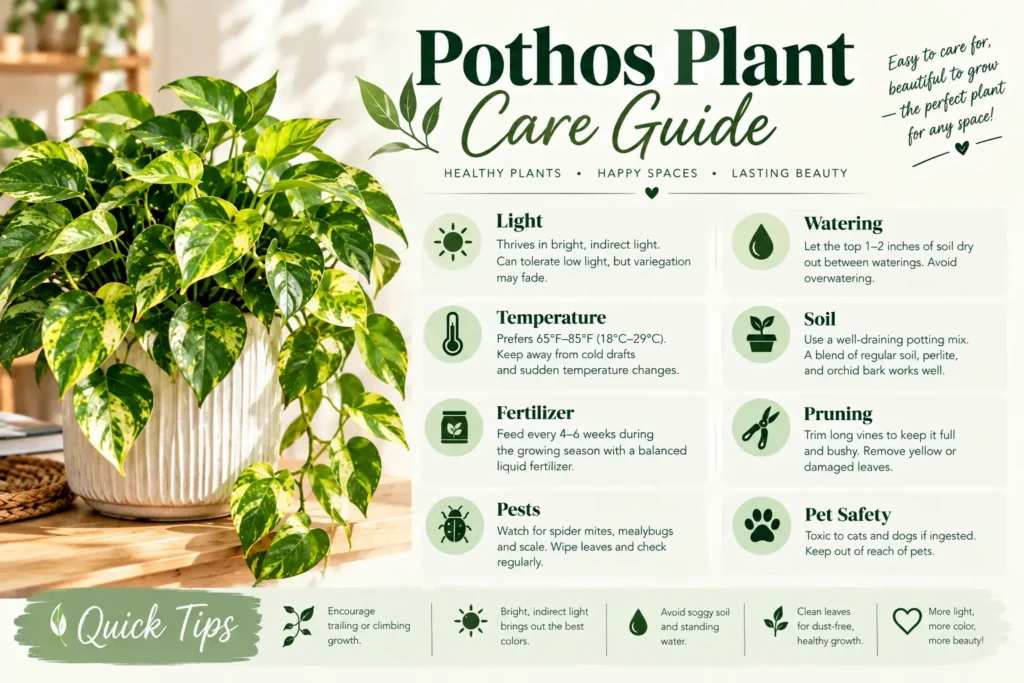
Now for the section you actually came here for. Pothos plant care is refreshingly simple once you understand a few key principles, and getting these basics right will set you up for years of healthy growth.
Light Requirements
Pothos is one of the most adaptable plants when it comes to light. Golden pothos tolerates low light remarkably well, which is why it thrives in offices and windowless bathrooms where other plants would struggle.
Variegated varieties like marble queen and manjula need brighter, indirect light to maintain their patterns. Without enough light, the white and cream sections can’t produce enough energy, and the plant may start reverting to solid green.
Avoid harsh direct sun, which can scorch the leaves and cause pale, bleached patches. A bright spot near an east or north facing window, or a few feet back from a south facing one, is usually ideal for most pothos plant varieties.
Watering Pothos Plants
Pothos plant watering follows one simple rule: let the top one to two inches of soil dry out before watering again. When you do water, water thoroughly until it drains from the bottom, then wait until the soil dries again before the next round.
Overwatering is, without question, the number one killer of pothos plants. It’s far more common than underwatering, and it typically shows up as yellowing leaves and mushy, blackened stems near the soil line.
If you catch yellow leaves early, check the roots. Healthy roots are white and firm, while root rot leaves them brown, soft, and foul smelling. Interestingly, pothos also does beautifully grown entirely in water, which we’ll cover in its own section below.
Soil Requirements
Pothos isn’t picky about soil, and any standard, well draining potting mix will do the job. Adding a bit of perlite improves drainage and airflow around the roots, which helps prevent the overwatering issues mentioned above.
Whatever container you choose, make sure it has drainage holes. Excess water needs somewhere to escape, and without drainage, even careful watering habits can lead to soggy, oxygen-starved roots.
Temperature and Humidity
Pothos plants are comfortable in average home temperatures between 60 and 85°F, or roughly 15 to 29°C. They handle lower humidity far better than many tropical houseplants, which is part of what makes them so livable in dry, heated homes during winter.
Keep your plant away from cold drafts, air conditioning vents, and drafty windowsills in winter. Misting can offer a small humidity boost, but it’s entirely optional and not something your pothos truly needs to thrive.
Pothos pairs beautifully with other tropical plants that share this same easygoing nature. If you enjoy low-maintenance greenery, our guide on the Cat Palm covers another easy-care tropical plant perfect for any room.
Fertilizing Pothos
Feed your pothos monthly during spring and summer with a balanced liquid fertilizer diluted to half strength. Skip fertilizing entirely in fall and winter, when growth naturally slows and the plant needs far less support.
Signs of over-fertilizing include crispy brown leaf tips, white crusty buildup on the soil surface, and stunted new growth. If you notice these symptoms, flush the soil thoroughly with plain water and hold off feeding for a month or two.
How to Display Pothos Plants
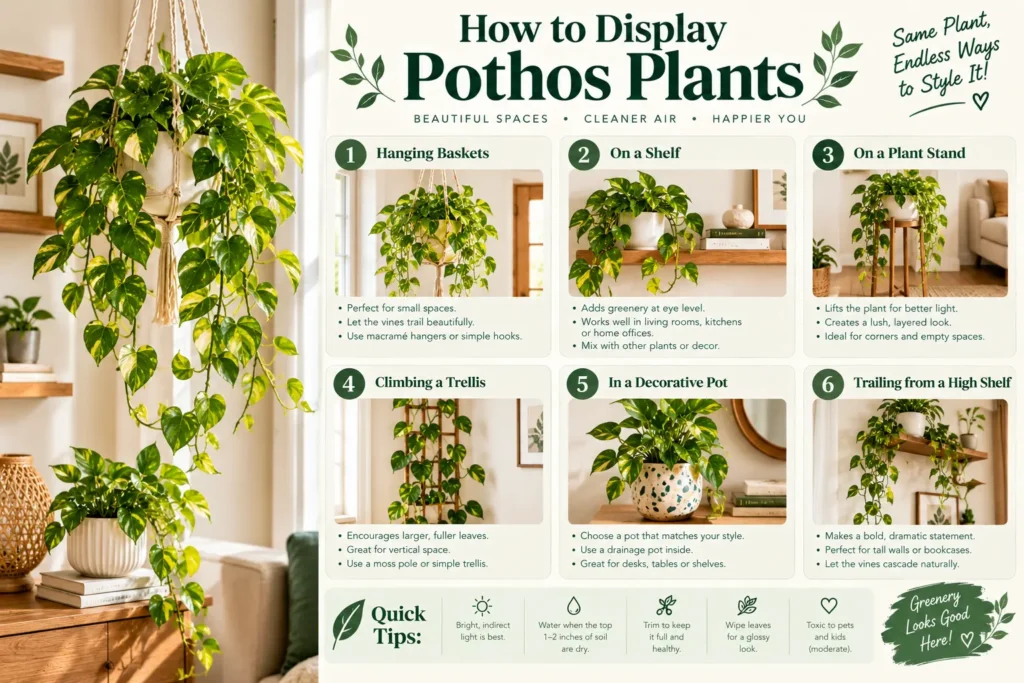
Half the joy of growing pothos plants is showing them off, and there’s no shortage of creative ways to do it.
- Trailing from a high shelf or bookcase, letting the vines cascade down
- Hanging in a basket near a bright window
- Climbing a moss pole, which encourages larger, more mature leaves
- Trained along a wall using command hooks for a living green accent
- Growing long term in a simple vase of water on a countertop
- Sitting on a desk as an easy, low-maintenance office companion
- Thriving in a bathroom, where warmth and occasional steam suit it well
Pothos Propagation
If you take away one thing from this guide, let it be this: pothos is quite possibly the easiest houseplant in the world to propagate. Once you learn the process, you’ll want to fill every room in your house.
Water Propagation, Step by Step
- Find a healthy vine and locate a node, the small brown bump on the stem where roots and leaves emerge.
- Cut just below the node using clean, sharp scissors, keeping at least one or two leaves on the cutting.
- Place the cutting in a jar of water, making sure the node is submerged while the leaves stay above the waterline.
- Set the jar somewhere bright but out of direct sun, and change the water every week or so.
- Watch for roots to appear within one to three weeks, growing longer over the following month.
- Once roots reach about an inch or two long, transfer the cutting into potting mix.
Soil Propagation Method
You can also skip water entirely and place fresh cuttings directly into moist potting mix. Keep the soil consistently damp for the first few weeks while roots establish, then transition to your normal watering routine.
Making Your Pothos Fuller
Regular pruning is the secret to a fuller, bushier pothos rather than one long, sparse vine. Every cutting you trim can become a new plant, so there’s truly no downside to trimming often.
The best time to propagate is during spring and summer, when the plant is actively growing and roots form fastest. And once you have more cuttings than you know what to do with, sharing them with friends is one of the most rewarding parts of growing pothos plants.
If you enjoy the process of building out an easy-care plant collection, our guide on the Bamboo Plant covers another surprisingly easy and beautiful plant worth adding once your pothos cuttings take root.
Common Pothos Problems
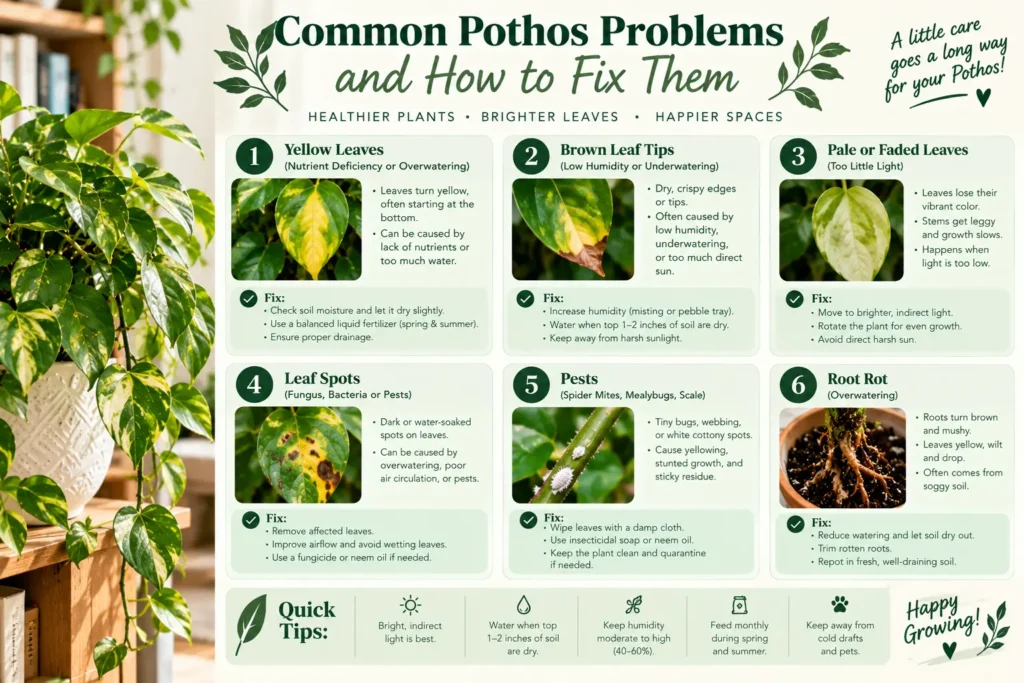
Even the most forgiving houseplant runs into trouble occasionally. Here’s how to diagnose and fix the issues that come up most often.
Pothos Yellow Leaves
Pothos yellow leaves are almost always tied to watering habits. Overwatering is the most frequent cause, often accompanied by root rot, so check the roots if multiple leaves yellow at once.
A single yellow leaf near the base, however, is usually just a natural part of the plant’s growth cycle and nothing to worry about. Nutrient deficiency can also cause pale yellowing over time, which a monthly feeding schedule during the growing season typically resolves.
Pothos Brown Tips
Brown, crispy tips usually point to low humidity, underwatering, or a buildup of fertilizer salts in the soil. Tap water containing fluoride can also cause tip burn in sensitive varieties, so switching to filtered or distilled water sometimes helps.
Pothos Leaves Turning Pale
Pale leaves on a variegated pothos often mean too much direct light is bleaching the color out. On the other hand, pale golden pothos leaves usually signal the opposite problem, too little light to support healthy pigment.
Variegation Reverting to Green
When a variegated pothos starts producing solid green leaves, it’s typically reaching for more light. Move the plant somewhere brighter, and prune away fully green stems to encourage the variegated growth to take over again.
Pothos Leggy and Sparse
A leggy, sparse pothos usually needs more light, more pruning, or both. Trimming back long bare vines encourages fuller, bushier growth from lower on the plant.
Common Pests
Mealybugs appear as small white cottony clusters, usually in leaf joints, and respond well to wiping with rubbing alcohol on a cotton swab. Spider mites show up as fine webbing with tiny yellow speckling on leaves, and thrive in dry conditions, so increasing humidity helps discourage them. Scale looks like small brown bumps stuck to stems and leaves, and can be scraped off gently before treatment. Neem oil applied every couple of weeks is an excellent preventive measure against all three.
Pothos vs Philodendron: How to Tell Them Apart
This is where nearly every beginner gets tripped up, and honestly, it’s an easy mistake to make. Nurseries mislabel these plants constantly, so let’s clear up the confusion once and for all.
The easiest test is texture. Pothos leaves feel slightly waxy and thick to the touch, while philodendron leaves feel soft, thin, and matte. Once you’ve felt both side by side, you’ll never confuse them again.
| Feature | Pothos | Philodendron |
|---|---|---|
| Leaf texture | Waxy, slightly thick | Soft, matte |
| Leaf shape | Asymmetrical heart shape | Symmetrical heart shape |
| Petiole | Grooved, ridged | Smooth, rounded |
| New growth | No cataphyll sheath | Wrapped in a papery cataphyll |
| Growth habit | Vigorous trailer or climber | Slightly slower, more compact |
| Typical price | Usually less expensive | Often pricier for rare types |
Both plants are excellent choices for beginners, but pothos generally edges out philodendron for sheer ease and tolerance of neglect. If you’re torn between the two, there’s no reason not to grow both.
Growing Pothos in Water
Yes, pothos plants can absolutely live in water permanently, not just during propagation. Many plant lovers keep pothos in decorative vases and jars for years with beautiful results.
To set one up, choose a container with a narrow enough neck to hold the plant upright, fill it with clean water, and place it somewhere bright but out of direct sun. Add a small amount of liquid fertilizer monthly, since water-grown plants have no soil to draw nutrients from.
Change the water every week or two to keep it fresh and free of algae buildup, and rinse the roots and container while you’re at it. Growing in water means no soil mess and easy monitoring of root health, though growth is typically a bit slower than in soil, and the plant can be more sensitive to sudden water changes.
Frequently Asked Questions
Water once the top one to two inches of soil have dried out, which is often every one to two weeks depending on light and temperature.
Yes, especially golden pothos, though variegated varieties will hold their patterns better with brighter indirect light.
Overwatering is the most common cause, though natural leaf drop and nutrient deficiency can also play a role.
Yes, pothos is toxic to cats, dogs, and humans if ingested, so keep it away from curious pets and small children.
Bright indirect light, consistent watering, and monthly fertilizing during the growing season will speed up growth noticeably.
Yes, pothos thrives long term in water as long as you refresh it regularly and add fertilizer monthly.
The Bottom Line on Pothos Plants
Pothos is the houseplant world’s best kept secret, quietly doing almost everything right while asking for almost nothing in return. It tolerates the light you have, forgives the watering mistakes you’ll inevitably make, and rewards you with trailing greenery that only gets more beautiful over time.
If you can keep pothos alive, you can grow any houseplant, and that confidence is worth more than any single plant could ever be. Don’t be afraid to propagate a few cuttings and pass them along to friends who need a little more green in their lives.
For even more lush, trailing greenery to fill out your collection, explore our guide on Green Flowers for stunning green plant inspiration. Whatever you choose next, your pothos plants will be right there thriving alongside it.