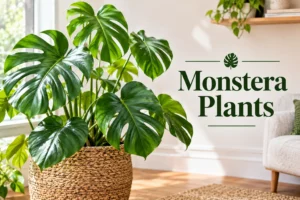
If you’ve scrolled through any home decor account in the past few years, you’ve seen those glossy, deeply split leaves reaching toward a sunny window. Monstera plants didn’t just become popular, they became a whole aesthetic. But underneath the Instagram fame is something even better: a genuinely easy, forgiving, and endlessly rewarding plant to grow.
Monstera was the plant that started my whole houseplant obsession. I picked up a small deliciosa from a grocery store clearance shelf, half expecting it to die within a month like most of my early plant attempts. Instead, it thrived, threw out new leaves every few weeks, and eventually towered over my bookshelf with leaves the size of dinner plates. That’s the thing about monstera plants: they reward attention without demanding perfection.
Whether you’re a total beginner or someone who already has a windowsill jungle going, this guide covers everything you need to know about growing thriving monstera plants, from picking the right variety to solving the yellow leaf mystery once and for all.
At Plant Style Home we help you grow the most beautiful and trendy plants. Explore our complete plant and flower guides here.
What Are Monstera Plants?
Monstera plants belong to the Araceae family, the same botanical family that gives us pothos, philodendrons, and peace lilies. They’re native to the tropical rainforests of Central America, particularly southern Mexico and Panama, where they climb up trees using aerial roots to chase dappled sunlight through the canopy.
The name itself is wonderfully literal. “Monstera” comes from the Latin word for monster, a nod to the plant’s enormous leaves, which can grow well over two feet across in mature specimens. It’s a fitting name once you’ve seen one in full, dramatic bloom in someone’s living room.
Those famous splits and holes in the leaves, called fenestrations, aren’t just for looks. In the wild, this leaf structure serves two purposes: it lets wind pass through without tearing the leaf during tropical storms, and it allows dappled sunlight to reach the lower leaves of the plant even when the canopy is dense. It’s a survival adaptation that happens to look stunning.
Here’s the part that trips up almost every new monstera owner: young plants don’t have splits. A baby monstera produces solid, heart-shaped leaves for quite a while before fenestration kicks in. This confuses so many people into thinking their plant is unhealthy or the wrong variety, when really it’s just growing up.
One important note before you bring one home: monstera plants are toxic to cats, dogs, and humans if ingested. The leaves and stems contain calcium oxalate crystals that cause irritation to the mouth, throat, and digestive tract. Keep them out of reach of curious pets and small children.
Types of Monstera Plants
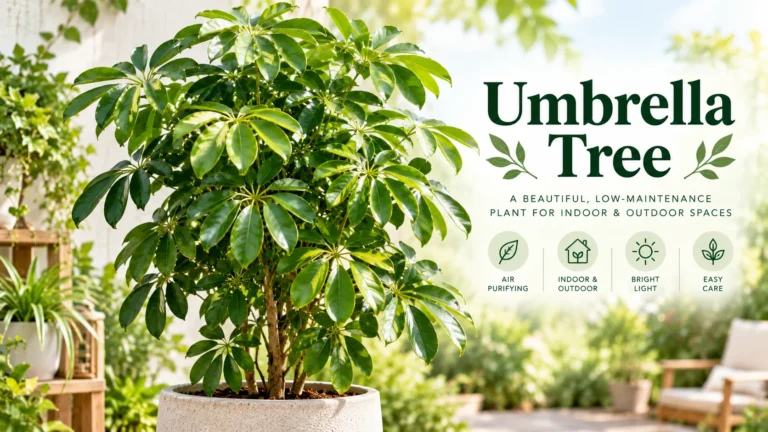
Not all monstera plants look alike, and once you start collecting them, you’ll realize how much variety exists within this one genus. Monstera pairs beautifully with other statement plants too, and our guide on the Umbrella Tree covers another dramatic tropical statement houseplant worth considering if you’re building out a collection.
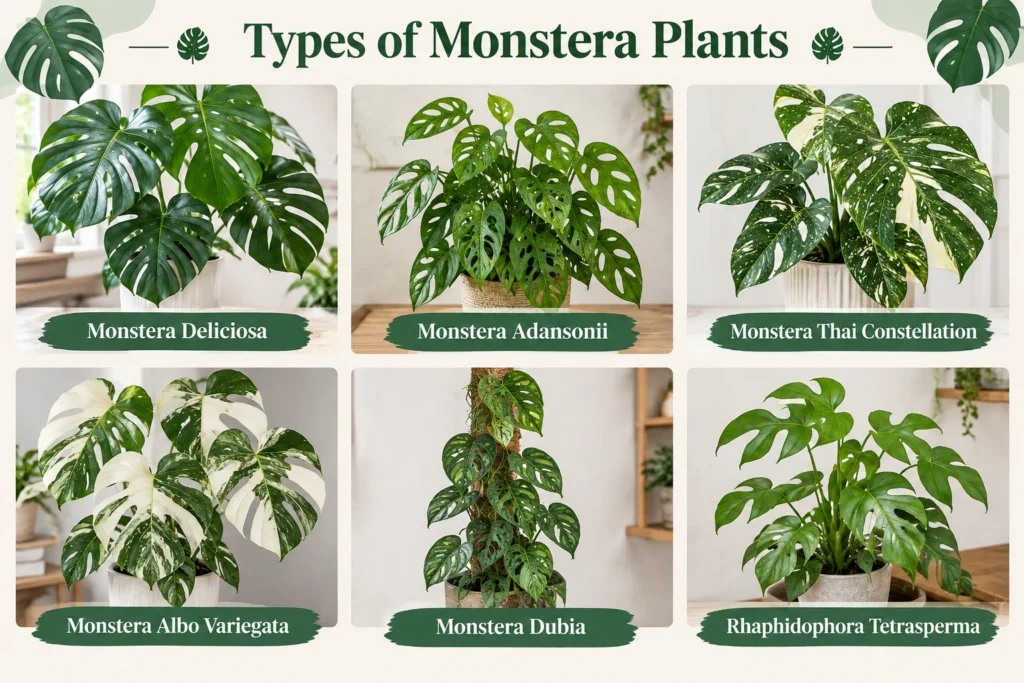
Monstera Deliciosa
This is the monstera everyone pictures, the classic with those iconic deep splits and holes. Monstera deliciosa is the most popular variety by far, and for good reason. It grows into an absolute showstopper, easily reaching six to ten feet indoors given enough time, space, and a sturdy support to climb.
Fun fact that surprises most people: monstera deliciosa produces edible fruit in its native habitat, and the fruit tastes like a mix of pineapple and banana. It’s rare to see this happen with houseplants, but it’s part of what gives the plant its species name.
Monstera Adansonii
Often called the Swiss cheese plant, monstera adansonii is a smaller, more delicate cousin. Instead of deep splits, it develops rounded holes scattered across thinner, more elongated leaves. It grows as a natural climber or trailer, making it gorgeous in a hanging basket where those holey leaves can cascade down.
Adansonii tends to grow faster than deliciosa and is one of the most popular varieties for smaller apartments or shelves.
Monstera Thai Constellation
This variety brings serious drama with creamy white and yellow splashes scattered across dark green leaves, almost like a night sky. Thai Constellation is a stable variegation created through tissue culture, which is part of why it commands such a high price. Because the variegated portions of the leaves lack chlorophyll, this variety needs more consistent bright light than a standard deliciosa to keep producing new growth and maintain vibrant patterning.
Monstera Albo Variegata
Considered by many collectors to be the holy grail, monstera albo has striking white sectors that can cover half a leaf or more. Unlike Thai Constellation, albo variegation is unstable and naturally occurring, meaning patterns vary wildly from leaf to leaf and plant to plant. That unpredictability, combined with slow propagation rates, is exactly why albo carries such a hefty price tag. Because the white sections can’t photosynthesize, albo plants need bright light and careful monitoring to avoid reverting to solid green.
Monstera Dubia
A true climber’s climber, monstera dubia has a fascinating habit of pressing its small, patterned leaves flat against a tree trunk or support in a shingling pattern before eventually maturing into larger, fenestrated leaves higher up. It’s a rarer find and an absolute treat for anyone who loves unusual growth habits.
Rhaphidophora Tetrasperma
Frequently sold as “mini monstera,” this plant isn’t a true monstera at all. It belongs to a different genus entirely, though it shares a similar leaf shape and fenestration pattern. Rhaphidophora tetrasperma grows much faster than true monstera plants and stays more compact, which makes it a favorite for people who want that split-leaf look without the eventual furniture-sized commitment.
Monstera Plant Care Guide
Good monstera plant care comes down to a handful of core habits. Get these right, and your plant will reward you generously.
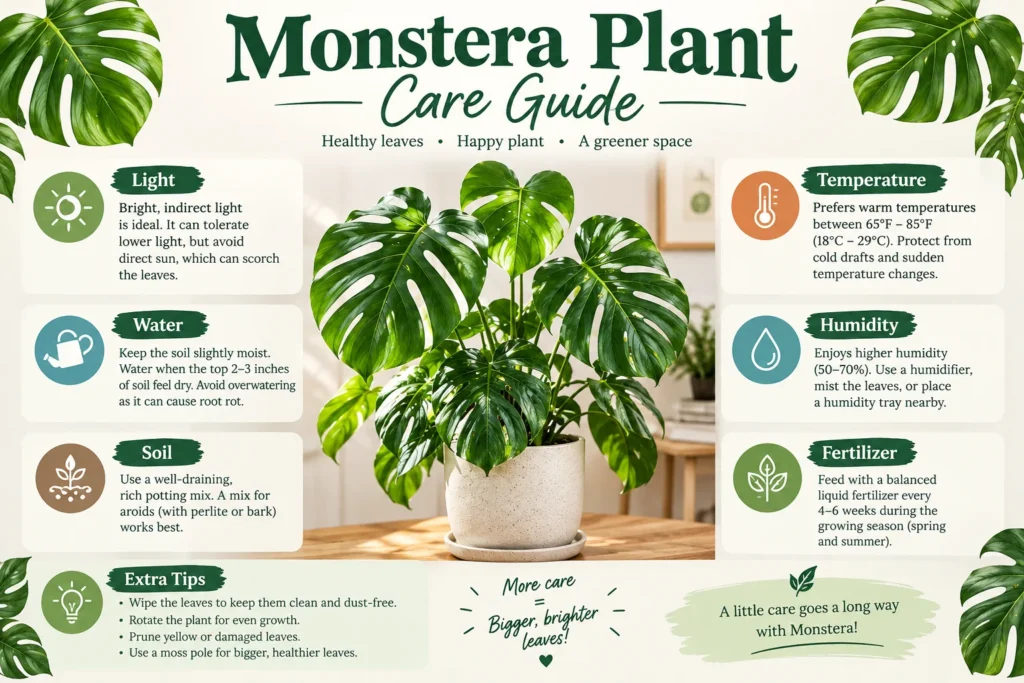
Light Requirements
Bright indirect light is the sweet spot for monstera plants. A spot near an east or west facing window, or a few feet back from a bright south facing window, works beautifully. Some gentle morning sun is tolerated and even encourages growth.
Avoid harsh direct afternoon sun, which can scorch those glossy leaves. On the flip side, low light won’t kill your monstera, but it will slow growth dramatically and prevent fenestration from developing at all. Variegated types like Thai Constellation and albo need noticeably brighter light than standard green varieties to thrive. If you love pairing large statement indoor plants near your brightest windows, our guide on the Bamboo Plant covers another architectural beauty that thrives in similar conditions alongside your monstera.
Watering Monstera Plants
Monstera plant watering trips up more people than almost anything else in this guide, so let’s simplify it. Let the top two inches of soil dry out before watering again. Use the finger test: stick your finger into the soil, and if it’s dry at that depth, it’s time to water.
When you do water, give it a thorough drench until water runs from the drainage holes, then let the pot fully empty out. Never let your monstera sit in standing water. Overwatering is the single biggest cause of yellow leaves and root rot in this plant, far more common than underwatering.
Expect to water less frequently in winter when growth slows, and more often during the active spring and summer growing season.
Soil & Potting Mix
Monstera plants want a chunky, well draining mix rather than dense, moisture holding soil. A combination of standard potting mix, orchid bark, and perlite creates the airy structure their roots crave. Regular potting mix alone tends to stay too wet for too long, which sets the stage for root rot.
Temperature Requirements
Keep your monstera somewhere between 65 and 85°F (18 to 29°C). These are tropical plants through and through, so avoid cold drafts near doors and windows, and never let temperatures drop below 55°F for extended periods. If you live in zones 10 through 12, monstera can even thrive outdoors in a shaded, protected spot.
Humidity Needs
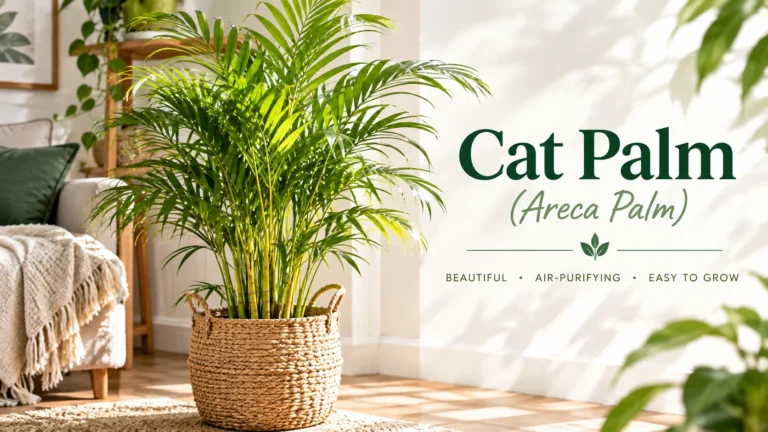
Coming from a rainforest, monstera plants genuinely love humidity, ideally 60% or higher. Low humidity often shows up as brown, crispy tips on otherwise healthy leaves. A humidifier nearby is the most reliable fix, though grouping plants together, using a pebble tray, or simply placing your monstera in a naturally humid bathroom with good light can help too. Monstera loves the same tropical, humid conditions as palms, and our complete guide on Cat Palm covers the perfect monstera companion plant if you’re looking to build a lush, tropical corner.
Fertilizing Monstera
Feed monthly from spring through summer using a balanced fertilizer diluted to half strength. This is enough to support steady new growth without overwhelming the roots. Skip fertilizing entirely in winter when the plant is naturally resting. If you’d rather set it and forget it, a slow release fertilizer applied once at the start of the growing season works well too.
Monstera Aerial Roots: What to Do With Them
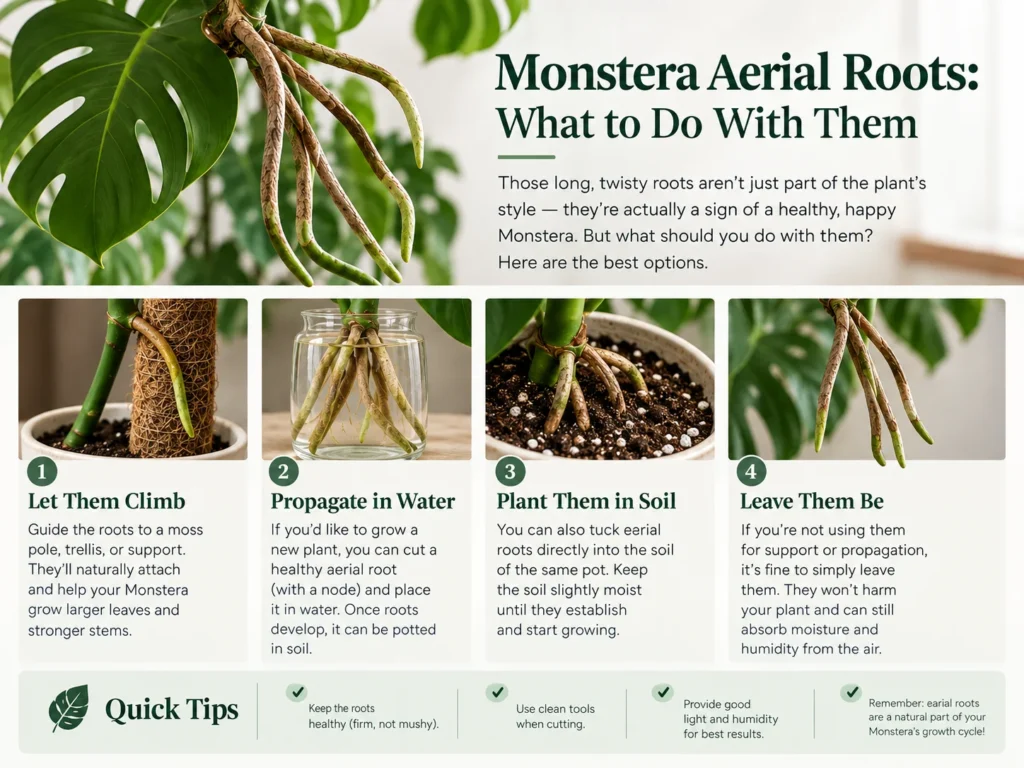
Those aerial roots confused me for the longest time. Here is what to actually do with them, because there’s no single right answer, and that’s actually good news.
In the wild, monstera plants use aerial roots to grab onto trees and climb toward the light. Indoors, your plant produces them for the same instinctual reason, even without a rainforest tree trunk in sight.
You have a few genuinely fine options here:
- Guide them into the soil or a water source, where they’ll help anchor the plant and take up extra moisture
- Attach them to a moss pole, mimicking their natural climbing behavior
- Leave them alone entirely, which causes no harm whatsoever
- Trim them off if they bother you aesthetically, and the plant won’t skip a beat
If you’re ready to level up your monstera plant care, a moss pole is genuinely the best option for larger specimens. Soak the pole, insert it into the pot near the base of the stem, and gently attach the plant with soft ties as it grows. Mist the pole occasionally to keep it slightly damp, which encourages the aerial roots to grab on.
Here’s why this matters beyond looks: a monstera allowed to climb naturally produces significantly larger leaves with more pronounced fenestration than one left to sprawl or flop over. Climbing essentially tells the plant it’s maturing, which triggers that split leaf development we all want to see.
Why Monstera Leaves Have No Holes or Splits
This is probably the most frustrating problem monstera owners run into, and I mean that from experience. You bring home a monstera expecting those signature splits immediately, and instead you get leaf after leaf of plain, solid green.
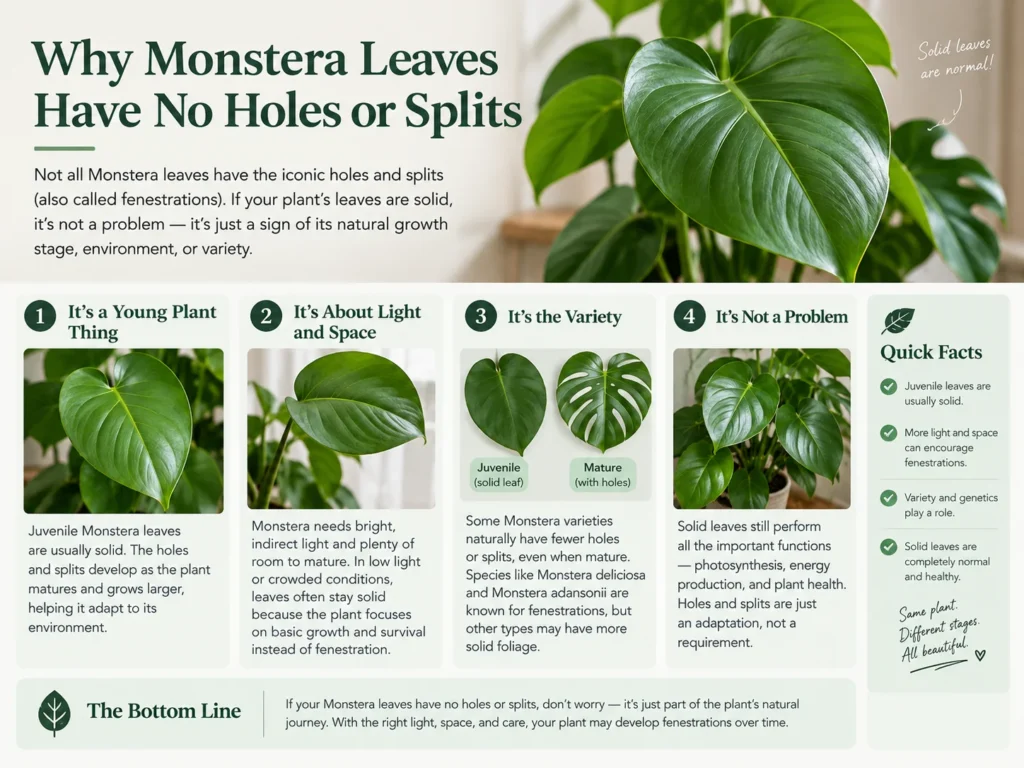
A few things could be going on:
Age matters more than almost anything else. Young monstera plants simply don’t produce fenestrated leaves yet, no matter how perfect their care is. Patience is genuinely required here.
Insufficient light is the second biggest culprit. Without enough bright indirect light, a monstera won’t develop the energy reserves needed to produce those complex leaf shapes.
Wrong variety expectations can also be at play. Remember that monstera adansonii develops holes, not the deep splits you see on deliciosa, so comparing the two isn’t quite fair.
To encourage fenestration, increase light exposure, add a moss pole to encourage climbing and maturity, fertilize consistently through the growing season, and above all, give it time. The moment you see your first new leaf unfurl with an actual split in it is genuinely exciting, and it does come with the right conditions and patience.
Common Monstera Problems
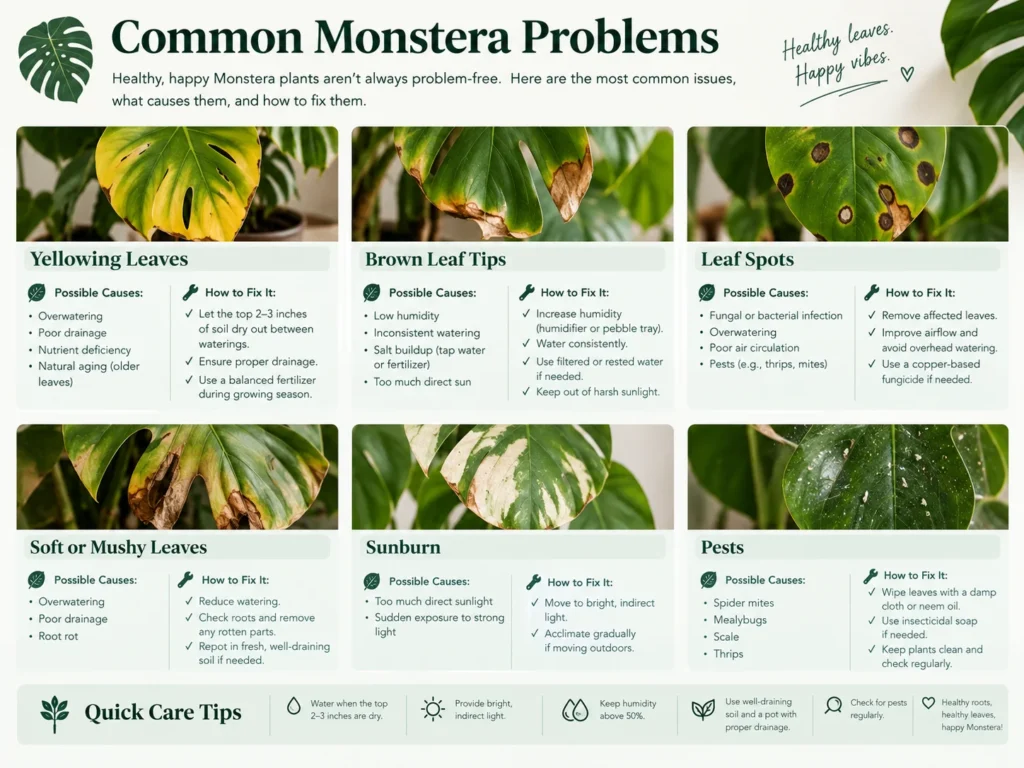
Monstera Yellow Leaves
This is the most common issue monstera owners search for, and there are a few different causes worth ruling out one by one.
Overwatering and root rot are the most frequent culprits. If the soil stays constantly wet and yellowing comes with a mushy stem or sour smell, cut back on watering immediately and check the roots.
Nutrient deficiency can also cause yellowing, particularly if you haven’t fertilized in a long time. A consistent feeding schedule during the growing season usually resolves this.
Natural older leaf drop is often mistaken for a problem when it’s actually normal. Older, lower leaves yellow and fall as the plant redirects energy to new growth. If it’s just one older leaf occasionally, there’s nothing to worry about.
Monstera Brown Tips
Brown, crispy edges usually point to low humidity, though underwatering and fertilizer burn can cause the same symptom. Increasing humidity around the plant solves most cases, while flushing the soil thoroughly with water helps if fertilizer buildup is the issue.
Monstera Drooping
Drooping leaves most commonly mean the plant is thirsty and needs water soon. If watering doesn’t perk things up within a day, check whether the plant has become root bound and needs repotting into a larger container.
Monstera Leggy or Sparse
A leggy monstera with long bare stems and few leaves is almost always asking for more light. Move it somewhere brighter, and consider pruning back leggy stems to encourage bushier, fuller growth from lower nodes. Those pruned stems make excellent propagation material, so nothing goes to waste.
Common Pests
Spider mites, thrips, scale, and mealybugs can all show up on monstera plants, particularly in dry indoor conditions. Spider mites often appear as fine webbing with stippled, dull leaves. Mealybugs and scale show up as small white or brown bumps along stems and leaf undersides. Treating any of these early with insecticidal soap or neem oil usually clears things up before the infestation spreads. Regularly wiping down leaves and inspecting the undersides goes a long way toward prevention.
Monstera Propagation
Propagating monstera plants is one of the most satisfying parts of growing them, and it’s easier than most people expect.
Stem cutting propagation is the most popular and reliable method:
- Identify a node on the stem, the small bump where a leaf and aerial root emerge. This is essential, since roots only grow from nodes, not random points on the stem.
- Choose a stem section with at least one node and ideally one leaf attached.
- Cut cleanly just below the node using sanitized scissors or a knife.
- Place the cutting in water or directly into moist, well draining soil.
- Keep it in bright indirect light and be patient.
Water propagation lets you watch root development happen, which is genuinely fun, and tends to show visible roots within two to four weeks. Soil propagation skips the transition shock of moving from water to soil later, though roots take a bit longer to establish and you won’t see progress as easily.
For thicker, more mature stems, air layering is worth trying. Wrap moist sphagnum moss around a node still attached to the parent plant, cover it with plastic wrap to retain moisture, and wait for roots to form before cutting the new plant free.
Spring is the best time to propagate, when the plant is naturally putting energy into new growth. Expect roots to develop within a few weeks under the right warm, humid conditions.
Repotting Monstera Plants
Signs your monstera needs repotting include roots circling the drainage holes, roots poking out of the soil surface, or noticeably slower growth despite good care.
When repotting, choose a pot only about two inches larger in diameter than the current one. Going too large all at once can lead to overly wet soil that sits around the roots for too long.
Spring is the ideal season for repotting, giving the plant a full growing season to recover and establish. To repot, gently remove the plant from its current container, loosen any tightly bound roots, place it in the new pot with fresh chunky mix, and backfill around the sides. Water thoroughly afterward and keep the plant out of direct sun for a week or two while it settles in. Those iconic split leaves are the ultimate green statement in any room, and if you want more inspiration, our guide on Green Flowers is worth a look for beautiful green plant pairings.
Frequently Ask Questions
Water when the top two inches of soil have dried out, typically every one to two weeks depending on light, temperature, and season. Always check with your finger rather than following a strict schedule.
Usually because the plant is still young, isn’t getting enough light, or hasn’t had time to mature. Fenestration develops with age and proper care, not overnight.
Guide them into soil or water, attach them to a moss pole, leave them alone, or trim them off. All four options are perfectly fine and won’t harm the plant.
Yes. Monstera contains calcium oxalate crystals that irritate the mouth and digestive tract if chewed or ingested, so keep it away from curious pets.
Under good conditions with bright light and consistent care, monstera plants can produce a new leaf every four to six weeks during the growing season, and can grow one to two feet or more per year.
Yes, if you live in USDA zones 10 through 12 with warm, humid, frost free conditions. In cooler climates, monstera plants should stay indoors or be brought inside before temperatures drop.
Final Thoughts on Growing Monstera Plants
Monstera plants have earned their place as the defining houseplant of a generation, and honestly, the hype is deserved. Behind the aesthetic appeal is a plant that’s genuinely forgiving, endlessly interesting to watch grow, and satisfying at every stage, from a baby plant with solid heart shaped leaves to a mature climber covered in dramatic fenestration.
Whether you’re nurturing your very first monstera deliciosa, chasing down a rare Thai Constellation, or troubleshooting yellow leaves on a plant you’ve had for years, the fundamentals stay the same: bright indirect light, thoughtful watering, humidity, and patience. Give your monstera those things, and it will reward you for years to come.
If this guide has you ready to bring home your first monstera, or finally solve whatever has been bothering yours, know that you’ve got everything you need to succeed.