Some plants make a room look finished the moment they arrive. The umbrella tree is one of them. Its glossy leaflets fan out like the spokes of an open umbrella, and within a season or two a small nursery plant turns into a tall, leafy centerpiece that makes any corner feel tropical.
It was my first large houseplant, and it completely transformed my living room. I was nervous about killing it. Then I learned what it actually wants, and it grew faster than anything else I owned.
This guide covers everything I’ve learned from growing these plants indoors and out. You’ll find the basics of light, water, and soil, plus honest help for the two problems that send most people searching: dropping leaves and yellow leaves.
At Plant Style Home we help you grow beautiful plants of every kind, so explore our complete plant and flower guides here.
What Is an Umbrella Tree?
The name covers two closely related plants in the Schefflera family, and knowing which one you have makes care much easier.
- Schefflera actinophylla is the large umbrella tree, native to Australia and New Guinea. It has big leaves and can become a genuine tree.
- Schefflera arboricola is the dwarf umbrella tree, native to Taiwan. It has smaller leaflets and a more compact, shrubby habit.
Both get their common name from the way the leaflets radiate from a central point on each stem, just like umbrella spokes. A mature leaf can carry anywhere from seven to sixteen leaflets, depending on the type.
Size depends heavily on where you grow it. Indoors, a large umbrella tree usually settles between 6 and 8 feet, while the dwarf type stays around 3 to 6 feet. Outdoors in the right climate, the large one can reach 40 feet. Yes, really.
You’ll also find variegated varieties with cream or gold splashes on the leaves. They’re gorgeous, but they need a bit more light to keep their patterning.
Those glossy green leaves are stunning in their own right. If you love that lush look, our guide on Green Flowers is full of beautiful green plant varieties and inspiration.
A safety note: every Schefflera is mildly toxic to cats, dogs, and people if chewed or swallowed. The leaves contain calcium oxalate crystals that can cause mouth irritation, drooling, and vomiting. If you have curious pets or toddlers, place it out of reach.
Umbrella Tree Care Guide
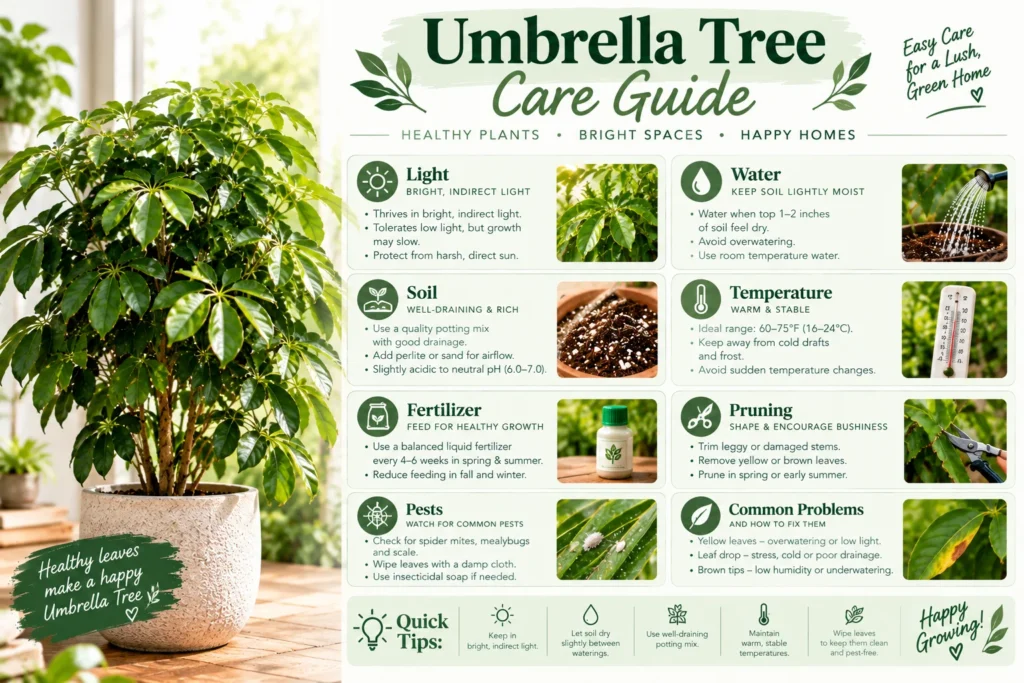
Good umbrella tree care comes down to five things: light, water, soil, temperature, and feeding. The good news is that none of them are complicated.
Light Requirements
Once you get the light right, this plant basically looks after itself. Everything else gets easier.
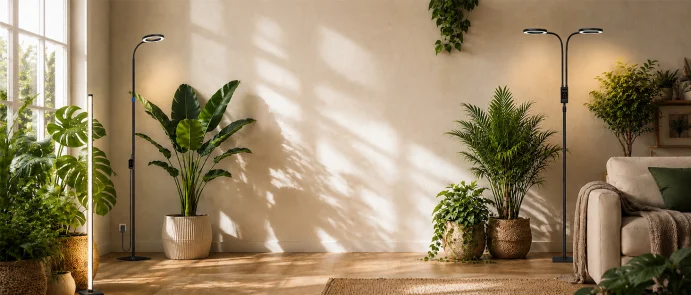
The umbrella tree light requirements are simple. It thrives in bright, indirect light, like a spot a few feet back from an east or south-facing window. A couple of hours of gentle morning sun is fine. Harsh afternoon sun through glass can scorch the leaves.
Here’s what to watch for:
- Too little light: stems stretch, leaves get further apart, and growth turns leggy.
- Too much direct sun: leaves develop pale, crispy patches.
- Variegated types: they need noticeably brighter light or the variegation fades to plain green.
Avoid dark corners. A Schefflera can survive there for a while, but it will slowly thin out and never look its best.
Watering Umbrella Tree
This is the part that matters most. The most common mistake new umbrella tree owners make is overwatering. I’ve done it myself, and I’ve watched friends do it too.
The rule is easy: water thoroughly, then let the top inch or two of soil dry out before watering again. Push your finger into the soil. If it feels damp, wait a few more days.
How to tell the difference between too much and too little water:
- Overwatered: yellowing leaves, soft or blackened stems, soil that stays wet, a sour smell.
- Underwatered: drooping, crispy leaf edges, soil pulling away from the pot.
Seasons change how thirsty the plant is. In spring and summer, expect to water about once a week. In winter, growth slows and you may stretch that to every two or three weeks.
Drainage is non-negotiable. Always use a pot with drainage holes, and empty the saucer after watering so the roots never sit in a puddle.
Soil and Potting Mix
Choose a well-draining mix. A standard indoor potting soil works well when you blend in about one part perlite to every three parts soil. The perlite keeps the mix airy so water moves through instead of pooling around the roots.
Pot size matters more than people think. A pot that’s too large holds extra soil, and extra soil stays wet for too long. Choose a pot just big enough for the roots with a little room to grow.
Terracotta breathes and dries faster, which helps if you tend to overwater. Plastic holds moisture longer, which suits you if you tend to forget. Neither is wrong. Pick the one that matches your habits.
Temperature and Humidity
This is a comfortable, easygoing plant. It’s happiest between 60 and 75°F (15 to 24°C), the same range most homes already sit in.
Keep it away from cold drafts, open doors in winter, and anything below 50°F. Heating vents are just as bad, because blasts of dry hot air stress the foliage.
Average household humidity is fine. If your air is very dry, occasional misting or a pebble tray nearby helps, though it isn’t essential.
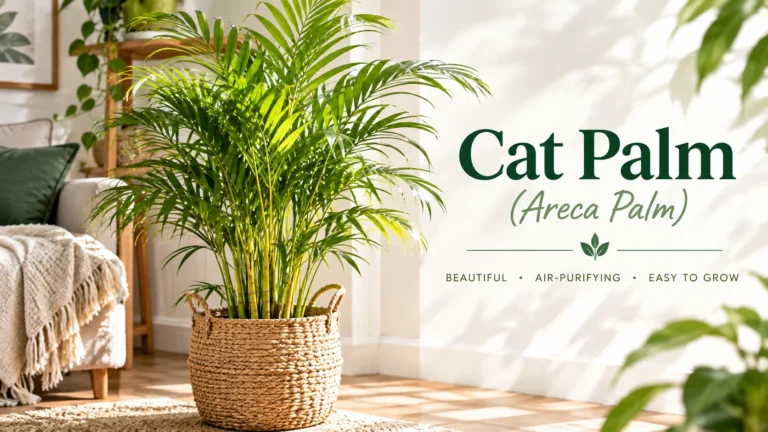
Grouping it with other tropical plants also raises humidity naturally, and it looks wonderful. Our guide on Cat Palm covers another stunning tropical statement houseplant that makes a great neighbor.
Fertilizing Umbrella Tree
From spring through summer, feed monthly with a balanced liquid fertilizer diluted to half strength. Stop completely in fall and winter when growth slows.
More is not better here. Signs of over-fertilizing include brown leaf tips, a white crust on the soil surface, and sudden leaf loss. If you see those, flush the pot with plenty of plain water and skip the next feeding.
Common Umbrella Tree Problems and Solutions
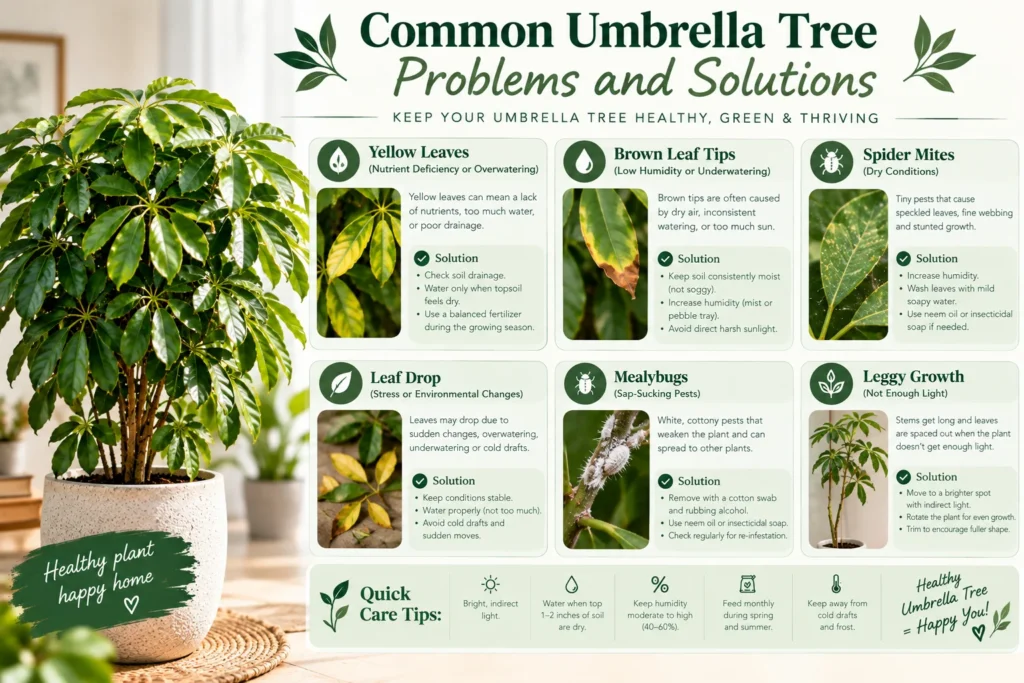
Almost every problem traces back to water, light, or sudden change. Here’s how to sort out what’s going on.
Umbrella Tree Dropping Leaves
This is the most searched problem, and I understand the panic. A pile of fallen leaves under your favorite plant is alarming. Take a breath, because umbrella tree dropping leaves is usually fixable, and these plants bounce back well.
Work through the likely causes:
- Overwatering: the top suspect. Let the soil dry out more between waterings and check that the pot drains freely.
- Underwatering: if the soil is bone dry and the leaves are limp, give it a deep soak and resume a steadier routine.
- Temperature shock: a move from a warm store to a cold room, or a chilly draft, can trigger sudden leaf loss. Find a stable spot and leave it there.
- Repotting stress: some drop is normal after a repot. Keep conditions steady and it will settle.
- Low light: a plant that isn’t getting enough light sheds older leaves to save energy. Move it closer to a bright window.
- Drafts: doors, vents, and air conditioners all cause trouble. Reposition the plant away from them.
Don’t move the plant around trying different spots every few days. That constant change makes the problem worse. Adjust one thing, then be patient for a few weeks. New growth is the sign that it’s recovering.
Umbrella Tree Yellow Leaves
Yellow leaves worry people almost as much, and the cause is often hiding in the pot.
- Overwatering: by far the most common reason. Cut back, and make sure water can drain.
- Root rot: if yellowing continues and the soil smells sour, slide the plant out of the pot. Healthy roots are pale and firm. Rotten ones are brown, mushy, and smelly. Trim the damaged roots with clean scissors and repot into fresh, dry mix.
- Nutrient deficiency: an older plant that hasn’t been fed in a long time may yellow overall. Resume a diluted monthly feed in the growing season.
- Natural aging: the occasional yellow leaf near the bottom is normal. Just remove it and carry on.
A quick way to tell them apart is to look at the pattern. Widespread yellowing with damp soil points to too much water. One or two old leaves at the base is simply the plant renewing itself.
Umbrella Tree Brown Tips
Brown tips are usually cosmetic, but they tell you something. The common causes:
- Low humidity: mist occasionally or group plants together.
- Fluoride and salts in tap water: let water sit out overnight, or switch to filtered or rainwater.
- Over-fertilizing: flush the soil and ease off feeding.
Trim the browned edges with clean scissors, following the natural shape of the leaf.
Leggy or Sparse Growth
If your plant looks tall and thin with big gaps between leaves, it’s asking for more light. Move it somewhere brighter, then prune it back to encourage branching. Rotate the pot a quarter turn every week or two so all sides get even light and the plant grows straight instead of leaning.
Common Pests
Healthy plants rarely get pests, but stressed ones can.
- Spider mites: tiny specks and fine webbing under the leaves. Wipe with a damp cloth, then spray with insecticidal soap weekly until clear.
- Scale insects: small brown bumps on stems. Dab each with a cotton swab dipped in rubbing alcohol.
- Mealybugs: white, cottony clusters in leaf joints. Treat the same way as scale.
Prevention is simple. Inspect the leaves when you water, wipe dust off regularly, and keep new plants apart for a couple of weeks before placing them near your others.
Pruning Umbrella Tree
Many people are scared to cut their plant. Don’t be. Umbrella tree pruning is the best thing you can do for a tall, awkward specimen, and it’s very forgiving.
Pruning keeps the size manageable and turns a single tall stem into a fuller, bushier plant. It also removes weak or damaged growth.
When to prune: spring is ideal, because the plant is about to enter its fastest growing season and recovers quickly.
How to prune, step by step:
- Sterilize sharp pruning shears or scissors with rubbing alcohol.
- Decide how tall you want the plant, and pick a point on the stem just above a leaf node (the small bump where a leaf attaches).
- Cut at a slight angle about a quarter inch above that node.
- Remove any dead, yellow, or crossing branches while you’re at it.
- Water normally and put the plant back in bright indirect light.
New shoots typically appear within a few weeks, often two or three below each cut, which is exactly what creates that fuller look.
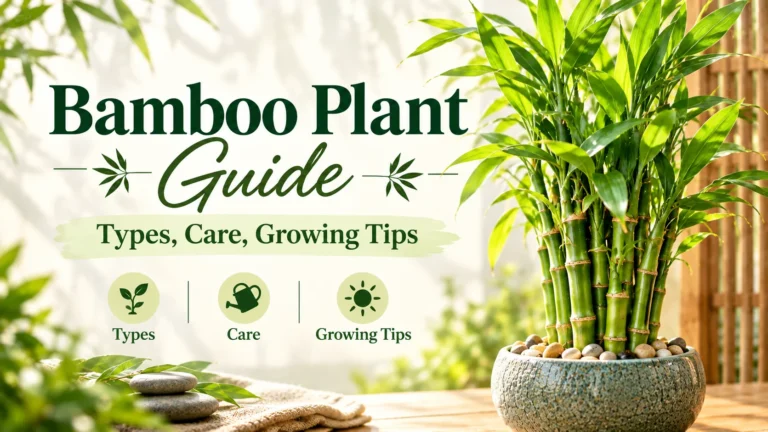
Shaping a plant this way is a bit like sculpting, and it’s part of why I love architectural greenery. For more of that kind of inspiration, our complete guide on Bamboo Plant covers another dramatic statement plant for home and garden.
The best part? Every cutting is a free new plant, and I’ll cover that below. As for regrowth, expect visible new leaves within 3 to 6 weeks during the growing season, and a noticeably fuller plant by the end of summer.
Repotting Umbrella Tree
Repotting keeps this plant growing strong, but it doesn’t need it constantly. Usually every two years or so is enough.
Signs it’s time:
- Roots poking through the drainage holes
- Roots circling the surface or the root ball
- Water running straight through, or the soil drying out unusually fast
- Growth slowing despite good care
When: spring, when the plant is actively growing.
Which pot: choose one only about 2 inches wider than the current one. Bigger pots hold excess moisture and invite root rot.
Step by step:
- Water the plant a day beforehand so the root ball slides out easily.
- Gently ease it out of the pot, loosening any tightly circled roots.
- Add a layer of fresh, well-draining mix in the new pot.
- Set the plant in at the same depth it was growing before.
- Fill around the sides, press gently, and water thoroughly.
Aftercare: keep it in its usual bright spot and skip fertilizer for about a month. Some leaf drop after repotting is completely normal. The plant is adjusting, so don’t be alarmed.
Umbrella Tree Outdoors
In the right climate, this plant becomes a spectacular landscape feature. Umbrella tree outdoors can be grown year-round in USDA zones 10 to 12, and there it can reach up to 40 feet tall, which is impressive for something many of us know as a living room plant.
The best outdoor spot offers bright light with some afternoon shade, shelter from strong wind, and well-draining soil. Give it space, too, because it grows quickly and spreads wide.
It’s magnificent outdoors in warm climates. If you’re planning a low-maintenance garden, our guide on Mesquite Trees covers another stunning outdoor tree worth considering.
Moving an indoor plant outside for summer: it loves the fresh air and humidity, but it must be acclimatized. Start in deep shade for a week, then move it gradually to brighter spots over two to three weeks. Skipping this step leads to scorched leaves.
Overwintering in colder zones: bring the plant indoors well before nighttime temperatures dip toward 50°F. Check the leaves and soil for hitchhiking pests first, then place it in your brightest window.
Umbrella Tree Propagation
Propagation is one of the most satisfying parts of growing this plant, and it’s how I filled my home with more of them.
Stem cuttings (the most reliable method):
- In spring or early summer, take a 4 to 6 inch cutting with a few leaves.
- Remove the lowest leaves so a couple of bare nodes remain.
- Dip the cut end in rooting hormone (optional but helpful).
- Plant it in a moist mix of perlite and potting soil, or stand it in a jar of water.
- Keep it warm and bright, out of direct sun, with the cutting lightly humid.
- Roots usually form in 4 to 8 weeks. Pot up once they’re an inch or two long.
Air layering: ideal for making a larger new plant from a leggy stem. Cut a small slit in the stem, wrap it with damp sphagnum moss, cover with plastic, and wait for roots to show. Then cut below the roots and pot it.
Growing from seed: it works, but it’s the slowest route. Sow fresh seeds in warm, moist mix and be patient, because seedlings take a long time to become substantial plants.
Best time: spring and early summer, when warmth and light help roots form fast.
Dwarf Umbrella Tree vs Large Umbrella Tree
Both are lovely, and the right choice depends on your space and goals.
| Feature | Dwarf | Large |
|---|---|---|
| Botanical name | Schefflera arboricola | Schefflera actinophylla |
| Native to | Taiwan | Australia and New Guinea |
| Indoor height | 3 to 6 feet | 6 to 8+ feet |
| Leaflet size | Small, delicate | Large, bold |
| Growth habit | Compact, bushy | Tall, tree-like |
| Light needs | Bright indirect, adaptable | Bright indirect, more demanding |
| Best for | Small spaces, desks, apartments | Statement plant, big rooms |
| Ease of care | Very forgiving | Forgiving, but needs space |
The dwarf umbrella tree is the easier one for most beginners. It tolerates slightly lower light, stays manageable, and handles pruning beautifully. It’s my pick for apartments and smaller rooms.
The large one is the drama queen. It suits big, bright spaces where you want a true statement plant, though it needs more room and more light.
Frequently Ask Questions
Water when the top inch or two of soil feels dry, which is roughly once a week in summer and every two to three weeks in winter. Always check the soil first rather than following a fixed schedule.
The usual causes are overwatering, underwatering, sudden temperature changes, drafts, low light, or repotting stress. Identify which one matches your situation, correct it, and give the plant a few weeks to recover.
Yes. The leaves contain calcium oxalate crystals that cause mouth irritation, drooling, and vomiting if chewed. Keep it out of reach, and call your vet if your pet eats any.
Bright, indirect light is ideal. Some gentle morning sun is fine, but avoid harsh afternoon rays. Variegated types need extra brightness.
Quickly, in good conditions. Indoors, expect roughly 6 to 12 inches per year, and more when it’s happy and well fed. Outdoors in warm climates it can grow even faster.
Yes, and it usually loves it. Introduce it gradually to avoid sunburn, place it in bright shade, and bring it in before temperatures fall toward 50°F.
Conclusion
An umbrella tree rewards you for very little effort. Once you understand its simple needs, it grows fast, looks stunning, and forgives the occasional slip. Even a struggling plant with yellow or dropping leaves can usually be turned around with a few patient adjustments.
My top 5 care tips:
- Give it bright, indirect light and avoid dark corners.
- Let the top inch or two of soil dry out between waterings.
- Use a well-draining mix in a pot with drainage holes.
- Keep it away from cold drafts and sudden changes.
- Prune in spring to keep it full, and propagate the cuttings.
Ready to keep growing? Explore more plant guides at plantstylehome.com, and enjoy your beautiful umbrella tree.