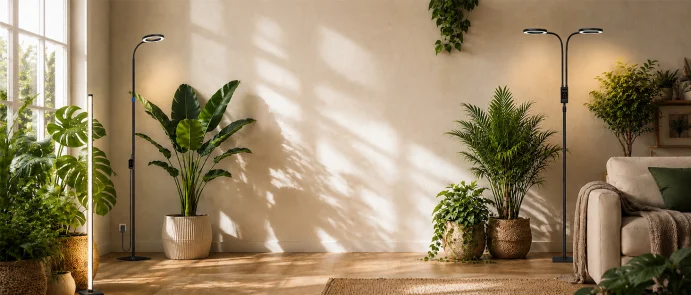
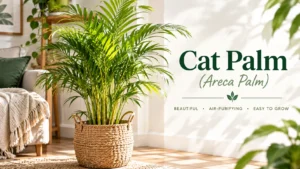
Some plants sit politely in a corner. A cat palm does not. Its fountain of glossy, arching fronds turns an ordinary room into something that feels like a jungle clearing after rain.
When I brought my first one home, it transformed my living room into a tropical paradise almost overnight. Friends walked in and asked whether I had redecorated. All I had done was add one plant.
The best part is that it’s safe around cats and dogs, which is a big deal if your pets treat every houseplant like a salad bar. It’s also more forgiving than its dramatic looks suggest, once you understand what it wants.
I’ve lost a few fronds and learned plenty along the way. This guide shares what actually works, including how to fix yellow leaves and brown tips, the two problems nearly every owner runs into.
At Plant Style Home we help you grow beautiful tropical plants and flowers, so explore our complete plant and flower guides here whenever you’re ready for your next green friend.
What Is a Cat Palm?
The cat palm’s botanical name is Chamaedorea cataractarum. It’s a clumping palm, which means it sends up multiple stems from the base and grows into a full, bushy shape rather than a single trunk.
Where It Comes From
This palm is native to southern Mexico and parts of Central America. In the wild it grows on riverbanks and beside waterfalls, often with its roots close to running water. The species name comes from the Latin word for waterfall, and that detail explains almost everything about its care.
A plant that evolved with constant moisture and humid air will not enjoy a dry, dusty windowsill. Keep that picture in mind and the rest of this guide will make sense.
How Big Does It Get?
Indoors, expect a height of about 3 to 6 feet with a similar spread. Outdoors in the right climate it can reach 6 to 8 feet, and sometimes a little more. It grows at a moderate pace, usually adding several inches a year in good conditions.
Why Is It Called Cat Palm?
The name most likely comes from the soft, feathery fronds that look a bit like cat tails, and some people say the leaves feel like fur when they brush past. Whatever the origin, the name suits a plant that’s so friendly around pets.
Is Cat Palm Pet Safe?
Yes. The ASPCA lists it as non-toxic to cats and dogs. A curious nibble may still cause a little stomach upset, so it’s smart to discourage chewing, but you don’t need to worry about poisoning. That makes it one of the best statement plants for pet households.
Cat Palm Care: Complete Guide
Once you know what this palm needs, it thrives. The core idea is simple: give it bright but filtered light, steady moisture, warm air and lots of humidity.
Light Requirements
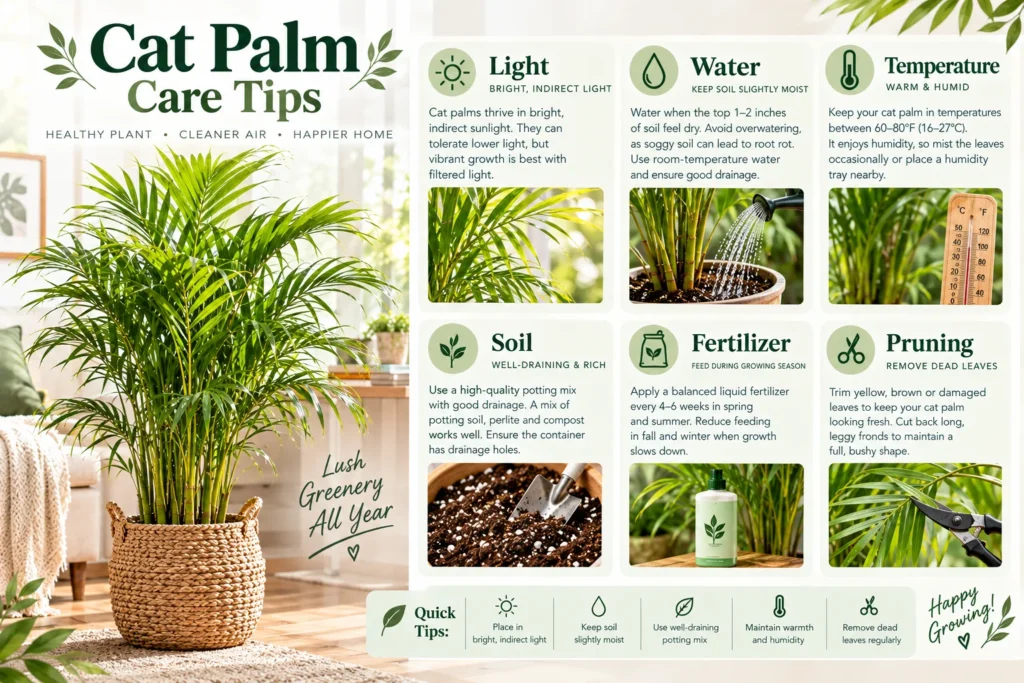
Cat palm light requirements come down to bright, indirect light. Think of the dappled light under a jungle canopy.
- East window: Ideal. Gentle morning sun is fine.
- North window: Works well, though growth may slow slightly.
- West window: Fine if the palm sits a few feet back or behind a sheer curtain.
- South window: Too intense unless the light is well filtered.
Direct afternoon sun scorches the fronds, leaving pale, bleached or crispy patches. Too little light shows up differently. Growth gets leggy and sparse, and the fronds lose their deep green color.
This palm tolerates lower light better than many tropical plants, but tolerating and thriving are different things. If you want a full, glossy plant, give it a bright spot.
Watering Cat Palm
This is the most important section, so read it twice. Cat palm watering is all about consistent moisture without sogginess. Remember the riverbank: wet feet, but never a swamp.
The most common mistake I see cat palm owners make is following a rigid schedule. Water when the plant needs it, not because it’s Sunday.
Here is the method I use:
- Push a finger about an inch or two into the soil.
- If the top layer feels barely damp or just starting to dry, it’s time to water.
- Water slowly until it drains freely from the bottom.
- Empty the saucer after about 15 minutes so the roots never sit in water.
As a rough guide, that means watering about once a week in spring and summer, and every 10 to 14 days in fall and winter. Homes vary, so trust the soil over the calendar.
Water quality matters more than most people realize. This palm is sensitive to fluoride and the salts found in many tap water supplies, and these build up in the soil and burn the leaf tips. If you can, use filtered water, rainwater or distilled water. If you must use tap water, let it sit out overnight so chlorine can dissipate, though that won’t remove fluoride.
Every few months, flush the pot by running water through the soil for a couple of minutes to wash out mineral buildup.
Soil and Potting Mix
The palm wants soil that holds moisture yet drains quickly. A good recipe is a quality potting mix blended with extra peat moss or coco coir and a generous handful of perlite. The mix should feel light and springy, not heavy and muddy.
A pot with drainage holes is essential. I’ve seen too many beautiful palms decline in decorative pots with no exit for water. If you love a pot without holes, use it as a cover and keep the plant in a plastic nursery pot inside.
Temperature Requirements
Cat palm is happiest between 65 and 80°F (18 to 27°C). Normal household temperatures suit it perfectly.
It does not enjoy chill. Keep it away from cold drafts, air conditioner vents and drafty windows in winter. Anything below about 50°F (10°C) can cause lasting damage, so bring it inside well before the first cold nights.
Humidity Needs
Here’s where this palm really shows its jungle heritage. It loves high humidity, and brown tips are often its way of complaining about dry air.
A few ways to help:
- Group plants together. They share moisture and create a humid microclimate.
- Use a pebble tray. Set the pot on a tray of pebbles with water below the pot base.
- Run a humidifier. It’s the most effective fix, especially in winter when heating dries the air.
- Mist occasionally. It gives a short boost, but don’t rely on it alone.
Grouping works best with plants that enjoy similar conditions. Cat palm pairs beautifully with other tropical plants, and our guide on Bamboo Plant covers another stunning low-maintenance indoor plant.
Bathrooms and kitchens are often great homes for these palms, as long as there’s enough light.
Fertilizing Cat Palm
Feed lightly. During spring and summer, use a balanced liquid fertilizer diluted to half strength once a month. Skip feeding completely in fall and winter when growth slows.
More is not better here. Too much fertilizer builds up salts in the soil and burns the leaf tips, which brings us to the problems section.
Common Cat Palm Problems and How to Fix Them
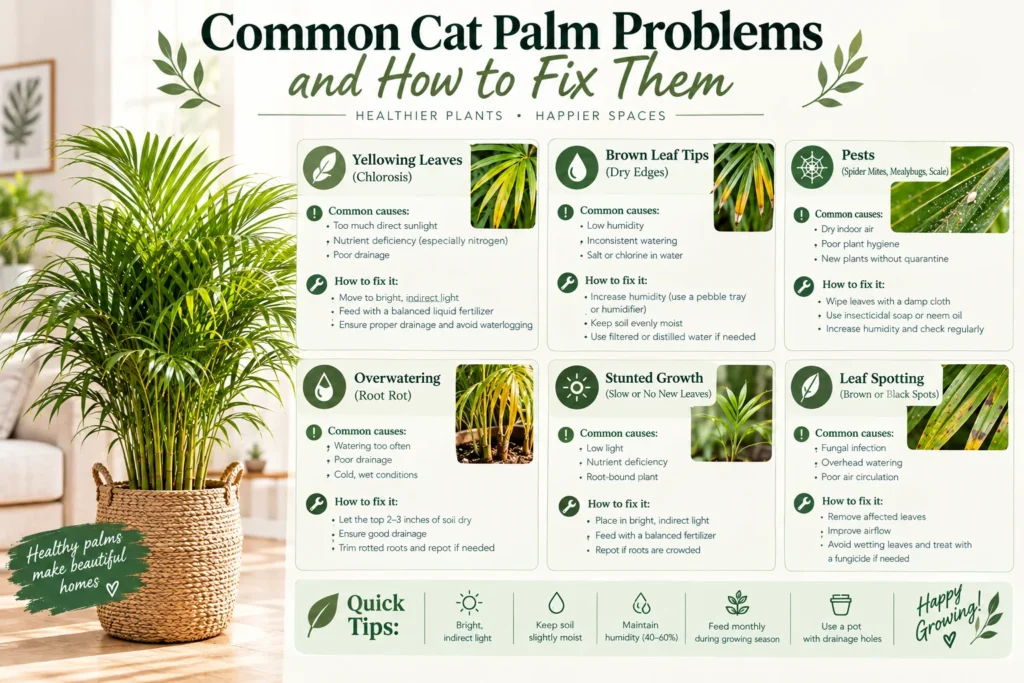
Almost every palm owner runs into trouble sooner or later. The good news is that most problems are easy to solve once you find the cause.
Cat Palm Yellow Leaves
Yellow leaves are the most searched problem, and I understand why. It’s alarming to see your lush palm suddenly fade. Look at the pattern to work out the cause.
- Overwatering: The most common culprit. Soil stays wet, roots suffocate, and lower leaves turn yellow. Let the top inch dry out, check drainage and empty saucers promptly.
- Underwatering: Leaves yellow and then crisp up, and the soil pulls away from the pot. Water thoroughly and stick to a steadier routine.
- Low light: Pale, yellowish fronds and slow growth. Move the palm to a brighter spot with indirect light.
- Nutrient deficiency: General yellowing across older fronds, often in a plant that hasn’t been fed in a long time. Feed with a diluted balanced fertilizer in the growing season.
- Cold temperature: Yellowing after a chilly night or draft. Move it somewhere warmer and away from windows in winter.
Some yellowing of the oldest lower fronds is normal as the plant grows. Trim those off at the base and don’t worry. Widespread yellowing is the sign that something needs attention.
Cat Palm Brown Tips
Brown tips are the other big complaint, and this one needs honesty. You may not be able to eliminate them completely in a typical home, but you can reduce them dramatically.
- Low humidity: The leading cause. Use a humidifier, pebble tray or plant grouping.
- Fluoride and salts in tap water: Switch to filtered or rainwater and flush the soil regularly.
- Underwatering: Dry roots lead to crispy tips. Keep moisture consistent.
- Fertilizer burn: Too much or too strong. Flush the soil and feed at half strength only in spring and summer.
Existing brown tips won’t turn green again. Trim them with clean scissors, following the natural shape of the frond and leaving a thin edge of brown so you don’t cut into healthy tissue.
Cat Palm Drooping
A drooping palm is usually thirsty, so check the soil first. If it’s dry, give it a deep drink and the fronds often perk up within a day.
If the soil is wet, look for root problems instead. When roots are circling the pot or poking out of the drainage holes, the plant is root bound and needs a bigger home. Sudden droop can also come from temperature shock after a cold draft or a move from a warm room to a cool one.
Cat Palm Pests
Dry indoor air invites pests. Here’s what to watch for:
- Spider mites: The most common. Look for fine webbing and tiny speckles on the fronds. Rinse the leaves in the shower, then wipe them and treat with insecticidal soap every 5 to 7 days for a few weeks.
- Scale insects: Small brown bumps on stems and undersides of leaves. Scrape or dab them with rubbing alcohol on a cotton swab, then treat with horticultural oil.
- Mealybugs: Fluffy white clusters in leaf joints. Dab with alcohol and follow with neem oil or insecticidal soap.
Prevention is simple. Keep humidity up, wipe the fronds occasionally to remove dust, and inspect the plant weekly. Isolate any new plant for a couple of weeks before it joins your collection.
Root Rot Prevention
Root rot is the silent killer, and it usually comes from too much water and poor drainage.
Signs: yellowing leaves, a musty smell, mushy dark roots and soil that stays wet for days.
Causes: heavy soil, pots without drainage, and watering on a schedule instead of by need.
Treatment:
- Slide the plant out of its pot and rinse the roots.
- Cut away any black, soft or smelly roots with clean shears.
- Repot in fresh, well-draining mix in a clean pot with drainage holes.
- Water lightly at first and keep the plant in bright, indirect light while it recovers.
Catch it early and the palm often bounces back. Wait too long and there may be little left to save.
Cat Palm vs Majesty Palm
People often confuse these two, and the mix-up leads to plenty of disappointment. Both are graceful, pet-safe palms, but their needs differ. Here’s a side-by-side look.
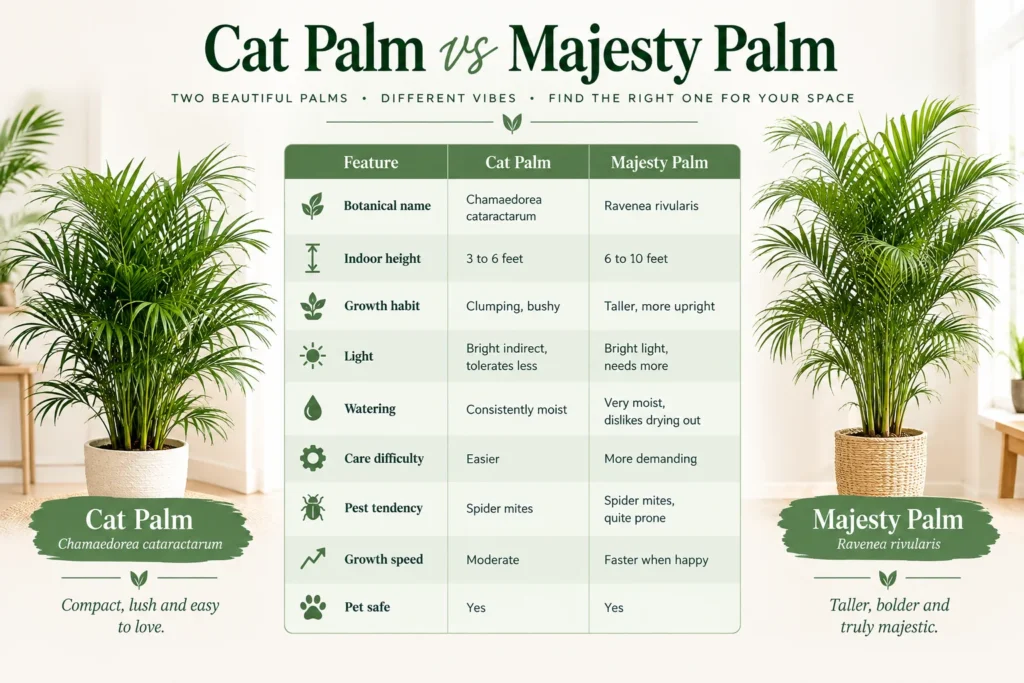
For beginners: The cat palm wins. It tolerates a wider range of light and forgives the occasional slip better.
For low light: Cat palm again. A majesty palm in dim conditions tends to decline fast.
For faster growth: Majesty palm grows quicker and taller, if you can give it the bright light and humidity it craves.
On price: Both are usually affordable in small sizes, though prices vary by nursery and region. Larger specimens of either can cost quite a bit, so buy the biggest healthy plant your budget allows rather than paying extra for a struggling one.
If you want a compact, bushy, easier palm, choose the cat palm. If you have a bright room and space for something tall, the majesty palm can make a dramatic statement.
Either way, those lush green fronds are a statement all by themselves. If you enjoy that leafy look, our guide on Green Flowers offers more beautiful green plant inspiration indoors.
Repotting Cat Palm
This palm doesn’t mind being slightly snug, so don’t rush to repot.
When to Repot
Look for these signs:
- Roots growing out of the drainage holes
- Water rushing straight through without soaking in
- Slowed growth despite good care
- The plant looking top-heavy or tipping over
Usually that means repotting every 2 to 3 years.
Best Time and Pot Size
The best time is spring or early summer when the plant is actively growing. Choose a pot only 1 to 2 inches wider than the current one. A pot that’s too large holds excess water and invites root rot.
Step by Step
- Water the plant a day before to ease the rootball out.
- Gently loosen the plant from its pot and tease apart any tight roots.
- Add a layer of fresh mix to the new pot.
- Set the palm at the same depth as before, since burying the crown can cause rot.
- Fill around the sides, pressing gently, and water thoroughly.
Aftercare
Keep the palm in bright indirect light and skip fertilizer for about a month. Some leaf drop or mild sulking is normal. Palms dislike root disturbance, so be gentle and patient.
Cat Palm Outdoors
If you live somewhere warm, you can enjoy this palm outside. It grows well in USDA zones 10 to 11, and zone 9 can work with protection from frost.
Location: Choose a spot with bright shade or dappled light. Direct afternoon sun scorches the fronds just like it does indoors. Shelter from strong wind helps too.
Moisture: Remember the riverbank. Outdoor palms want steady moisture and rich, well-draining soil, so water regularly in dry spells.
Overwintering: If temperatures drop toward 50°F, move potted palms indoors. In marginal zones, cover in-ground plants with frost cloth and mulch heavily around the base.
Container growing: Pots make it easy to move the palm as seasons change. Use a container with drainage holes and check the soil more often, since pots dry out faster outdoors.
If you love tropical plants for both patio and living room, our guide on Asiatic Lily covers another stunning plant that brings exotic beauty to your home.
Cat Palm Benefits
Beyond looking gorgeous, this palm earns its place in your home.
- Pet safe: Peace of mind for cat and dog owners.
- Air purifying: Palms are often listed among plants that help filter indoor air. The effect in a real home is modest, so think of it as a bonus rather than a replacement for ventilation.
- Humidity boosting: Through transpiration, the plant releases moisture into the air, gently softening dry rooms.
- Tropical aesthetic: Few plants give such an instant resort feeling.
- Stress reducing: Caring for green things and simply being around them can help you relax. I notice it every morning when I check on mine with my coffee.
This palm also creates the perfect backdrop for fragrant plants. Our guide on Night Blooming Jasmine shows a perfect fragrant tropical companion.
Frequently Ask Questions
Roughly once a week in the growing season and every 10 to 14 days in winter, but always check the top inch of soil first. Water when it starts to dry, and never let the pot sit in standing water.
The usual causes are overwatering, underwatering, low light, nutrient deficiency and cold. Check the soil moisture and drainage first, since overwatering is the most common. Lower fronds yellowing occasionally is normal aging.
No. It’s listed as non-toxic to both. Chewing may still upset a pet’s stomach, so keep an eye on curious nibblers.
Bright, indirect light is best. It tolerates lower light but grows fuller and greener with more. Avoid direct sun, which scorches the leaves.
At a moderate pace, adding several inches a year in good conditions. Growth slows in winter and speeds up with warmth, light and steady moisture.
The cat palm is smaller, bushier and easier to care for. The majesty palm grows taller and faster but needs brighter light and more constant moisture, and it’s harder for beginners.
Conclusion
Caring for a cat palm is one of the most rewarding things you can do as a plant lover. Once you understand that it’s a waterfall-loving tropical at heart, everything falls into place.
Here are the top tips to remember:
- Give it bright, indirect light and avoid direct sun.
- Keep the soil consistently moist but never soggy.
- Use filtered or rainwater to prevent brown tips.
- Boost humidity with a humidifier or pebble tray.
- Feed lightly in spring and summer only.
- Watch for spider mites and root rot early.
Be patient, be observant, and don’t panic over the odd yellow frond. Your palm will reward you with lush, glossy growth that makes your whole home feel alive.
Ready for more green inspiration? Come back to Plant Style Home anytime for more plant and flower guides, and enjoy growing your cat palm.