I still remember the first time I chopped fresh cilantro into a pot of homemade salsa and realized the grocery store stuff had been lying to me my whole life. That bright, citrusy punch was nothing like the wilted bunch I used to buy. So I did what any obsessive home cook would do: I bought a packet of seeds and stuck them in a pot on my kitchen windowsill.
That first attempt bolted (went to seed) within three weeks. My second attempt did better. By my third round, I finally understood what this plant actually wants, and now I keep a steady supply going almost year-round. If you’ve ever wondered how to grow cilantro without watching it turn bitter and flowery on you, you’re in the right place.
This guide walks through everything I’ve learned, the good, the frustrating, and the “why didn’t anyone tell me this sooner” moments, so you can skip the trial and error I went through.
At Plant Style Home, we love helping you grow beautiful and useful plants right in your own home and garden, and cilantro is one of the most rewarding places to start.
What is Cilantro?
Cilantro is the leafy, herb stage of a plant called Coriandrum sativum, a member of the parsley family native to regions of Southern Europe, North Africa, and Southwest Asia.
Here’s where it gets confusing for a lot of new gardeners: cilantro and coriander are the exact same plant. In the United States, “cilantro” refers to the fresh leaves and stems, while “coriander” refers to the dried seeds. In most of Europe and Asia, though, the whole plant, leaves included, is simply called coriander.
So when someone hands you a coriander growing guide, don’t panic. You’re growing the same thing.
Why grow it at home instead of buying it? A few honest reasons:
- Store-bought cilantro wilts fast, often within two or three days
- Homegrown cilantro tastes noticeably fresher and more aromatic
- You get to harvest exactly what you need, when you need it
- It’s genuinely one of the easier herbs for beginners, once you understand its quirks
In my experience, growing cilantro at home also just makes you cook more with it. When it’s sitting right there on the counter, you reach for it constantly.
What You Need to Grow Cilantro
Before you get started, let’s talk supplies. Cilantro isn’t fussy, but a few smart choices upfront will save you headaches later.
Seeds vs. seedlings
Cilantro has a long taproot, which means it genuinely does not like being transplanted. I’d always recommend starting from seed directly where the plant will live, rather than buying seedlings from a nursery. Transplant shock often triggers early bolting, which defeats the whole purpose of growing your own.
Container vs. garden bed
Both work well. Containers are great if you want cilantro close to the kitchen or you’re working with limited space. Garden beds are ideal if you’re growing enough to preserve or use heavily in cooking.
Essential tools & supplies
- Cilantro seeds (whole coriander seeds work in a pinch, more on that below)
- A container at least 8–10 inches deep, or a garden bed with loose soil
- Well-draining potting mix or garden soil
- A watering can or gentle hose attachment
- Basic organic fertilizer or compost
- A spot with the right light (we’ll get into this next)
One fun fact I share with beginners: those whole coriander seeds sitting in your spice rack can actually be planted. Just gently crack the outer husk first to help germination along.
How to Grow Cilantro Step by Step
This is the heart of any solid cilantro growing guide, so let’s go through it properly.
Choosing the Right Location
Cilantro likes sun, but it doesn’t love heat. That’s an important distinction.
Outdoors, aim for a spot that gets 4 to 6 hours of sunlight a day. In cooler climates, full sun works great. In hot climates, cilantro actually does better with some afternoon shade, because heat is the number one trigger for bolting.
Indoors, a south or west-facing window usually provides enough light. If your home doesn’t get strong natural light, a simple grow light will make a noticeable difference in how sturdy and flavorful your plants turn out.
Best Soil for Cilantro
Cilantro wants soil that’s loose, rich, and drains well. Heavy, waterlogged soil is one of the fastest ways to kill it.
- Soil type: Light, well-draining potting mix or garden soil amended with compost
- pH range: Slightly acidic to neutral, around 6.2 to 6.8
- Drainage: Non-negotiable, always use containers with drainage holes
If your garden soil is heavy clay, mix in compost or coarse sand before planting to loosen it up.
Planting Cilantro Seeds
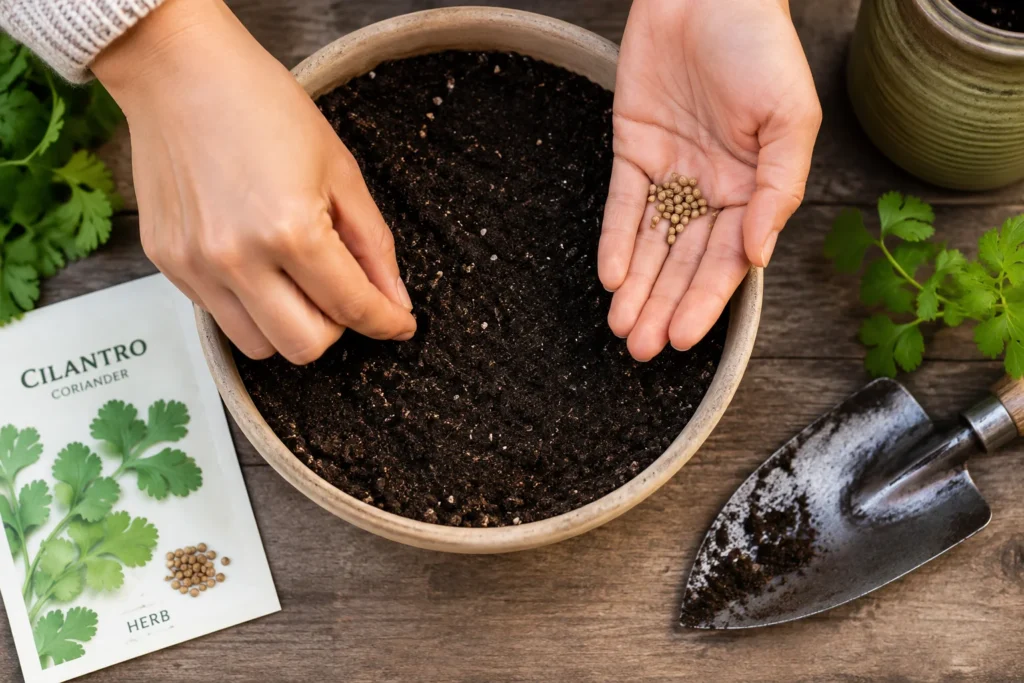
Here’s the step-by-step process I follow every single time:
- Prep the soil. Loosen it and mix in compost if planting in the ground.
- Sow seeds ¼ to ½ inch deep. Cilantro seeds need light soil coverage, not deep burial.
- Space seeds 2 inches apart, or scatter them and thin later.
- Water gently right after planting to settle the soil.
- Keep soil consistently moist until germination, which usually takes 7 to 14 days.
- Thin seedlings once they reach about 2 inches tall, leaving roughly 4–6 inches between plants.
Timing matters too. Cilantro grows best in cooler weather, so aim to plant in early spring or early fall rather than the peak of summer.
Watering Cilantro
Cilantro likes evenly moist soil, but it hates sitting in water.
- Water when the top inch of soil feels dry to the touch
- Aim for consistent moisture rather than heavy, infrequent watering
- Reduce watering slightly in cooler months
- Always let excess water drain away completely
One mistake I see beginners make constantly is either drowning the plant out of enthusiasm or forgetting it for a week and then overcorrecting. Cilantro really does prefer a steady, boring watering routine.
Fertilizing Guide
Cilantro isn’t a heavy feeder, so go easy here.
- Mix compost into the soil at planting time
- Apply a balanced, diluted liquid fertilizer every 3–4 weeks during active growth
- Avoid high-nitrogen fertilizers late in the growing cycle, since they can push the plant toward flowering faster
Less is more with cilantro fertilizing. Overfeeding tends to speed up bolting rather than prevent it.
How to Grow Cilantro Indoors?
If you’re short on outdoor space, how to grow cilantro indoors is probably the question that brought you here, so let’s cover it properly.
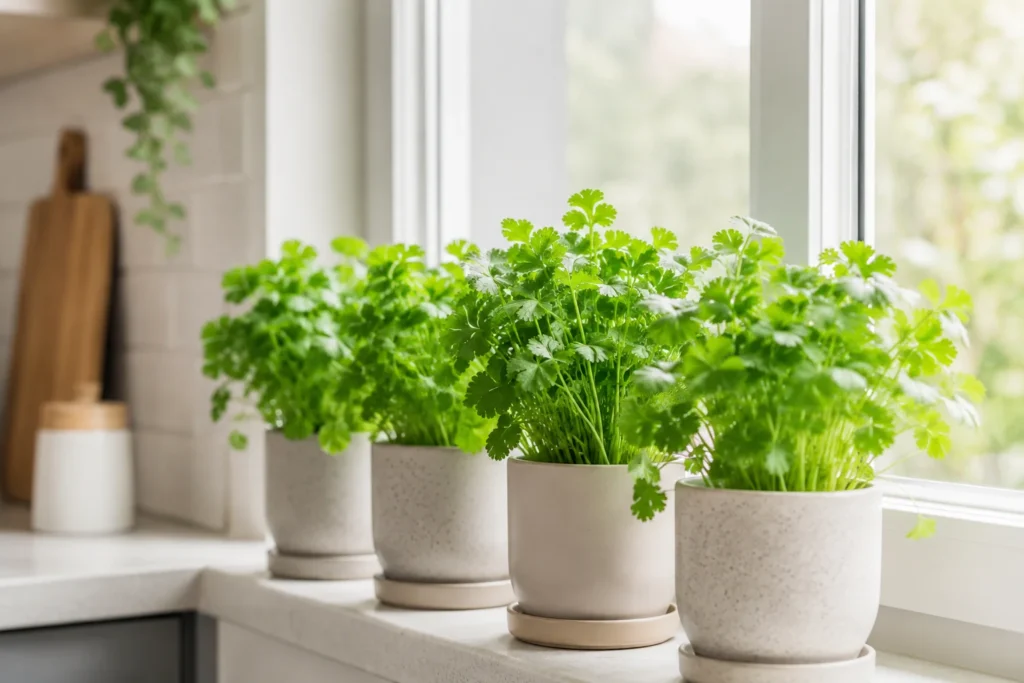
Container size & type
Choose a pot at least 8–10 inches deep to accommodate that long taproot. Unglazed terracotta works well because it allows excess moisture to escape through the sides.
Window placement tips
A south or west-facing window gets the most consistent light. Rotate the pot every few days so the plant grows evenly instead of leaning toward the light source.
Indoor watering differences
Indoor cilantro dries out more slowly than outdoor plants, especially in winter with less airflow. Check soil moisture before watering rather than sticking to a rigid schedule.
Best indoor varieties
Slow-bolt varieties like ‘Calypso’ or ‘Santo’ are excellent choices for growing cilantro at home indoors, since they’re bred specifically to resist premature flowering.
Cilantro Care Tips
How to Prevent Bolting?
This is the section most people are really here for, so let’s get into it.
Bolting is when cilantro shifts from producing leaves to producing flowers and seeds. Once it bolts, the leaves turn bitter and the plant stops putting energy into fresh growth. It’s the single most common frustration home growers run into.
Bolting happens because of two main triggers: heat and stress. Long daylight hours and rising temperatures signal to the plant that it’s time to reproduce.
The secret to keeping cilantro from bolting is managing temperature and harvesting consistently. Here’s exactly how I do it:
- Plant during cooler seasons, spring or fall, not the height of summer
- Provide afternoon shade in warmer climates
- Keep soil consistently moist, since drought stress accelerates bolting
- Harvest regularly to encourage the plant to keep producing leaves
- Choose slow-bolt varieties if you’re in a hot climate
- Succession plant every 2–3 weeks so you always have young plants coming up behind older, bolting ones
That last tip is honestly the one that changed everything for me. Instead of fighting one plant’s natural cycle, I just keep a rotation going.
Pruning & Harvesting Tips
Regular light harvesting actually encourages the plant to branch out and produce more.
- Start harvesting once plants reach 4–6 inches tall
- Snip outer leaves and stems, leaving the center intact to keep growing
- Never remove more than a third of the plant at once
- Pinch off any early flower stalks to delay bolting
Common Pests & Diseases
Cilantro is fairly low-maintenance, but keep an eye out for:
- Aphids: small clusters on new growth; rinse off with water or use insecticidal soap
- Powdery mildew: a white coating on leaves, usually from poor airflow; space plants properly
- Damping off: seedlings collapsing at the base, caused by overly wet, cool soil
- Leaf spot: brown spots from fungal issues; avoid overhead watering
Common Growing Mistakes
- Planting during hot summer months
- Transplanting seedlings and damaging the taproot
- Overwatering or letting soil stay soggy
- Letting soil dry out completely between waterings
- Harvesting too aggressively or not at all
- Using containers without drainage holes
How to Harvest Cilantro?
When to harvest
Once plants reach 4–6 inches tall, usually around 3–4 weeks after germination, you’re good to start snipping.
How to harvest correctly
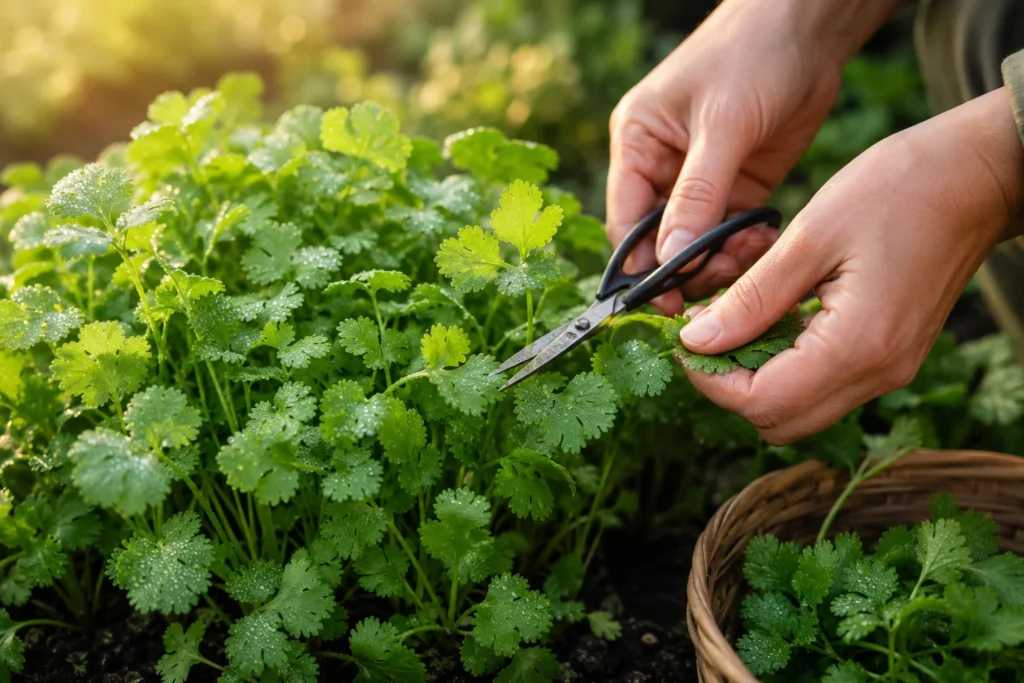
Use scissors or your fingers to cut stems near the base, working from the outer leaves inward. This encourages continued growth rather than stunting the plant.
How to store fresh cilantro
Trim the stems and place the bunch in a glass of water like a bouquet, then loosely cover with a plastic bag and refrigerate. This can keep cilantro fresh for over a week, which is a game-changer compared to how fast the grocery store bunches wilt.
How to dry & freeze cilantro
Cilantro doesn’t dry particularly well, since it loses most of its flavor. Freezing works much better:
- Chop fresh leaves and freeze them in ice cube trays with a little water or olive oil
- Pop out cubes as needed for soups, sauces, and stews
Cilantro Uses & Benefits
Culinary uses & recipe ideas
Cilantro is a staple in salsas, guacamole, curries, chutneys, and countless Mexican, Indian, Thai, and Middle Eastern dishes. Try tossing it into rice, blending it into a cilantro-lime dressing, or finishing a taco with a generous handful.
Nutritional benefits
Cilantro is low in calories but offers a good amount of vitamin K, vitamin A, and vitamin C, along with small amounts of antioxidants.
Medicinal properties
Traditionally, cilantro has been used to support digestion and is sometimes credited with mild anti-inflammatory properties. As always, this isn’t a substitute for medical advice, but it’s a nice bonus on top of a flavorful herb.
Cilantro vs Coriander
| Feature | Cilantro | Coriander |
|---|---|---|
| Plant part | Fresh leaves and stems | Dried seeds |
| Common region of use | United States | Europe, Asia, elsewhere |
| Flavor | Bright, citrusy, herbaceous | Warm, nutty, slightly citrusy |
| Common uses | Garnish, salsas, fresh dishes | Spice blends, baking, pickling |
| Same plant? | Yes | Yes |
Same plant, different stage, different purpose. Once that clicks, cooking with both becomes a lot more intuitive.
Cilantro grows beautifully alongside other herbs, just like Foenegriek, another amazing kitchen herb worth growing at home.
Frequently Ask Questions
Cilantro typically germinates in 7–14 days and is ready for its first harvest around 3–4 weeks after that, though full maturity takes closer to 6–8 weeks.
The most common causes are overwatering, poor drainage, too much heat, or transplant shock from moving seedlings. Check soil moisture and light conditions first.
Yes, especially indoors or in mild climates, if you succession plant every few weeks and protect it from extreme heat or cold.
Aim for 4–6 hours of sunlight daily, with some afternoon shade in hot climates to prevent stress and bolting.
Bolting is usually triggered by heat, long daylight hours, or stress from underwatering. Consistent moisture, cooler planting times, and regular harvesting all help slow it down.
If you enjoy growing edible plants, our complete guide on Pravi Celer is another fascinating kitchen garden plant worth trying.
Final Thoughts
Learning how to grow cilantro successfully really comes down to understanding what it wants: cool temperatures, consistent moisture, and regular harvesting. Once those habits click, you’ll find yourself with a steady supply of fresh, fragrant leaves right on your windowsill or in your garden bed.
Cilantro pairs beautifully with other garden plants, so explore our guide on Mesquite Trees for outdoor garden inspiration.
Whether you’re growing cilantro at home for the first time or troubleshooting a plant that keeps bolting on you, I hope this cilantro growing guide gives you the confidence to keep experimenting. It took me a few rounds to get it right, and it’ll probably take you a couple tries too, but that first handful of homegrown cilantro tossed into a fresh batch of salsa makes it entirely worth it.