The first time a goldfish plant bursts into bloom, you understand immediately why people fall in love with it. Those tiny orange flowers really do look like little goldfish leaping out of the glossy, dark green foliage, while the trailing stems spill over the pot like a slow-motion waterfall.
No wonder it has become such a favourite hanging basket houseplant. It asks for slightly more attention than a pothos or snake plant, but the reward is absolutely worth it.
This guide covers everything: daily care, coaxing out flowers, propagating new plants and fixing the problems that trip most people up. You can also explore our full collection of houseplant and flower guides at PlantStyleHome, everything from trailing plants to bold statement trees.
What Is a Goldfish Plant?
The classic goldfish plant is Columnea gloriosa, and the name often covers related Columnea species too. If you have seen it labelled as a columnea plant, it is the same family of trailing beauties. It belongs to the Gesneriaceae family, which makes it a cousin of the African violet.
In the wild, it grows in the tropical rainforests of Central and South America, usually draping over tree branches and mossy ground. That origin explains almost everything about its care: it loves warmth, humidity and light that is bright but gentle.
The common name comes from the tubular orange flowers, which resemble small goldfish or koi. Stems trail and cascade, so a hanging basket shows them off perfectly. With good care, a plant can live well over 10 years.
A quick safety note: it is not considered toxic to humans, though the sap can mildly irritate skin. Check pet toxicity with a trusted source before you bring one home if you share your space with cats or dogs.
Here are the varieties you are most likely to meet:
- Columnea gloriosa: the classic, with fuzzy dark leaves and bright orange-red flowers.
- Columnea ‘Stavanger’: a vigorous grower with long, lush trailing stems.
- Columnea ‘Light Prince’: a lovely choice with variegated leaves.
- Nematanthus gregarius: also sold as goldfish plant, more compact and an excellent bloomer.
Garden centres often sell Nematanthus under the goldfish plant name, and the care is very similar, so everything below applies to both.
The vivid orange blooms are a true showstopper. For more orange flower inspiration, our guide to Orange Flowers covers stunning varieties for both indoors and outdoors.
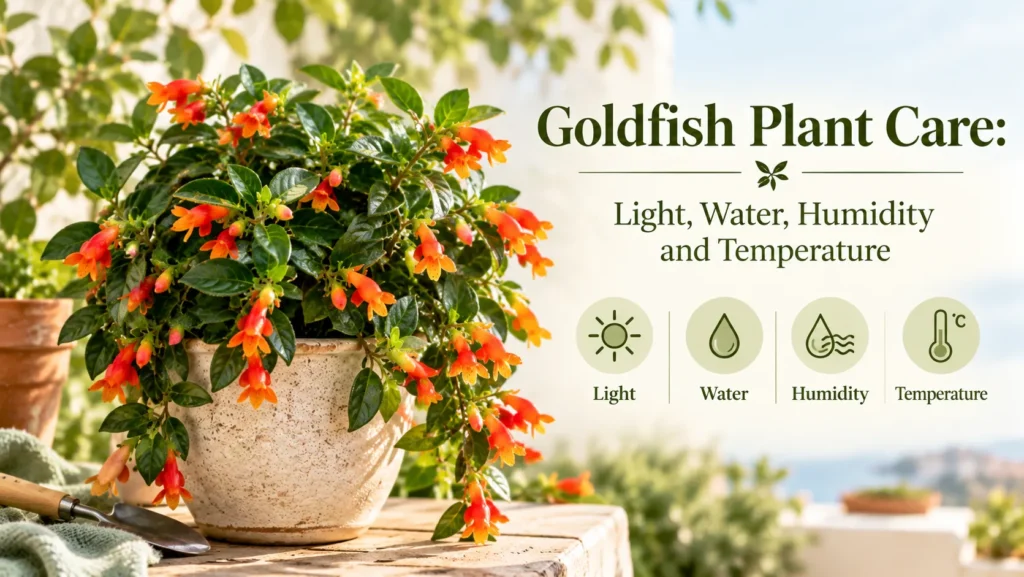
Goldfish Plant Care: Light, Water, Humidity and Temperature
Get these four things right and the rest falls into place.
Goldfish Plant Light Requirements
Bright, indirect light is the sweet spot. An east or west-facing window usually works best.
- Harsh midday sun burns the glossy leaves, so filter it with a sheer curtain.
- Low light means weak, leggy growth and no flowers.
- A grow light is a great help in dark rooms or through winter.
- Rotating the pot every week or so keeps growth even on all sides.
Watering
Keep the soil consistently moist but never waterlogged. Let the top 2-3cm dry out slightly between waterings.
Overwatering is the number one killer. It leads to root rot and leaf drop, so when in doubt, wait a day. A few habits help:
- Use room-temperature water, because cold water shocks tropical roots.
- Water less in winter, when growth slows.
- Never leave the pot standing in a saucer of water.
Humidity
Rainforest plants love moisture in the air, and 50-60% relative humidity is ideal. Easy ways to raise it:
- Set the pot on a pebble tray filled with water.
- Group plants together so they share moisture.
- Run a humidifier nearby.
- Mist occasionally, but keep droplets off the flowers, where they can cause spotting.
A bright bathroom or kitchen often suits this plant perfectly. If you enjoy tropical foliage, the Monstera Plant thrives in the same humid conditions, and our complete guide covers care, types and why it remains one of the most popular houseplants.
Temperature
The ideal range is 18-24°C (65-75°F). Below 13°C (55°F), leaves start to drop. Keep the plant away from cold drafts, air conditioning vents and radiators.
Here is a handy secret: cool autumn nights of 12-15°C for 4-6 weeks actually trigger blooming. We will come back to that trick shortly.
Soil, Pot and Feeding
Soil
You want a light, airy, well-draining mix. My favourite recipe is simple:
- 50% peat-free potting mix
- 25% perlite
- 25% orchid bark
African violet compost also works nicely. Avoid heavy standard potting soil, which stays too wet. Aim for a slightly acidic pH of 6.0-6.5.
Pot
A hanging basket is ideal, since it lets the stems trail naturally. Choose a small pot, because slightly root-bound plants bloom more freely. Drainage holes are essential.
Terracotta is a smart pick if you tend to overwater, as its breathable walls dry the soil faster. Repot only when roots fill the pot completely, usually every 2-3 years.
Feeding
Feed every 2 weeks in spring and summer with a high-phosphorus liquid fertilizer to encourage flowers. Dilute it to half strength, because this plant is sensitive to over-fertilizing.
Stop feeding in autumn and winter while the plant rests. Resume in late winter to set up spring blooms.
Why Is My Goldfish Plant Not Blooming?
This is the most common frustration, and the good news is that it is nearly always fixable. Here is exactly what to check.
- Not enough light. Move it to a brighter spot with indirect light right away. A grow light helps in winter.
- No cool rest period. Move the plant to a cooler room at 12-15°C for 4-6 weeks in autumn and water a little less. It reads this as winter and blooms in response when things warm up again.
- The wrong fertilizer. High nitrogen feed gives you lots of leaves and no flowers. Switch to a high-phosphorus formula, where the middle number on the NPK label is the highest.
- Root-bound or freshly repotted. A snug pot encourages blooms. If you just repotted, give it one full season to settle.
- Low humidity. Below 40%, buds drop and flowering suffers. Boost humidity straight away.
- Overwatering. Stressed roots do not bloom, so check drainage and ease off the water.
Goldfish Plant Dropping Leaves: Causes and Solutions
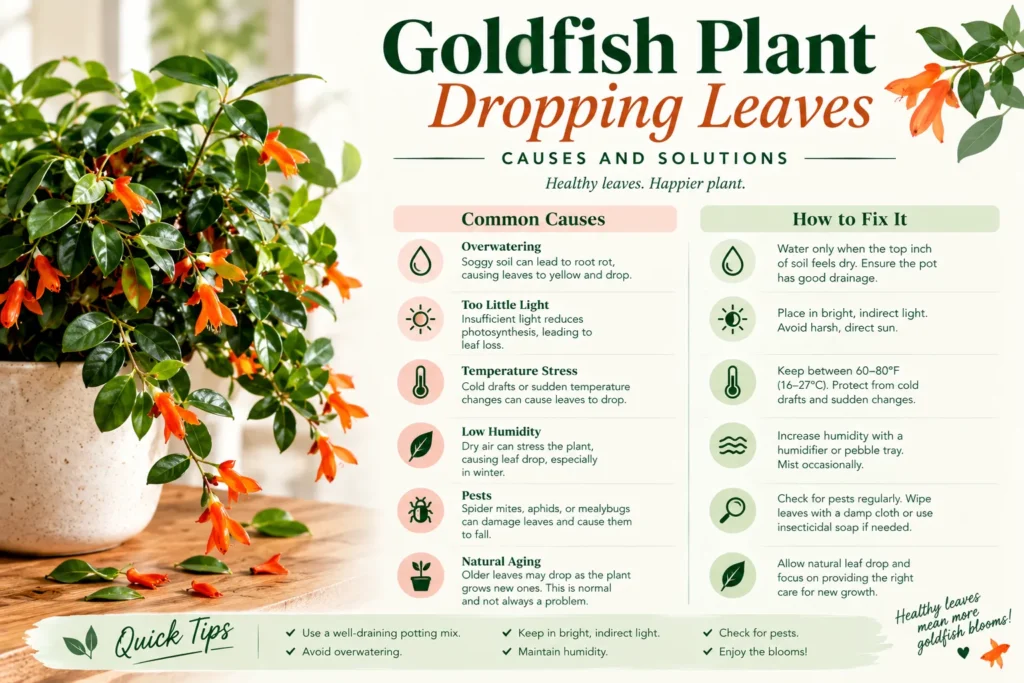
Leaf drop is the most visible sign that something is off. Work through these causes.
- Cold shock. A sudden temperature dip or draft makes leaves fall quickly. Move the plant away from winter windows and check for drafts.
- Overwatering. Yellowing leaves that drop usually point to root rot. Check the roots: brown and mushy means rot. Repot into fresh, barely damp mix and trim the dead roots.
- Underwatering. Leaves turn crispy and then fall, and the soil feels bone dry. Water thoroughly and let it drain.
- Low humidity. Leaves curl before they drop. Raise humidity urgently.
- Natural aging. Some lower leaf loss is normal, and older stems become bare at the base. Take cuttings from healthy tips to refresh the plant.
How to Propagate Goldfish Plant
Goldfish plants root very easily from stem cuttings. The best time is spring or early summer.
- Take 10-12cm stem tip cuttings with at least 2-3 pairs of leaves.
- Remove the lower leaves, leaving only the top 2-3 pairs.
- Optionally, dip the cut end in rooting hormone.
- Push the cuttings into moist perlite or a mix of peat and perlite.
- Cover loosely with a clear plastic bag to hold humidity.
- Keep them warm in bright, indirect light, never direct sun.
- Wait 3-4 weeks for roots to form.
- Pot up into your goldfish plant mix once the roots are 2-3cm long.
Tip: plant 3-4 cuttings per pot for a fuller, bushier display from the start. New plants from cuttings often bloom within their first year.
Propagation is half the fun of owning trailing plants. For another easy-to-propagate favourite, our Spider Plant guide covers propagation, care and why it remains a classic for good reason.
Common Goldfish Plant Problems and Pests
Pests
- Spider mites leave fine webbing and pale, stippled leaves. Spray with neem oil and raise humidity.
- Mealybugs look like white cottony clusters at leaf joints. Dab them with a cotton swab dipped in rubbing alcohol, or use neem oil.
- Aphids cause sticky residue and distorted new growth. Use an insecticidal soap spray.
- Fungus gnats lay larvae that damage roots. Let the soil dry more between waterings and set out sticky traps.
Disease
- Root rot (Pythium or Phytophthora) comes from overwatering and is the most common culprit. Repot, trim dead roots and improve drainage.
- Powdery mildew shows up as a white coating on leaves, usually from poor airflow. Improve ventilation and treat with a fungicide.
General Care Problems
- Leggy stems mean too little light. Prune back by a third in spring and move the plant somewhere brighter.
- Brown leaf tips point to low humidity or fluoride in tap water. Switch to filtered water or rainwater and raise humidity.
If all of this sounds like a lot, a more forgiving option might suit you better. Our ZZ Plant guide covers one of the toughest, most adaptable plants you can grow indoors. And if you want a different trailing companion for your hanging baskets, the pothos is a lovely choice. Our complete Pothos Plants guide covers all the varieties, care tips and propagation methods.
Final Thoughts
A goldfish plant really is one of the most rewarding flowering houseplants once you understand what it needs: bright indirect light, steady moisture, plenty of humidity and a proper rest in autumn.
If yours has refused to bloom, please try the cool rest period trick. It genuinely works, and the display of orange “goldfish” that follows makes every bit of the effort worthwhile.