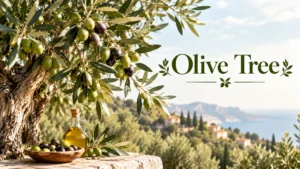
There is something almost timeless about an olive tree. It has stood on Mediterranean hillsides for thousands of years, its silvery leaves flickering in the breeze, its trunk twisting into shapes that look carved by hand. It has been a symbol of peace, a source of golden oil and a quiet companion to whole civilizations.
Today it has travelled far beyond its homeland. You will find olives in sunny gardens, on city balconies, beside patios and even in bright living rooms. They ask for very little and give back so much.
Whether you have an acre or a single windowsill, this is one of the most beautiful trees you can discover on our complete plant and garden resource: your guide to growing everything from exotic houseplants to ancient garden trees.
Olive Tree: Quick Facts
Before we get into the details, here is a snapshot of what you are working with.
- Scientific name: Olea europaea
- Family: Oleaceae
- Origin: Mediterranean basin
- Lifespan: 500 to 1,000+ years, with some ancient trees passing 2,000
- Height: 3 to 15 m outdoors, 0.6 to 1.5 m in pots
- Growth rate: Slow to moderate
- Hardiness: Drought tolerant, frost sensitive below -10°C
- Fruiting: After 3 to 5 years
- Best known varieties: Arbequina, Frantoio, Picual, Koroneiki and Pendolino
People often ask how long do olive trees live. The honest answer is far longer than you will. A tree planted today could easily be admired by your grandchildren, and that is part of its quiet magic.
The look of the tree is a large part of its charm. The narrow, leathery leaves are deep green on top and silvery underneath, so the whole canopy seems to shimmer when the wind moves. In late spring, tiny creamy flowers appear in clusters, easy to miss unless you stand close. Over the years the trunk thickens, splits and twists, gaining the sculptural character that makes even a young garden feel established.
Popular Olive Tree Varieties
Choosing between the many olive tree varieties is half the fun. Each has its own personality, and the right one depends on your space, your climate and what you hope to get from the tree.
- Arbequina: Small, bushy and self-fertile, with a mild, fruity oil. It is the best choice for pots and first-time growers.
- Frantoio: An Italian classic. Vigorous and upright, it produces some of the finest oil you can taste.
- Picual: The most widely grown Spanish variety, valued for its generous oil yield.
- Koroneiki: Greek in origin, with small fruit and an intense, peppery flavour.
- Pendolino: A graceful, weeping form that works beautifully as an ornamental and is a reliable pollinator for other varieties.
Dwarf Olive Tree Choices for Patios and Indoors
If space is tight, a dwarf olive tree is a wonderful answer. Compact cultivars such as ‘Little Ollie’ stay neat and rounded, and they take clipping well. Arbequina also stays manageable in a container, which is why nurseries recommend it so often.
Self-Fertile or Needing a Partner?
Some olives set fruit alone, while others want a second tree nearby for cross-pollination. Arbequina and several others are self-fertile, though even they often crop more heavily with a companion. Frantoio and Picual usually do better with a pollinator such as Pendolino.
Olive trees often grow alongside magnolias in warmer gardens. Our guide on Magnolia Flowers explores another timeless tree that brings drama and elegance to any outdoor space.
How to Grow an Olive Tree Outdoors
Once you understand what an olive tree actually needs, it becomes one of the most rewarding plants you can grow. Growing olive trees is mostly a matter of giving them sun, drainage and a little patience.
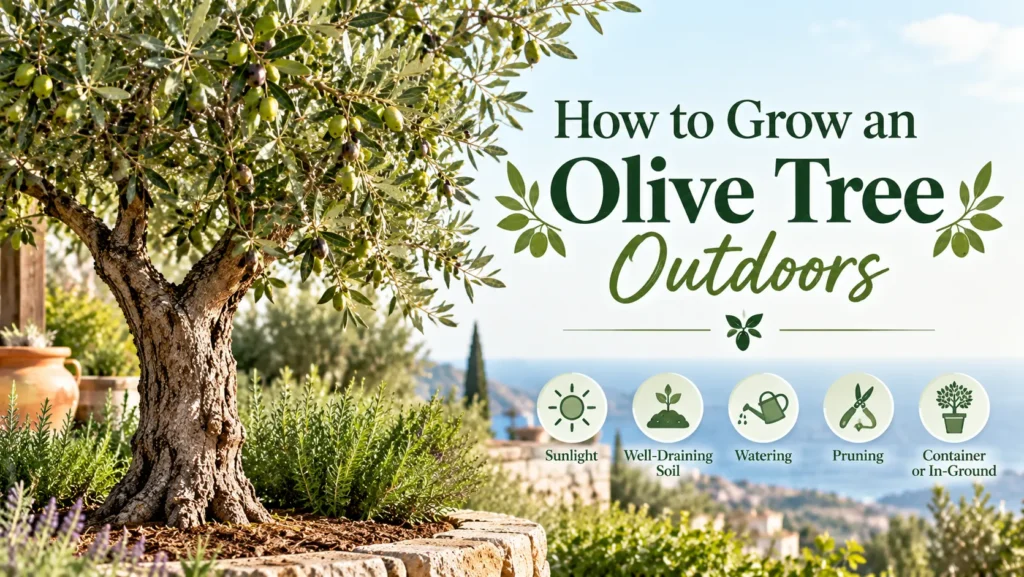
- Climate: Full sun and a Mediterranean-type climate with hot, dry summers and mild winters.
- Soil: Well-draining, sandy or loamy, with a pH between 6 and 8. Poor, stony soil is perfectly fine. They actually prefer it.
- Planting time: Spring or early autumn, avoiding any risk of frost.
- Spacing: 4 to 8 m for a fruiting orchard, 2 to 3 m for an ornamental planting.
- Feeding: A low-nitrogen fertilizer once or twice a year. Too much nitrogen gives you leaves but few olives.
- Mulching: A layer of mulch keeps moisture in and steadies soil temperature.
Watering Done Right
Young trees need regular water for the first couple of years while their roots settle in. After that, they become wonderfully drought tolerant. Water deeply but infrequently, and let the soil dry between sessions. A soggy root zone does far more harm than a dry spell.
Cold Hardiness
An established tree can survive -7°C to -10°C. Young trees are more vulnerable, so protect them with fleece during their first winters. Olive trees are grown successfully in the UK, usually in sheltered southern gardens, and across the USA in California, Texas and Arizona, where the climate feels very much like home to them.
For a truly Mediterranean garden feel, pair your olive tree with the intoxicating scent of Night Blooming Jasmine. Our guide covers how to grow this magical fragrant plant.
Growing Olive Trees in Pots (Indoor and Patio)
A container suits this tree better than you might expect. It grows slowly, shrugs off dry spells and actually enjoys being slightly root-bound. That is why an olive tree in pot form has become such a favourite for balconies and terraces.
- Pot size: Start with 30 to 40 cm and repot every 2 to 3 years.
- Compost: Gritty and free-draining. Use John Innes No.3 with extra perlite.
- Light: At least 6 hours of direct sun daily. Indoors, a south-facing window is essential.
- Feeding: A liquid feed every 4 weeks through spring and summer.
Watering Pots Carefully
Pots dry out faster than open ground, but the real danger is still too much water. Let the top inch of compost dry out before watering again. Never leave the pot sitting in a waterlogged saucer.
Can an Olive Tree Live Indoors?
Yes, with enough light. An olive tree indoors will sulk in a dim corner, so choose your brightest window. In winter, when days are short, a grow light can make all the difference.
Turn the pot a quarter turn every week or two so the canopy grows evenly instead of leaning toward the glass. Good air movement matters too, because stale, humid corners invite fungal trouble. If you can, move the tree outside for the summer. Introduce it to full sun gradually over a week or so, since sudden strong light can scorch leaves that have spent months behind a window. Keeping an olive tree indoors all year is possible, but a few warm months outside leave it noticeably stronger.
Like olive trees, Cactus Plants are masters of surviving drought. Our complete guide covers 1750+ species of these remarkable survivors.
For more low-maintenance indoor plant inspiration, our ZZ Plant guide covers another nearly indestructible plant that thrives on neglect.
Overwintering Potted Trees
Bring pots indoors or into a cool, bright porch when temperatures fall below -5°C. If the tree must stay outside, wrap the pot in horticultural fleece. Roots in containers feel the cold far more than roots in the ground. An olive tree in pot form also benefits from a sheltered spot against a wall in winter, where it is shielded from wind and holds a little stored warmth.
Olive Tree Care: Pruning
Good olive tree care includes a yearly trim, and it is gentler than many people fear. Pruning shapes the tree, improves airflow, encourages fruiting and removes anything dead or damaged.
The best time is late spring, once the risk of frost has passed.
How to Prune an Olive Tree
Olive tree pruning follows a simple idea: keep the centre open so light reaches every branch. Aim for an open vase shape.
- Remove crossing and rubbing branches first.
- Cut out dead, diseased or weak growth.
- Never remove more than one third of the canopy in a single year.
- To rejuvenate an overgrown tree, a hard prune is possible, because these trees regrow with surprising vigour.
For potted trees, light shaping in spring is plenty. Olive tree pruning in containers is really about keeping the tree in proportion with its pot, so trim long, leggy shoots back to a healthy pair of leaves and step back often to check the overall shape. A tree that is lightly shaped every year rarely needs drastic work later. Use sharp secateurs for thin stems and loppers for thicker branches. Afterwards, feed and water well to help the tree recover.
If you love ornamental trees, you will also enjoy our guide on the Autumn Blaze Maple. It is a stunning shade tree that transforms with fiery colour every fall.
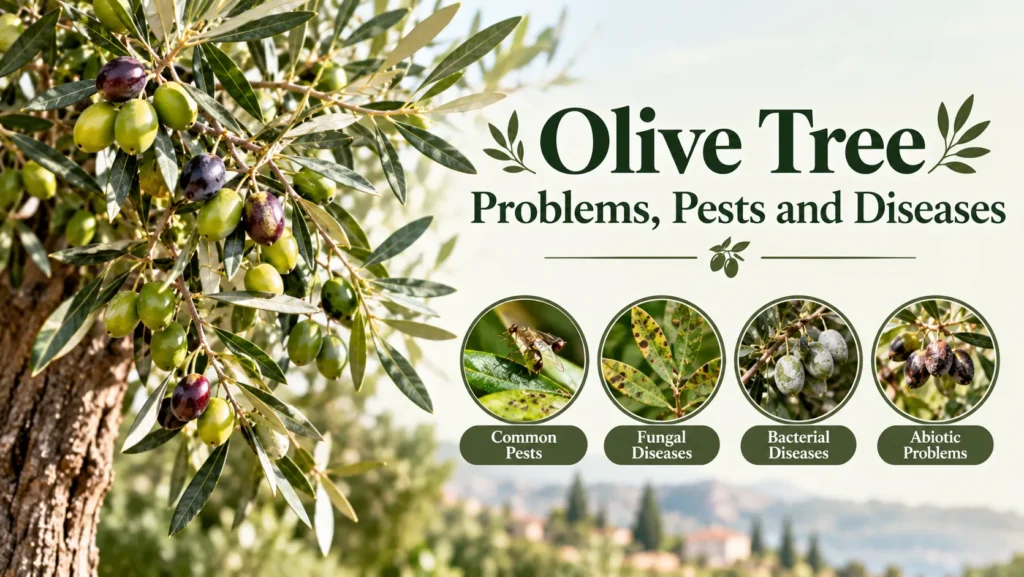
Olive Tree Problems, Pests and Diseases
Healthy trees rarely have serious trouble, and most issues trace back to water. Your olive tree leaves are the best health report you will ever get, so check them often. Glossy, firm, silvery-green foliage means all is well. Olive tree leaves that curl, drop suddenly or turn dull usually point to stress at the roots, either from too much water or from a pot that has been left too dry for too long.
Yellow Leaves
Overwatering is the number one cause. Poor drainage and nutrient deficiency come next. A slight leaf drop in spring, as new growth appears, is perfectly normal.
Common Pests and Diseases
- Olive leaf spot (Spilocea oleagina): Brown spots on the foliage. Treat with a copper-based fungicide.
- Verticillium wilt: Yellowing and wilting. There is no cure, but improving drainage and removing affected branches can help.
- Scale insects: Sticky leaves are the giveaway. Treat with neem oil or horticultural soap.
- Olive fly (Bactrocera oleae): Mainly a problem for outdoor, fruiting trees. Sticky traps help.
- Sooty mould: A black film that follows aphids or scale. Deal with the pest first and the mould fades.
- Root rot: Always the result of overwatering. Improve drainage immediately and cut back on watering.
Do Olive Trees Produce Olives?
They do, when conditions suit them. A fruiting olive tree needs full sun, warm summers and cool winters. That winter chill triggers flowering, a process gardeners call vernalization.
A young tree typically fruits after 3 to 5 years, while one grown from seed takes much longer. Self-fertile varieties can crop alone, but others need a second tree nearby.
Indoor and potted trees can fruit, though they rarely do without plenty of sun and cross-pollination. Do not be discouraged. The foliage alone is reward enough.
Harvest and Curing
Harvest runs from October to December, depending on variety and region. Green and black olives come from the same tree, only picked at different stages of ripeness.
One warning: raw olives are intensely bitter. They must be cured in brine or lye before you can eat them, so do not be tempted to taste one straight from the branch.
Olive Tree Symbolism and History
Few plants carry as much meaning. The olive is one of the oldest cultivated trees in human history, with a story stretching back more than 6,000 years.
- In Greek myth, Athena’s gift to Athens was an olive tree, and the city took her name.
- It has long stood for peace, wisdom, prosperity and longevity.
- Ancient Olympic winners were crowned with olive branches.
- In the Bible, a dove returns to Noah with an olive branch.
- Across the Mediterranean, olive oil served as food, medicine and lamp fuel.
The oldest known olive tree, in Crete, is thought to be over 2,000 years old. So how long do olive trees live when they are well looked after? Centuries is the realistic answer, and many groves around the Mediterranean are still productive after hundreds of harvests. These trees live so long because they regenerate from the base. A swollen structure called a lignotuber lets them sprout again after fire, frost or even severe damage.
Bringing an Olive Tree Home
An olive tree brings timeless beauty, resilience and meaning to any garden or home. It forgives a missed watering, rewards a little attention and grows more characterful with every passing year.
If you are ready to begin, start small. Choose a potted Arbequina, give it light and good drainage, and watch it settle in. Before long you will understand why people have loved the olive tree for thousands of years, and you will have the joy of growing one of your own.