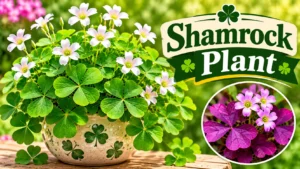
The shamrock plant is one of those houseplants that wins you over within minutes. Its clover-like leaves, either fresh green or a deep, moody purple, open wide in the morning light and fold closed again as evening settles in. Above the foliage, slender stems carry small pink or white flowers that nod in the slightest draft.
Most people meet it around St. Patrick’s Day, tied up in a bow and sold as a lucky gift. It deserves far more than a week of seasonal attention, because it makes a charming companion all year long. This guide walks you through what the plant really is, how to care for it, what to do when it goes dormant, how to share it, and how to fix the usual problems.
What Is a Shamrock Plant?
Most plants sold as a shamrock plant belong to the genus Oxalis, in the wood sorrel family (Oxalidaceae). Two species dominate the shelves:
- Oxalis triangularis: the purple shamrock, with deep purple triangular leaves
- Oxalis regnellii: the green-leafed version, equally common and just as easy
You will see it sold under many names, including lucky shamrock, false shamrock, purple shamrock and wood sorrel. If you have ever wondered about the lucky shamrock plant on a garden center shelf, this is usually what you are looking at.
Where It Comes From
Basic Oxalis triangularis care starts with knowing its roots. It hails from Brazil and the wider South American region, where it grows along tropical and subtropical woodland edges. Despite the Irish associations, the true shamrock is a different plant altogether: white clover, from the genus Trifolium.
The link to March 17th is commercial rather than botanical, but the plant is lovely regardless. With its strong association with St. Patrick’s Day and the arrival of spring, it fits perfectly into March. Our March Birth Flowers guide covers all the flowers and plants that celebrate that month.
Growth Habit
This plant grows from small underground bulbs called corms, not from a traditional root system. It forms a compact, clumping mound, usually 15 to 30 cm tall. Each leaf is made of three heart-shaped leaflets joined at the point, which gives that unmistakable triangular look.
The leaves fold downward at night and in low light. This movement, known as nyctinasty, is completely normal and is not wilting. There is something almost magical about watching those triangular leaves fold closed as the light fades each evening and open again with the morning sun.
Flowers
The flowers are delicate and five-petalled, held on slender upright stems. Depending on the variety they come in pink, pale pink or white. Blooms arrive in cycles, most heavily in spring and autumn.
Both flowers and leaves are edible in small amounts and taste pleasantly sour, thanks to the oxalic acid that sorrel also contains. A few leaves in a salad are fine, though this is a houseplant first and a garnish second.
Is It Toxic to Pets?
That same oxalic acid makes the plant mildly toxic to cats and dogs. It can cause digestive upset, and large quantities may affect the kidneys. Keep the pot out of reach of curious pets.
The Dormancy Surprise
The shamrock plant is one of those houseplants that surprises you. You think it has died, then a few weeks later tiny new leaves are pushing up through the soil as if nothing happened.
Periodic dormancy is the most misunderstood part of owning one. The leaves yellow and die back completely, and that is normal. It usually happens in summer when the heat kicks in, or after a long flowering period. We will cover exactly what to do further down.
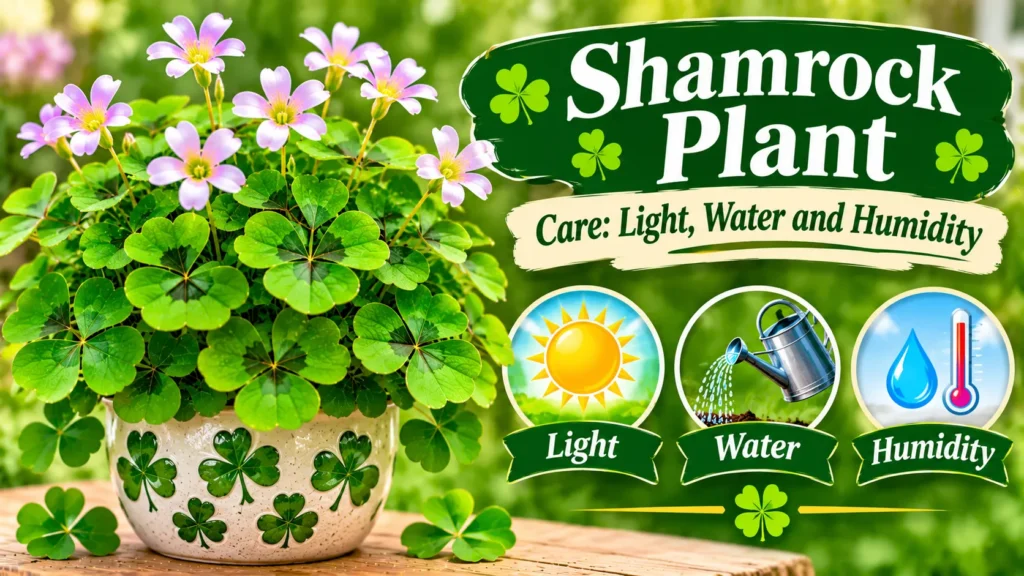
Shamrock Plant Care: Light, Water and Humidity
Good shamrock plant care is refreshingly simple once you understand how the plant behaves. It is not a fussy specimen, and most problems come down to too much water or too little light.
Light Requirements
Shamrock plant light requirements are easy to meet in most homes. Aim for bright, indirect light. A little direct morning sun is fine, so an east or west-facing window works well.
Avoid harsh afternoon sun. It scorches the leaves and fades the purple color of Oxalis triangularis. Good light is also what keeps that rich, dark purple. Too little light and the leaves drift toward a washed-out green-purple.
Here is the key behavior to remember:
- Leaves folding at night or in dim light is natural. It is a sleep movement, not a sign of stress or thirst.
- Leaves that stay closed during the day mean the plant needs more light. Move it somewhere noticeably brighter.
In summer, the plant can live outdoors in bright shade or dappled light. Morning sun with afternoon shade is ideal.
Watering
Shamrock plant watering comes down to one rule: let the top 2 to 3 cm of soil dry out between drinks. Sitting in wet soil is the number one killer, because it rots the corms.
- Use room-temperature water.
- Good shamrock plant watering means wetting the soil, not the foliage. Drops on leaves and flowers cause spotting.
- Water less often in autumn as the plant heads toward dormancy.
- During dormancy, give only a light splash of moisture every 3 to 4 weeks.
- Resume regular watering once new growth appears.
Humidity
Average indoor humidity suits this plant well. The ideal range is 40 to 60 percent. Very dry air, below about 30 percent, brings brown leaf tips and leaves that stay folded longer.
Skip the misting. Water sitting on those densely packed leaves can invite fungal problems. If your air is very dry, a pebble tray or a small room humidifier is the better choice.
Temperature
This is not a heat-loving plant, and that surprises many new owners. It is happiest between 15 and 24°C (60 to 75°F) and will tolerate a cool windowsill down to about 7°C (45°F) in winter.
Heat above 27°C (80°F) often triggers dormancy. Keep it away from hot radiators and heat vents, especially directly under the pot.
Like the shamrock plant, the Boston fern thrives in cool, bright conditions and rewards the right care with lush, beautiful growth. Our Boston Fern guide covers everything you need to know.
Soil, Pot and Feeding for Healthy Oxalis
Sound oxalis plant care starts below the surface, and the same goes for any shamrock plant indoors. Because the corms rot so easily, drainage matters more than anything else in this section.
Soil
Use a well-draining potting mix. Standard houseplant compost with 20 to 30 percent perlite added works nicely. A slightly acidic pH of 6.0 to 6.5 suits it best. Avoid heavy, clay-based mixes that hold water.
Pot
- Drainage holes are non-negotiable.
- Shallow pots work well. The corms sit just below the surface and do not need depth.
- Terracotta helps. It dries faster than plastic, which gives you a margin of error.
- Choose width over depth. Pick a pot slightly wider than the spread of the plant.
Repot every 2 to 3 years, or when corms visibly crowd the pot. The best moment is as the plant emerges from dormancy.
Feeding
During spring and summer, feed every 2 to 4 weeks with a balanced liquid fertilizer at half strength. Drop to monthly in autumn, and stop completely during dormancy. Start again once the first few leaves have opened.
Go easy on the fertilizer. Too much nitrogen produces lush but weak, floppy growth. A well-fed plant also flowers generously, and the shamrock plant produces its most abundant blooms as spring arrives. Our Spring Flowers guide celebrates the best blooms and plants of the season.
Understanding Shamrock Plant Dormancy
If you search for this plant online, the questions are almost always the same. Is my shamrock plant dead? Why are the leaves dying? The answer is nearly always reassuring: your plant is resting, not dying.

What Happens
The leaves gradually yellow, droop and die back. Stems collapse and vanish, and the soil looks empty. Underground, though, the corms are alive and waiting. Understanding shamrock plant dormancy removes most of the panic.
When It Happens
Dormancy is usually triggered by heat and long days, so summer is the classic time. A long, heavy flowering period can bring it on too. It typically lasts 4 to 8 weeks, sometimes longer. Plants kept in consistently cool indoor conditions may skip it altogether.
What to Do
- Do not throw the pot away. The corms are still alive.
- Stop watering almost completely. Offer light moisture only every 3 to 4 weeks.
- Move it somewhere cool and dim. A spare room, an unheated porch or a quiet corner away from heat will do.
- Wait. Four to eight weeks is typical.
- Watch for tiny new growth at the soil surface. Then return the pot to bright indirect light, restart regular watering gradually, and begin feeding once the first few leaves have opened.
Tiny purple leaves emerging from what looked like a pot of empty soil never gets old. It is one of the great little joys of indoor gardening.
Repotting After Dormancy
This is the perfect time to repot and divide. Tip the corms out gently, separate any that have multiplied, and settle them into fresh compost.
How to Propagate Oxalis Corms
Propagation is easy because the plant does most of the work itself. Corms multiply naturally over time, so an established pot soon becomes crowded.
Division
Division is the easiest and most reliable method. Do it when the plant is dormant or just waking up.
- Remove the plant from its pot gently.
- Separate the small, bulb-like corms by hand. They come apart easily.
- Pot groups of corms in fresh, well-draining compost.
- Plant them just below the surface, about 1 to 2 cm deep.
- Water lightly. Overwatering at this stage invites rot.
- Place the pot in bright, indirect light.
- Expect new growth in 2 to 4 weeks.
Stem Cuttings
Stem cuttings are not the standard method for oxalis. They can root in water, but success is inconsistent, so corms remain far more reliable.
Sharing Your Plant
An established plant produces dozens of corms over a few years. Once you have one, you will always have enough to give away to friends.
The shamrock plant and spider plant share the same easy-going, multiplying nature that makes them so rewarding. Our Spider Plant guide covers another brilliant houseplant that practically propagates itself.
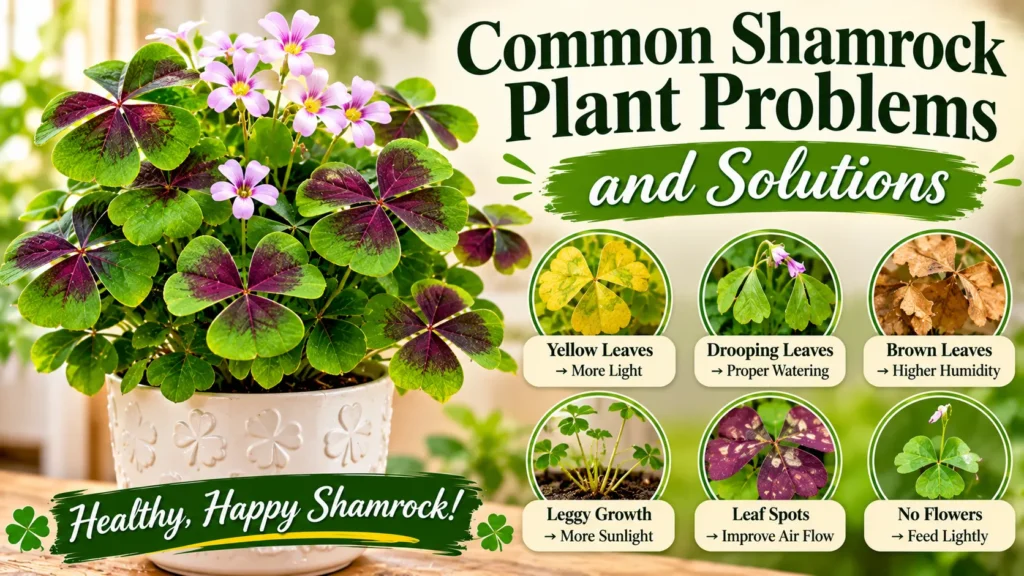
Common Shamrock Plant Problems and Solutions
Most issues are easy to spot and easy to fix, and good oxalis plant care prevents nearly all of them. Here are the ones you are most likely to meet.
Leaves staying folded during daylight
- Cause: not enough light.
- Fix: move the pot to a significantly brighter spot. Folding at night is normal. It only becomes a problem if the leaves stay closed all day.
Yellowing leaves outside of dormancy
- Cause: overwatering is the most common culprit, followed by poor drainage or simple end-of-cycle aging.
- Fix: check the soil. If it is soggy, let it dry fully and make sure the drainage holes are clear.
Leggy, floppy growth
- Cause: too little light, or too much nitrogen fertilizer.
- Fix: add light and reduce feeding.
Brown leaf tips
- Cause: low humidity, fluoride in tap water, or dry air from heating.
- Fix: use filtered or rainwater, move away from radiators, and raise humidity slightly.
Fading purple color
- Cause: not enough light.
- Fix: this matters for oxalis triangularis care in particular. Deep purple needs good, bright, indirect light.
The deep, rich purple of Oxalis triangularis leaves is one of the most striking in the houseplant world. Our Purple Flowers guide celebrates more of the most beautiful purple plants and blooms.
Corm rot
- Cause: consistently waterlogged soil.
- Signs: the plant collapses, stems turn mushy at the base, and there is an unpleasant smell.
- Fix: remove the plant from its pot and inspect the corms. Firm, healthy ones can be saved. Repot them in fresh, barely damp compost and water far less from now on.
Pests
- This plant is generally pest-resistant.
- Spider mites may appear in very dry conditions. Treat them with neem oil spray.
- Fungus gnats are a sign the soil stays wet too long, so let it dry out more between waterings.
Why You Will Love Growing This Plant
Few houseplants give as much for so little effort. A lucky shamrock plant earns its name when it keeps blooming on a bright windowsill. Keep it in bright, indirect light, water only when the top of the soil has dried, and give it a cool spot to rest when it asks. Growing a shamrock plant indoors rewards you with moving leaves, soft flowers and a dormancy cycle that makes the plant feel almost alive in a way few others do.
If your pot ever empties out, please do not throw it away. Wait, keep the soil barely moist, and trust the corms. The return is one of the most rewarding moments in indoor gardening, and it will make you a fan for life.
Whether you pick up a purple or a green one, your shamrock plant will repay every bit of care, and you can explore more houseplant and flower guides at PlantStyleHome.