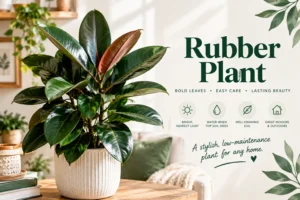
The moment I brought my first rubber plant home, the whole room changed. One tall stem with thick, glossy leaves was enough to make a plain corner feel designed.
That is the magic of a rubber plant. It has dark, polished foliage and an architectural shape that looks styled even in a simple pot. It is also far more forgiving than its high-fashion looks suggest.
If you have been eyeing one in a shop, or spotting them in every well-dressed interior online, this guide is for you. We will cover varieties, light, watering, the dreaded leaf drop, propagation, pruning and repotting. I will also explain why the burgundy form is the one everyone wants.
At Plant Style Home we help you grow the most beautiful and stylish houseplants, so explore our complete plant and flower guides here whenever you want more inspiration.
What Is a Rubber Plant?
The rubber plant is Ficus elastica, a member of the fig family. It is native to India and Southeast Asia, where it grows into a huge tree with aerial roots that drape down its trunk.
The name comes from its milky white latex sap. Before the Brazilian Hevea brasiliensis took over commercial production, this sap was harvested to make rubber. The plant gave the material its name, and the name stuck.
Outdoors in the tropics, a mature tree can pass 30 feet and keep climbing. Indoors, a rubber plant typically reaches 6 to 10 feet, which is plenty to anchor a room.
It shares its family with other stunning indoor trees. Our guide on Umbrella Tree covers another gorgeous statement plant for your home, and the two look wonderful in the same space.
One safety note matters here. The latex sap is toxic to cats, dogs and humans. It can irritate skin and cause stomach upset if chewed. Keep your plant out of reach of curious pets, and wear gloves when you prune.
So why is this plant having such a moment? Interior designers love it for its bold, clean silhouette. The leaves are big enough to make a statement without clutter, and the deep tones suit moody, modern and earthy spaces alike.
Types of Rubber Plant Varieties
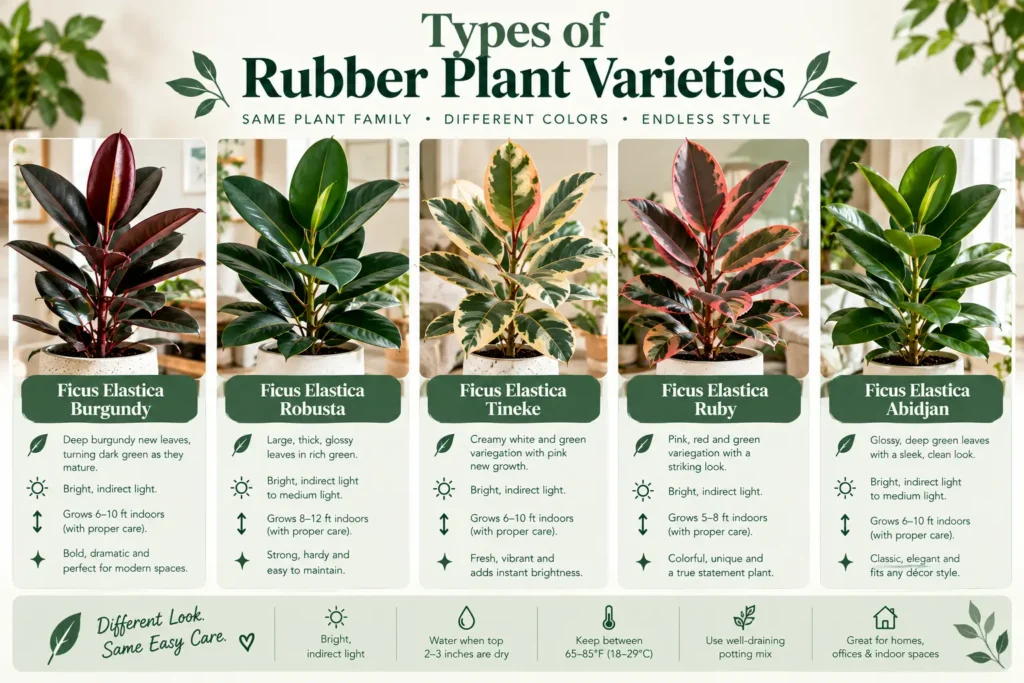
There are more rubber plant varieties than most people realize. Each has its own personality, so here are the ones worth knowing.
Ficus Elastica Burgundy
The burgundy rubber plant is arguably the most stylish houseplant you can own right now. The leaves are so dark they look nearly black, with a reddish glow when the light catches them. New growth unfurls in a rich red sheath that is a small show in itself.
That deep, brooding color echoes the drama of dark blooms. If you love this look, our guide on Black Flowers is full of dark and dramatic plant inspiration to pair with it.
Give your burgundy bright, indirect light to hold that depth of color. Otherwise, care is the same as for any other rubber plant.
Ficus Elastica Robusta
Robusta is the classic. The leaves are deep green, broad and glossy, and the plant is a vigorous grower. If you want the traditional look with the least fuss, this is the one.
Ficus Elastica Tineke
Tineke is the colorful one, with leaves splashed in green, cream and soft pink. It is stunning, but variegation takes energy. Put it in your brightest spot, out of harsh afternoon sun.
Ficus Elastica Ruby
Ruby takes the variegation further, with pink, red and green mixed through each leaf. It is unusual and eye-catching. It needs bright light to keep its colors, and it grows a little more slowly than its green cousins.
Ficus Elastica Abidjan
Abidjan is very dark, nearly black, and similar to burgundy. If you want a bold, brooding statement, it delivers.
Easiest for beginners: Robusta, with Burgundy a close second. Needs the most light: Tineke and Ruby, because variegated leaves have less chlorophyll to work with.
Rubber Plant Care Guide
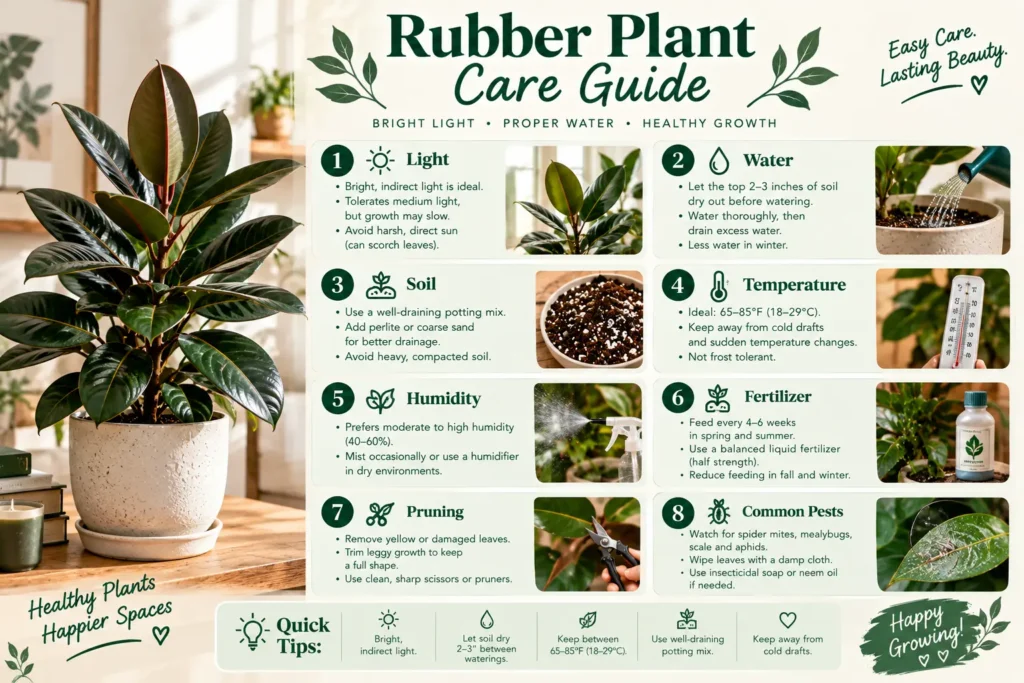
Good news: rubber plant care is mostly about getting a few basics right and then leaving the plant alone. Here is what Ficus elastica care looks like in practice.
Light Requirements
Rubber plant light requirements are simple. Bright, indirect light is ideal, and a little gentle morning sun is fine.
- Green varieties tolerate medium light
- Burgundy needs brighter light to keep its dark color
- Variegated types need the most light of all
- Low light leads to leggy growth and faded leaves
Place yours near an east-facing window, or a few feet back from a south or west window. If you are building a collection of statement plants, our guide on Monstera Plants covers a stylish companion that enjoys very similar light.
Watering Rubber Plant
Rubber plant watering is where most people go wrong. Overwatering is the most common killer, so wait until the top 2 inches of soil feel dry.
Then water thoroughly until it drains from the bottom, and empty the saucer. Small sips only keep the surface damp, so give a proper drink instead.
Water more often in spring and summer, and much less in winter when growth slows.
Signs of overwatering: yellow leaves, mushy stems, a sour smell from the soil, dropping leaves.
Signs of underwatering: drooping, curling leaves, dry crispy edges, soil pulling away from the pot.
Soil and Potting Mix
Use a well-draining mix. A good potting soil with a generous handful of perlite works well, since roots need air as much as moisture.
The pot must have drainage holes. Terracotta dries faster and forgives heavy watering. Plastic holds moisture longer and suits people who forget to water. Pick the one that matches your habits.
Temperature and Humidity
A rubber plant indoors is happiest between 60 and 80°F (15 to 27°C). Keep it away from cold drafts, and never let it drop below 55°F.
Average household humidity is fine. Misting is optional, and a wipe of the leaves does more good.
Fertilizing Rubber Plant
Feed monthly in spring and summer with a balanced liquid fertilizer diluted to half strength. Skip feeding in winter.
If you see crusty white buildup on the soil or scorched leaf edges, you are over-fertilizing. Flush the pot with water and ease off.
Cleaning Rubber Plant Leaves
Those big glossy leaves collect dust, and dust blocks light. Wipe them every few weeks with a damp cloth, supporting each leaf from underneath.
For extra shine, a very light touch of diluted neem oil works nicely and also helps deter pests.
Common Rubber Plant Problems
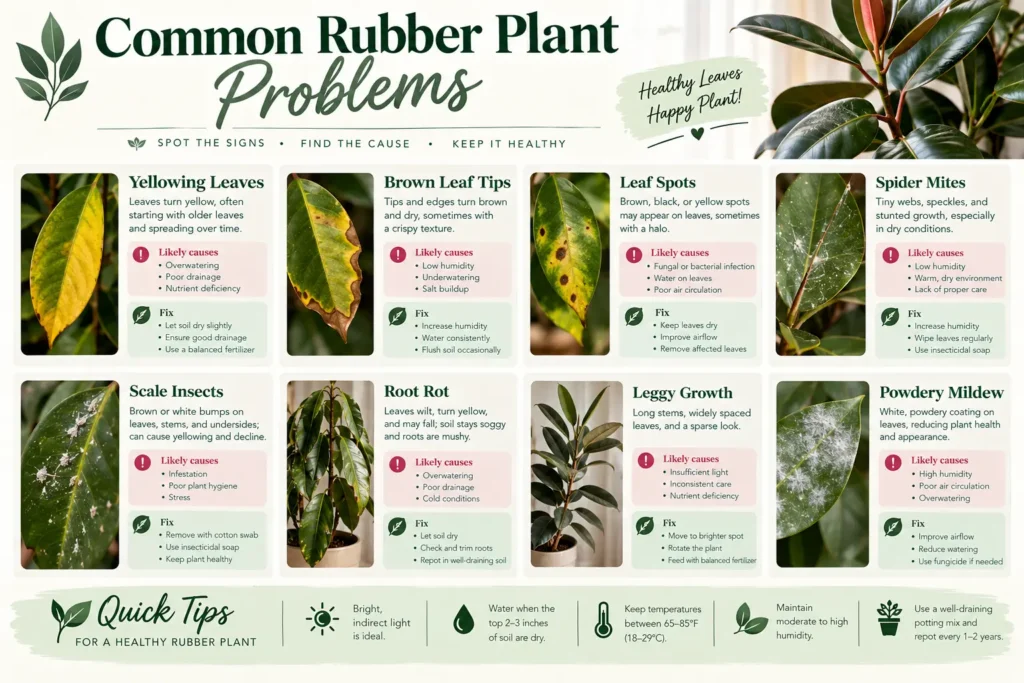
Every plant lover hits a snag eventually. Here is how to read what your plant is telling you.
Rubber Plant Dropping Leaves
This is the most alarming problem, so let me reassure you first. Dropping leaves after bringing home a new rubber plant is completely normal. The plant is adjusting to new light, temperature and humidity, and shedding a few leaves is its way of adapting.
If the drop continues, look at these causes:
- Overwatering: the most common culprit. Let the soil dry out more between waterings.
- Cold temperatures: move the plant somewhere warmer.
- Drafts: keep it away from vents, open doors and chilly windows.
Keep conditions steady and the plant will settle. A rubber plant dropping leaves is rarely a lost cause.
Rubber Plant Yellow Leaves
Rubber plant yellow leaves usually point to overwatering. Check the roots: healthy ones are firm and pale, while rotted ones are brown and mushy. Trim any rot, repot in fresh dry mix and water more carefully afterward.
Other causes:
- Natural aging: an occasional yellow lower leaf is normal
- Nutrient deficiency: feed in the growing season
Rubber Plant Brown Tips
Brown tips come from low humidity, underwatering or too much direct sun. Water more consistently, and move the plant back from harsh windows. A humidifier helps if your air is very dry.
Rubber Plant Losing Color
If your burgundy is turning green, it is not getting enough light. The same goes for variegated types losing their pattern. Move the plant to a brighter spot, and new growth will come in richer.
Common Pests
Watch for spider mites, scale insects and mealybugs. Look for fine webbing, small brown bumps or white cottony clusters.
Wipe affected areas with a cloth, then treat with neem oil every week or so until clear. Regular leaf cleaning is the best prevention.
Rubber Plant Propagation
Rubber plant propagation takes patience. This plant roots more slowly than trailing favorites like pothos, but it is absolutely doable. If you want a quick win while you wait, our guide on Pothos Plants covers one of the easiest plants to propagate, and it makes a lovely trailing companion for your rubber plant.
The stem cutting method is the most popular. Here is how:
- Choose a healthy stem with at least two or three leaves and a node.
- Cut just below a node with clean, sharp shears. Wear gloves.
- Let the latex dry for an hour or so.
- Dip in rooting hormone if you like. It is optional but helps.
- Root in water or soil. Soil is usually more reliable.
- Wait. Roots take 4 to 8 weeks, sometimes longer.
For tall, leggy plants, try air layering. You wound the stem, wrap it in moist sphagnum moss and plastic, and wait for roots before cutting. It gives you a ready-grown plant with a head start.
Spring is the best time to propagate, when the plant is growing strongly.
Pruning and Shaping Rubber Plant
Pruning keeps your plant at a manageable height, encourages bushiness and holds its shape. Spring is the best time.
- Decide where you want a branch to form.
- Cut just above a leaf node using clean shears.
- Wear gloves, because the latex will bleed and can irritate your skin.
- Dab the sap with a paper towel until it stops.
Cutting the top encourages the plant to send out side shoots below the cut. This is the easiest way to get a fuller plant.
If your tall rubber plant starts to lean, stake it gently with a bamboo pole and soft ties.
Repotting Rubber Plant
Rubber plants like to be slightly snug, so do not rush to repot.
Signs it needs repotting:
- Roots circling the drainage holes
- Water running straight through
- Growth slowing despite good care
Choose a pot only about 2 inches larger in diameter. A pot that is too big holds excess water and invites rot.
Spring is the best time. To repot:
- Water lightly the day before.
- Slide the plant out gently and loosen the roots.
- Add fresh mix to the new pot, set the plant at the same depth, and fill around it.
- Water well and return it to its usual spot.
A little leaf drop after repotting is normal, so do not panic. The plant is simply recovering from the move.
Frequently Ask Questions
When the top 2 inches of soil are dry, usually every 1 to 2 weeks in the growing season and less in winter.
Most often it is a change in environment, overwatering, cold or drafts. Check each, and keep conditions steady.
Yes. The latex sap is toxic to pets and irritating to humans. Keep it out of reach.
Give it bright, indirect light. Low light turns the leaves greener over time.
In good light, it can add a foot or two a year during the growing season.
It will survive, but it will grow leggy and lose color. Bright, indirect light is far better.
Final Thoughts on Rubber Plant
Few houseplants give back as much as a rubber plant. It is beautiful from day one, forgiving when you slip up, and it grows into something truly impressive.
The burgundy variety is the one I would urge you to try first. Those dark, glossy leaves bring drama and depth to any space.