Moses in the cradle is one of those houseplants that stops people in their tracks. The sword-shaped leaves are glossy dark green on top and a vivid purple-red underneath, and when it flowers, tiny white blooms sit tucked inside boat-shaped purple bracts like little passengers in a cradle. It is unlike anything else in the houseplant world.
Here is the best part. Despite its exotic looks, this plant is surprisingly easy to grow. It shrugs off dry indoor air, forgives the occasional missed watering, and stays handsome in rooms that would stress many other plants.
This guide covers what the plant is, how to get its light, water and soil right, how to multiply it for free, and how to fix the problems you may run into.
What Is Moses in the Cradle?
Botanically, this plant is Tradescantia spathacea. Many nurseries still sell it under its old names, Rhoeo spathacea or Rhoeo discolor, because it was moved into the Tradescantia genus after reclassification. If you see a Rhoeo label at the garden center, you are looking at the same plant.
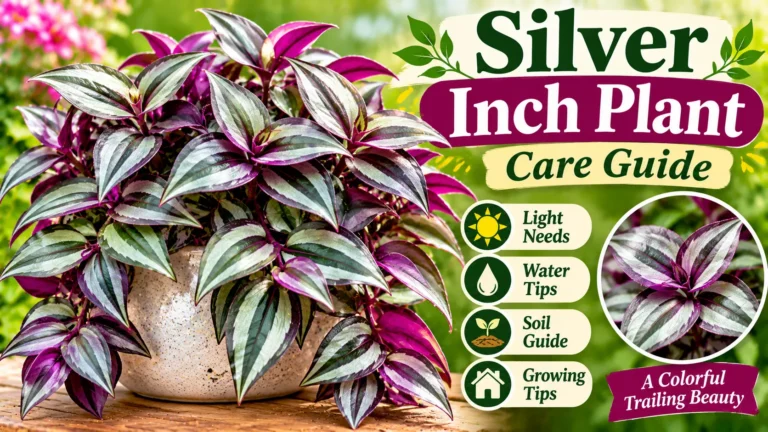
It belongs to the Commelinaceae family, better known as the spiderwort family. This plant shares that family tree with the silver inch plant, another stunning foliage plant with remarkable purple coloring. Our Silver Inch Plant guide covers its care in full detail.
Common names
You will meet this plant under quite a few names:
- Moses in the cradle (the most common)
- Oyster plant
- Boat lily
- Moses in a basket
- Rhoeo plant
Whichever label you find, the same rules apply. Tradescantia spathacea care and Rhoeo plant care are identical, and oyster plant care is no different either, because every one of those names points to the same easygoing plant.
Where the name comes from
The name describes the flowers. Small white blooms nestle inside purple boat-shaped bracts, which are modified leaves, at the base of the plant. The flowers are “Moses” and the bract is the “cradle.” It is a wonderfully descriptive name once you have seen the plant in bloom.
Origin
The plant is native to Mexico, Belize and Guatemala, where it grows on tropical forest floors and rocky hillsides. It has naturalized in many warm regions around the world and is often used as a ground cover or border plant in tropical gardens. That rocky, well-drained heritage explains why it hates soggy soil.
Growth habit
The plant grows as a rosette, with sword-shaped leaves emerging from a central point. It is compact and clumping, usually reaching 25 to 45cm tall. Over time it sends out offsets (small plantlets) around the base, so a single plant slowly becomes a crowd.
You can grow it three ways:
- As a houseplant, which is by far the most common use
- As an outdoor bedding or border plant in frost-free climates
- As a ground cover in tropical gardens
The leaves
The foliage is the main attraction. The upper surface is glossy dark green, sometimes with light green stripes in certain varieties. Flip a leaf over and you find a vivid purple-red underside, one of the most striking in the houseplant world.
The leaves are fleshy and slightly succulent, storing water in their tissue. That is the secret behind the plant’s drought tolerance. The ‘Tricolor’ variety adds cream and pink striping to the green and purple, which makes it even more ornamental.
The flowers
The flowers are small, three-petalled and white. They sit inside the purple bracts at the base of the leaves and appear year-round in good conditions. Each bloom is short-lived, but new ones keep coming, so there is almost always something to admire.
The tiny white flowers that give this plant its name are a subtle but charming detail. Our White Flowers guide celebrates more of the most beautiful white blooms in the plant world.
Why it works so well indoors
As an indoor plant, it asks for very little. It copes with ordinary room temperatures, average humidity and the odd lapse in watering, which makes it ideal for beginners and busy plant lovers. Its upright, tidy shape also means it fits on a shelf, a windowsill or a desk without sprawling.
Is it toxic?
The plant is mildly toxic to cats and dogs and can cause skin irritation and digestive upset. The sap may also irritate sensitive skin, so wash your hands after pruning or propagating. Keep it out of reach of pets and young children.
Moses in the Cradle Care: Light, Water & Humidity
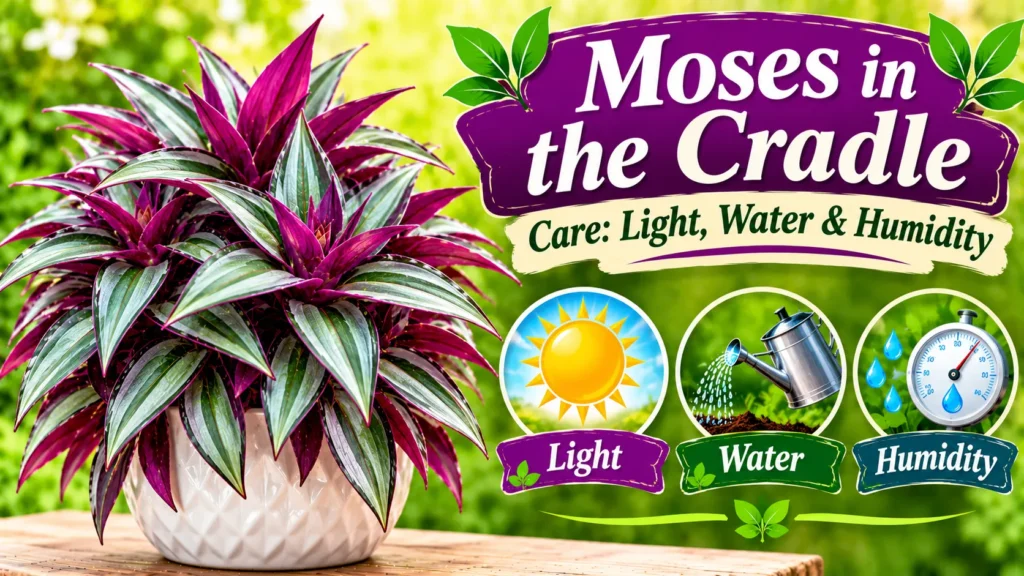
Good moses in the cradle plant care comes down to a handful of simple habits. Get the light and watering right and the rest mostly looks after itself.
Light
Bright indirect light is ideal. This plant tolerates more direct sun than many houseplants, so a few hours of morning sun is perfectly fine. Some afternoon sun is also tolerated, especially in climates with weaker light.
The moses in the cradle light requirements are flexible, but there is one catch. It survives in moderate indirect light, yet the purple underside fades in deep shade. For the richest color, give it bright indirect light or morning sun.
The rich purple-red undersides of these leaves are among the most striking in the houseplant world. Our Purple Flowers guide celebrates more of the most beautiful purple plants and blooms.
Outdoors in summer:
- Partial shade to bright shade works best
- Morning sun with afternoon shade is ideal
- Full sun is handled in cool climates but may bleach the leaves in harsh tropical sun
Water
Moses in the cradle watering is refreshingly simple. Let the top half of the soil dry out between waterings. The fleshy leaves store some moisture, so this plant is more drought-tolerant than most houseplants.
Overwatering is the most common mistake and it leads to root rot. Here is how to avoid it:
- Water less in winter, when growth slows
- Water at the base and keep water out of the central rosette, where it can cause rot in cool, low-light conditions
- Use room-temperature water
- Try bottom watering: stand the pot in water for 20 to 30 minutes, then drain it fully
Humidity
Average indoor humidity suits this plant very well, and that is one of its most adaptable qualities. The ideal range is 40 to 60%, but it copes with dry air better than most tropical houseplants. It is far less demanding than ferns or calatheas, which makes it a great choice for heated homes.
If you see brown tips in very dry conditions, raise the humidity slightly.
Temperature
- Ideal range: 18 to 27°C (65 to 80°F)
- Minimum: 10°C (50°F). Frost will kill it
- Warm, humid rooms are no problem
- Avoid cold drafts and sudden temperature drops
- It can go outdoors in summer when nights stay above 13°C (55°F)
Soil, Pot & Feeding for Moses in the Cradle
Getting the roots right matters more than anything else for this plant, so it is worth setting it up properly from the start.
Soil
Choose a well-draining potting mix. A standard houseplant compost with 20 to 30% added perlite works nicely. The ideal pH is slightly acidic, between 6.0 and 6.5. Avoid heavy, moisture-retaining mixes because they raise the risk of root rot.
Pot
- Drainage holes are essential
- Plastic, terracotta and ceramic pots all work well
- A relatively shallow pot suits the rosette habit, since the roots do not go deep
- Repot every 1 to 2 years, when offsets are crowding the pot
- Spring is the best time, when growth is most active
If you love the bold, architectural look of this plant, our Snake Plant guide covers another striking, low-maintenance plant with upright sword-shaped leaves and extraordinary visual impact. The two look fantastic side by side in matching pots.
Feeding
This is not a heavy feeder. Moderate fertilizing gives the best balance of growth and color.
- Feed every 2 to 4 weeks in spring and summer with a balanced liquid fertilizer at half strength
- Reduce to monthly in autumn
- Stop feeding completely in winter
Go easy on the fertilizer. Too much nitrogen produces lush but paler, less colorful leaves, which defeats the whole point of growing a plant this dramatic.
How to Propagate Moses in the Cradle
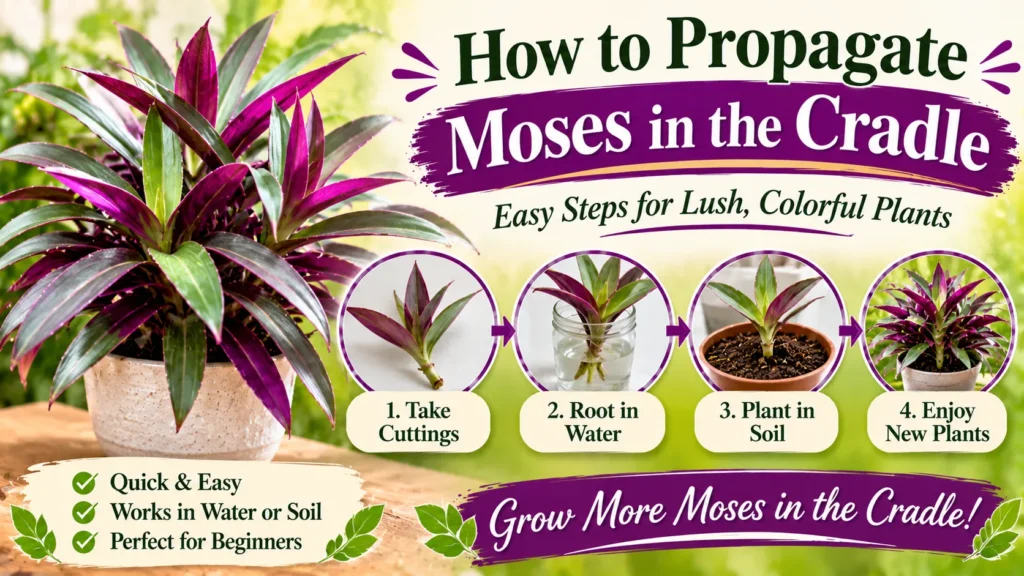
Moses in the cradle propagation is one of the most rewarding jobs in the houseplant world. The plant does most of the work itself by producing offsets, so you can multiply it and share it with friends at almost no cost.
Offset division (the easiest method)
- Wait for roots. Let the offsets develop their own small root system, usually when they reach 5 to 8cm tall.
- Separate gently. Pull or cut the offsets away from the parent plant. Use a clean knife if they are firmly attached.
- Pot individually. Use moist, well-draining compost.
- Give light. Place them in bright indirect light.
- Water lightly. Do not overwater at this fragile stage.
- Watch for new growth. It confirms the offset has established, usually within 2 to 3 weeks.
Stem cuttings (less common, but it works)
- Take a healthy leaf rosette cutting with a short section of stem attached.
- Let the cut end callus for a few hours.
- Plant it in moist compost and keep it barely moist until rooted.
- Expect roots in 3 to 4 weeks.
Making it fuller
Resist the urge to remove every offset. Let some grow alongside the parent in the same pot and the display becomes denser and more impressive over time. A pot with several rosettes crowded together is a genuinely spectacular sight.
Common Moses in the Cradle Problems & Solutions
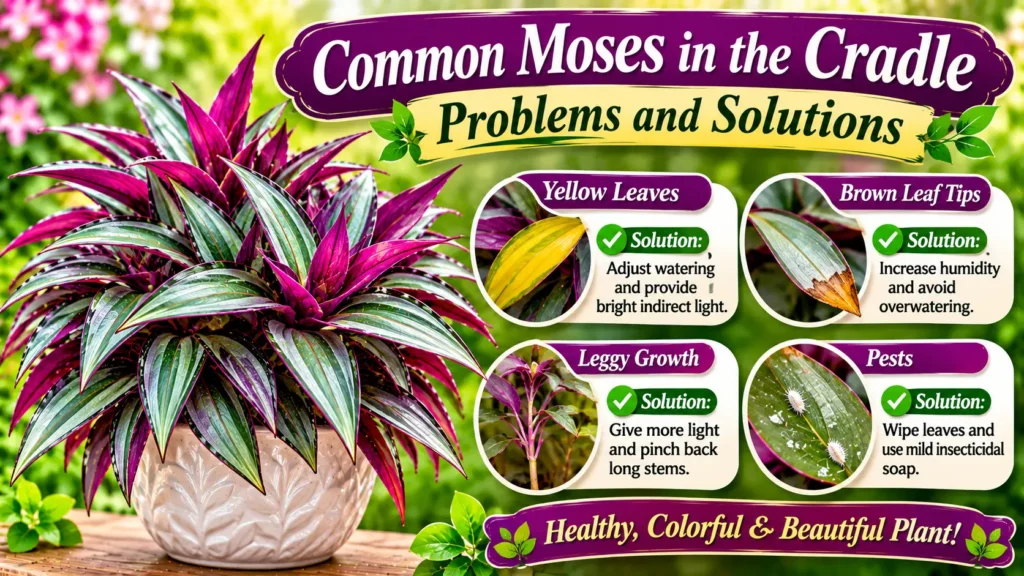
This plant is tough, but a few issues do come up. Most trace back to light or water.
Purple color fading on the underside
- Cause: Not enough light. The purple pigments (anthocyanins) need adequate light to develop.
- Fix: Move the plant to a significantly brighter spot.
- If you enjoy foliage that is all about color contrast, the Coleus Plant is another brilliant choice. Like this one, it makes a bold statement in any space, and our guide covers color-first indoor growing.
Brown leaf tips
- Cause: Low humidity, fluoride in tap water, or dry air from heating systems.
- Fix: Use filtered or rainwater and move the plant away from radiators.
Yellowing lower leaves
- Cause: Natural aging, which is normal as the plant grows taller, or overwatering.
- Fix: If only the lowest leaves are yellowing, remove and discard them. If yellowing is widespread, check soil moisture and drainage.
Root rot
- Cause: Consistently waterlogged soil or water trapped in the central rosette.
- Signs: The plant collapses, the soil smells foul, and the base feels mushy.
- Fix: Remove the plant from its pot, cut away all brown or mushy roots, and repot in fresh, barely moist compost. Then water far less.
Leggy growth
- Cause: Insufficient light.
- Fix: Move to a brighter position. Lower leaves also yellow faster in low light.
Water sitting in the rosette
- Standing water in the central cup where the leaves emerge can cause rot in cool, low-light conditions.
- Prevention: Water at the base, use bottom watering, and keep air circulating around the plant.
Pests
The plant is generally very pest-resistant. Still, keep an eye out for these:
- Spider mites show up in very dry conditions as fine webbing and pale, stippled leaves. Treat with neem oil and raise humidity.
- Mealybugs look like white cottony clusters in the leaf axils. Dab them with isopropyl alcohol on a cotton swab, then spray with neem oil.
- Scale insects appear as brown bumps on stems. Treat them the same way as mealybugs.
Final Thoughts
Few houseplants deliver this much drama for so little effort. The contrast of dark green and deep purple, the tiny white flowers cradled in their boat-shaped bracts, and the bold sword-shaped silhouette make it stand out from almost every other common houseplant. Yet it asks for far less fuss than its exotic looks suggest.
Give it bright light, let the soil dry between drinks, and keep water out of the rosette. That is nearly everything you need to know about Tradescantia spathacea care, Rhoeo plant care and oyster plant care alike. Let a few offsets grow up beside the parent plant and you will soon have a full, spectacular display.
If this guide made you want to grow more, explore more houseplant and flower guides at PlantStyleHome. Moses in the cradle is a plant you will be proud to show off, and a great place to start if you want drama without the drama.