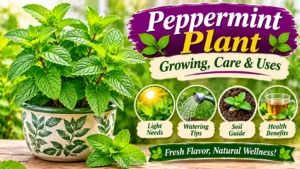
Brush your fingers across a peppermint plant and you will understand the appeal straight away. That cool, sharp scent hits first, followed by the sight of crinkled dark green leaves held on reddish-purple stems. It is a plant that looks lovely and works hard in the kitchen at the same time.
Peppermint is one of the most rewarding herbs you can grow. It is fast, vigorous and productive, and it suits containers and indoor growing beautifully. Within a few weeks of planting you will have more fresh mint than you know what to do with, and that is a very good problem to have.
This guide covers what makes peppermint special, how to grow peppermint in pots, how to look after it, how to harvest without weakening it, and how to fix the usual problems.
What Is a Peppermint Plant?
Peppermint (Mentha × piperita) is a natural hybrid between watermint (Mentha aquatica) and spearmint (Mentha spicata). It belongs to the Lamiaceae family, the large and aromatic mint family that also includes basil, sage and lavender.
What sets it apart is menthol. Peppermint contains far more of it than spearmint or other garden mints, and that is where the sharp, cooling sensation comes from. Spearmint is milder and sweeter, while peppermint is bolder and far more intensely aromatic.
Popular varieties
- ‘Black Mitcham’: the classic dark-stemmed peppermint, with the highest menthol content. It is the variety most used commercially.
- ‘Chocolate Mint’: a subtle chocolate-and-mint scent with attractive dark stems. Lovely in desserts and hot chocolate.
- Eau de Cologne mint (citrata): a citrusy, floral scent that is much less sharp. Great for something different.
One common mix-up is worth clearing up. Spearmint is its own species and is not a type of peppermint, even though the two are often sold side by side. If you want that punchy, tingly flavour, check the label says peppermint.
Growth habit
Peppermint is a vigorous, spreading perennial. Underground runners (rhizomes) travel in every direction, and left to its own devices in a garden bed it will cheerfully take over. In the ground it can reach 30 to 90cm tall, though in a pot it stays more compact.
The stems are square in cross-section, a trademark of the mint family, and often tinted reddish-purple. The leaves are oval to lance-shaped with serrated edges and a slightly wrinkled texture. If you enjoy that purple-red detail, our Purple Flowers guide explores more of the most striking purple plants and blooms.
Flowers
From July to September, small pink-purple flowers appear in whorls along upright spikes. Bees and other pollinators adore them. Our White Flowers guide celebrates more of the most beautiful pale and white blooms in the plant world, if you like that soft, delicate look.
For the best flavour, pinch out flower buds as they form. Flowering tells the plant to put its energy into seeds instead of leaves, and the taste of the foliage fades as a result.
Why people love it
Peppermint has plenty of uses that go well beyond the teapot:
- In the kitchen: teas, cocktails, desserts, mint sauce, tzatziki, salads and anything involving chocolate.
- For wellness: a cup of mint tea is a time-honoured aid for digestion, and the menthol is popular for easing headaches, colds and congestion.
- Around the home: a handful of crushed leaves works as a natural air freshener. Ants and aphids dislike the strong menthol scent too.
- In homemade skincare: think face toners and refreshing foot soaks.
Like the peppermint plant, aloe vera is one of the most useful plants you can grow at home. Our Aloe Vera guide covers everything you need to know about this remarkable plant and its many uses.
A note for pet owners: peppermint is safe for people in culinary and tea quantities, but it is toxic to cats and dogs. The menthol can cause digestive upset and may be harmful in larger amounts, so keep your pot well out of reach.
Peppermint Plant Care: Light, Water & Humidity
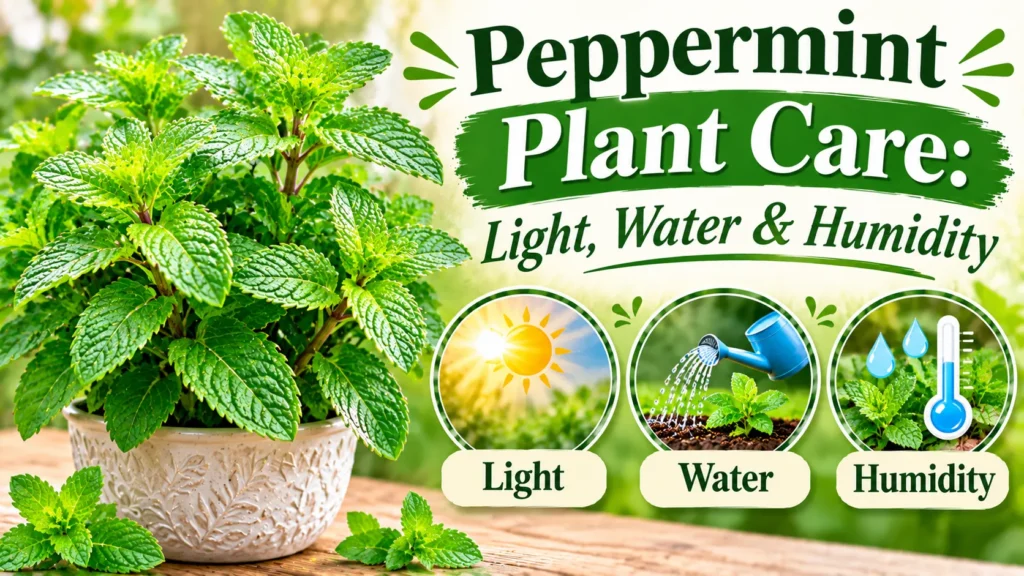
Get these three things right and mint practically looks after itself. Everything else in this guide builds on them.
Light
Peppermint needs good light to grow vigorously and develop its full scent. Aim for 4 to 6 hours of direct sun, or very bright indirect light, every day. These are the peppermint plant light requirements that matter most, because more light means more menthol, which means stronger flavour.
Best spots indoors:
- South or east-facing windowsill: the best option.
- West-facing window: perfectly acceptable.
- North-facing window: not enough light. The plant grows weak and leggy, and the leaves taste disappointing.
Outdoors, peppermint copes with anything from full sun to partial shade. In hot climates, morning sun with afternoon shade is ideal. It tolerates more shade than many herbs, but the flavour is always best in good light.
If your windowsill falls short, a full-spectrum LED grow light works well. Run it for 12 to 14 hours a day. Pale, floppy leaves grown in dim conditions are simply not worth harvesting, so do not be tempted to put up with low light.
Water
Peppermint is thirstier than most herbs. Keep the soil consistently moist but never waterlogged, and do not let it dry out completely. Drought causes rapid wilting, leaf drop and poor flavour.
In summer, check the pot daily. A container can dry out remarkably fast in warm weather. Good peppermint plant watering comes down to reading the signs:
- Underwatering: drooping leaves and stems. The plant usually bounces back within hours of a good drink.
- Overwatering: yellowing lower leaves, soggy soil and, in bad cases, the smell of root rot.
Bottom watering suits mint very well. Stand the pot in a tray of water for 20 to 30 minutes, then let it drain fully before returning it to its saucer.
Humidity
Peppermint tolerates average indoor humidity but prefers it a touch higher than very dry rooms provide. Brown leaf tips are the giveaway that the air is too dry. Grouping plants together or using a pebble tray helps.
Air circulation matters just as much. Stagnant, humid air invites powdery mildew, so do not tuck your mint into a stuffy corner. If you enjoy plants that like cool, moist conditions, our Boston Fern guide covers another rewarding plant that thrives in similar indoor environments.
Temperature
This is a cool-weather plant. Ideal temperatures sit between 13 and 21°C (55 to 70°F), and cooler conditions produce the most flavourful leaves. Anything above 30°C (86°F) causes heat stress, wilting and weaker flavour.
In the ground, peppermint is remarkably tough and survives down to around -15°C with mulch protection. Pots are a different story, because roots are far more exposed. Bring containers indoors before the first frost.
Growing a Peppermint Plant in Pots: Soil, Container & Feeding
If you take only one tip from this guide, make it this one: grow your mint in a container. It is the single best way to enjoy it without regret.
Why containers work best
Those underground runners will push well beyond their allotted space in a garden bed. A pot keeps the spreading under control completely. It also makes harvesting easy, lets you move the plant to the best light as seasons change, and means you can grow mint year-round indoors. If you are new to growing peppermint indoors, a pot on a bright windowsill is the ideal start.
If you have ever wondered how to grow peppermint without it escaping, this is the answer. Mint plant care indoors is also far simpler than outdoors, because you control the light, the water and the roots.
Choosing a container
- Size: at least 30cm across, because peppermint fills a pot quickly.
- Depth: at least 20 to 25cm, so roots and runners have room.
- Material: terracotta, plastic and ceramic all work.
- Drainage: holes in the base are essential.
- Shape: wide and shallow beats tall and narrow.
Soil
Peppermint likes a rich mix that holds moisture yet still drains well. Standard multipurpose compost with 10 to 20 percent perlite stirred in is perfect. Aim for slightly acidic to neutral soil, around pH 6.0 to 7.0.
Avoid sandy or very free-draining mixes, which dry out too fast. Refresh the compost every year too, because mint exhausts the nutrients in a container surprisingly quickly.
Feeding
Less is more here. Feed every two to three weeks in spring and summer with a balanced liquid fertiliser at half strength. A slow-release granular feed at the start of the season works just as well.
Steer clear of high-nitrogen feeds. They produce lush but weak growth with very little flavour. Cut back in autumn and stop altogether in winter. Moderate feeding gives you the most aromatic leaves.
Looking for another beginner-friendly plant that grows fast and rewards you for very little effort? Our Spider Plant guide covers another brilliant easy-care plant that practically grows itself.
How to Harvest Peppermint (And Keep It Producing)
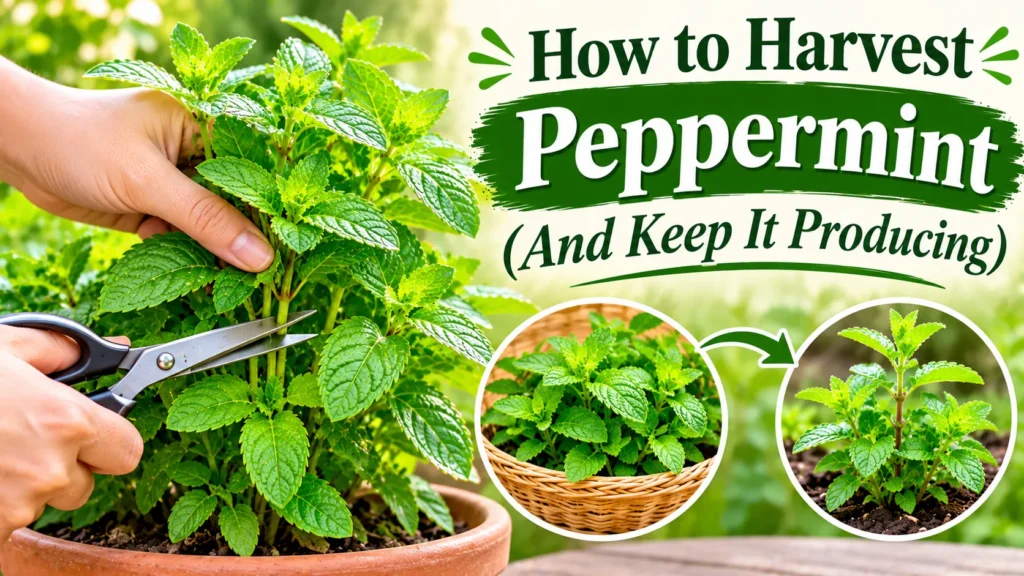
Harvesting is where many people go wrong. Done properly, it makes mint bushier and more productive. Done badly, it weakens the plant.
When to harvest
Wait until the plant is established and growing well, usually six to eight weeks after planting. Pick in the morning once the dew has dried, when menthol levels are at their highest. Within the season, the best flavour comes just before flowering begins.
How to harvest correctly
- Never take more than one-third of the plant at once.
- Cut just above a leaf node, the point where leaves meet the stem.
- Expect two new stems to grow from that spot, so the plant gets bushier with every harvest.
- Use clean, sharp scissors or garden snips.
- Take from the top of the stems, where the youngest and most flavourful leaves grow.
Pinching out
Even when you do not need leaves, pinch out the top 2 to 3cm of each stem regularly. It stops the plant turning tall and leggy and encourages dense, bushy growth. Remove flower buds as soon as they appear to protect that flavour.
Using what you pick
- Fresh: perfect for tea, cocktails, salads, garnishes and water infusions.
- Dried: hang small bundles upside down in a dry, airy spot. They are ready in one to two weeks.
- Frozen: spread leaves flat on a tray to freeze, then bag them. They are brilliant in smoothies and tea.
Peppermint Plant Problems & Solutions
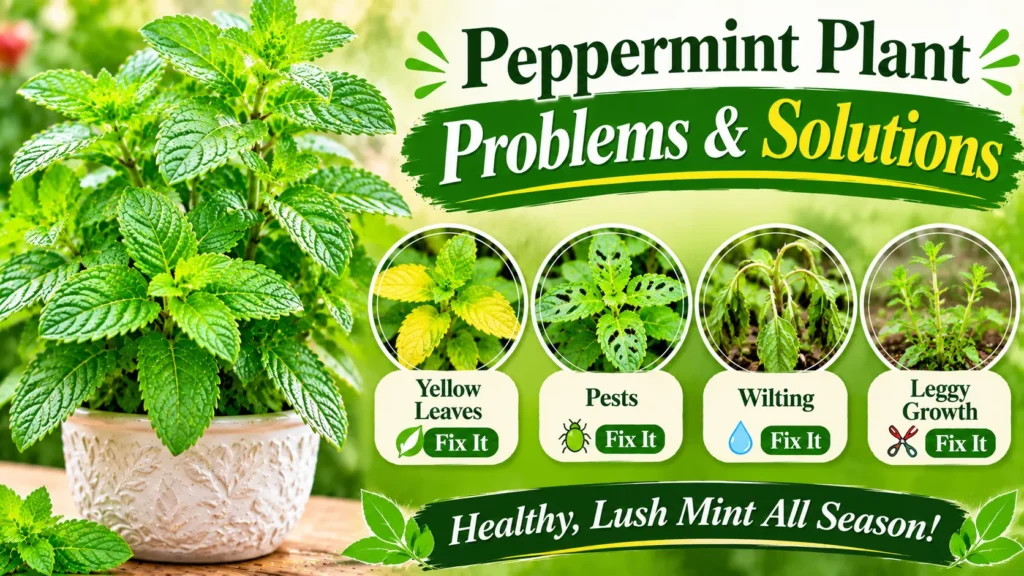
Mint is tough, but it is not bulletproof. Here are the issues you are most likely to meet.
- Wilting despite moist soil: the cause is either root rot or heat stress. Slide the plant out and check the roots. If they are brown and mushy, repot in fresh compost, trim away dead roots and water less. If they are firm and healthy, the plant is too hot, so move it somewhere cooler and shadier for a while.
- Powdery mildew (white dusty coating): very common with mint, usually caused by poor air circulation, high humidity or overhead watering. Improve airflow, water at the base, remove affected leaves and spray with diluted neem oil. Give plants space to prevent it.
- Leggy, weak growth: this points to too little light or too much nitrogen. Move the plant to a brighter spot, ease off feeding and pinch out the tips to encourage bushy regrowth.
- Yellowing leaves: overwatering is the usual culprit, though nutrient deficiency and natural ageing of lower leaves also cause it. If the soil is constantly wet, water less and improve drainage. If it is dry and the leaves look pale, give a balanced feed.
- Rust (orange spots on leaves): a fungal disease caused by Puccinia menthae. Remove every affected leaf and bin them, never compost them. Treat with a copper-based fungicide and improve airflow. In severe cases, cut the whole plant back, treat the soil and let it regrow from the roots.
- Aphids: clusters on new growth with sticky residue on the leaves. Blast them off with a jet of water or use insecticidal soap. Mint’s scent deters many insects, but stressed plants still attract aphids.
- Spider mites: fine webbing and pale, stippled leaves, usually in hot, dry conditions. Raise humidity and treat with neem oil.
- Stops growing in winter: this is completely normal. Mint dies back or goes semi-dormant in cold, dim weather. Kept warm indoors with good light, it may keep growing slowly all year. Cut it back hard in autumn, mulch outdoor plants and wait for spring regrowth.
A quick word on mint plant care indoors during winter: resist the urge to overwater a slow-growing plant. Soil stays wet longer when growth slows, and that is when root rot sneaks in.
Final Thoughts
There is something deeply satisfying about growing your own mint. Brushing a leaf and catching that sharp, clean scent is one of the simple pleasures of having a herb garden, even if that garden is just one pot on a sunny windowsill.
A peppermint plant is generous, fragrant and endlessly useful, and it asks for surprisingly little in return. Give it bright light, steady moisture, a roomy pot and regular harvests, and it will keep you in fresh tea and garnishes for months.
Growing peppermint indoors is one of the easiest ways to begin, so start with a single pot and harvest often. Before long you will probably find yourself adding spearmint, chocolate mint and a few other varieties to the windowsill, because this habit is catching.
When you are ready for your next green project, explore more plant and herb guides at PlantStyleHome.