Just like birthstones, every birth month has its own special flower, and honestly, the tradition is even older and more romantic than most people realize. Long before anyone thought to assign gemstones to months, people were tying flowers to the seasons of our birth, using blooms to say things words couldn’t quite capture.
Discovering your birth flower is like finding a piece of yourself in nature. Maybe you were born in June and share your month with the rose, a flower that has symbolized love and devotion for centuries. Maybe you’re a February baby whose flower, the violet, has whispered “faithfulness” in secret garden language for hundreds of years. Either way, there’s a bloom out there that was, in a sense, waiting for you.
This guide walks you through everything: where birth month flowers came from, what each one means, how they connect to your zodiac sign, and how to actually use this knowledge, whether you’re planning a birthday gift, choosing a tattoo, or just want to grow something meaningful on your windowsill. By the end, you’ll know exactly what your birth month flower is and why it fits you better than you might expect.
What Are Birth Month Flowers?

Birth month flowers are blooms traditionally associated with each month of the calendar year, each one carrying its own symbolism, history, and emotional meaning. Think of them as nature’s version of a birthstone: a small, living detail that’s uniquely tied to when you came into the world.
Ancient Roman and Greek Origins
The roots of this tradition stretch back to ancient Rome and Greece, where flowers and plants were already deeply woven into mythology and daily ritual. The Romans celebrated birthdays with garlands and floral offerings, and certain flowers were linked to gods, seasons, and virtues long before anyone formalized a month-by-month system. Ancient Greek culture told stories through flowers too, often explaining a bloom’s origin through myths of transformation, love, or loss.
Victorian Flower Language: Floriography
The birth month flower tradition as we know it today really blossomed during the Victorian era. This was the height of floriography, or the “language of flowers,” a coded system where every bloom carried a specific meaning. Victorians used bouquets to send messages they couldn’t say aloud: a red rose for passionate love, a yellow carnation for disappointment, a sprig of rosemary for remembrance.
During this period, flower dictionaries became wildly popular parlor books, and pairing specific flowers with specific months became a natural extension of that obsession. People wanted a way to celebrate identity and personality through something beautiful and symbolic, and birth flowers fit perfectly.
How Birth Flowers Were Assigned
There’s no single ancient council that sat down and finalized this list. Instead, birth month flowers evolved through a combination of folklore, seasonal availability, and symbolic meaning. Flowers that bloomed naturally during a given month were often assigned to it, while others were chosen because their traditional meaning matched the general character of that time of year. Over decades, certain associations became standard, especially once florists and publications began promoting consistent charts.
Why Two Flowers Per Month
You may notice most months actually have two birth flowers rather than one. This happens for a few reasons. Sometimes different cultures or historical periods favored different blooms for the same month, and rather than choose a winner, both stuck around. Other times, a primary flower had limited availability in certain climates, so a secondary flower filled the gap. The result is that you get options, which honestly makes the whole thing more fun. If one flower doesn’t feel like “you,” the second one usually does.
Birth Flowers vs. Birthstones
Birthstones and birth month flowers work beautifully together, but they come from different traditions entirely. Birthstones trace back to ancient breastplates and biblical references, later formalized commercially in the early 1900s. Birth flowers, meanwhile, grew organically out of folklore and Victorian sentiment. Where a birthstone gives you a permanent, sparkling symbol, a birth flower gives you something living and seasonal, a reminder that beauty is often temporary and worth celebrating while it lasts. Many people now pair both in gifts: a necklace featuring a birthstone charm alongside a pressed or illustrated version of the matching birth flower.
Birth Month Flowers Chart
Here’s your quick-reference birth flower chart, showing the primary and secondary birth flower for each month along with a key meaning to remember it by.

Keep this birth flower chart handy any time you need a quick answer to “what is my birth flower,” or when you’re shopping for a birthday gift and want to add a meaningful, personal touch.
Birth Month Flowers: Month by Month Guide
Ready for the details? Here’s a closer look at the birth flowers for each month, including their meanings, the personalities they tend to match, and gift ideas worth stealing.
January Birth Flowers
January’s flowers are the Carnation and the Snowdrop, a fitting pair for the year’s determined first month. Carnations symbolize loyalty, affection, and deep admiration, while the snowdrop, often the very first bloom to push through winter snow, represents hope and new beginnings.
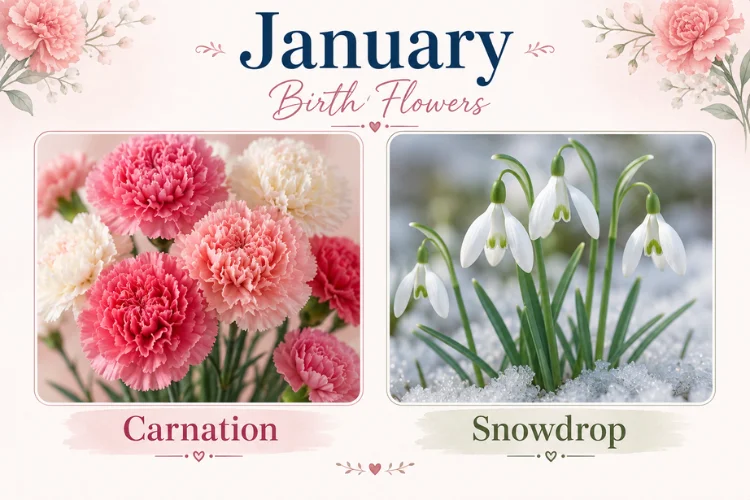
These flowers suit the steady, ambitious nature often linked to Capricorns and the independent, forward-thinking spirit of Aquarians. For a gift, consider a bouquet of soft pink carnations paired with a hand-poured candle in a wintry scent.
Want the full story? Read the complete January Birth Flowers guide.
February Birth Flowers
February belongs to the Violet and the Primrose, two delicate blooms that feel right at home during the season of love. Violets have long symbolized faithfulness and modest devotion, while primroses represent young love and can’t-help-yourself affection.
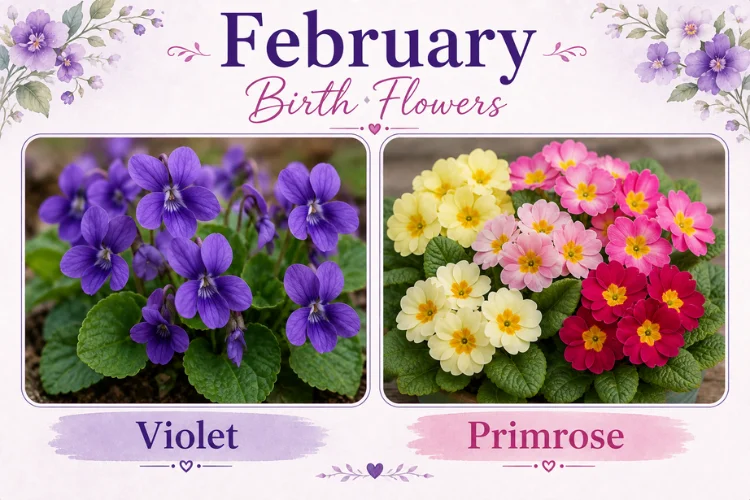
It’s easy to see why these birth month flowers suit the romantic, dreamy energy of Pisces and the quietly rebellious charm of Aquarius. A framed pressed-violet print makes a lovely, lasting Valentine’s-season gift.
Explore more in the February Birth Flowers.
March Birth Flowers
March brings the Daffodil and the Jonquil, cheerful yellow blooms that practically announce spring’s arrival. Daffodils symbolize rebirth and new beginnings, while jonquils add a layer of sweetness and desire for affection returned.
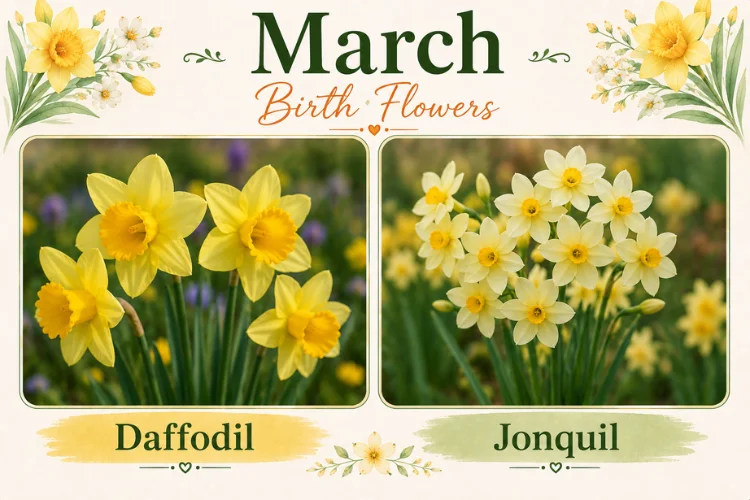
These flowers match the intuitive, imaginative nature of Pisces and the bold, energetic spark of Aries. A potted daffodil bulb ready to bloom makes a thoughtful, growing gift.
Dive deeper into the March Birth Flowers.
April Birth Flowers
April’s birth flowers are the Daisy and the Sweet Pea, both bursting with the innocent joy of full spring. Daisies represent purity and cheerful simplicity, while sweet peas symbolize pleasure, gratitude, and blissful happiness.
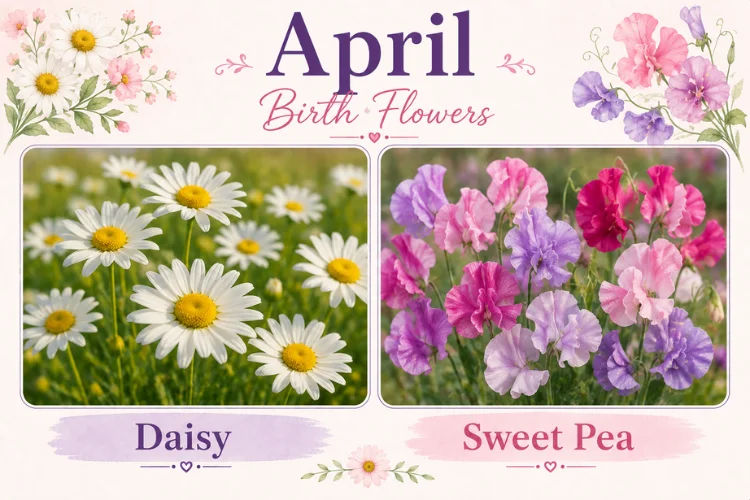
Fittingly, these blooms echo the fiery enthusiasm of Aries and the grounded sensuality of Taurus. Consider gifting a sweet pea-scented candle or a daisy-print piece of jewelry.
See the April Birth Flowers for more.
May Birth Flowers
May belongs to the Lily of the Valley and Hawthorn, elegant blooms tied to happiness and protection. Lily of the valley symbolizes the return of pure happiness, while hawthorn represents hope and enduring love.
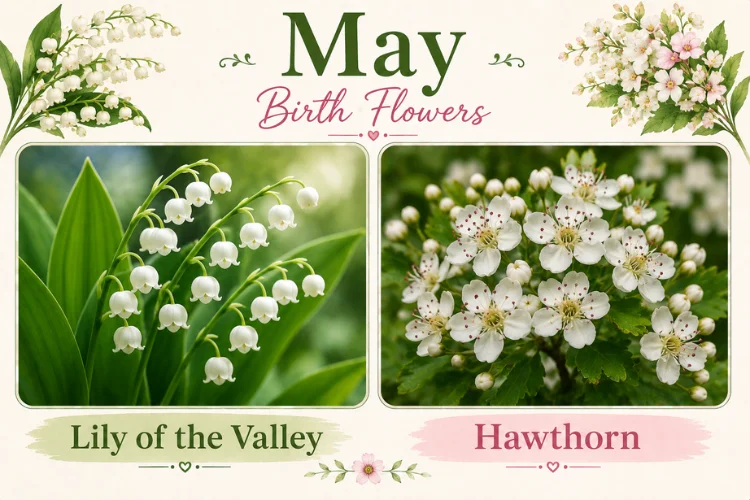
These birth flowers suit the luxury-loving, patient Taurus as well as the curious, quick-witted Gemini. A small potted lily of the valley or a hawthorn-scented soap makes a beautifully understated gift.
Read the full May Birth Flowers.
June Birth Flowers
June’s flowers are the Rose and Honeysuckle, arguably the most iconic pairing on this entire list. Roses have symbolized love and beauty for centuries, while honeysuckle represents devoted, everlasting bonds.
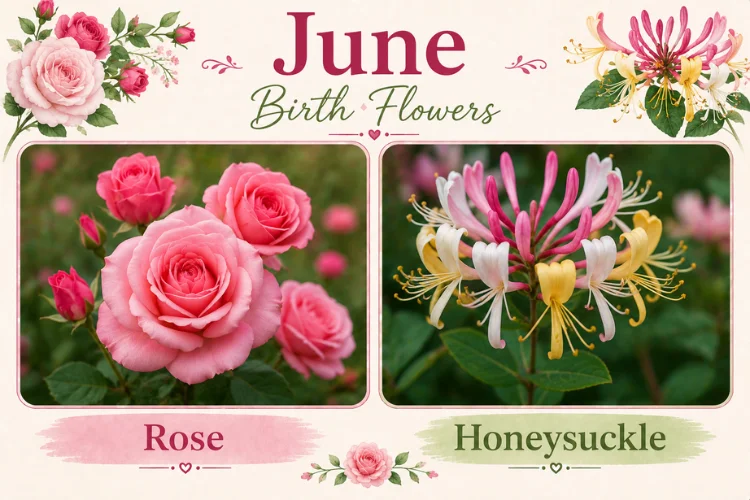
Together, they capture the sociable charm of Gemini and the deeply nurturing heart of Cancer. A classic rose bouquet or honeysuckle-scented perfume oil is always a hit.
Get all the details in the June Birth Flowers.
July Birth Flowers
July brings the Larkspur and Water Lily, striking summer blooms full of meaning. Larkspur represents positivity and an open heart, while the water lily symbolizes purity and quiet strength.

These flowers reflect the sensitive, protective nature of Cancer and the confident, radiant presence of Leo. A larkspur-themed birthstone-and-flower necklace makes for a memorable July gift.
Learn more in the July Birth Flowers.
August Birth Flowers
August’s birth flowers are the Gladiolus and Poppy, bold blooms for the height of summer. Gladiolus symbolizes strength, moral integrity, and remembrance, while the poppy represents imagination and restful peace.

They pair beautifully with the warm confidence of Leo and the detail-oriented precision of Virgo. A gladiolus stem arrangement in a statement vase suits this month’s personality perfectly.
Explore the August Birth Flowers.
September Birth Flowers
September belongs to the Aster and Morning Glory, gentle flowers that mark the turn toward autumn. Asters symbolize wisdom and daintiness, while morning glory represents affection and new beginnings each day brings.
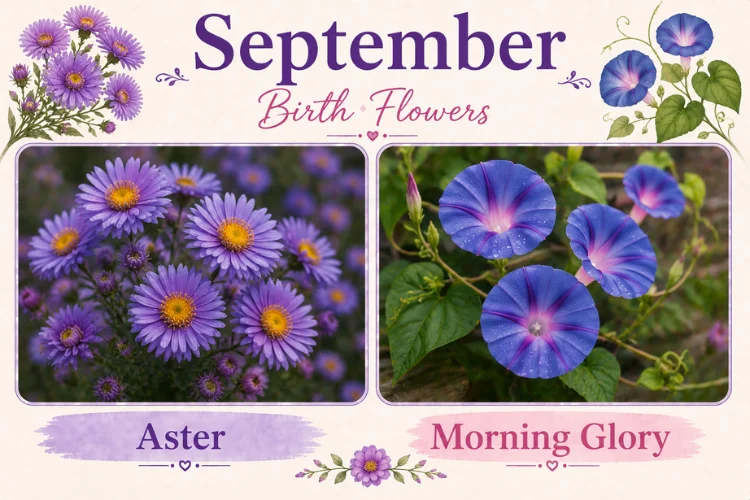
These blooms match the analytical mind of Virgo and the balanced, harmony-seeking Libra. A pressed-aster bookmark or morning glory seed packet gift set feels right at home this month.
Discover more in the September Birth Flowers.
October Birth Flowers
October’s flowers are the Marigold and Cosmos, warm and richly colored blooms for deep autumn. Marigold symbolizes passion and creativity, while cosmos represents harmony and order amid change.
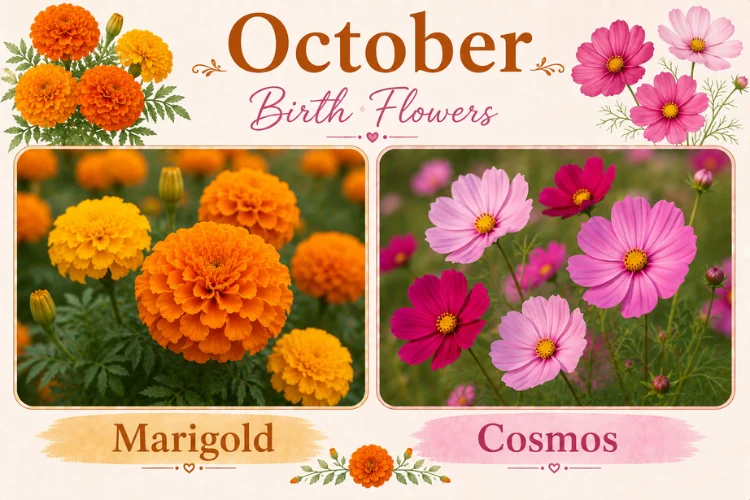
Together, they capture the diplomatic grace of Libra and the intense, transformative energy of Scorpio. A marigold-scented candle or cosmos flower print makes a fitting gift.
Read the complete October Birth Flowers.
November Birth Flowers
November brings the Chrysanthemum and Peony, elegant flowers tied to loyalty and joy. Chrysanthemums symbolize devotion and honesty, while peonies represent romance, honor, and prosperity.
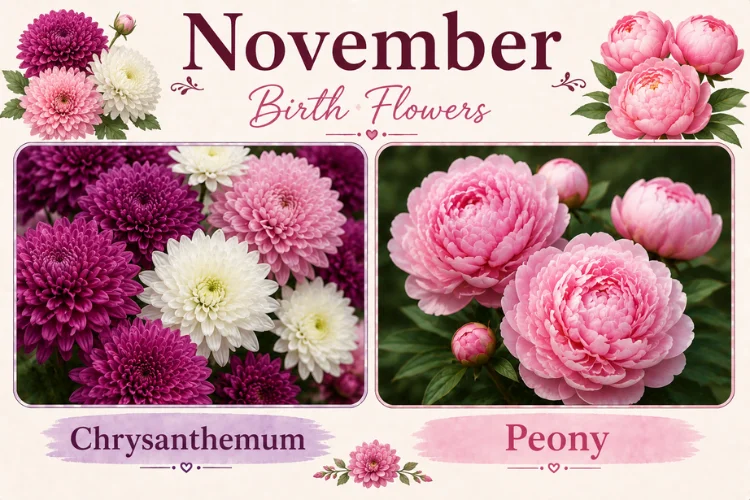
These blooms reflect the magnetic depth of Scorpio and the adventurous optimism of Sagittarius. A chrysanthemum-and-peony floral arrangement makes a luxurious late-autumn gift.
See the full November Birth Flowers.
December Birth Flowers
December’s birth flowers are the Narcissus and Holly, festive blooms full of hope and protection. Narcissus symbolizes hope and renewal, while holly represents good fortune and protection through winter’s darkest days.

Fittingly, they suit the free-spirited Sagittarius and the disciplined, determined Capricorn. A narcissus bulb kit for indoor winter blooming makes a wonderfully unique gift.
Check out the full December Birth Flowers.
How to Use Birth Month Flowers as Gifts
Once you know your birth flower, or someone else’s, the fun part begins: actually using it. Here are some of the most meaningful ways to bring birth month flowers into everyday life.
- Personalized birthday bouquets. Ask your florist to build an arrangement centered on the recipient’s birth flower rather than a generic mix. It instantly feels more thoughtful.
- Birth flower jewelry. Necklaces, rings, and bracelets featuring engraved or illustrated birth flowers have become a popular alternative or companion to birthstone jewelry.
- Birth flower potted plants. A living plant tied to someone’s birth month is a gift that keeps growing long after the birthday celebration ends.
- Pressed birth flower art. Framed, pressed versions of a birth flower make elegant, long-lasting wall art or keepsakes.
- Birth flower tattoo ideas. Small, delicate birth flower tattoos have become a favorite way to carry a permanent, personal symbol.
- Birth flower candles and home decor. Scented candles, throw pillows, and art prints featuring a birth flower motif bring the tradition into someone’s home in a subtle way.
- Combining birth flowers for couples. For anniversaries or engagement gifts, try pairing both partners’ birth flowers in a single bouquet or piece of art, a sweet nod to two individual stories coming together.
Birth Month Flowers by Zodiac Sign
Birth month flowers and zodiac flowers aren’t always identical, since zodiac signs span two calendar months rather than lining up neatly with one. Still, many people love comparing the two. Here’s a quick reference:
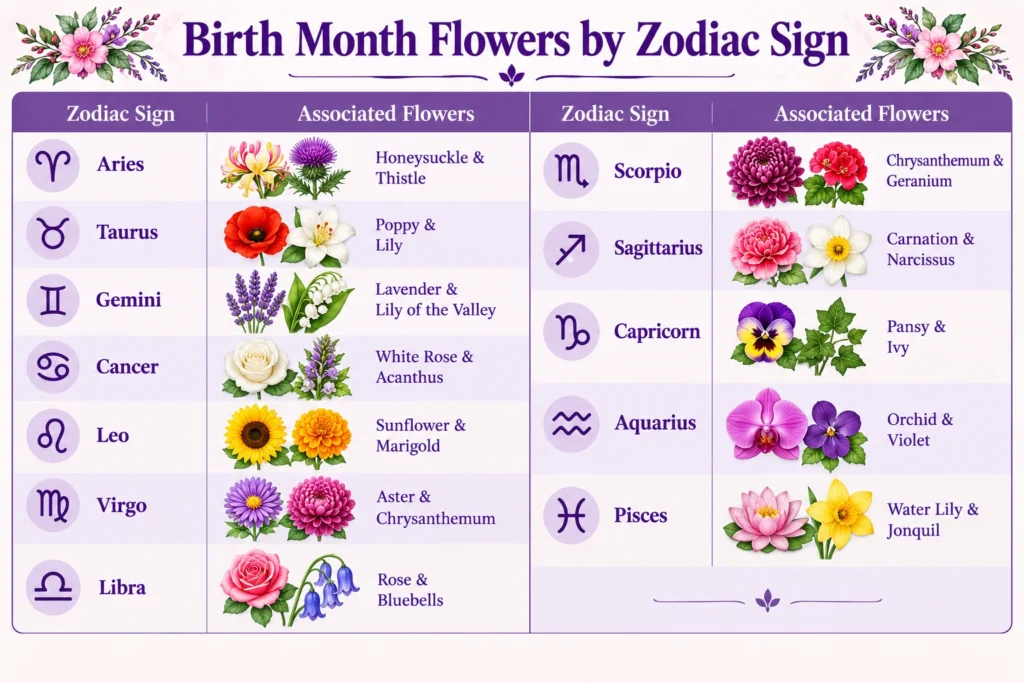
Worth noting: your calendar birth month flower and your zodiac flower can differ slightly, since one system follows exact months and the other follows astrological date ranges. Both are valid, and both are fun to explore, so feel free to embrace whichever resonates with you more.
Growing Your Birth Month Flower at Home
There’s something special about growing your own birth flower rather than just admiring it in a bouquet. It turns an abstract tradition into something you tend, watch, and watch bloom with your own hands.
Gifting a potted birth flower carries extra meaning too. Unlike cut flowers, a living plant becomes an ongoing reminder of the person and occasion every time it’s watered or repotted.
Seasonal planting guide by birth month flower:
- Winter flowers (carnation, snowdrop, violet, primrose, narcissus, holly) generally prefer cool conditions and can often be grown indoors or as early spring bulbs.
- Spring flowers (daffodil, jonquil, daisy, sweet pea, lily of the valley, hawthorn) do best planted in early spring once the last frost has passed.
- Summer flowers (rose, honeysuckle, larkspur, water lily, gladiolus, poppy) thrive with full sun and consistent watering through the warmer months.
- Autumn flowers (aster, morning glory, marigold, cosmos, chrysanthemum, peony) are hardy bloomers that add color as the season shifts.
Most beginner-friendly birth month flowers to grow: marigolds, daisies, sweet peas, and violets are all forgiving, low-maintenance choices for anyone new to gardening. They tolerate minor mistakes gracefully and reward you with blooms fairly quickly, which makes them perfect starter plants for a first attempt at growing your own birth flower.
Frequently Asked Questions
A birth month flower is a specific bloom traditionally associated with the month someone was born in, similar to how a birthstone is tied to a birth month. Each flower carries its own symbolism and history.
Most months have a primary and secondary birth flower because different cultures, historical periods, and regional availability led to more than one bloom becoming associated with the same month over time.
The rose, June’s primary birth flower, is widely considered the most popular and universally recognized birth month flower thanks to its long-standing association with love and beauty.
Simply match your birth month to the birth flower chart above. If you want more detail, check the dedicated month-by-month guide for your specific month.
Any birth month flower makes a wonderful gift when it’s personalized to the recipient. Pairing it with their birthstone, favorite color, or a meaningful keepsake makes it even more special.
Not always. Birth month flowers follow the calendar month, while zodiac flowers follow astrological sign date ranges, so they can overlap but aren’t always identical.
Your Birth Month Flower Is Waiting
At the end of the day, birth month flowers are more than a fun fact or a pretty chart. They’re a small, living connection to history, to nature, and to the specific moment you came into the world. Whether your bloom is a bold gladiolus, a gentle violet, or a devoted rose, it carries a story that’s been passed down for generations, and now it’s yours to carry forward.
The perfect personalized birthday gift always includes the recipient’s birth month flower, so next time you’re stuck on what to give someone, let their birth flower guide you. It’s a detail people notice and remember.
At Plant Style Home, we’ve created a complete guide to every birth month flower, and this hub is just the beginning. Explore our full collection of monthly birth flower guides and plant inspiration to go even deeper into the meaning behind your bloom, and start celebrating your birth month flowers all year long.