A truly great garden never sleeps. There is always something blooming if you plan it right, and seasonal flowers are the secret that makes it possible.
Snowdrops nod in the January frost. Tulips and magnolias light up April. Roses spill over the fence in June, and by October the dahlias and asters are burning in copper, gold and crimson.
I designed my garden so that every month has at least three flowers in bloom. It took a few seasons of notes, muddy knees and happy mistakes. Now I can step outside in any month and find colour waiting for me.
This seasonal flower guide will show you how to do the same. You will find what blooms in each season, when to plant it, and how to fill the gaps so your garden never falls quiet. Whether you have a sprawling border or a few pots by the door, flowers for every season are well within your reach.
At Plant Style Home we have created complete guides for every season and every type of flower. Explore our full collection and let your garden become a living canvas.
What Are Seasonal Flowers?
Seasonal flowers are plants that reach their peak bloom at a particular time of year, guided by daylight, temperature and their own natural rhythm. A tulip does not flower in July, and a dahlia does not flower in February. That predictability is exactly what makes planning possible.
Learning flowers by season matters because most gardens peak once and then fade. A border full of summer roses looks glorious in July and bare in November. When you know what flowers bloom each season, you can stagger your planting so one display hands over to the next like runners passing a baton.
I think of the year as four acts:
- Spring brings bulbs, blossom and fresh green energy.
- Summer delivers abundance, fragrance and buzzing borders.
- Autumn offers warm, rich colour and late nectar.
- Winter rewards you with small, tough, scented surprises.
Wildlife depends on this rhythm too. Bees, butterflies and hoverflies need food from the first warm days of spring to the last mild days of autumn. A garden with year round flowers for garden visitors becomes a lifeline rather than just a pretty picture.
The design principle I follow is simple: always have something blooming. Below you will find garden flowers by season, and each section builds on that one idea.
Complete Seasonal Flowers Chart
Here is the quick reference I keep pinned inside my potting shed. Use this seasonal flower chart to see flowers by season at a glance, then dive into the details that follow.
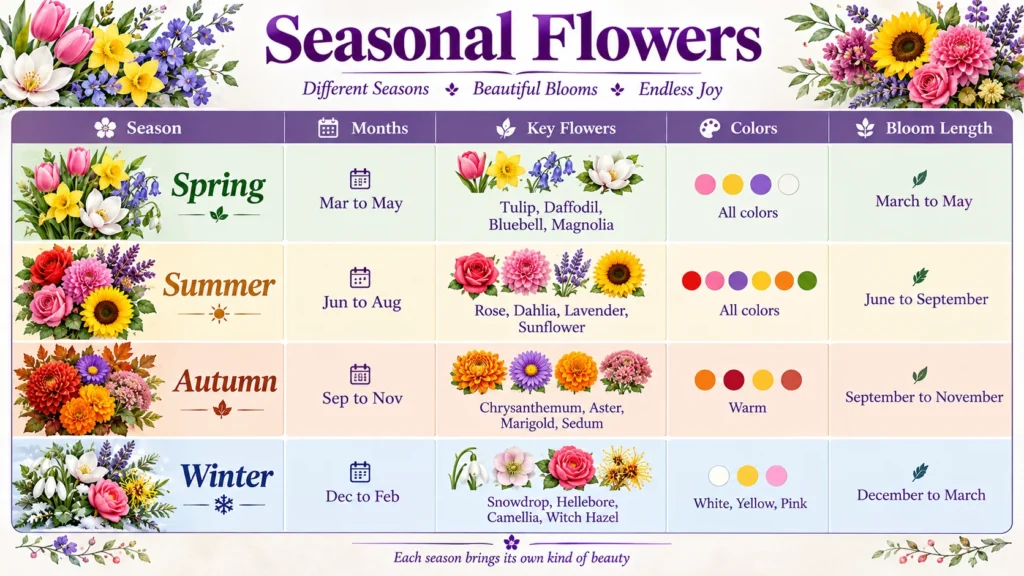
These dates suit the northern hemisphere and a temperate climate. Shift them by a few weeks if you garden somewhere warmer or colder.
Spring Seasonal Flowers: March, April, May
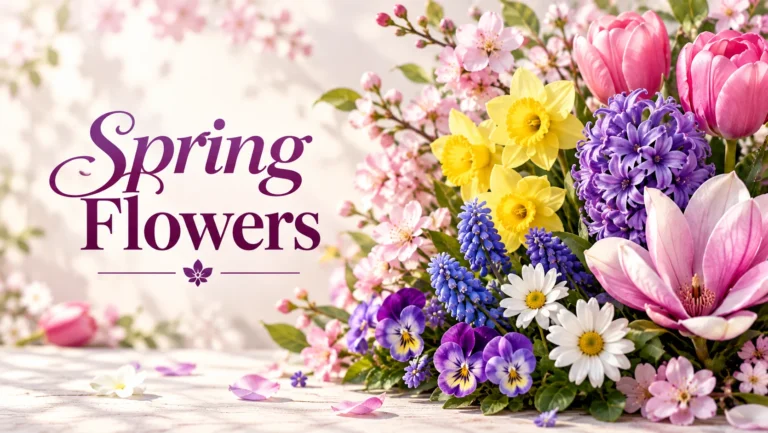
Spring arrives quietly and then all at once. One week the border is bare soil and hopeful green shoots, and the next it is awash with colour. Bulbs I planted months ago push up like small promises kept, and the air smells of hyacinth and damp earth.
This is the season when the garden wakes up hungry, and so do the first bees. Cool nights help spring blooms last longer, which makes it one of the most forgiving seasons to garden in. Here are my eight favourite performers.
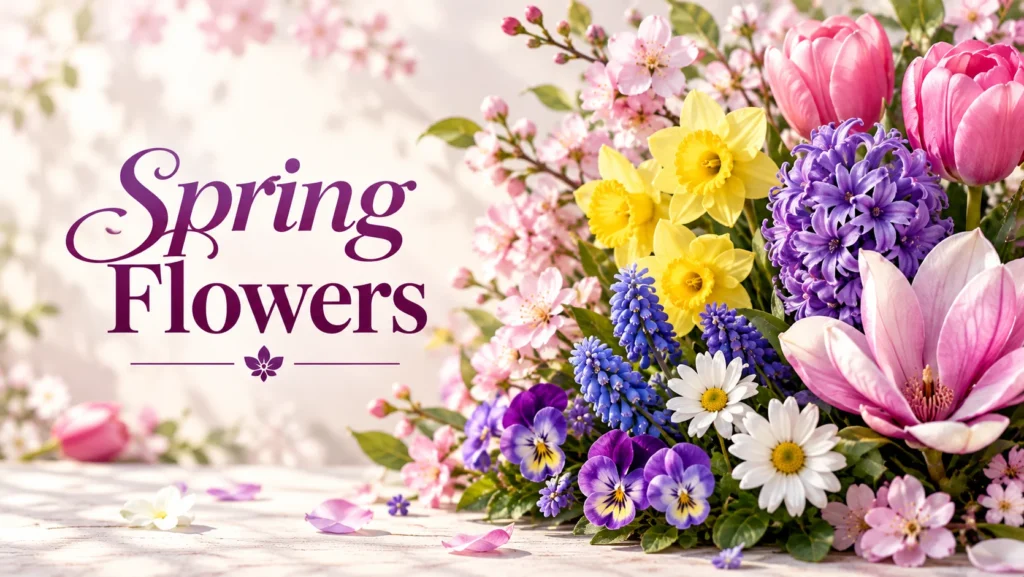
- Tulip: The icon of April, with cup-shaped blooms in nearly every colour imaginable.
Care tip: plant bulbs about 15 cm deep in autumn, in well-drained soil. - Daffodil: Cheerful trumpets that return and multiply year after year. Rabbits and deer leave them alone.
Care tip: let the leaves die back naturally for six weeks so the bulb can recharge. - Hyacinth: Dense, fragrant spikes in blue, pink and white that perfume a whole doorway.
Care tip: wear gloves when planting, as the bulbs can irritate skin. - Cherry Blossom: Clouds of pink and white that make a street stop and stare.
Care tip: prune only in summer, when the risk of disease is lower. - Bluebell: Woodland carpets of violet-blue that thrive in dappled shade.
Care tip: buy from a reputable grower and never dig them from the wild. - Magnolia: Goblet-shaped flowers glowing on bare branches.
Care tip: shelter it from morning sun after frost, which can scorch the petals. - Allium: Purple globes on tall stems that float above the border in late spring.
Care tip: give them full sun and leave the seed heads standing for structure. - Primrose: Soft yellow faces that are often the first flowers of the year.
Care tip: keep the soil moist, and divide clumps after flowering.
When to plant spring flowers: Most spring bulbs go in during autumn, from September to November. Primroses and hardy annuals can be planted or sown in early spring, and blossom trees are best planted while dormant.
Explore our complete dedicated guide to Spring Flowers, covering all the best spring blooms, bulbs and planting tips in full detail.
As the last tulips drop their petals, the roses are already swelling into bud. The garden is preparing to step into its most generous chapter.
Summer Seasonal Flowers: June, July, August
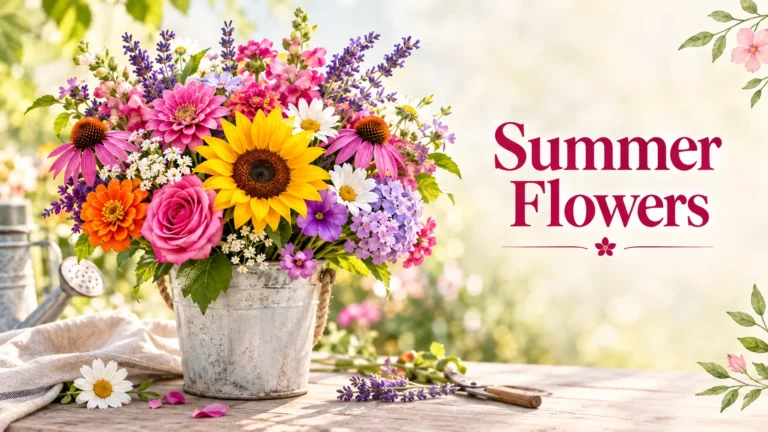
By June the garden hums. Roses open, lavender warms in the sun, and the borders grow so full you can barely see the soil. Summer is the season of abundance, when a single vase of sweet peas perfumes an entire kitchen.
This is also when your planning pays off, because everything you sowed in spring arrives in a rush. Deadheading becomes a happy evening ritual, and every snip buys you extra weeks of flowers. Water deeply, mulch well, and enjoy the show.
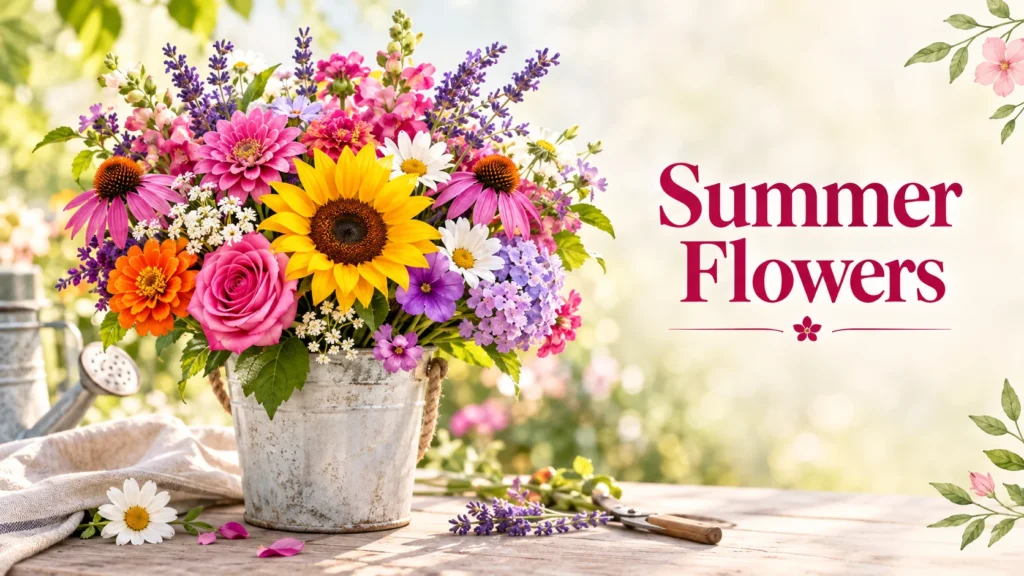
- Rose: The queen of the summer border, with generous flushes of scented bloom.
Care tip: feed in spring and deadhead regularly to encourage a second flush. - Sunflower: Tall, sunny and joyful, and a favourite with children and goldfinches alike.
Care tip: stake tall varieties and sow direct once the soil warms. - Lavender: Silvery foliage and purple spikes that hum with bees.
Care tip: trim lightly after flowering, and never cut into old bare wood. - Dahlia: Endlessly varied blooms that keep going until the first frost.
Care tip: pinch out the tips of young plants to get more flowers. - Zinnia: Bright, easy and long-lasting, and a superb cut flower.
Care tip: sow after the last frost and pick often to keep blooms coming. - Echinacea: Daisy-like coneflowers that shrug off heat and drought.
Care tip: leave the seed heads in autumn for hungry finches. - Hydrangea: Big, romantic blooms that turn the shady corner into a showpiece.
Care tip: water generously in dry spells, as they wilt quickly. - Sweet Pea: Ruffled, fragrant climbers that give more flowers the more you pick them.
Care tip: give them a tall support and pick every few days.
When to plant summer flowers: Sow tender annuals like zinnias and sunflowers once frost has passed. Plant dahlia tubers in mid to late spring, and set out roses and lavender in spring or early autumn.
Dive deeper into our complete guide to Summer Flowers, the most abundant and spectacular flower season of the year.
As August fades, the light softens and the first asters begin to open. They are telling you the golden season is on its way.
Autumn Seasonal Flowers: September, October, November
Autumn is the season most people write off too early, and I think that is a mistake. Just when summer weariness sets in, the garden lights up in copper, gold and burnt orange. Low sun turns every seed head into a lantern.
Autumn blooms are bold and generous, and they feed butterflies and bees preparing for the cold. Plant with warm colours in mind and the border glows right up to the first hard frost. It is also the gardener’s planting season, so you enjoy one display while quietly building the next.
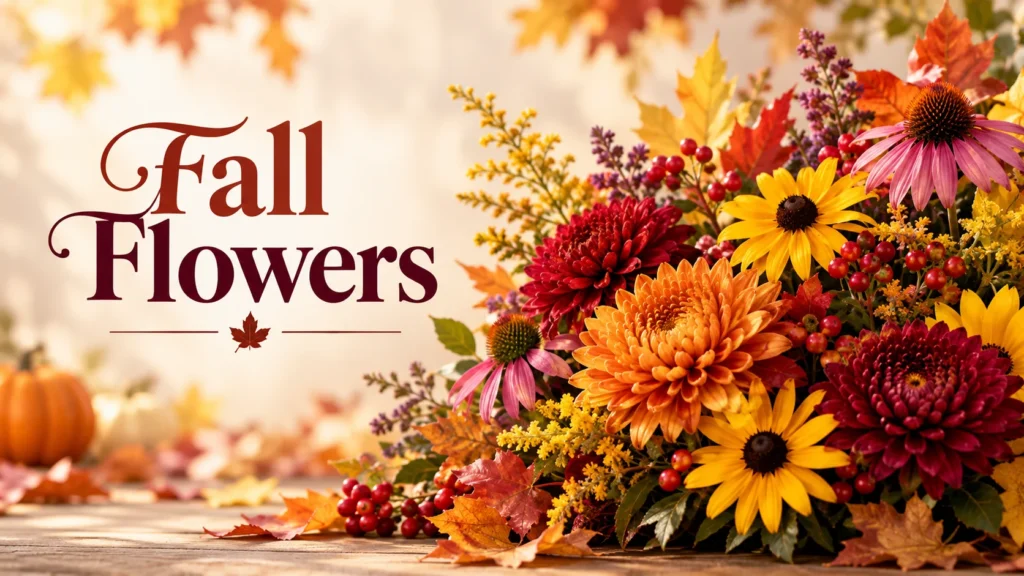
- Chrysanthemum: The classic autumn flower, in rusty reds, golds and creamy whites.
Care tip: pinch back young plants in early summer for bushier growth. - Aster: Starry purple and pink flowers that butterflies adore in September.
Care tip: divide clumps every few years to keep them vigorous. - Marigold: Fiery orange and yellow blooms that flower until frost.
Care tip: deadhead often, and plant beside vegetables to deter pests. - Sedum: Fleshy, drought-proof plants whose flat heads turn from pink to deep rust.
Care tip: leave the dried heads over winter for insects and frosty beauty. - Rudbeckia: Golden daisies with dark centres that light up the late border.
Care tip: plant in full sun and divide in spring. - Cosmos: Airy, delicate flowers that dance on the breeze into autumn.
Care tip: skip rich soil, which gives leaves instead of blooms. - Helenium: Warm sneezeweed flowers in shades of copper, mahogany and gold.
Care tip: stake tall types and cut back after flowering. - Japanese Anemone: Graceful pink and white blooms that thrive in partial shade.
Care tip: plant in spring and leave undisturbed, as they resent moving.
When to plant autumn flowers: Set out perennials in early autumn while the soil is still warm. This is also the moment to plant spring bulbs and sow hardy annuals for next year.
Explore our complete guide to Fall Flowers, the most dramatic and colourful autumn blooms for your garden through to first frost.
When the last chrysanthemum finally browns in the frost, do not worry. The Winter has its own quiet stars waiting.
Winter Seasonal Flowers: December, January, February
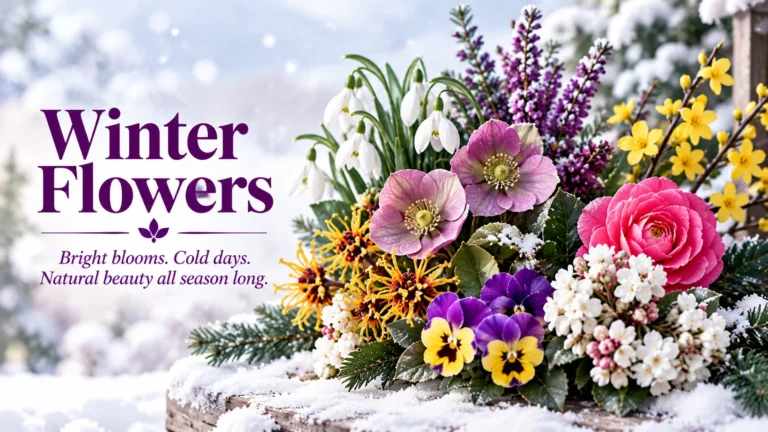
Winter flowers are small, but they carry enormous meaning. On a grey morning, a cluster of snowdrops or the scent of witch hazel drifting across frozen air feels like a small miracle.
These plants have evolved to bloom when little else dares, and many are fragrant to attract the few insects on the wing. I plant them close to paths and doorways so I can enjoy them without wading through mud. Pour a hot drink, look out of the window, and let them remind you that spring is already on its way.
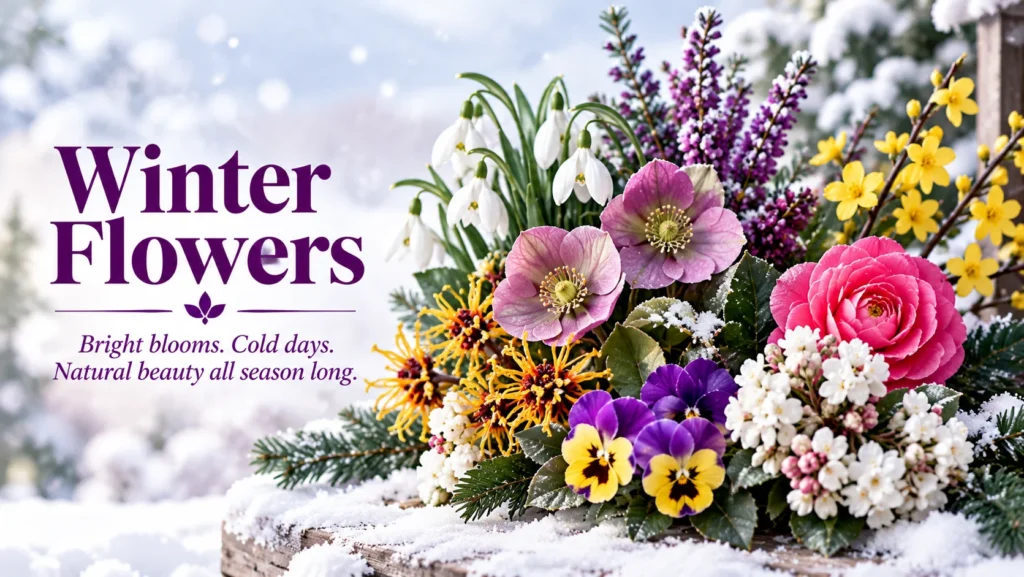
- Snowdrop: Nodding white bells that push through frost and snow.
Care tip: plant “in the green” just after flowering for the best results. - Hellebore: Elegant, long-lasting blooms in plum, cream and green.
Care tip: trim old leaves in winter so the flowers show clearly. - Camellia: Glossy evergreen shrubs with rose-like flowers in pink, red and white.
Care tip: use acidic soil and shelter from early morning sun. - Winter Jasmine: Cheerful yellow stars on bare green stems.
Care tip: train it against a wall or fence and prune after flowering. - Witch Hazel: Spidery, spicy-scented flowers in yellow and orange on bare branches.
Care tip: give it space, as it grows slowly but rewards patience. - Winter Heather: Low, tough evergreens covered in pink and white bells.
Care tip: shear lightly after flowering to keep plants tidy. - Cyclamen: Dainty, swept-back flowers that carpet the ground beneath trees.
Care tip: plant tubers shallowly in well-drained, shaded spots. - Daphne: Small clusters of intensely fragrant pink blooms.
Care tip: plant where you will pass daily, and avoid disturbing the roots.
When to plant winter flowers: Plant shrubs like camellia, daphne and witch hazel during the dormant season, whenever the ground is not frozen. Hellebores and cyclamen settle best in autumn or early spring.
Discover our complete guide to Winter Flowers, the brave blooms that defy frost and bring joy to the darkest months of the year.
And just when the cold seems endless, the first daffodil buds swell. The wheel turns back to spring.
How to Plan a Year-Round Seasonal Flower Garden
Planning is where the magic happens. Think of your garden as a stage where different players take turns in the spotlight.
The layering principle. Each layer of a garden fills a different gap:
- Trees such as cherry and magnolia set the spring scene.
- Shrubs like camellia, hydrangea and witch hazel give structure and off-season colour.
- Perennials including echinacea, sedum and helenium return every year.
- Bulbs deliver spring drama and hide beneath emerging perennials.
- Annuals like zinnia and cosmos fill any gap with fast colour.
Succession planting. Instead of planting everything for one big show, stagger your choices. Tuck late-blooming asters behind early-flowering alliums, and sow annuals every few weeks. Each plant covers for the others as they fade.
Colour palette planning. Pick a palette for each season. Spring can be soft pastels, summer bold and hot, autumn copper and gold, winter pale and fragrant. Repeating a few colours across the year makes the whole garden feel connected.
Bridging the gaps. The tricky moments are late winter into spring and late summer into autumn. Fill them with plants that span two seasons:
- Hellebore stretches from winter into spring.
- Rose blooms from late spring into autumn.
- Dahlia and cosmos carry summer into autumn.
- Japanese anemone and hydrangea bridge late summer and early autumn.
Keep your seasonal flower chart nearby and mark any month where the border looks thin. Then choose one plant to fix it. Here is my simple seasonal blooms guide by month, showing garden flowers by season in a nutshell:
- January: Hellebore, Snowdrop, Winter Jasmine
- February: Snowdrop, Witch Hazel, Camellia
- March: Daffodil, Primrose, Magnolia
- April: Tulip, Cherry Blossom, Hyacinth
- May: Allium, Bluebell, Rose
- June: Rose, Lavender, Sweet Pea
- July: Sunflower, Echinacea, Hydrangea
- August: Dahlia, Zinnia, Sunflower
- September: Aster, Helenium, Japanese Anemone
- October: Chrysanthemum, Sedum, Rudbeckia
- November: Chrysanthemum, Cyclamen, Winter Heather
- December: Winter Jasmine, Winter Heather, Camellia
Follow this and year round flowers for garden success stops being a dream. It becomes a habit.
Seasonal Flowers for Different Garden Situations
Not every garden is a sunny country border. Whatever your space, flowers for every season can be matched to your conditions. Use this seasonal flower guide to pick your best fit.
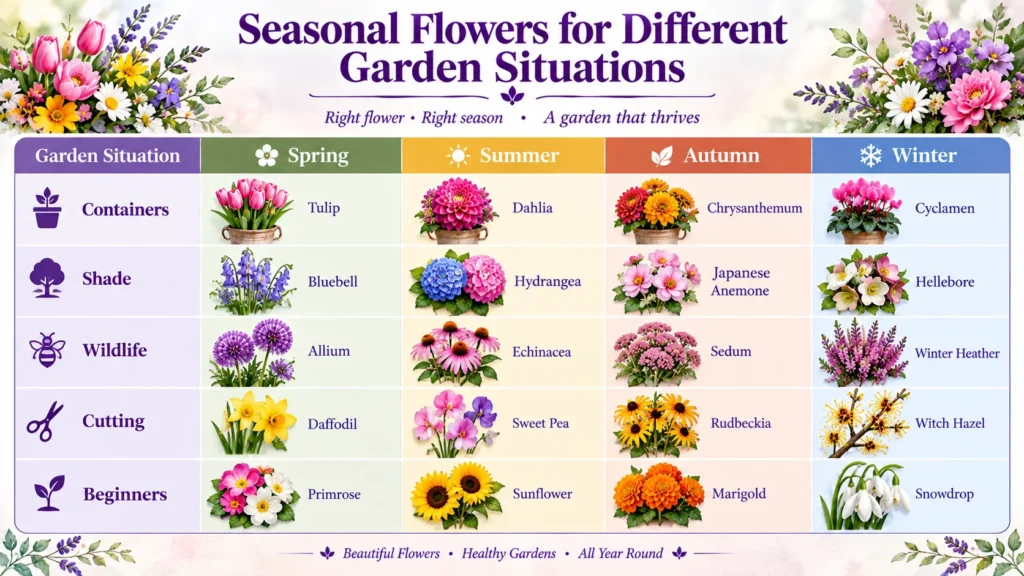
A quick note on beginners: start with the easiest plant in your favourite season, get comfortable, and add another each year. That is how my garden grew, one happy addition at a time.
Seasonal Blooms and Wildlife Year Round
A garden that flowers only in summer leaves wildlife hungry for the rest of the year. A good seasonal blooms guide keeps pollinators fed from January to December.
- Spring: Bees emerge hungry after winter, and early flowers like primrose and crocus give them a first meal.
- Summer: This is peak butterfly season. Lavender, echinacea and zinnia keep them fuelled.
- Autumn: Migrating butterflies and late bees need sedum, aster and helenium to build reserves for the journey or the winter.
- Winter: Queen bumblebees may wake on mild days and need winter heather, hellebore and snowdrop to find nectar.
You can create a wildlife corridor simply by linking your garden with neighbours through overlapping plantings. Each flowering patch acts as a stepping stone. Add a shallow water dish and leave a few seed heads standing, and your garden becomes a small nature reserve.
Frequently Ask Questions
They are plants that bloom most strongly during a specific time of year, such as tulips in spring or chrysanthemums in autumn. Growing them in the right season means healthier plants and more flowers.
No single plant blooms all year, but you can cover each season. Try tulips in spring, roses in summer, chrysanthemums in autumn and snowdrops in winter. Overlapping plants like hellebores and dahlias help bridge the gaps.
Layer trees, shrubs, perennials, bulbs and annuals, and stagger their bloom times. Aim for at least three flowers in bloom each month, and use a monthly checklist to spot gaps.
Primroses, sunflowers, marigolds and snowdrops are hard to beat. They tolerate mistakes, need little fuss, and reward beginners with reliable colour.
Lavender, echinacea, sedum, allium and winter heather are all superb. Single-flowered plants with open centres are usually easiest for pollinators to use.
Yes, and year round flowers for garden pots are easier than you might expect. Use tulips in spring, dahlias in summer, chrysanthemums in autumn and cyclamen in winter, and swap them as the seasons turn.
Your Garden Is a Living Canvas
A garden is never finished, and that is the joy of it. Each season paints a new picture, and you hold the brush. Once you know what flowers bloom each season, your borders stop being a summer showpiece and become a year-round story.
Start small. Choose one plant from each season, tuck it into a sunny corner, and watch the year unfold. Refer to this seasonal flower guide as you grow, and let the seasonal blooms guide and monthly list keep you on track.
Ready to go deeper? Revisit our complete guides to Spring Flowers, Summer Flowers, Fall Flowers and Winter Flowers above, and explore even more inspiration at plantstylehome.com.
Here is to a garden that never sleeps, and may your seasonal flowers keep you smiling in every month of the year.