There is nothing quite like a garden still blooming in October, when the light turns gold and everything else seems ready to sleep. Most people assume their flower beds are finished the moment summer packs up and leaves, but that’s simply not true. Fall flowers are nature’s way of saying goodbye with style, filling borders and containers with warm color right up until the first hard frost.
If you’ve ever walked past a neighbor’s yard in late September and wondered how their asters and mums looked so vivid while your own garden had gone quiet, the answer isn’t luck. It’s planning. A thoughtfully chosen mix of fall flowers can carry your garden from the last days of summer through crisp November mornings, giving you weeks of color you might have thought were impossible this time of year.
This guide covers everything you need to know: which fall blooming flowers deserve a spot in your beds, how to plant and care for them, and how to design a garden that feels rich and alive well into autumn. At Plant Style Home we love helping you grow beautiful gardens in every season, so explore all our flower and plant guides here for even more inspiration once you’ve finished this one.
Why Fall Flowers Matter
Autumn gardens tend to get neglected, and it’s easy to see why. By September most gardeners have spent months tending tomatoes, deadheading roses, and battling summer heat. Once the calendar flips to fall, the temptation is to call it a season and let everything fade.
But that’s exactly why fall flowers matter so much. They bridge the gap between summer’s last blooms and the first frost, keeping your garden from going straight to bare stems and brown mulch. A well-planned bed of autumn flowers can look just as full and vibrant as anything you grew in July, only with a warmer, richer color palette.
There’s a wildlife benefit too. Bees, butterflies, and other late-season pollinators depend on fall flowers for one final push of nectar before winter sets in. Goldenrod, asters, and sedum are often the last reliable food source these insects find, which makes planting them an act of quiet generosity toward the creatures sharing your yard.
And then there’s the simple emotional lift. When everything around you is turning brown and dropping leaves, a border full of blooming mums or a pot of cheerful marigolds feels like a small act of defiance against the season. Fall flowers remind you that beauty doesn’t have to end just because summer did.
Best Fall Flowers for Your Garden: Complete List
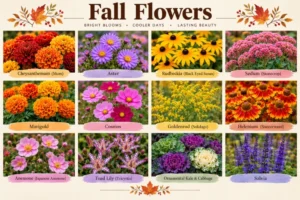
Before diving into detailed care instructions, here’s a quick overview of the best fall flowers for garden beds, borders, and containers. Use this table to compare bloom time, height, and difficulty at a glance.
| Flower Name | Color | Bloom Time | Height | Difficulty |
|---|---|---|---|---|
| Chrysanthemum (Mum) | Red, orange, yellow, purple, white | September to first frost | 12-24 inches | Easy |
| Aster | Purple, blue, pink, white | September to October | 1-4 feet | Easy |
| Rudbeckia (Black Eyed Susan) | Golden yellow | Late summer to October | 2-3 feet | Easy |
| Sedum (Stonecrop) | Pink, red, mauve | September to November | 12-24 inches | Very Easy |
| Marigold | Orange, gold, yellow | Summer to hard frost | 6-24 inches | Very Easy |
| Cosmos | Pink, white, orange | Summer to October | 2-4 feet | Easy |
| Goldenrod (Solidago) | Golden yellow | August to October | 2-5 feet | Easy |
| Helenium (Sneezeweed) | Orange, red, gold | Late summer to October | 3-5 feet | Moderate |
| Anemone (Japanese Anemone) | Pink, white | September to October | 2-4 feet | Moderate |
| Toad Lily (Tricyrtis) | Purple, white, spotted | September to October | 1-3 feet | Moderate |
| Ornamental Kale & Cabbage | Purple, white, cream | October to hard frost | 8-15 inches | Easy |
| Salvia | Blue, purple, red | Late summer to October | 1-3 feet | Easy |
Top Fall Flowers: A Detailed Guide
Now let’s get into the details. Each of these flowers has earned its place on this list because it performs beautifully once the calendar turns toward autumn, whether planted in a border, a container, or tucked among your existing perennials.
Chrysanthemum (Mum)
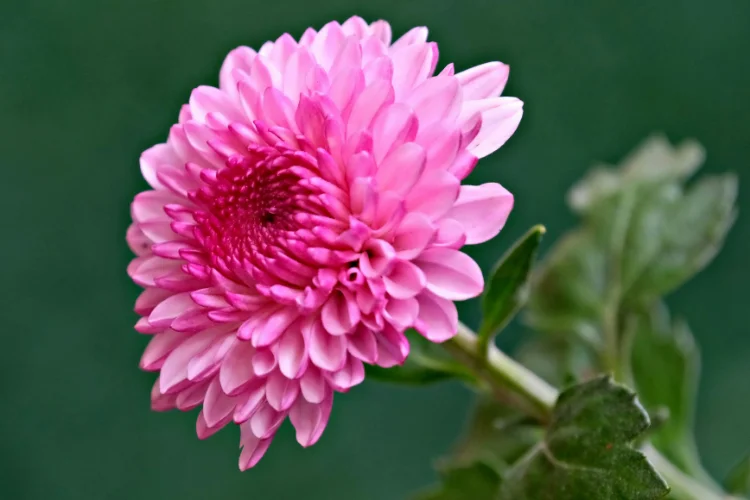
Mums are the single most popular fall flower, and it’s easy to understand why. Their dense, rounded blooms come in nearly every warm color imaginable, from deep burgundy to sunny gold, and they hold up beautifully in cool weather.
Care tips for chrysanthemums:
- Plant in full sun for the fullest, most compact blooms
- Water deeply but avoid soggy soil, since mums dislike wet feet
- Pinch back new growth through midsummer to encourage bushier plants
- Deadhead spent blooms to keep the plant flowering longer
My personal favorite fall flower for containers is a deep rust-colored mum paired with trailing ivy. It looks like autumn poured into a pot, and it instantly upgrades any front porch or entryway.
Aster
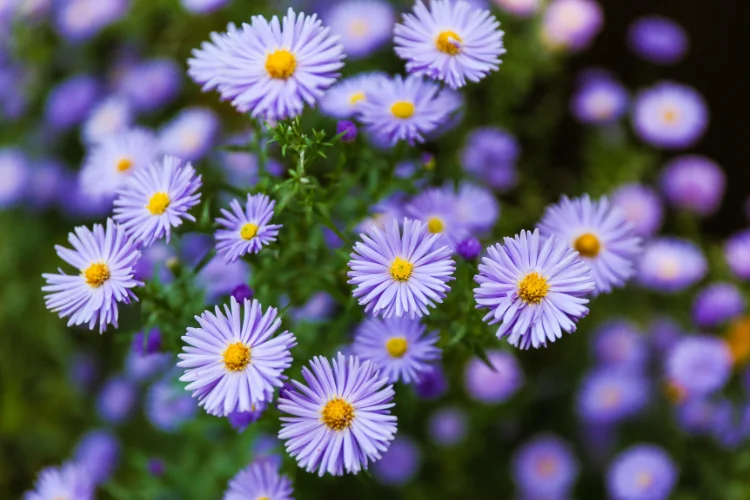
Asters bring a star-shaped charm to the fall garden that few other flowers can match. They’re true late bloomers, often waiting until other perennials have finished before putting on their best show.
Care tips for asters:
- Plant in well-drained soil with full to partial sun
- Space plants generously to allow good air circulation and prevent mildew
- Cut back by about a third in early summer for bushier, more floriferous plants
- Leave spent blooms standing into winter, since birds enjoy the seed heads
Asters are also incredibly valuable to pollinators. Bees and butterflies flock to their purple, blue, and pink petals right when other nectar sources have dried up.
Rudbeckia (Black Eyed Susan)
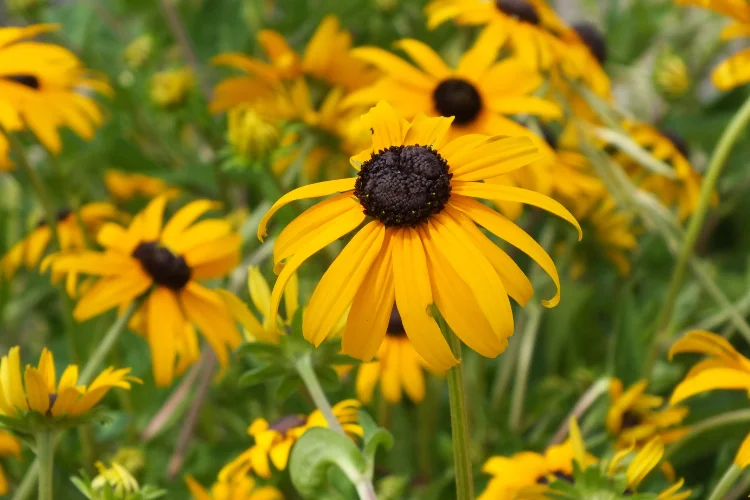
With their golden yellow petals and dark chocolate centers, rudbeckia bring a burst of sunshine to any autumn bed. They’re remarkably long blooming, often starting in midsummer and carrying strong right through October.
Care tips for rudbeckia:
- Choose a sunny spot with well-drained soil
- Water sparingly once established, since these plants are quite drought tolerant
- Divide clumps every few years to keep them vigorous
- Leave seed heads standing for goldfinches and other seed-eating birds
Sedum (Stonecrop)
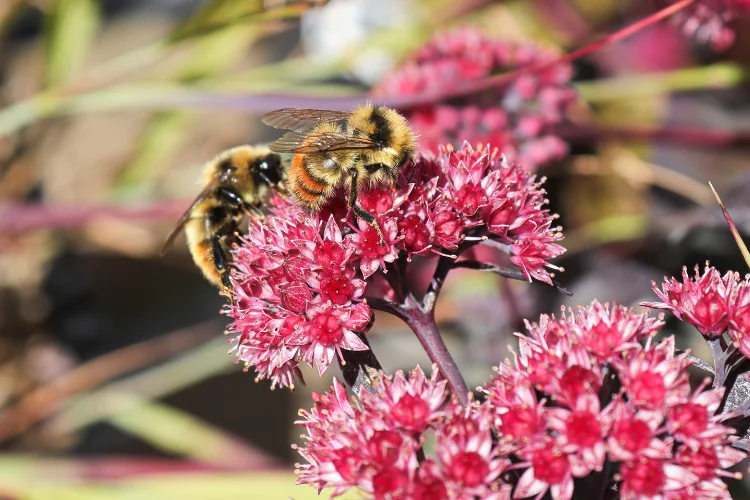
Sedum is one of the easiest fall flowers you can grow, and its succulent leaves make it nearly foolproof. The flower clusters start out pale green in summer and slowly deepen into rich pink, red, or rust tones as the season shifts.
Care tips for sedum:
- Plant in full sun and well-drained soil, even sandy or rocky ground works
- Water only during extended dry spells since sedum stores moisture in its leaves
- Avoid overwatering or rich soil, which causes floppy, weak stems
- Leave the dried flower heads standing through winter for structural interest and bird food
Marigold
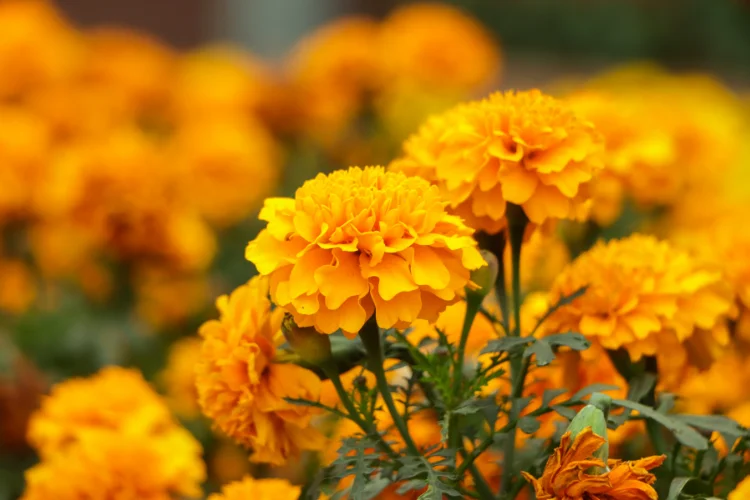
Marigolds might be best known as summer flowers, but they’re surprisingly hardy fall performers. Their vibrant orange and gold blooms hold up well against cool nights, and they keep flowering right up until a hard freeze.
Care tips for marigolds:
- Plant in full sun for the most abundant blooms
- Deadhead regularly to encourage continuous flowering
- Water at the base rather than overhead to prevent mildew
- Take advantage of their natural pest-repelling qualities by tucking them near vegetables
Cosmos
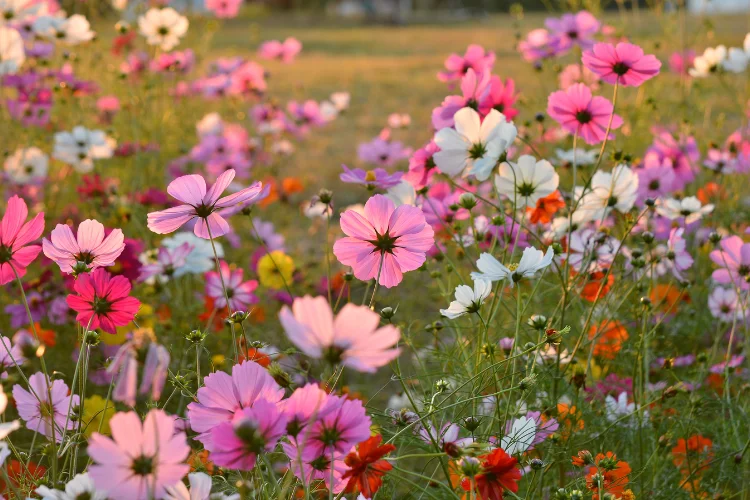
Cosmos bring an airy, feathery texture that softens the boldness of other fall flowers. Their delicate blooms sway on tall, wiry stems and keep flowering well into October in most climates.
Care tips for cosmos:
- Sow in full sun and avoid overly rich soil, which produces foliage instead of flowers
- Water moderately and let the soil dry between waterings
- Deadhead to extend the bloom season
- Let a few flowers go to seed for easy self-seeding next year
Goldenrod (Solidago)
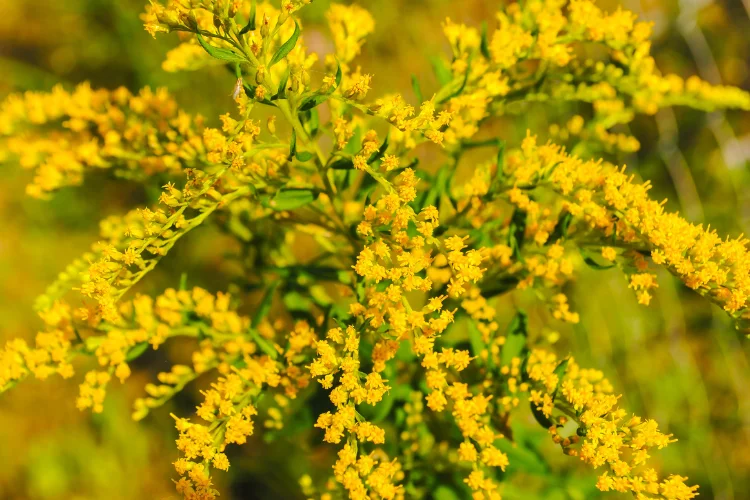
Goldenrod is often unfairly blamed for autumn allergies, but that reputation is a myth. The real culprit is usually ragweed, which blooms at the same time. Goldenrod pollen is heavy and sticky, designed to cling to insects rather than float through the air.
Care tips for goldenrod:
- Plant in full sun; it tolerates poor, dry soil with ease
- Avoid fertilizing, since rich soil leads to floppy, aggressive growth
- Divide every few years to control spread in smaller gardens
- Pair with asters for one of the most classic autumn combinations
Goldenrod is a genuine wildlife magnet, drawing in bees, butterflies, and beneficial insects right through October.
Helenium (Sneezeweed)
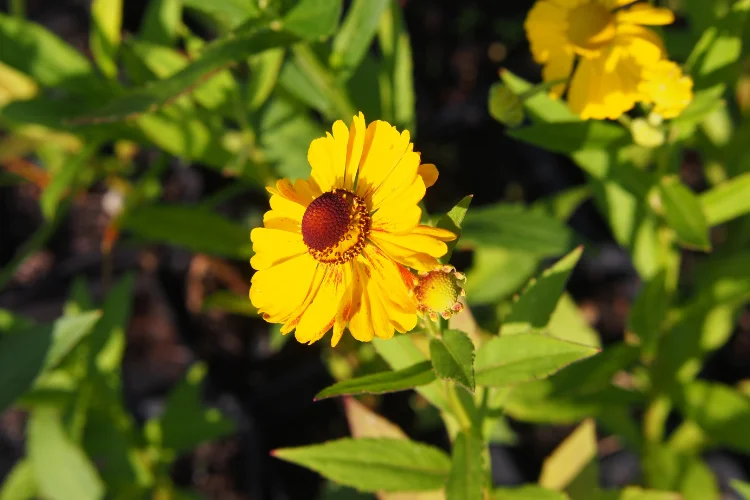
Despite its unfortunate common name, helenium won’t make you sneeze. Its daisy-like blooms come in rich autumn tones of copper, red, and burnt orange, making it one of the most striking fall blooming flowers you can grow.
Care tips for helenium:
- Plant in full sun and moist, well-drained soil
- Stake taller varieties to prevent flopping in wind and rain
- Deadhead regularly for a long, continuous bloom period
- Divide every two to three years to keep plants healthy and vigorous
Anemone (Japanese Anemone)
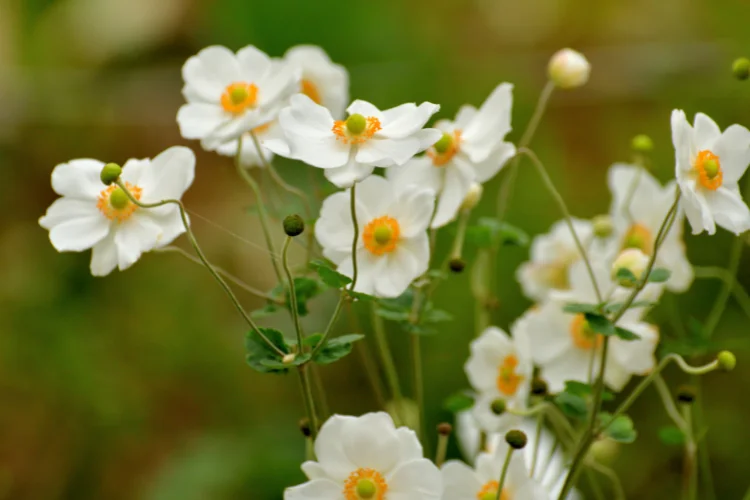
Japanese anemones bring elegant, simple beauty to the shadier corners of an autumn garden. Their pink and white blooms float above the foliage on slender stems, giving the whole plant an almost weightless quality.
Care tips for Japanese anemones:
- Plant in partial shade with rich, moist soil
- Water consistently, especially during dry spells
- Mulch well before winter to protect the roots
- Be patient, since anemones can take a year or two to establish before blooming fully
Toad Lily (Tricyrtis)
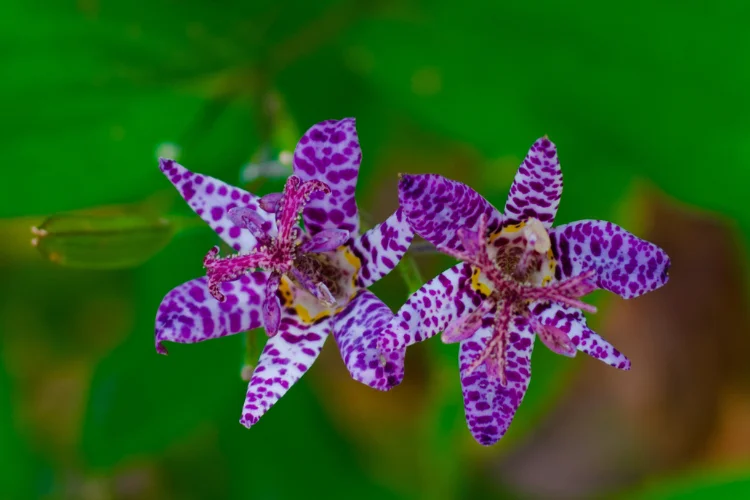
If you want something unusual, the toad lily delivers. Its orchid-like flowers are speckled and spotted in purples and whites, making it one of the most distinctive fall flowers for shaded gardens.
Care tips for toad lilies:
- Plant in partial to full shade with humus-rich, moist soil
- Water regularly, since toad lilies dislike drying out
- Mulch to retain moisture and regulate soil temperature
- Combine with hostas and ferns for a lush, woodland autumn look
Ornamental Kale & Cabbage
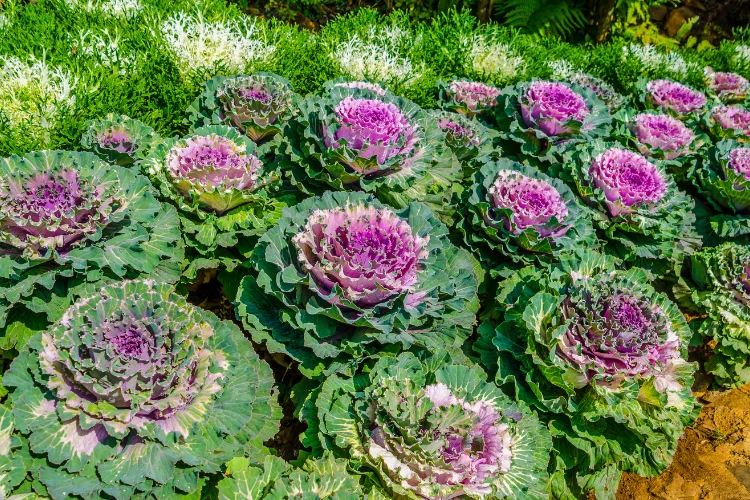
Technically grown for foliage rather than flowers, ornamental kale and cabbage still earn a spot on any list of fall flowers thanks to their ruffled, colorful rosettes. They actually improve in appearance as temperatures drop, developing deeper purples and creams with the first frosts.
Care tips for ornamental kale and cabbage:
- Plant in full sun for the most vivid color
- Water regularly, especially right after transplanting
- Feed lightly, since too much fertilizer weakens color development
- Combine with mums and pumpkins for a classic autumn porch display
Salvia
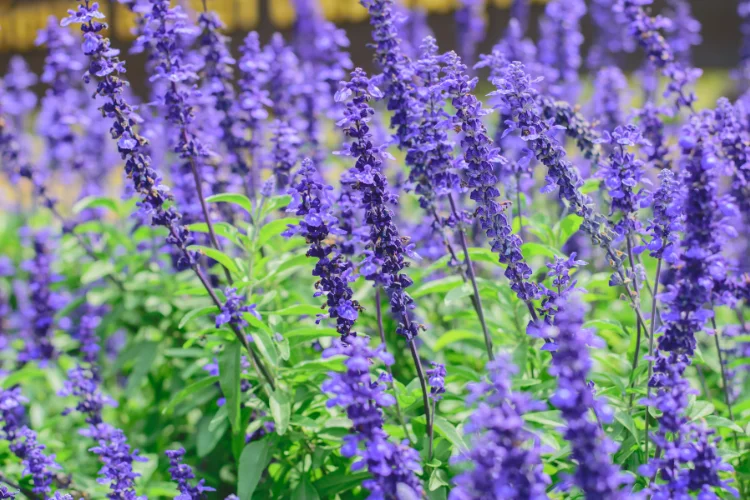
Salvia adds vertical drama to the fall garden with its tall spikes of blue and purple blooms. Butterflies and hummingbirds love it, and deer tend to leave it alone thanks to its aromatic foliage.
Care tips for salvia:
- Plant in full sun with well-drained soil
- Water moderately, allowing soil to dry slightly between waterings
- Deadhead spent spikes to encourage a fresh flush of blooms
- Cut back in late fall after flowering has finished
Fall Flowers by Color
Grouping fall flowers by color makes it much easier to design a border or container display that feels intentional rather than random. Here’s how the most popular fall blooming flowers break down.
Orange fall flowers:
- Marigold
- Helenium
- Rudbeckia
Orange is the signature color of fall, and our dedicated guide on Orange Flowers covers even more beautiful warm orange bloom varieties beyond what’s listed here.
Purple fall flowers:
- Aster
- Salvia
- Anemone
Yellow fall flowers:
- Goldenrod
- Rudbeckia
- Sedum (in its early stage)
Pink fall flowers:
- Anemone
- Cosmos
- Sedum
White fall flowers:
- Anemone
- Cosmos
- Chrysanthemum
Red fall flowers:
- Chrysanthemum
- Sedum
- Salvia
Fall Flowers for Different Garden Situations
Not every garden looks the same, so the best fall flowers for your space depend on your specific conditions. Here’s a quick breakdown to help you choose.
Best fall flowers for containers: Chrysanthemums, ornamental kale, and marigolds all perform beautifully in pots, offering instant color for porches and patios.
Top fall flowers for shade: Japanese anemones and toad lilies thrive in dappled or partial shade, bringing elegance to spots where sun-loving plants struggle.
Best fall flowers for sunny borders: Rudbeckia, asters, and helenium reward full sun with taller, fuller growth and richer color.
Ideal fall flowers for wildlife: Goldenrod, asters, and sedum are magnets for late-season bees and butterflies searching for nectar before winter.
Standout fall flowers for cutting: Cosmos, salvia, and asters hold up well in a vase and make for lovely, informal autumn bouquets.
Best fall flowers for beginners: Marigolds, sedum, and mums are nearly foolproof, forgiving a little neglect while still delivering reliable color.
How to Plant Fall Flowers
Getting the timing and technique right makes a real difference in how well your fall flowers perform. A few simple habits go a long way.
When to plant for best results: Late summer through early fall is ideal for most fall blooming flowers, giving roots time to establish before the ground cools too much. Perennials like asters and sedum can also be planted in spring if you’d rather wait for next year’s display.
Soil preparation for autumn: Loosen compacted soil and work in a couple inches of compost before planting. Good drainage matters even more in fall, since cooler temperatures slow evaporation and can lead to soggy roots.
Watering in cooler weather: Fall flowers generally need less water than their summer counterparts, but newly planted specimens still need consistent moisture until established. Water at the base of the plant rather than overhead.
Fertilizing in fall tips: Skip heavy nitrogen fertilizers, which encourage soft new growth that won’t survive frost. A light application of phosphorus-rich fertilizer instead supports strong roots and better blooms.
Deadheading to extend blooms: Removing spent flowers regularly signals many fall flowers to keep producing new buds, stretching your color further into the season.
Preparing plants for winter: Once frost has finished off the blooms, leave sturdy stems and seed heads standing where possible. They provide winter interest and valuable shelter and food for birds.
Fall Flowers That Attract Wildlife
Late-season pollinators face a real challenge as summer flowers fade, and fall flowers step in to fill that gap. Bees, monarch butterflies on their migration south, and countless other beneficial insects rely on these final blooms for survival.
Goldenrod, asters, and sedum consistently rank among the fall flowers that attract the most pollinator activity, offering both nectar and pollen right when it’s needed most. Even a small patch of these plants can make a noticeable difference for the insects passing through your yard.
Supporting autumn wildlife matters more than most gardeners realize. Many pollinator populations are already under pressure, and every additional food source helps them build the reserves they need before winter arrives. Planting fall flowers is a small effort with a genuinely meaningful impact.
If you’d like to help birds too, resist the urge to cut everything back the moment flowering ends. Seed heads from rudbeckia, sedum, and asters provide food for finches, chickadees, and other birds well into the colder months.
Fall Flower Garden Design Ideas
Designing with fall flowers is where the real fun begins. A few thoughtful choices can turn a simple planting into a display that stops neighbors mid-walk.
Warm autumn color palette tips: Lean into rich oranges, deep purples, and golden yellows rather than fighting the season’s natural mood. For the most dramatic autumn display, our guide on Autumn Blaze Maple shows the ultimate fall color tree for any garden, which pairs beautifully as a backdrop for these flower beds.
Layering heights in a fall border: Place taller flowers like helenium and goldenrod toward the back, mid-height rudbeckia and asters in the middle, and low-growing sedum or ornamental kale along the front edge.
Container autumn display ideas: Combine a tall centerpiece like ornamental grass with a full mum for volume, then add trailing ivy for movement and softness at the edges.
Cutting garden for fall bouquets: Dedicate a small bed to cosmos, salvia, and asters so you always have fresh stems ready for the kitchen table.
Front door fall flower display: Group pumpkins, ornamental kale, and a cluster of mums for a classic welcoming look that feels effortless but polished.
Frequently Asked Questions
Chrysanthemums, asters, rudbeckia, sedum, goldenrod, and helenium are among the most reliable fall blooming flowers, along with marigolds and cosmos, which continue flowering well past summer’s end.
Chrysanthemums, ornamental kale, and marigolds are excellent choices for pots, since they hold their shape and color well in cooler weather and don’t require much space to shine.
Many fall flowers are perennials that return each year, including asters, sedum, rudbeckia, and Japanese anemones. Others like marigolds and cosmos are annuals and will need replanting each season.
Salvia, goldenrod, and sedum are generally deer resistant thanks to their aromatic foliage or succulent texture, though deer behavior can vary depending on how hungry they are and what else is available.
Late summer through early autumn is the best window for most fall flowers, giving roots enough time to settle before the soil cools significantly. Many perennial fall flowers also transplant well in spring.
Asters, goldenrod, and salvia are particularly attractive to butterflies, offering nectar right as many other food sources are disappearing for the season. Many fall flowers are also October birth flowers, and our guide on October Birth Flowers explores marigold and cosmos gift inspiration for anyone celebrating a fall birthday.
Embrace the Beauty of Fall Flowers
A garden doesn’t have to fade quietly once summer ends. With the right mix of fall flowers, your beds and containers can glow with color from the last warm days of September all the way through the crisp mornings of November.
Whether you choose the reliable cheer of marigolds, the wildlife-friendly charm of goldenrod, or the elegant grace of Japanese anemones, there’s a fall flower suited to nearly every garden and every gardener. Start small if you need to, with just one or two varieties tucked into an existing bed, and watch how much life they bring to your yard when everything else has gone quiet.
Autumn gardening deserves the same enthusiasm we give spring and summer, and fall flowers make that enthusiasm easy to justify. Ready to keep exploring more guides on building a garden that looks beautiful in every season?