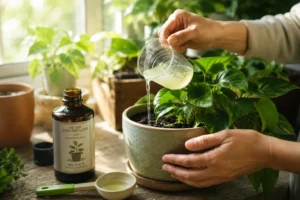
My neighbor Carol once told me she wanted her tomatoes to be “the best on the block.” So she fed them fertilizer every single time she watered, figuring more nutrients meant faster growth. Within two weeks, the leaf edges had turned crispy and brown, the soil had a strange white crust on top, and her once-bushy plants looked like they’d been through a drought. She hadn’t under-watered them at all. She had over-fed them, and the roots were essentially burned. That’s the thing about fertilizer: it’s not a “more is better” situation. Learning how to dose fertilizer for plants correctly is really about restraint, timing, and reading what your plants are actually telling you, not about dumping in extra plant food and hoping for the best.
If you’ve ever stood in the garden aisle staring at a fertilizer bottle wondering how much is too much, you’re in good company. This guide walks through exactly how to dose fertilizer for plants, whether you’re growing a windowsill pothos or a backyard orchard, so you can feed with confidence instead of guesswork.
Why Fertilizer Dosage Matters
Fertilizer isn’t food in the way we think of food. It’s closer to medicine. A little bit at the right time helps enormously. Too much, and it can actually hurt or kill the plant.
What happens with too much fertilizer:
- Salt buildup in the soil pulls moisture away from roots, essentially dehydrating the plant from the inside
- Leaf tips and edges scorch, turning brown or crispy
- Roots can burn, stunting growth or killing the plant outright
- Excess nutrients wash into groundwater and waterways, which is a real environmental cost
What happens with too little fertilizer:
- Growth slows to a crawl or stalls completely
- Leaves turn pale or yellow, especially older ones
- Flowering and fruiting drop off dramatically
- Plants become more vulnerable to pests and disease
Somewhere between these two extremes is what I call the Goldilocks zone: not too much, not too little, just the right amount for that specific plant, at that specific time in its life. And here’s the part that trips people up: the “right amount” isn’t universal. A cactus and a tomato plant have wildly different appetites. Fertilizer dosage for plants always depends on the species, the pot or soil size, the season, and how actively the plant is growing.
Understanding Fertilizer Labels
I learned the hard way that skipping the label is where most fertilizing mistakes start. Those three numbers on the front of every bag or bottle aren’t decoration. They’re the whole story.
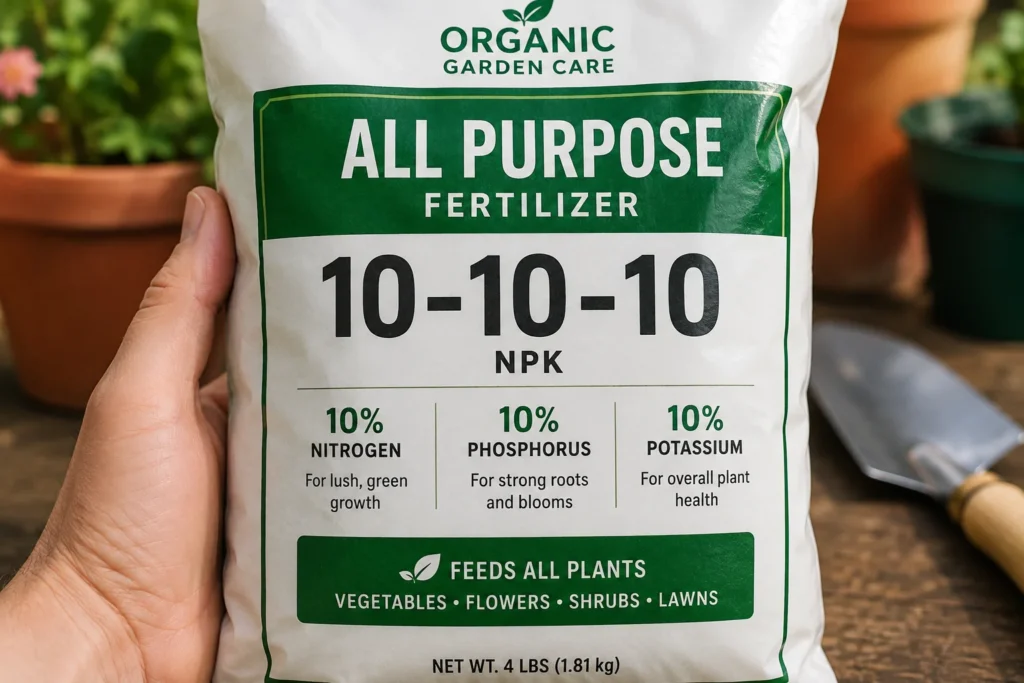
NPK explained simply:
Those numbers, like 10-10-10 or 5-1-5, stand for the percentage of Nitrogen (N), Phosphorus (P), and Potassium (K) in the mix.
- Nitrogen (N) fuels leafy, green growth
- Phosphorus (P) supports roots, flowers, and fruit
- Potassium (K) builds overall strength and disease resistance
A fertilizer labeled 10-10-10 has equal parts of each. Something like 15-30-15, popular for blooms, is phosphorus-heavy to push more flowers.
How to read dosage instructions:
Every label has a suggested dosage, usually something like “1 tablespoon per gallon of water every two weeks.” Read this before you read anything else on the packaging. It’s the single most important line on the bottle.
Concentrated vs. ready-to-use:
Concentrated fertilizers need to be diluted with water before use, and this is where overdosing happens most often. Ready-to-use formulas are pre-diluted, so they’re more forgiving but still shouldn’t be applied more often than the label suggests. One mistake almost every beginner makes is assuming “concentrated” means “stronger is better,” when really it just means you control the dilution, and that control needs respect.
How to Dose Fertilizer for Plants, By Plant Type
There’s no single formula that works for every plant, so let’s break it down by category.
Indoor Houseplants
Most houseplants do well with a balanced liquid fertilizer (something like 10-10-10 or 20-20-20) diluted to half strength.
- Dose: Half the strength recommended on the label
- Frequency: Every 4 to 6 weeks during spring and summer, and rarely to never in fall and winter
- Tip: Always water the soil first, then fertilize. Feeding dry soil can burn roots almost instantly
Outdoor Garden Plants
Garden beds benefit from a slow, steady feed rather than a single heavy dose.
- Dose: Follow the label rate, typically 1 to 2 tablespoons per gallon for liquid feeds, or a light granular scattering worked into the topsoil
- Frequency: Every 4 to 6 weeks through the growing season
- Tip: Water thoroughly after applying granular fertilizer to help it dissolve and reach the roots
Flowering Plants
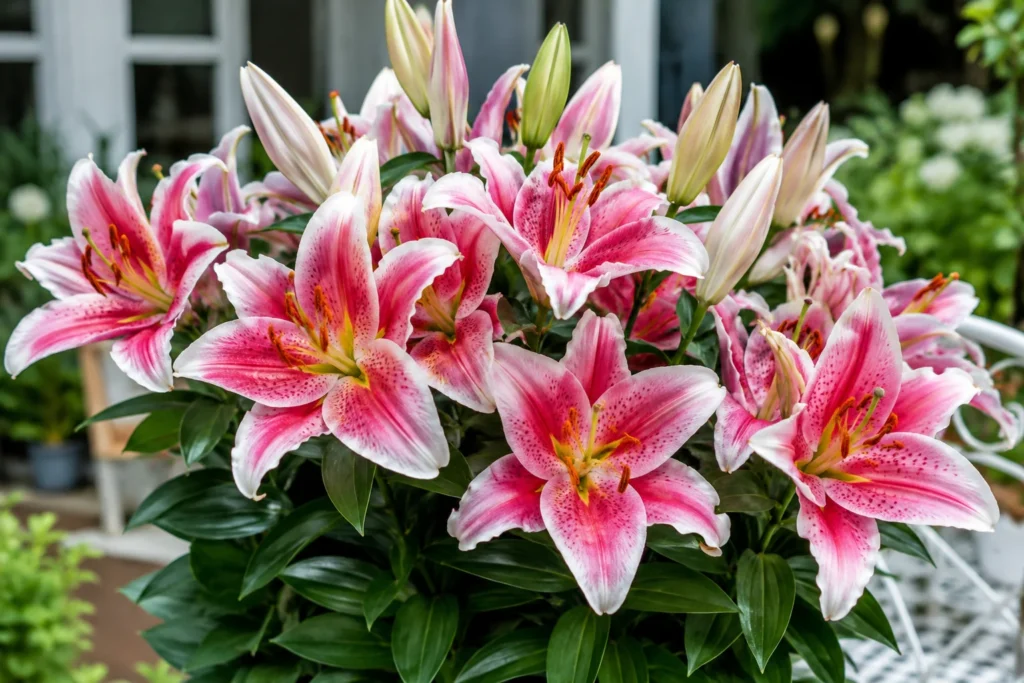
Flowering plants want that phosphorus boost to keep the blooms coming.
- Dose: A bloom-boosting formula like 5-10-5, diluted per label instructions
- Frequency: Every 2 to 4 weeks while actively blooming
- Tip: Getting fertilizer right makes a huge difference for blooms. Our guide on Asiatic Lily care shows exactly what a well-fed, well-timed flowering plant looks like at its peak
Vegetable & Herb Garden
Vegetables are heavy feeders, but herbs are the opposite. Too much fertilizer on herbs actually weakens their flavor.
- Dose: Vegetables typically need a balanced or nitrogen-forward feed every 3 to 4 weeks; herbs need a much lighter hand, often just once or twice a season
- Frequency: Check individual plant needs, since tomatoes and herbs like basil are worlds apart in appetite
- Tip: Herbs like cilantro need especially careful fertilizing, since overfeeding pushes fast, weak growth instead of flavorful leaves. Our complete guide on how to grow cilantro covers herb-specific fertilizing tips in detail
Trees & Shrubs
Trees and shrubs are the slow eaters of the plant world. They need far less frequent feeding than most people assume.
- Dose: A slow-release granular fertilizer applied around the drip line, following the product’s rate per trunk diameter or square foot
- Frequency: Once or twice a year, typically in early spring and sometimes again in fall
- Tip: Trees need very different fertilizer doses than garden plants. Our guide on mesquite trees covers outdoor tree care including how and when to fertilize properly
Types of Fertilizer and How to Dose Each
The dosage math changes quite a bit depending on the form the fertilizer comes in.
Liquid Fertilizer
Liquid feeds are fast-acting, which makes them easy to overdo.
- How to dilute: Follow the label ratio exactly, usually measured in tablespoons or milliliters per gallon of water
- Frequency: Every 2 to 6 weeks depending on the plant, always during active growth
Granular Fertilizer
Granular fertilizer releases over time as it breaks down with watering.
- How to measure: Use a measuring spoon or scoop, never eyeball it, since granules are concentrated and easy to overapply
- Application: Sprinkle evenly around the base of the plant, avoiding direct contact with stems, then water it in
Slow Release Fertilizer
These are pellets or prills coated to release nutrients gradually over weeks or months.
- How much: Follow the label’s rate per pot size or square footage, since this varies significantly by brand
- How often: Typically applied just once every 2 to 4 months, sometimes just once a season
Organic Fertilizer
Compost, worm castings, and other organic options are gentler and much harder to overdose, which makes them great for beginners.
- Compost: A 1-inch layer worked into the topsoil once or twice a year
- Worm castings: About a quarter cup mixed into the soil for a medium-sized pot, or a light top-dressing for garden beds
When to Fertilize Plants
Timing matters just as much as dosage. The golden rule of fertilizing is to feed when a plant is actively growing, and pull back when it’s resting.
Spring and summer (growing season):
This is when most plants are putting out new leaves, flowers, and roots, and can actually use the extra nutrients. This is your main fertilizing window.
Fall and winter (rest period):
Growth slows or stops for most plants, so fertilizer just sits in the soil unused, building up salts instead of helping. Cut back significantly or stop altogether, depending on the species.
Signs your plant needs fertilizer:
- New leaves are smaller or paler than older ones
- Growth has noticeably slowed during what should be the growing season
- Flowering has dropped off or never really started
- The plant hasn’t been fed in over 2 to 3 months and looks generally tired
Signs of Over Fertilizing
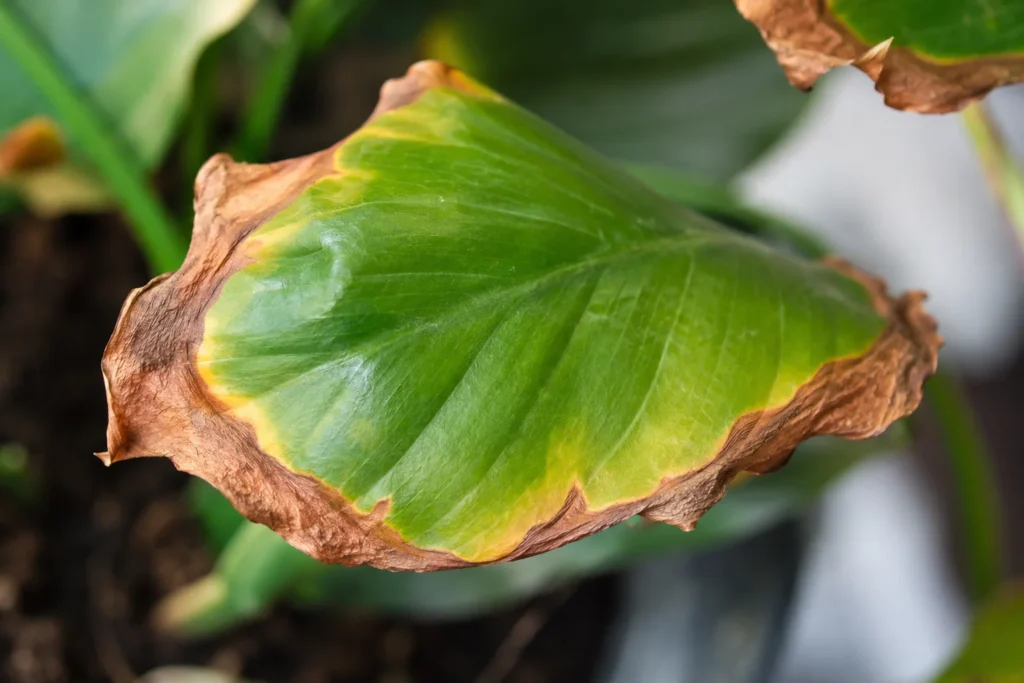
Symptoms to watch for:
- Brown, crispy leaf tips and edges
- A white, crusty buildup on the soil surface or pot rim
- Wilting despite moist soil
- Leaf drop, even on otherwise healthy-looking plants
- Roots that look dark, mushy, or blackened when checked
How to fix over fertilized plants, the flushing soil method:
- Stop fertilizing immediately
- Move the plant to a sink or outdoor spot
- Run water through the soil slowly, using roughly triple the volume of the pot, letting it drain fully each time
- Repeat two to three times to flush out excess salts
- Let the plant rest without any fertilizer for at least a month before resuming a lighter routine
Signs of Under Fertilizing
Symptoms to watch for:
- Pale, yellowing leaves, particularly older growth first
- Slow or stunted growth despite good light and water
- Thin, weak stems
- Few or no flowers on plants that should be blooming
- Leaves that are smaller than they should be
How to correct deficiencies:
Start with a balanced fertilizer at half strength and observe for two to three weeks. If the plant perks up, you’ve found the issue. If not, check light, water, and pests before assuming it’s purely a nutrient problem, since deficiency symptoms can overlap with other stressors.
Fertilizer Dosage Quick Reference Table
| Plant Type | Fertilizer Type | Dose | Frequency |
|---|---|---|---|
| Indoor Houseplants | Balanced liquid (10-10-10) | Half strength | Every 4 to 6 weeks (spring/summer) |
| Outdoor Garden Plants | Balanced liquid or granular | Full label rate | Every 4 to 6 weeks |
| Flowering Plants | Bloom booster (5-10-5) | Full label rate | Every 2 to 4 weeks while blooming |
| Vegetables | Balanced or nitrogen-forward | Full label rate | Every 3 to 4 weeks |
| Herbs | Balanced liquid | Quarter to half strength | Once or twice a season |
| Trees & Shrubs | Slow-release granular | Per trunk diameter/label | 1 to 2 times per year |
Frequently Ask Questions
Most houseplants do best with a half-strength liquid fertilizer every 4 to 6 weeks during spring and summer, and little to none in fall and winter when growth slows down.
Yes, and it’s one of the most common plant care mistakes. Over fertilizing plants leads to salt buildup, root burn, and scorched leaves, so it’s always safer to underfeed slightly than to overdo it.
A phosphorus-heavy ratio like 5-10-5 or 15-30-15 encourages more blooms, since phosphorus supports flower and fruit production specifically.
Generally no. Most plants rest during fall and winter, and fertilizer applied then just builds up unused in the soil instead of supporting growth.
Neither is strictly better. Organic options like compost and worm castings release nutrients slowly and are harder to overdo, making them beginner-friendly, while chemical fertilizers act faster and offer more precise control for experienced growers.
Final Thoughts
Once you understand how to dose fertilizer for plants properly, feeding season stops feeling like guesswork and starts feeling like second nature. Read the label, match the dose to the plant and the season, and always lean toward feeding a little less rather than a little more. Your plants will tell you what they need if you pay attention. At Plant Style Home we cover everything you need to grow healthy, beautiful plants and gardens, so if this guide helped, take a look around for more plant care tips built on real hands-on experience.