There’s a particular kind of magic that happens every November in homes all over the world. A plain green cactus, ignored for months on a windowsill, suddenly bursts into color just as the weather turns cold. Zygocactus plants have this uncanny habit of blooming exactly when we need a little cheer the most.
Many people are surprised to learn this plant is even a cactus at all. It doesn’t look like one. There are no spines, no desert vibes, none of the prickly toughness we associate with the word “cactus.” Instead, you get soft, flat, segmented leaves that cascade gracefully over the edge of a pot, topped with flowers so vivid they almost look artificial.
Zygocactus has been passed down through generations in many families, mine included. My grandmother kept one on her kitchen windowsill for as long as I can remember, and cuttings from that same plant now sit in my own home and in the homes of my cousins. It’s the kind of plant that outlives owners, gets divided among siblings, and shows up at every family Christmas with a story attached.
If you’ve ever wondered why your zygocactus refuses to flower, why its leaves have gone yellow and mushy, or how to keep this beloved heirloom thriving for decades, you’re in exactly the right place. At Plant Style Home we help you grow beautiful plants all year round, so let’s dig into everything this festive winter bloomer needs.
What is a Zygocactus Plant?
Zygocactus is the common older name for what botanists now classify under the genus Schlumbergera. The two most widely grown species are Schlumbergera truncata and Schlumbergera bridgesii, though most nurseries and plant lovers still call the whole group by its familiar, comfortable old name: zygocactus, or its more famous nickname, the Christmas cactus.
You’ll also hear it called the Thanksgiving cactus or the holiday cactus, depending on which species you have and when it tends to bloom. All of these names describe essentially the same beloved plant, just at slightly different points in its flowering calendar.
Here’s the detail that changes everything about how you care for it: zygocactus is native to the mountainous rainforests of southeastern Brazil, not the desert. In the wild, it grows as an epiphyte, nestled in the crooks of trees and rocky crevices, catching filtered light through a forest canopy and drawing moisture from humid, misty air rather than dry sandy soil. If you find this rainforest-versus-desert cactus contrast fascinating, explore our complete guide on the Dragon Fruit Plant, another spectacular cactus with a similarly surprising backstory.
This single fact explains almost every care mistake people make with this plant. Treat it like a desert cactus and it will sulk, drop leaves, and refuse to bloom. Treat it like the rainforest native it actually is, and it rewards you generously.
Zygocactus is also remarkably long-lived. With reasonable care, these plants can live 20 to 30 years with ease, and there are documented specimens still blooming after 50, even 100 years, passed down as genuine family heirlooms. Flower colors range widely too, including red, hot pink, white, purple, orange, and soft magenta. If soft pink blooms are your favorite, take a look at our guide on Pink Flowers for more beautiful pink bloom inspiration year round.
Zygocactus Plant Care Guide
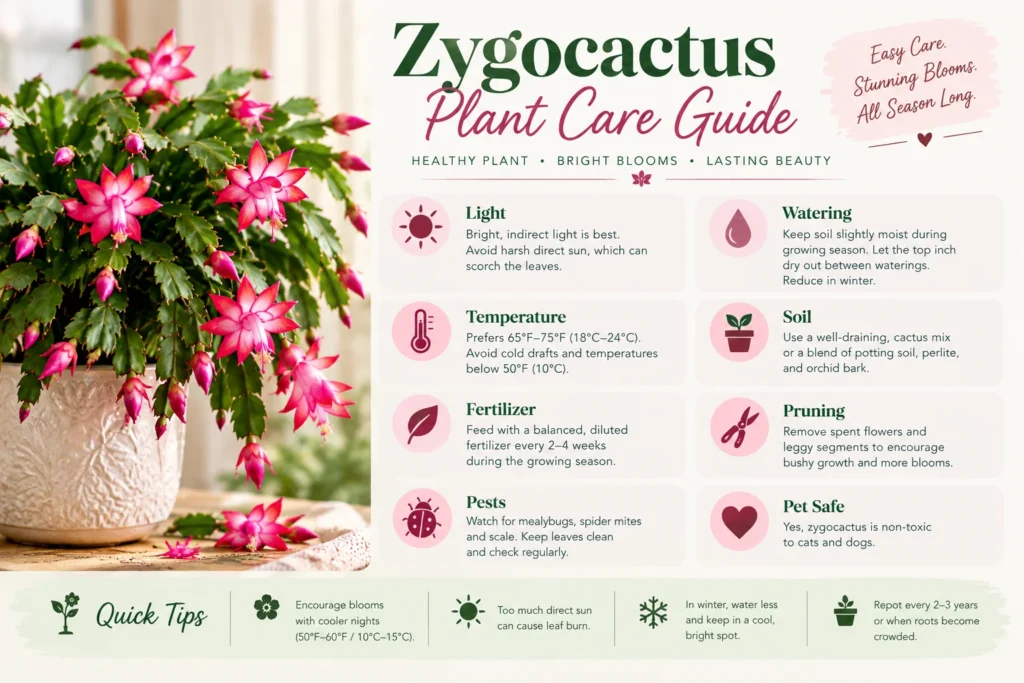
Good zygocactus plant care comes down to remembering one thing: this is a jungle plant wearing a cactus costume. Once that clicks, everything else falls into place.
Light Requirements
Bright, indirect light is what your zygocactus wants most of the year. An east-facing or gently lit west-facing window works beautifully. Avoid harsh, direct midday sun, which can scorch those fleshy segments and leave pale, bleached patches behind.
Come autumn, light actually becomes the trigger for flowering rather than just a growth requirement. Your zygocactus needs a stretch of genuine darkness each night in September and October to set its flower buds, something we’ll walk through step by step further down.
Watering Zygocactus
Because zygocactus is a rainforest cactus rather than a desert one, it drinks more often than people expect. The general rule is simple: let the top inch of soil dry out between waterings, then water thoroughly until it drains from the bottom of the pot.
During active growth and while flower buds are developing, watering can be a touch more frequent. Once flowering finishes, ease back significantly and let the plant rest with much drier soil for several weeks.
What trips people up most is waterlogged roots. Soggy, standing water at the base of the pot is the number one cause of problems in this plant, so good drainage matters just as much as the watering schedule itself. If your tap water is heavily chlorinated or very hard, filtered or rested water tends to keep your zygocactus noticeably happier.
Soil & Potting Mix
A well-draining, slightly acidic soil mimics the leaf litter this plant naturally roots into in the wild. A mix designed for orchids or cacti works well, and many growers blend the two together with extra perlite folded in for even better aeration.
Zygocactus actually prefers to be a little snug in its pot rather than swimming in a huge container, and drainage holes are non-negotiable. Without them, excess water has nowhere to go and root rot becomes almost inevitable.
Temperature Requirements
An ideal daytime range sits between 60 and 70°F (15 to 21°C). What most people don’t realize is that cool autumn nights, somewhere around 50 to 55°F, are one of the two essential triggers that tell your plant it’s time to bloom.
Keep it away from frost at all costs, and just as importantly, keep it away from hot radiators, fireplaces, or heating vents. Sudden warm drafts confuse the plant and are a leading cause of dropped flower buds later on.
Humidity Needs
Given its rainforest origins, zygocactus enjoys noticeably higher humidity than a typical desert cactus. Occasional misting helps, and a pebble tray filled with water sitting beneath the pot creates a gentle pocket of humidity around the leaves without waterlogging the roots.
Dry winter air from central heating is genuinely tough on this plant, so keep it away from heating vents and consider a small humidifier nearby if your home runs very dry in winter.
Fertilizing Zygocactus
From spring through summer, a balanced, diluted fertilizer once a month supports healthy new growth. Come autumn, switch to a low-nitrogen formula, since too much nitrogen at this stage encourages leafy growth instead of flower buds, which is exactly the opposite of what you want heading into the holidays. Stop feeding altogether once winter and blooming arrive, and let the plant focus its energy purely on flowers.
How to Make Zygocactus Flower
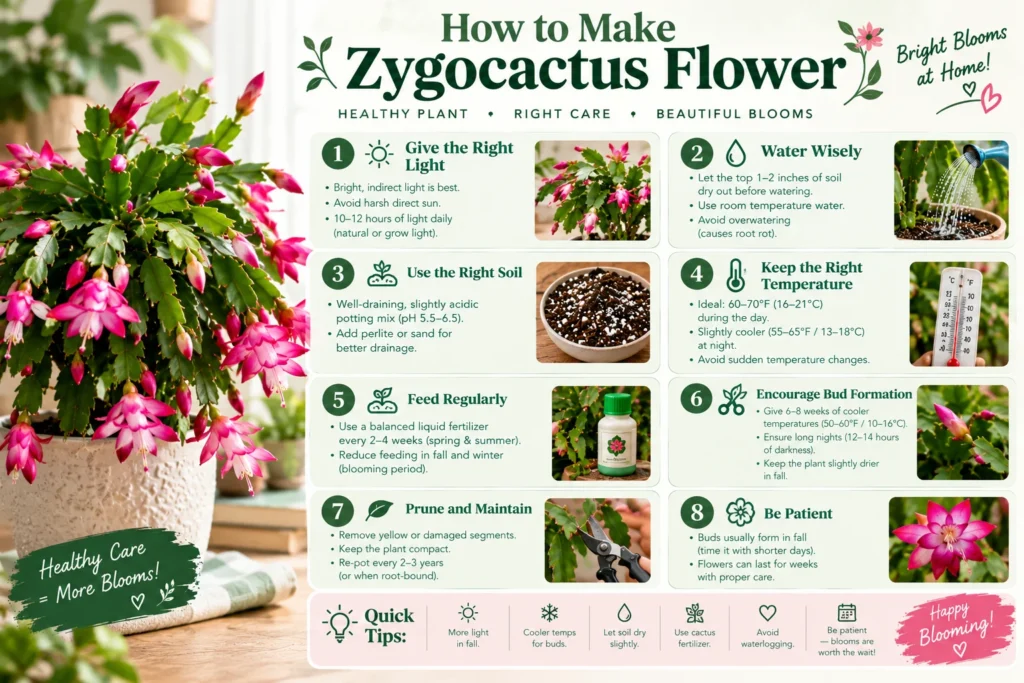
Getting zygocactus to rebloom is, hands down, the single most frustrating challenge owners face, and it confused me for years until I realized it comes down to a handful of simple habits rather than one magic trick.
Everyday Basics That Support Blooming
Bright, indirect light for 10 to 12 hours daily keeps the plant healthy, while direct sun should be avoided since it scorches the segments. Water only once the top inch or two of soil has dried out, using room-temperature water to prevent root rot. A well-draining, slightly acidic mix, ideally with added perlite, mirrors the plant’s natural rainforest habitat.
Temperature and Feeding
Daytime temperatures of 60 to 70°F (16 to 21°C) suit zygocactus well, with slightly cooler nights helping it thrive. A balanced liquid fertilizer every two to four weeks through spring and summer supports strong growth, though feeding should ease off in fall, right when blooming begins to take shape.
Triggering the Buds
This is the step most people miss. Give your zygocactus six to eight weeks of cooler temperatures, around 50 to 60°F (10 to 16°C), paired with 12 to 14 hours of true, uninterrupted darkness each night. A closet that stays closed overnight, a paper bag draped over the plant each evening, or a spare room with the lights off all work well. Keeping the plant slightly drier during this stretch reinforces the signal that it’s time to set buds.
Patience and Care Once Buds Appear
Buds typically form in fall as days shorten naturally, and flowers can last several weeks once open. Nothing beats the joy of seeing those first buds appear in November, just in time to make a wonderful gift for December birthdays too, so if you’re gifting one, check our guide on the December Birth Flower for more winter gifting ideas.
Once buds show up, avoid moving the plant, rotating it, or exposing it to sudden temperature swings, since these are the most common reasons healthy buds drop before opening. Zygocactus truly is the star of winter indoor blooms, and our Winter Flowers guide has plenty more inspiration for the cold months.
Common Zygocactus Problems
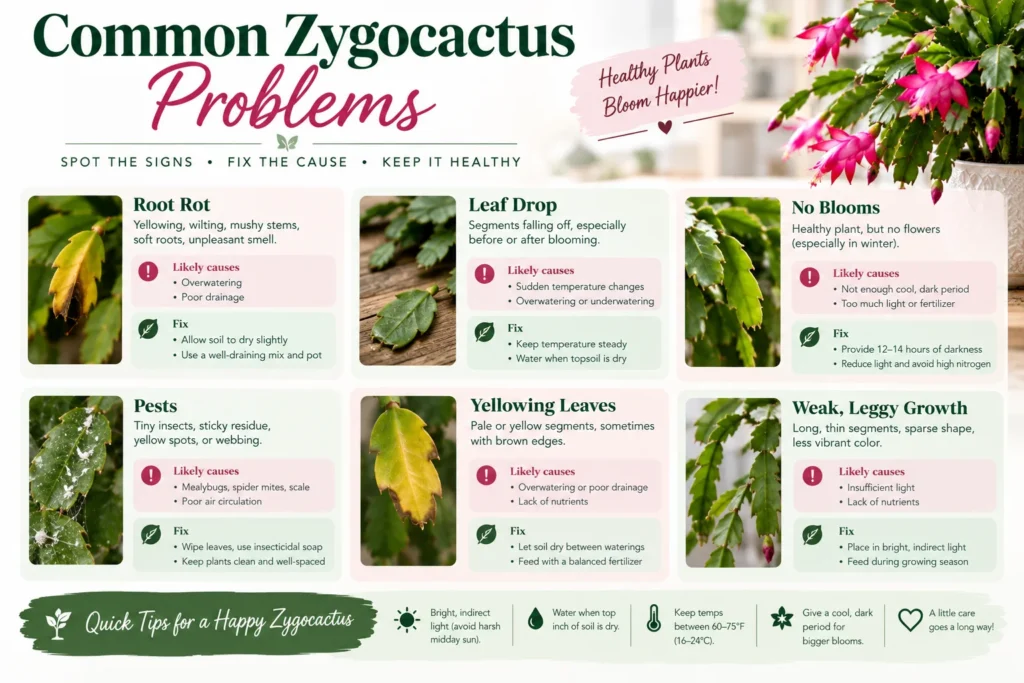
Zygocactus Not Flowering
This is, by far, the most searched question about this plant, and it almost always comes down to one of three culprits.
Not enough darkness is the leading cause. If your plant sits anywhere near a porch light, streetlamp, or even a nightlight, that light exposure can be enough to block bud formation entirely. The fix is simply committing to true, uninterrupted darkness for the full six-week window.
Nighttime temperatures that stay too warm are the second issue. If your home never drops below the mid-60s at night, your zygocactus may never receive the cool-temperature cue it needs. Moving it to a cooler room, garage, or enclosed porch (as long as it stays frost-free) during the trigger period solves this.
Over-fertilizing with nitrogen in early autumn is the third common mistake. Switching to a low-nitrogen or bloom-specific fertilizer starting in September gives the plant permission to put its energy into flowers rather than foliage.
Zygocactus Yellow Leaves
Yellow, mushy segments are almost always a watering issue rather than a lighting one. Overwatering is the most frequent cause, and if left unchecked it progresses into root rot, recognizable by a sour smell at the soil line and blackened, soft roots when you check.
Occasionally, yellowing stems from a nutrient deficiency during heavy growth periods, easily corrected with a balanced feed once growth resumes. Too much direct sun can also cause a yellow, bleached look, particularly on segments facing a bright afternoon window.
The fix in every case starts the same way: check the roots, trim away anything black or mushy, repot into fresh, well-draining mix, and adjust your watering habit going forward.
Zygocactus Dropping Buds
Few things are more disheartening than watching healthy buds fall off right before they open. Sudden temperature fluctuation is the top cause, closely followed by moving the plant while it’s actively budding.
Underwatering during the bud stage and cold drafts near windows or doors round out the usual suspects. Prevention is straightforward: pick one stable, moderately lit spot for your plant once buds appear and don’t touch it again until flowering is complete.
Limp or Shriveled Segments
Shriveled, deflated-looking segments can mean either underwatering or root rot, and telling them apart matters because the fixes are opposite. Underwatered segments feel thin and slightly wrinkled but the soil is bone dry. Root rot segments often feel soft or mushy and the soil stays wet for far too long after watering.
Adjust watering upward for the first case, and repot into fresh soil after trimming damaged roots for the second.
Common Pests
Fungus gnats are usually a direct sign of overwatering, since their larvae thrive in consistently damp soil, and letting the top layer dry out fully solves most infestations. Mealybugs, appearing as small cottony white clusters, and spider mites, which leave fine webbing and stippled leaves, both respond well to insecticidal soap or a diluted neem oil spray applied every week or two until they’re gone.
Zygocactus Propagation
Propagating zygocactus is remarkably simple, which is exactly why so many families end up with cuttings passed between siblings, neighbors, and coworkers for decades.
Twist off a small piece with two to three segments rather than cutting it, which mimics how the plant naturally breaks apart in the wild. Let that cutting sit somewhere dry and shaded for one to two days so the wound calluses over, a step that dramatically reduces the risk of rot once it’s planted.
Once callused, tuck the cutting into a barely moist, well-draining mix, and resist the urge to water heavily right away. Roots typically begin forming within two to four weeks, with new segment growth following shortly after.
Late spring through summer is the best window for propagation, giving cuttings a full growing season to establish before their first winter. Sharing cuttings really is part of the tradition with this plant. It’s a slow-growing gift that keeps multiplying, and there’s something lovely about knowing your zygocactus might trace back to a great-grandmother’s windowsill.
Repotting Zygocactus Plants
Zygocactus doesn’t need repotting often, and that’s a good thing, because this plant genuinely blooms better when its roots are a little crowded.
Signs it’s time to repot include roots visibly emerging from the drainage holes, soil drying out unusually fast after watering, or a plant that has clearly outgrown its container’s proportions. The best window to repot is right after flowering finishes, when the plant is heading into its natural rest period rather than active growth or bud formation.
When you do repot, go up only one to two inches in pot diameter, never more. A dramatic jump in pot size leaves too much excess soil holding onto moisture, which sets the stage for root rot.
To repot: gently ease the plant out, loosen any tightly wound roots, place fresh well-draining mix in the new pot, settle the plant at the same depth it was previously growing, and water lightly to help the roots settle in. Then simply wait, since a snug pot really does translate into a more generous flush of blooms come autumn.
Zygocactus Varieties
Schlumbergera truncata, often sold as the Thanksgiving cactus, has segments with distinctly pointed, claw-like edges and tends to bloom slightly earlier in the season, often as early as late October or November.
Schlumbergera bridgesii, the true Christmas cactus, has softer, more rounded segment edges and typically blooms a few weeks later, landing closer to December.
The easiest way to tell them apart at a glance is by running your finger along the edge of a segment. Pointed and jagged means truncata, smooth and scalloped means bridgesii. Both varieties come in the same wide spread of flower colors, from classic red and white to striking purple, orange, and soft yellow, so the choice between them often comes down to bloom timing rather than appearance.
Frequently Asked Questions
Give it six weeks of cool nights around 50 to 55°F combined with 13 to 14 hours of true darkness each night, starting in October, and reduce watering and nitrogen fertilizer beforehand.
Water when the top inch of soil feels dry, roughly every one to two weeks depending on your home’s humidity, and always allow excess water to drain freely.
Temperature swings, moving the plant, cold drafts, and inconsistent watering are the most common reasons buds drop before opening.
Zygocactus is generally considered non-toxic to cats and dogs, making it a safer holiday plant choice than many other festive favorites, though it’s always wise to discourage pets from chewing on any houseplant.
With good care, these plants regularly live 20 to 30 years, and many documented specimens have thrived for 50 years or more as genuine family heirlooms.
Repot right after flowering ends, moving up only one to two pot sizes, and only when roots are visibly crowded or growth has clearly outpaced the container.
Bringing Your Zygocactus Into Bloom
There’s a reason zygocactus plants earn a permanent spot in so many homes and get handed down through so many families. This is a plant that asks for patience in autumn and rewards that patience with one of the most cheerful, reliable winter blooms you can grow indoors.
Once you understand its rainforest origins, its need for cool, dark autumn nights, and its preference for a snug pot, reblooming stops feeling like a mystery and starts feeling like something you can genuinely count on year after year. This autumn, give the darkness trick a real try, and don’t be surprised when November delivers those first hopeful little buds right on schedule.