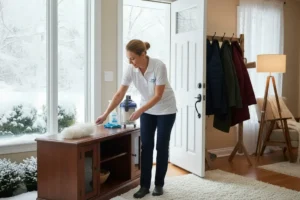
You spend Saturday morning dusting every shelf, wiping the television stand, and vacuuming the living room. By Tuesday evening, a pale layer is back on the sideboard, and the light from the window shows a haze across the coffee table. It feels as though the house is making dust faster than you can remove it.
Part of that is simple physics. Dust is not one substance but a mixture of skin cells, textile fibres, pet dander, pollen, soil tracked in on shoes, and fine particles from cooking and outdoor air. It is produced constantly, and it settles on every flat surface within hours of being disturbed. A clean house is not one without dust, but one where the amount stays low enough that you rarely notice it, whether the cleaning is done by the household or by cleaning services.
When the dust returns far faster than expected, though, there is usually a specific cause, and that is worth tracking down before you add more cleaning to the week. The answer is often somewhere other than the shelf where the dust lands.
Where Household Dust Actually Comes From
Much of what settles on furniture arrives from outside. Shoes carry soil and pollen across the floor, open windows let in fine particles, and clothes bring in more each time someone comes home. A house near a building site, an unpaved road, or a busy road tends to see more.
A large share is made inside. Bedding, clothing, towels, and upholstered furniture constantly shed fibres. People and pets lose skin cells and hair. Cooking adds a greasy fraction that makes dust stick instead of drifting away.
Dry air has an effect too. In winter, when heating lowers humidity, dust stays airborne longer and static makes it cling to televisions, screens, and glass surfaces.
The Heating and Cooling System Is a Frequent Culprit
If one room is much dustier than the others, or if dust reappears within a day, look at the heating and cooling system. Every time it runs, it pulls air through a filter and pushes it back through the vents. A filter clogged with dust cannot catch more, and it can force the system to draw air around its edges, where it carries dust straight into the ducts.
Check the filter. Most manufacturers recommend inspecting it monthly and replacing it every one to three months, depending on the type, the pets in the house, and how much the system runs. It belongs on the household’s own calendar, whatever cleaning visits from CJS Cleaning Solutions are booked. A higher-rated filter catches finer particles, but some systems struggle with very dense filters, so check what the equipment manual allows before upgrading.
The vent covers and return grilles collect dust of their own, and that dust gets blown back into the room. Wipe them with a damp cloth, or remove the covers if they come off easily and wash them. Households with a lot of return vents sometimes ask cleaning services cary nc to include the vent covers and grilles in a regular visit, though the ductwork behind them is a separate trade and should be assessed by an HVAC technician rather than treated with household tools.
Leaky ductwork in a loft, crawlspace, or garage can pull in dust and insulation fibres and distribute them through the house. If you notice a dusty smell when the system starts, visible dirt around the vents, or dust that arrives in bursts when the heating switches on, have a technician inspect the system.
Fabrics Quietly Shed All Week
Textiles are a larger source than most people realise. A bed releases a surprising amount of fibre every night, which settles on the bedside table and floor. Throw blankets, soft cushions, curtains, and rugs all shed in the same way, particularly when they are new or made from loosely woven material.
Washing helps more than dusting. Bedding should be laundered regularly according to its care label, and throws and cushion covers can follow a slower schedule. Shaking soft items outdoors, rather than in the room, moves the fibres out of the house. Curtains can be vacuumed with a brush attachment or laundered if the fabric allows.
Open shelving, books, and decorative objects hold dust in layers. A bookshelf without doors collects dust on every edge, and each object adds more surfaces to clean. If dust is a constant frustration, glass doors, closed storage, or a smaller number of displayed items reduce the work without any extra effort.
Dusting in an Order That Works
A common mistake is wiping with a dry cloth or feather duster that flicks particles into the air. They drift for a while and settle again on the same surfaces. A slightly damp microfibre cloth traps dust instead, because the fibres hold on to it.
Work from the top of the room to the bottom. Start with ceiling fans, light fixtures, the tops of cabinets and wardrobes, and picture frames, then move down through shelves, furniture, and window sills, and finish with the floor. Dust falls, so cleaning the floor first means doing it again afterward. Use a vacuum with a brush attachment on upholstery, curtains, and lampshades where wiping isn’t suitable.
A vacuum fitted with a good filter keeps fine particles from blowing back out of the exhaust. A machine with a worn filter or a full bag can send dust straight back into the air. Empty the canister or replace the bag before it is completely full, and check the filter according to the manual.
If a weekly visit from CJS Cleaning Solutions is part of the routine, a note about which surfaces collect the most dust, such as an open bookcase or a particular room, helps the time go where it is most noticeable.
Stopping Dust Before It Lands
Prevention takes less time than constant cleaning. A shoes-off rule at the door and a good mat on each side reduce the soil and pollen that cross the floor, and they shorten the floor work during a visit from CJS Cleaning Solutions as well. Keeping windows closed on high-pollen or windy days limits what comes in, and a filter fitted over an intake vent catches more.
Clutter should be reduced where possible, since every object on a surface is another thing to dust. Keep surfaces in the bedroom and living room clear, store items in closed boxes, and avoid piles of paper that shed fine fibres.
An air purifier with a true HEPA filter can reduce airborne particles in a room, especially for people with allergies, though it supplements cleaning and doesn’t replace it.
When It Isn’t Ordinary Dust
Occasionally the dust isn’t ordinary at all. Fine black soot around vents, walls, or windowsills may come from candles, incense, a fireplace, or a poorly adjusted heating appliance. Soot from a gas or oil appliance should be reported to a qualified technician immediately, because it can signal incomplete combustion, which also produces carbon monoxide. Make sure carbon monoxide alarms are working.
If you disturb old paint or insulation during building work, get advice before cleaning the dust with an ordinary vacuum, since older buildings can contain hazardous materials.
A musty smell with dust, visible mould, or damp walls points to moisture rather than a cleaning problem. Fix the moisture source first.
A Realistic Routine
Most homes manage well with a few habits. Wipe the main surfaces with a damp microfibre cloth every week or two, vacuum floors and upholstery once or twice a week depending on traffic, and do the high surfaces, vents, and shelves every few weeks. Wash bedding regularly and replace the HVAC filter on schedule.
Where time is short, cleaning services can take over the heavier jobs, such as vacuuming, floor care, and dusting of accessible surfaces, leaving the filter checks and fabric washing with the household. That split gives the best result for the least effort, since the visible work and the hidden sources both get attention.
Aim for Less Dust, Not No Dust
Dust returns because it is constantly made, carried in, and stirred up, and a few sources produce most of it. Fresh filters, washed fabrics, a door mat, and a damp cloth in the right order do more than extra dusting. Whether the work is done by you or by cleaning services, the aim is a house where dust stays light between cleans, not one that is spotless for an afternoon and dusty by Tuesday.