
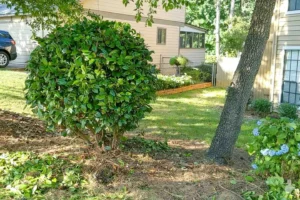
Every garden has one. The hedge that has swallowed the side path, the flowering shrub that now blocks the window, the small tree whose lower branches brush your head on the way to the clothesline. Overgrowth creeps up slowly, and by the time it’s obvious, the job feels too big to start.
Pruning brings these plants back into shape, and done well it also makes them healthier, with better airflow, more flowers and fewer pests. The secret is working with the plant rather than against it: cutting at the right time, in the right places and in stages. The guide below walks through timing, tools and technique so you can tackle overgrown growth with confidence. More seasonal advice sits in the Garden section.
Signs Your Shrubs Need Pruning
Some plants send obvious signals. Others hide the problem inside a dense canopy. Look for:
- Branches crossing and rubbing against each other
- Bare, woody stems at the base with leaves only at the tips
- Dead or brittle wood that snaps instead of bending
- Fewer flowers than in previous years
- Growth blocking paths, windows, gutters or neighbors’ fences
Any one of these is reason enough to prune. Several together usually mean the plant needs a staged renovation over two or three seasons rather than a single hard cut.
When to Prune Overgrown Shrubs
Timing depends on when the plant flowers, and getting it wrong can cost you a year of blooms.
Spring-Flowering Shrubs
Plants that bloom in spring, such as azaleas, lilacs and forsythia, set next year’s buds on this year’s growth. Prune them straight after flowering finishes. Cutting in winter removes the buds before they open. For ideas on what to plant in the gaps once the shrubs are back in shape, browse the Spring Flowers guide.
Summer-Flowering Shrubs
Shrubs that bloom later, including many hydrangeas, abelias and crepe myrtles, flower on new growth. Prune them in late winter or very early spring while they’re dormant, and they’ll push out fresh flowering stems in the warmer months.
Evergreen Hedges and Small Trees
Most evergreen hedges respond well to a trim in late spring and a lighter tidy in late summer. Small deciduous trees are easiest to prune when bare in winter, since you can see the branch structure clearly.
Tools for Pruning Shrubs and Branches
Matching the tool to the branch thickness gives clean cuts that heal quickly. Crushed or torn wood is an open door for disease.
- Bypass secateurs: stems up to about 2cm thick
- Loppers: branches from 2 to 4cm, with long handles for reach
- Pruning saw: thicker branches, though slow and tiring on bigger jobs
- Mini chainsaw: branches up to around 14cm, cut in seconds
Hand saws are where most people give up on an overgrown garden, because thick branches take a lot of effort and strain the wrists and shoulders. A lightweight mini chainsaw handles that work with far less strain. The Brancho, made by Australian brand Gardeners Crate, weighs 1.3kg with its battery and cuts branches up to 14cm thick using a 6-inch bar. It oils the chain with one button press and has an automatic chain brake, a hand guard and a safety lock, which makes it a sensible step up for home gardeners who have never used a power saw. Prices start at 199.99 AUD, with a 30-day trial and a three-year replacement warranty.
Whatever tools you use, keep the blades sharp and wipe them with rubbing alcohol between plants to avoid spreading disease.
How to Prune an Overgrown Shrub in Stages
Start With the Three Ds
Remove anything dead, damaged or diseased first. These cuts can happen at any time of year and immediately open up the plant so you can see what’s left.
Follow the One-Third Rule
Take out no more than a third of the plant in a single season. Cutting harder than that can shock many shrubs and trigger a mass of weak, leafy shoots instead of a healthy framework.
Cut the Oldest Stems at the Base
Thin out the thickest, oldest stems right down to the ground, spreading the cuts around the plant. Over three years this replaces old wood with young, productive growth, a method known as renewal pruning.
Make Clean Cuts in the Right Place
Cut just above an outward-facing bud or side branch, angled slightly away from it. For larger limbs, cut just outside the branch collar, the slightly swollen ring where a branch meets the trunk. Leaving the collar intact helps the wound seal over naturally.
Step Back Often
Pause every few cuts and look at the shape from a distance. It’s easy to take too much from one side when working up close.
Caring for Shrubs After Pruning
Freshly pruned plants put a lot of energy into regrowth, so give them support. Water deeply for the first few weeks, especially in warm weather, and spread a layer of compost or mulch around the base, keeping it clear of the stems. A light feed with a balanced fertilizer in spring helps fuel new growth.
Watch for pests on the soft new shoots, since aphids love them. The Plants section has more care guides for keeping growth healthy year-round.
Final Thoughts on Pruning Overgrown Shrubs
Overgrown shrubs and small trees rarely need to be ripped out. Prune at the right time for the plant, remove the three Ds first, follow the one-third rule and spread a big renovation over a few seasons. With sharp tools matched to the branch size, the job becomes steady garden maintenance instead of a dreaded weekend project.