
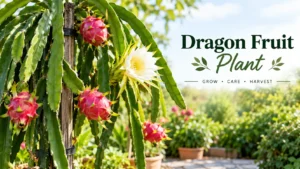
A cactus that blooms once, at midnight, then vanishes by dawn
The first time I saw a dragon fruit flower bloom at midnight I couldn’t believe it was real. One moment there was a fat, closed bud the size of a fist. A few hours later there was a flower wider than my hand, pure white, glowing faintly under the porch light, filling the whole yard with a sweet, heavy perfume. By the time I checked again at sunrise, it had already closed forever.
That’s the strange, thrilling contract you sign when you grow a dragon fruit plant. You’re not growing a tidy houseplant. You’re growing a sprawling, climbing cactus that spends most of the year doing very little, then rewards your patience with the single most dramatic flower in the plant world and, weeks later, one of the most beautiful fruits you can grow at home. It’s also, somewhat famously, the fastest growing fruiting cactus there is, throwing out new segments almost fast enough to watch.
The Cactus Nobody Expects
Most people don’t realize dragon fruit is actually a cactus. There’s no trunk, no branches in the traditional sense, and definitely no tree shape. It’s a climbing, vining cactus that scrambles up whatever it can find, which is exactly why growing one successfully starts with understanding what it actually is, not what it looks like in the grocery store.
What This Guide Covers
This guide walks through the whole journey. What a dragon fruit plant actually needs to thrive, how to start one from a cutting or seed, how to care for it in the ground or in a pot indoors, and how to coax that once-a-year miracle flower into becoming fruit. At Plant Style Home we cover exotic and everyday plants, so if this one hooks you, our complete collection of plant and flower growing guides has plenty more to explore.
What Is a Dragon Fruit Plant?
The dragon fruit plant most commonly grown by home gardeners is Hylocereus undatus, though several closely related Hylocereus and Selenicereus species are sold under the same common name. All of them are native to Central America and parts of northern South America, where they grow wild in dry forests, often climbing up trees or over rocks rather than sitting neatly in the ground.
The surprise: Despite the tropical fruit shelf presentation, this is a genuine cactus, complete with succulent triangular stems, areoles, and small spines along the ridges. It just happens to be a climbing cactus, which means it needs something to climb rather than open ground to sprawl across.
There are three main varieties you’ll come across when shopping for a dragon fruit plant:
- Red skin, white flesh is the most common variety, mild and refreshingly watery, and usually the easiest to find as a starter cutting.
- Red skin, red flesh is generally considered the sweetest and most flavorful of the three, with a deep magenta flesh that stains everything it touches.
- Yellow skin, white flesh is the rarest of the group, smaller fruited, and often described as the most intensely flavored once you can get your hands on it.
Now for the honest part. From planting a rooted cutting, a dragon fruit plant typically takes one to three years to produce its first fruit, depending on variety, climate, and how much light and warmth it gets along the way. Seed-grown plants take even longer, often three to five years. This isn’t a plant for anyone chasing instant results, and I’d rather tell you that up front than have you feel discouraged in year two.
What makes the wait worth it, beyond the fruit itself, is the flower. Dragon fruit produces what’s widely regarded as one of the largest flowers of any cactus in cultivation, opening only after dark and closing again by morning. It’s a single-night event, and it’s the reason so many growers describe this as their favorite plant to have in the garden.
Dragon Fruit Plant Growing Requirements
Climate and Temperature
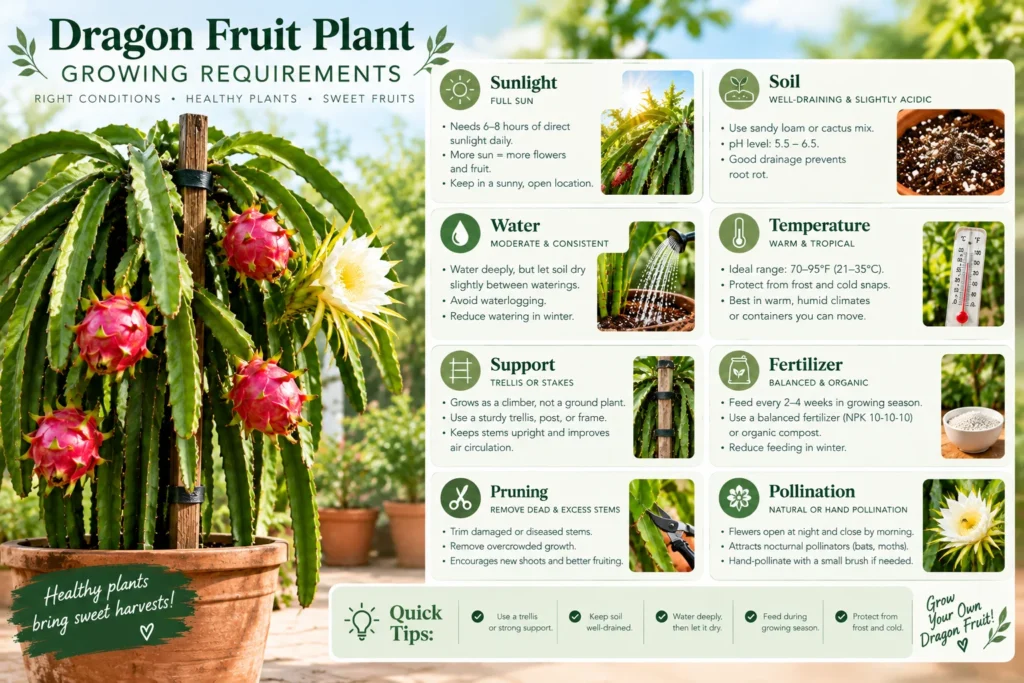
Dragon fruit is a tropical and subtropical plant at heart. Outdoors, it thrives in USDA zones 10 through 12, where winters stay mild. Anywhere colder, it can absolutely still be grown, just in a container that comes indoors before frost, because frost will kill a dragon fruit plant quickly and often permanently.
The ideal temperature range sits between 65 and 95°F (18 to 35°C). It tolerates heat far better than cold, and growth slows noticeably once temperatures dip below 50°F.
Sunlight Requirements
Give a dragon fruit plant at least six hours of sun a day. Outdoors, a spot with strong morning sun and some relief from the harshest afternoon rays tends to produce the healthiest stems, since intense midday sun in very hot climates can actually scorch the flat green segments.
Growing a dragon fruit plant indoor? A south-facing window is your best bet, and in lower-light homes, a simple grow light can make the difference between a plant that limps along and one that actually flowers.
Soil Requirements
This is a cactus, so drainage rules everything. Use a well-draining sandy or loamy soil outdoors, or a proper cactus and succulent mix in containers. Aim for a soil pH between 6 and 7. Poor drainage is the single fastest way to end up with root rot, which is by far the most common way people lose a dragon fruit plant.
Support Structure Needed
Because it’s a climbing cactus, a dragon fruit plant needs something to climb. Left without support, it sprawls untidily along the ground and rarely flowers well. Give it a sturdy trellis, a wooden or concrete post, or a small arbor, and it will send out aerial roots along its stems to grip and climb.
- A single thick post about 6 to 8 feet tall, with a tire or wheel-shaped frame at the top, is the classic commercial setup and works beautifully at home too.
- A wooden trellis against a wall gives it a flatter climbing surface if space is tight.
- Whatever you choose, make sure it’s stable. Mature plants get heavy fast.
Dragon fruit loves tropical conditions. Pair it with our guide on Cat Palm for another stunning tropical plant for your home or garden.
How to Grow Dragon Fruit Plant
Growing from Cutting
This is by far the most popular way to start a dragon fruit plant from cutting, and for good reason. It’s faster, more reliable, and produces a genetic clone of the parent plant, meaning you know exactly what fruit you’re going to get.
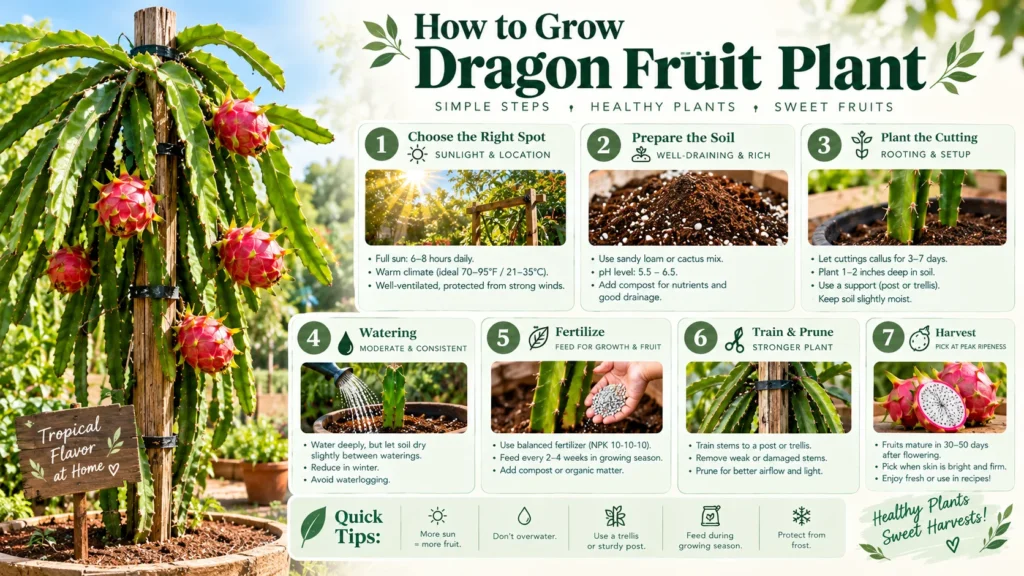
- Choose a healthy, mature stem segment, ideally 12 to 18 inches long, from an established plant.
- Cut it cleanly with a sharp, sterilized knife.
- Let the cut end dry and callus over for 5 to 10 days in a shaded, airy spot. This step matters enormously. Planting a fresh, wet cut invites rot before roots ever form.
- Once callused, plant the cutting 2 to 3 inches deep in well-draining cactus mix, cut end down.
- Wait about a week before watering for the first time, then water lightly and infrequently.
- Roots typically form within 2 to 6 weeks, with visible new growth following soon after.
Growing from Seed
Growing dragon fruit from seed is slower but genuinely fun if you enjoy the whole process from scratch.
- Scoop the tiny black seeds from a ripe fruit and rinse off the pulp thoroughly, since leftover flesh can encourage mold.
- Let the cleaned seeds air dry for a day.
- Press them lightly into moist, well-draining seed starting mix and keep them warm and humid.
- Germination usually happens within 1 to 3 weeks.
- Seedlings are delicate at first. Keep them in bright, indirect light until they’re a few inches tall before moving them into stronger sun.
Remember that seed-grown plants take longer to fruit than cuttings, and because dragon fruit doesn’t always grow true from seed, the fruit you eventually get may differ slightly from the parent.
Planting in Ground
If your climate allows outdoor planting, space plants roughly 8 to 10 feet apart to give their eventual size room to spread. Dig a hole slightly wider than the root ball, backfill with a well-draining mix, and set your support structure in place before or immediately after planting, not years later once roots are established.
A layer of mulch helps regulate soil moisture and temperature, and a simple drip irrigation setup makes it far easier to give consistent, light watering rather than unpredictable soakings.
Dragon Fruit Plant in Pot
Growing a dragon fruit plant in pot is entirely doable and often the only realistic option outside true tropical climates.
- Start with a large container, at least 15 to 20 inches wide, since dragon fruit roots appreciate room and mature plants get top-heavy.
- Drainage holes are non-negotiable. Without them, root rot is almost guaranteed.
- Use a quality cactus and succulent potting mix, not regular potting soil.
- Repot every 2 to 3 years, or sooner if roots are crowding the container or growth has visibly slowed.
- Add a small trellis or stake directly in the pot so the plant has something to climb from the start.
Dragon Fruit Plant Care Guide
Watering Dragon Fruit Plant
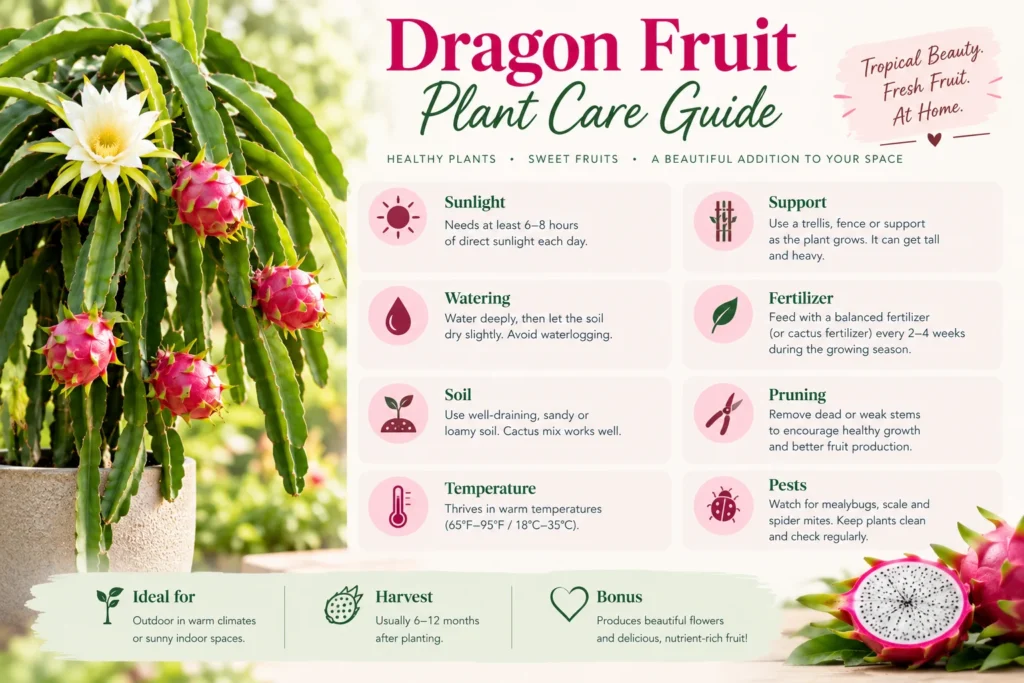
It’s a cactus, so less is more. Dragon fruit is genuinely drought tolerant once established, and overwatering is a far bigger risk than underwatering.
- Growing season (spring and summer): water deeply, then let the soil dry out almost completely before watering again, roughly every 7 to 10 days depending on heat.
- Dormant season (fall and winter): cut back significantly, watering only every 3 to 4 weeks.
- Always check the soil with your finger before watering. If it’s still damp an inch down, wait.
- Watch for wrinkled, shriveling stems as a sign of underwatering, and yellow, mushy stems as a sign of the opposite problem.
Fertilizing Guide
For a dragon fruit plant to flower and fruit well, it needs a fertilizer that’s low in nitrogen but higher in phosphorus and potassium. Too much nitrogen produces lush green growth at the expense of flowers.
- Feed every 4 to 6 weeks during the active growing season with a bloom-boosting formula.
- Compost, worm castings, or a diluted fish and seaweed emulsion work well as organic options.
- Skip fertilizing entirely during winter dormancy.
Pruning Dragon Fruit Plant
Pruning isn’t just tidying up. It’s one of the main ways you actually encourage flowering, since dragon fruit tends to bloom on mature, well-established stems rather than fresh new growth.
- Remove dead, damaged, or crossing stems regularly to improve airflow and light penetration.
- Tip young stems once they reach a good length to encourage branching, which means more potential flowering points.
- The best time to prune is after fruiting season ends, so the plant has a full growing season to recover before its next bloom cycle.
Pollination
Hand pollination is arguably the single most important skill for anyone growing dragon fruit, especially indoors or in a container. Because the flowers open only at night, when far fewer pollinators like moths and bats are active in most home gardens, flowers can open, close, and drop the next morning without ever setting fruit.
Some dragon fruit varieties are self-fertile and will set fruit with their own pollen, while others need a genetically different partner plant nearby to cross-pollinate. If you’re not sure which type you have, hand pollinating is worth doing anyway as insurance.
- Once the flower has fully opened at night, use a small soft paintbrush or cotton swab.
- Gently collect the pale yellow pollen from the anthers in the center of the flower.
- Brush that pollen directly onto the sticky, star-shaped stigma in the flower’s core.
- If you have a second, different dragon fruit variety flowering at the same time, transferring pollen between the two plants often produces the best fruit set.
- Do this while the flower is still fully open, since your entire window is a matter of hours before it closes for good.
Dragon Fruit Plant Flowering
Growing dragon fruit is one of the most rewarding plant journeys precisely because of this moment. The flower itself is often described as the largest bloom produced by any cactus grown in home gardens, sometimes reaching close to a foot across.
It opens after sunset, stays open for a single night, and is intensely fragrant, with a sweet, almost vanilla-and-jasmine scent that carries surprisingly far. By the time morning light arrives, the flower has already begun closing, never to reopen. Some growers set alarms in the middle of the night just to witness it in person, and honestly, I understand why. If pure white blooms are a weakness of yours, our guide to White Flowers rounds up more stunning white flowers worth growing.
Dragon fruit has the most spectacular night blooming flower. Our guide on Night Blooming Jasmine covers another magical night-flowering plant.
When Does Dragon Fruit Flower
Flowering happens mainly through the summer months, often with several separate bloom cycles between late spring and early fall. Signs a flower bud is forming include a small pointed growth emerging from the ridge of a mature stem, which swells and lengthens over about three weeks before opening.
A healthy, established plant can produce anywhere from a handful to several dozen flowers across a single season, with more flowers generally appearing as the plant matures over the years.
How to Encourage More Flowering
- Stress watering: a brief, deliberate dry period before the growing season can sometimes trigger heavier bud formation, mimicking the wet-dry cycles of its native habitat.
- Fertilizer timing: switching to a phosphorus and potassium rich feed just before and during the flowering months supports bud development.
- Pruning connection: since flowers form on mature stems, consistent pruning that encourages branching over time means more potential flowering sites each season.
From Flower to Fruit Timeline
Once successfully pollinated, expect roughly 30 to 50 days from flower to ripe, harvestable fruit. You’ll see the swelling ovary at the base of the spent flower begin developing within about a week, gradually taking on the familiar oval shape and eventually its final color.
Dragon Fruit Plant Stages
Understanding the full arc of a dragon fruit plant’s life makes the waiting so much easier, because you know exactly what to expect and when.
- Planting and Establishment. The first 1 to 3 months after planting a cutting or transplanting a seedling. Focus is entirely on root development, with minimal watering and no fertilizer yet.
- Vegetative Growth. From roughly month 3 out to a year or more, depending on climate. The plant puts on rapid new stem growth and begins climbing its support in earnest.
- First Flowering. Typically arrives somewhere between year 1 and year 3, once stems have matured enough. This is often the most anticipated milestone in the entire growing process.
- Fruiting. Following successful pollination, fruit develops over 30 to 50 days per cycle, with multiple cycles possible in a single summer once the plant is established.
- Mature Producing Plant. From around year 3 onward, a well-cared-for dragon fruit plant settles into a reliable rhythm, producing more flowers and more fruit each successive season.
Common Dragon Fruit Plant Problems
Yellow or Brown Stems
Usually a sign of overwatering or root rot. Cut back watering immediately, check that drainage is adequate, and remove any visibly mushy or blackened sections with a clean, sterilized blade.
No Flowers Forming
The most common causes are insufficient light, a fertilizer too heavy in nitrogen, or simply a plant that isn’t mature enough yet. Patience, more sun, and a bloom-focused feed usually resolve this over time.
Flowers Dropping Without Fruit
This almost always points to poor pollination, especially indoors or in areas with few nighttime pollinators. Hand pollinating every flower is the reliable fix.
Pests: Mealybugs, Scale, and Ants
Check the ridges and joints of stems regularly. Wipe off small infestations with rubbing alcohol on a cotton swab, or use insecticidal soap for larger outbreaks. Ants are often a sign of an existing mealybug or scale problem, since they farm the honeydew these pests produce.
Sunburn on Stems
Pale, bleached, or scarred patches usually mean too much intense afternoon sun. Provide some afternoon shade in especially hot climates, or acclimate plants gradually when moving them from indoors to full outdoor sun.
Harvesting Dragon Fruit
You’ll know a fruit is ready when its skin shifts from green to a deep, even red or yellow depending on variety, and it gives just slightly to gentle pressure, similar to a ripe avocado.
- Harvest by cutting the fruit from the stem with clean shears rather than twisting or pulling.
- This typically happens 30 to 50 days after the flower that produced it opened.
- Store unwashed fruit at room temperature for a few days, or in the refrigerator for up to two weeks once ripe.
- An established, mature plant can produce anywhere from several to a few dozen fruits across a single season, depending on size, variety, and how many flowers were successfully pollinated.
Dragon fruit pairs beautifully with fruit trees. Our guide on Navigator Pear covers another rewarding fruit plant to grow.
Frequently Asked Questions
Most dragon fruit plants grown from cuttings bear fruit in 1 to 3 years, while seed-grown plants usually take 3 to 5 years.
Yes, once established they’re fairly low-maintenance, needing mainly good drainage, plenty of sun, and a sturdy support to climb.
It’s a cactus, and since every cactus is technically a succulent, dragon fruit is really both at once.
Avoid it if the skin looks dull, wrinkled, or shows dark mold spots, or if the flesh smells fermented instead of sweet.
With good care, a dragon fruit plant can live and keep producing fruit for 20 years or more.
The Wait Is the Whole Point
Growing dragon fruit is one of the most rewarding plant journeys you can take on at home, not despite the waiting but because of it. You start with a single dried-out cutting stuck in a pot, and somewhere between year one and year three, you get to stand outside after dark and watch a flower the size of a dinner plate open just for one night.
Give your dragon fruit plant good drainage, real sun, something sturdy to climb, and a little patience, and it will eventually give you back something genuinely unforgettable. At Plant Style Home we cover exotic and everyday plants alike, so explore our complete collection of plant and flower growing guides for more.