Have you ever noticed how many gorgeous flowers share the same first letter? The letter C might just be the most blooming letter in the floral alphabet. From the beloved Carnation gifted on Mother’s Day to the wild, free-spirited Cosmos that dances in the breeze, flowers that start with C have a charm that’s hard to beat.
Whether you’re building your first garden, hunting for the perfect bouquet, or simply curious about flower names starting with C, you’ve landed in the right place. This guide covers everything: appearance, colors, care tips, meanings, and which ones are easiest to grow.
This is part of our A-Z flower series. If you missed it, check out our guide on Flowers That Start With B first, then come back here for your complete C flowers list!
Let’s dive in.
Most Beautiful Flowers That Start With C (Full List)
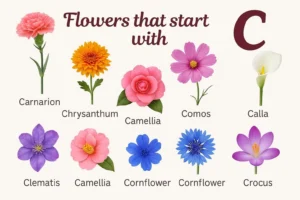
Before we go deep into the details, here’s a quick overview of all the flowers beginning with C covered in this guide:
| Flower Name | Color(s) | Season | Difficulty Level |
|---|---|---|---|
| Carnation | Pink, Red, White, Yellow, Purple | Spring-Summer | Easy |
| Chrysanthemum | White, Yellow, Orange, Red, Purple | Fall | Moderate |
| Cosmos | Pink, White, Red, Magenta | Summer-Fall | Very Easy |
| Calla Lily | White, Yellow, Pink, Purple, Black | Spring-Summer | Easy |
| Clematis | Purple, Blue, White, Pink, Red | Spring-Fall | Moderate |
| Camellia | Pink, Red, White | Winter-Spring | Moderate |
| Cornflower | Blue, Pink, White, Purple | Spring-Summer | Easy |
| Calendula | Orange, Yellow | Spring-Fall | Very Easy |
| Celosia | Red, Orange, Pink, Yellow, Purple | Summer-Fall | Easy |
| Crocus | Purple, White, Yellow, Striped | Late Winter-Spring | Very Easy |
Flowers That Start With C: Detailed Descriptions
Now, let’s get up close and personal with each of these beauties. Here’s everything you need to know: what they look like, which colors they come in, and how to keep them thriving.
Carnation
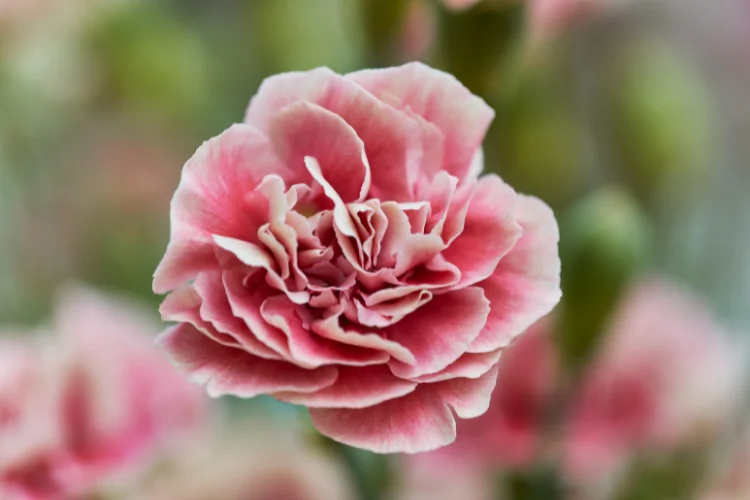

The Carnation (Dianthus caryophyllus) is one of the most recognized flowers in the world, and for good reason. Its ruffled, layered petals look almost too pretty to be real, sitting atop slender blue-green stems. Carnations come in virtually every color imaginable: soft blush pinks, passionate reds, crisp whites, cheerful yellows, and even deep purples.
What makes Carnations extra special is their incredible staying power. Cut carnations can last two to three weeks in a vase, which is why florists absolutely love them. They carry a spicy, clove-like fragrance that’s subtle but unmistakable.
Care Tips:
- Plant in full sun, at least 4-6 hours of direct sunlight daily
- Well-drained, slightly alkaline soil works best
- Water deeply but infrequently; they dislike soggy roots
- Deadhead spent blooms regularly to encourage new flowers
- Feed with a balanced fertilizer every 4-6 weeks during the growing season
Carnation is also the birth flower for January. Read our complete guide on August Birth Flowers for more birth flower inspiration across the calendar!
Chrysanthemum
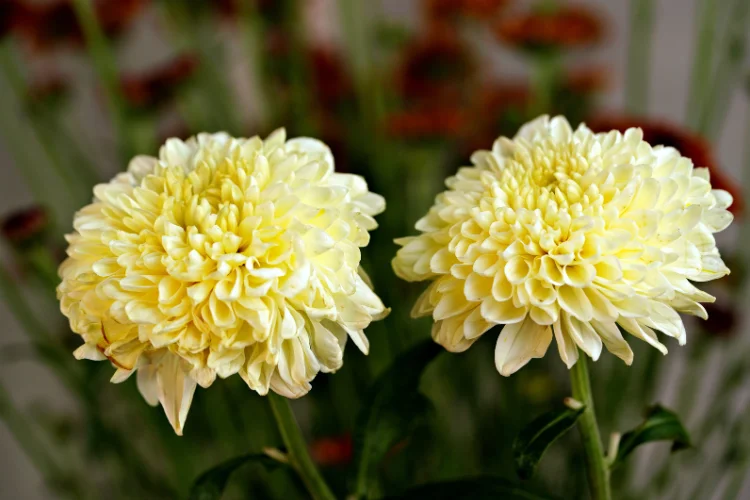
The Chrysanthemum (Chrysanthemum spp.), affectionately called the “Mum,” is the queen of autumn gardens. When most other flowers are winding down, Chrysanthemums burst into their full glory in brilliant oranges, golds, whites, and deep burgundies. Their pom-pom-shaped blooms or daisy-like petals make them one of the most versatile flowers in the C flowers list.
In many cultures, especially across Asia, Chrysanthemums hold deep cultural significance. They symbolize longevity, joy, and rebirth. And honestly, just looking at a field of Mums in bloom feels like a little celebration.
Care Tips:
- Full sun is non-negotiable; aim for 6+ hours per day
- Plant in well-drained, fertile soil with good organic matter
- Pinch back stems in early summer to encourage bushy, full growth
- Water at the base to prevent fungal issues on the leaves
- In cold climates, mulch heavily before winter to protect the roots
Cosmos
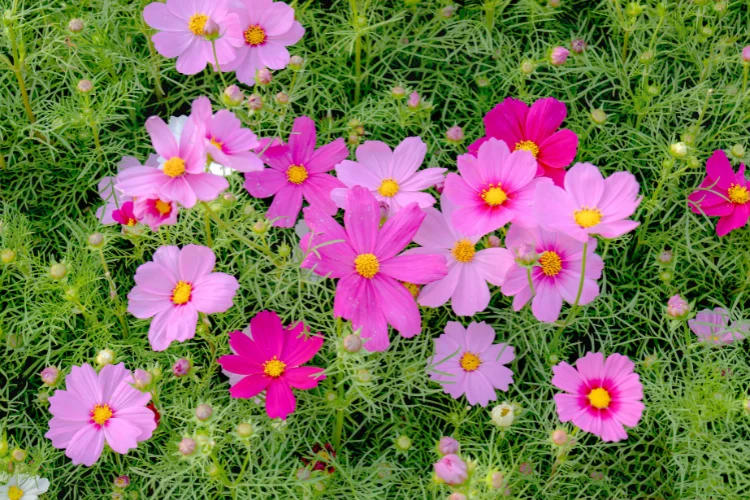
If you want a flower that basically grows itself, meet the Cosmos (Cosmos bipinnatus). These delicate, daisy-like flowers have fine, feathery foliage and blooms in shades of hot pink, soft lilac, magenta, white, and cherry red. They sway gracefully in the wind, giving any garden that relaxed, meadow-like feel.
Cosmos are absolute gifts for beginner gardeners. Sow the seeds directly into poor, dry soil (they actually prefer it that way) and they’ll reward you with non-stop blooms from midsummer right up until the first frost. They’re one of the most cheerful flowers beginning with C you can grow.
Care Tips:
- Direct sow seeds after the last frost in a sunny spot
- Do NOT over-fertilize; too much nitrogen means lots of leaves, few flowers
- Thin seedlings to about 12 inches apart for good air circulation
- Deadhead regularly to keep the blooms coming
- Self-seeds abundantly, so expect them to return year after year
Calla Lily
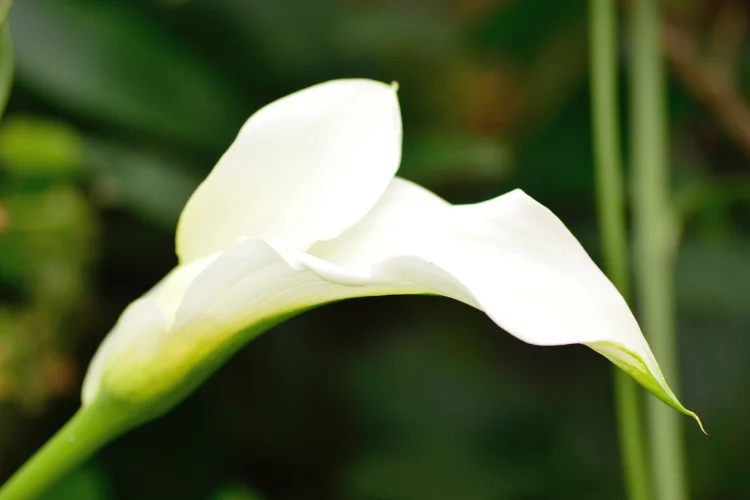
Few flowers are as elegantly dramatic as the Calla Lily (Zantedeschia spp.). That iconic trumpet-shaped bloom, smooth, sculptural, and almost architectural in form, has made it a staple of wedding bouquets for decades. Traditional Calla Lilies come in pure white, but modern varieties now include rich purples, soft pinks, bold oranges, sunny yellows, and even near-black blooms.
Despite their sophisticated appearance, Calla Lilies are surprisingly easy to grow, making them a wonderful addition to any C flowers for garden list. They thrive near water features or in moist garden beds, and they make absolutely showstopping cut flowers.
Care Tips:
- Plant bulbs (rhizomes) in spring after the last frost
- Prefer moist, humus-rich soil; they like consistently damp conditions
- Full sun to partial shade works well; in hot climates, afternoon shade helps
- In colder zones, dig up rhizomes before frost and store indoors over winter
- Avoid overhead watering; water at the base to prevent rot
Clematis
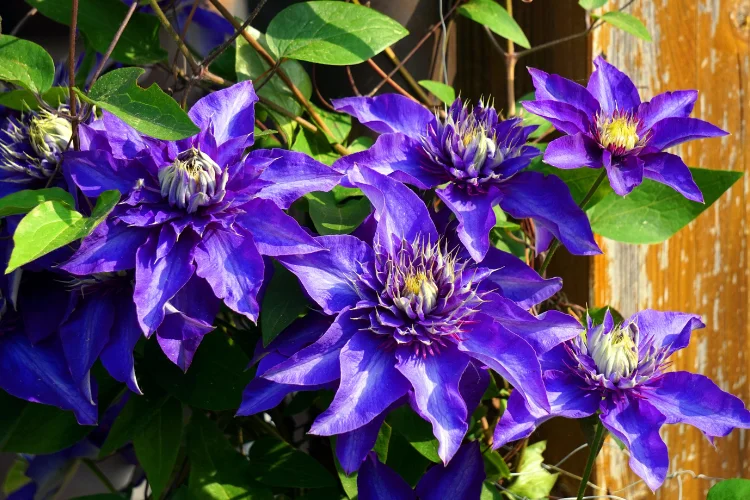
The Clematis (Clematis spp.) is the undisputed queen of climbing flowers. Give it a trellis, a fence, or even a mailbox post, and it will drape itself in breathtaking cascades of blooms. With hundreds of varieties available, Clematis flowers come in every shade imaginable: rich royal purples, soft lavenders, pristine whites, deep reds, and bicolored varieties with contrasting centers.
Some Clematis varieties bloom in spring, others in summer, and a few give you a second flush in autumn. With careful selection, you could have Clematis blooming in your garden for most of the year. For a flower that makes such a dramatic statement, it asks for surprisingly little in return.
Care Tips:
- Follow the old rule: “Clematis likes its head in the sun and its feet in the shade”
- Plant deeply; bury the crown about 2-3 inches below the soil surface
- Provide a sturdy support structure from the beginning
- Water regularly during the growing season, especially in dry spells
- Pruning depends on the variety group; always check which group yours belongs to before pruning
Camellia
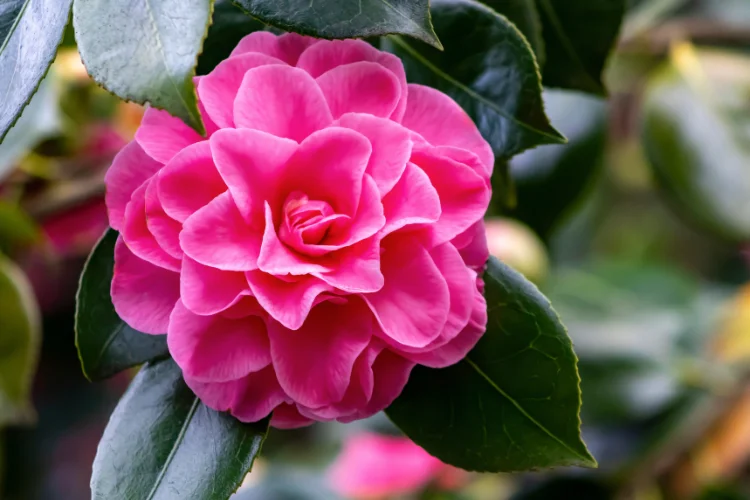
The Camellia (Camellia japonica) is a stunning evergreen shrub that blooms when most gardens look bare and sad, right through late winter into early spring. Its large, perfectly symmetrical blooms in shades of pink, red, and white look like something out of a Victorian painting. The glossy, dark green leaves make it beautiful year-round, even when it’s not in bloom.
Camellias have a refined elegance that’s hard to find in other flowering shrubs. They’re the kind of plant that makes neighbors stop and ask, “What IS that?” which is always a satisfying moment for any gardener.
Care Tips:
- Partial shade is ideal; too much direct sun can scorch leaves and bleach blooms
- Acidic, well-drained soil is essential (pH 5.5-6.5)
- Water consistently but never allow the soil to become waterlogged
- Mulch around the base to maintain moisture and cool roots
- Feed with an acid-formulated fertilizer in spring after blooming finishes
Cornflower
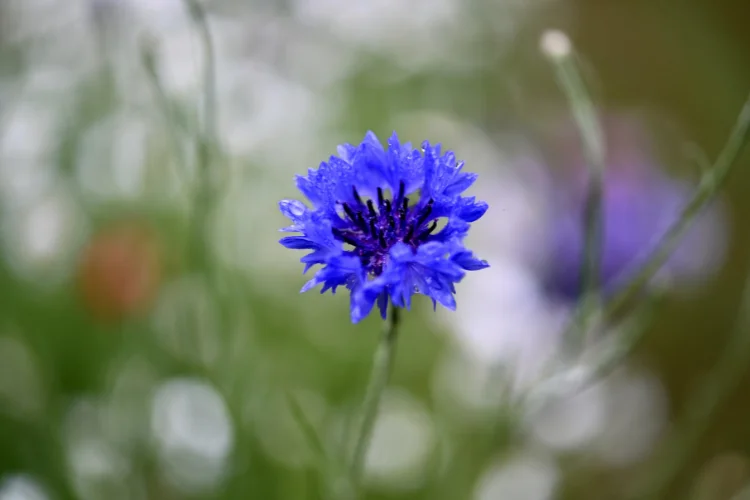
The Cornflower (Centaurea cyanus), also called Bachelor’s Button, is one of those simple, honest beauties that never goes out of style. Its most classic form is a vivid, electric blue that’s almost impossibly bright, though it also comes in pinks, whites, and soft purples. The papery, thistle-like petals cluster together into a cheerful little button of color on long, slender stems.
Cornflowers were once so common in European grain fields that farmers considered them weeds, but today that wild blue is a treasured garden color. They’re wonderfully easy to grow from seed, and pollinators absolutely adore them.
Care Tips:
- Sow seeds directly where they are to grow; they dislike being transplanted
- Full sun gives the best, most vibrant blooms
- Poor to average soil is actually preferred; rich soil means more leaves, fewer flowers
- Water moderately; they’re reasonably drought-tolerant once established
- Deadhead spent flowers to prolong blooming through summer
Calendula
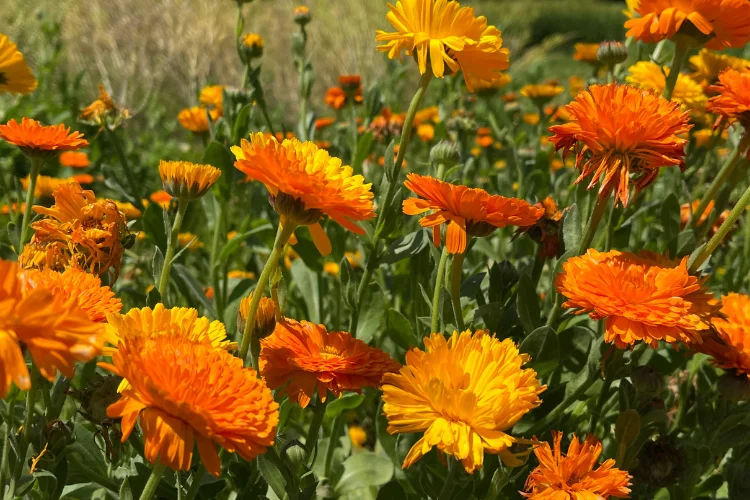
Bright, bold, and brilliantly cheerful: that’s the Calendula (Calendula officinalis), also known as Pot Marigold. These sunshine-yellow and rich orange blooms are some of the most hardworking beautiful flowers starting with C in any garden. They bloom enthusiastically from spring, continue through summer, and keep going well into autumn.
Beyond their good looks, Calendulas are also medicinal herbs. The petals have been used for centuries in skin salves, teas, and herbal remedies. They’re edible too, making a gorgeous addition to salads. And they’re one of the best companion plants in a vegetable garden, repelling pests naturally.
Care Tips:
- Sow seeds directly in early spring; they can handle a light frost
- Full sun to light partial shade; they prefer cooler temperatures
- Water regularly but avoid soggy soil
- Deadhead consistently; removing old blooms keeps the plant producing new ones
- Watch for powdery mildew in humid conditions; improve air circulation if needed
Celosia
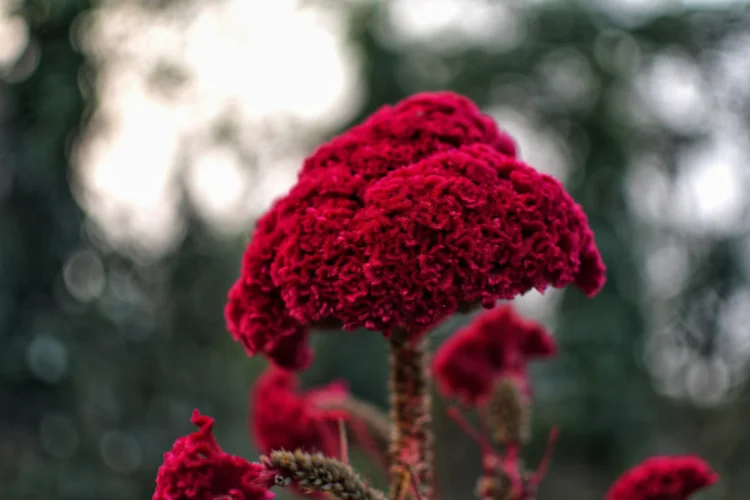
The Celosia (Celosia argentea) is unlike anything else in the garden. Also called Cockscomb or Wool Flower, Celosia blooms look like something from another planet: velvety, brain-shaped crests or feathery plumes in the most intense shades of red, orange, hot pink, gold, and purple. They’re bold. They’re dramatic. And they absolutely refuse to be ignored.
What’s especially wonderful is that Celosia holds its vibrant color even after drying, making it a favorite for dried flower arrangements. If you want to add a genuinely unique texture and color punch to your garden, Celosia is your answer.
Care Tips:
- Plant in full sun; at least 6-8 hours daily
- Warm temperatures are essential; don’t plant out until the soil is warm
- Well-drained soil with good fertility produces the best blooms
- Water regularly but allow the soil to dry slightly between waterings
- Avoid overhead watering to prevent fungal issues on the dense flower heads
Crocus
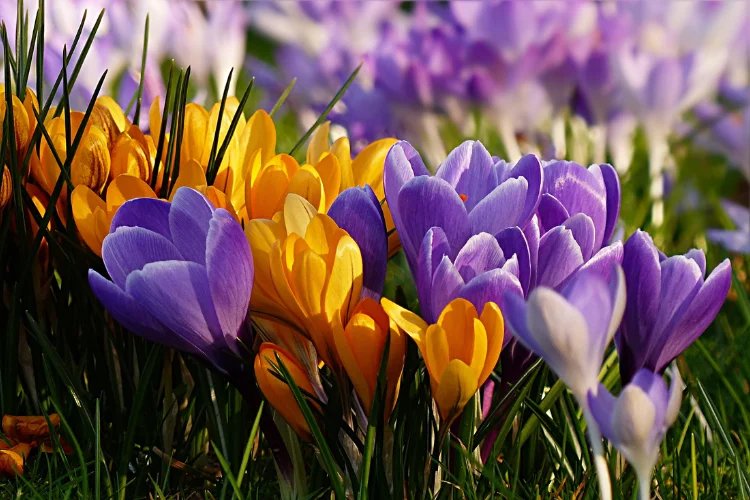
The Crocus (Crocus spp.) is the tiny, mighty herald of spring. These cup-shaped little blooms emerge directly from bare ground, often pushing right through the last of the snow, in cheerful purples, whites, yellows, and striped bicolors. They’re among the first flowers beginning with C to bloom each year, and that first glimpse of a Crocus always feels like a personal message that winter is finally over.
Crocus bulbs (technically corms) are planted in autumn, then they quietly wait underground through the cold months and surprise you with their cheerful little flowers just when you need them most.
Care Tips:
- Plant corms in autumn, about 3-4 inches deep
- Choose a spot with full sun to partial shade
- Well-drained soil is critical; corms will rot in waterlogged conditions
- No regular watering needed once established; rainfall usually suffices
- Leave foliage to die back naturally after blooming; this feeds the corm for next year
Flowers That Start With C For Your Garden
Not sure which C flowers are right for you? Here’s a practical breakdown:
Best C Flowers for Beginners
If you’re new to gardening, start with these forgiving, easy-care varieties:
- Cosmos: practically grow themselves in poor soil with little water
- Calendula: fast-growing, frost-tolerant, and bloom for months
- Cornflower: direct sow and mostly forget; pollinators will love you for it
- Crocus: plant bulbs in fall and enjoy effortless spring color
Best C Flowers for Indoors
Bring some C flower magic inside the house:
- Carnation: long-lasting cut flowers that perfume a room beautifully
- Calla Lily: elegant and architectural; makes a stunning potted plant
- Celosia: thrives in bright indoor spots and keeps its color when dried
Best C Flowers for Gifting
When you want to give flowers that make a real impression:
- Carnation: classic, meaningful, and long-lasting in a vase
- Camellia: a single bloom floating in a bowl of water is breathtaking
- Chrysanthemum: cheerful, colorful, and widely loved
- Calla Lily: the epitome of elegant gifting
Explore more gifting ideas and floral inspiration at PlantStyleHome.
Flowers That Start With C: Meanings and Symbolism
Flowers have always carried messages. Here’s what each of our C flowers says:
- Carnation: Love, fascination, and distinction. Red = deep love; white = pure love; pink = gratitude
- Chrysanthemum: Joy, longevity, and rebirth. In many Asian cultures, it represents the sun and positive energy
- Cosmos: Order, peace, and wholeness. The name comes from the Greek word for “order of the universe”
- Calla Lily: Purity, elegance, and transition. A classic funeral flower that also represents new beginnings
- Clematis: Mental beauty, ingenuity, and artistic talent
- Camellia: Admiration, perfection, and gratitude. Red Camellia = deep love; white = adoration
- Cornflower: Hope, delicacy, and anticipation. Also a symbol of bachelor life in old European tradition
- Calendula: Comfort, warmth, and remembrance. Once used in funeral garlands across Europe
- Celosia: Boldness, warmth, and unfading love; fitting for a flower that never seems to wilt
- Crocus: Cheerfulness, youthfulness, and the joy of new beginnings
How to Grow Flowers That Start With C
General Care Tips
Most flowers that start with C share a few fundamental needs:
- Sunlight: The majority prefer full sun (6+ hours daily). Camellias and Calla Lilies are the exceptions, appreciating some afternoon shade.
- Soil: Well-drained soil is non-negotiable for almost all of them. Waterlogged roots are the enemy.
- Watering: Deep, infrequent watering is better than frequent shallow watering. It encourages deeper root growth.
- Feeding: A balanced fertilizer in spring sets most C flowers up beautifully for the season ahead.
- Deadheading: Removing spent blooms on Carnations, Cosmos, Calendula, and Cornflowers significantly extends the blooming period.
Common Mistakes to Avoid
Even experienced gardeners slip up sometimes. Watch out for these:
- Overwatering: More C flowers are killed by too much water than too little. When in doubt, hold off.
- Planting too early: Cosmos and Celosia hate cold soil. Wait until the ground is genuinely warm.
- Skipping the deadhead: Flowers that aren’t deadheaded put energy into making seeds, not new blooms.
- Wrong soil pH for Camellias: Planting Camellias in alkaline soil leads to yellow leaves and poor flowering. Test your soil first.
- Not pruning Clematis correctly: The wrong pruning approach can mean no flowers for an entire season. Know your group before you cut.
- Planting Crocus in shade: They’ll come up, but bloom poorly and fade fast. Sun is essential.
Frequently Ask Questions
The Carnation is probably the most globally recognized, followed closely by the Chrysanthemum. Both appear in florist shops worldwide year-round and carry centuries of cultural significance.
Cosmos and Cornflowers are your best friends here. Both self-seed freely, thrive in poor soil, and attract butterflies and bees in huge numbers. Let them go to seed at the end of the season and they’ll come back on their own next year.
The Camellia is a standout here, blooming in late winter through early spring when most gardens are bare. Crocus also emerges very early, sometimes pushing through snow in late winter.
Yes! Calendula petals are fully edible and taste mildly peppery, wonderful scattered over salads or used as a garnish. Carnation petals are also edible and have a subtly spicy, clove-like flavor.
Cosmos, Calendula, Cornflower, and Crocus are all exceptional pollinator plants. Bees especially love Cornflowers and Crocus, and butterflies can’t resist Cosmos. If you’re building a pollinator-friendly garden, plant all four.
Conclusion: Ready to Grow Your Own C Flowers?
There’s something wonderfully satisfying about realizing just how many beautiful flowers that start with C are out there waiting to brighten your garden, your home, and your life. From the dignified Camellia to the joyful Cosmos, from the architectural Calla Lily to the humble little Crocus, each one brings something unique to the table.
Whether you’re a seasoned gardener looking to expand your plant palette or a complete beginner wanting to start simple, there’s a C flower perfectly suited for you. Start with easy-going Cosmos or Calendula, then work your way up to the more rewarding Clematis and Camellia as your confidence grows.
The best time to start is now. Pick your favorite flower from this C flowers list, grab some seeds or bulbs, and get them in the ground. Your future self, surrounded by blooms, will thank you.
Want to keep exploring? Head back to PlantStyleHome to browse more of our flower guides, garden tips, and plant care advice. There’s a whole alphabet of flowers waiting for you.
Happy growing! 🌸