The bamboo plant is one of the few living things that grows fast enough to watch. Some species stretch up to 91 cm (about 3 feet) in a single day, making bamboo the fastest growing plant on earth. People have relied on it for more than 5,000 years. It has sheltered temples, fed giant pandas, built scaffolding, and sat on office desks as a small green symbol of good fortune.
Few plants are as versatile. In a garden, bamboo becomes a living wall, a wind screen, or a soft green curtain. Indoors, a few stalks in a glass vase can make a corner feel calmer.
At Plant Style Home we cover everything from exotic plants like bamboo to beautiful flowers and garden inspiration. This bamboo plant growing guide covers the two kinds people love most: true bamboo for the garden and lucky bamboo for the home. You’ll learn how to choose, plant, and care for each so they thrive.
What Is a Bamboo Plant?
Here is the surprise that catches almost everyone: bamboo is a grass. It belongs to the family Poaceae, the same family as wheat, rice, and your lawn. It is simply the giant of that family.
Unlike a tree, bamboo has no growth rings and no true wood. Its stems, called culms, are hollow, jointed, and remarkably strong. Each culm reaches its full height in a single growing season, usually within two or three months, and never gets taller after that. New shoots emerge from underground stems called rhizomes, which are the real engine of the plant.
If you enjoy the sculptural quality of grasses, our guide on Lyposingrass covers another stunning grass variety. Like bamboo, ornamental grasses add beautiful structure to a garden.
When people search for a bamboo plant, they usually mean one of two things:
- True bamboo (Phyllostachys, Fargesia, Bambusa and others) is a real grass that grows outdoors in gardens.
- Lucky bamboo (Dracaena sanderiana) is a houseplant that only looks like bamboo. Nearly every indoor “bamboo” sold in shops is this one.
Wild bamboo grows across Asia, Africa, and the Americas, from tropical rainforests to cool mountain slopes. It thrives at high altitudes, in humid lowlands, and almost everywhere between. Only Europe and Antarctica have no native bamboo.
The reasons for its popularity are easy to feel. It grows quickly, looks elegant, supports countless practical uses, and makes a soft rustling sound in the breeze. That sound is one of the most calming in any garden.
Types of Bamboo Plants
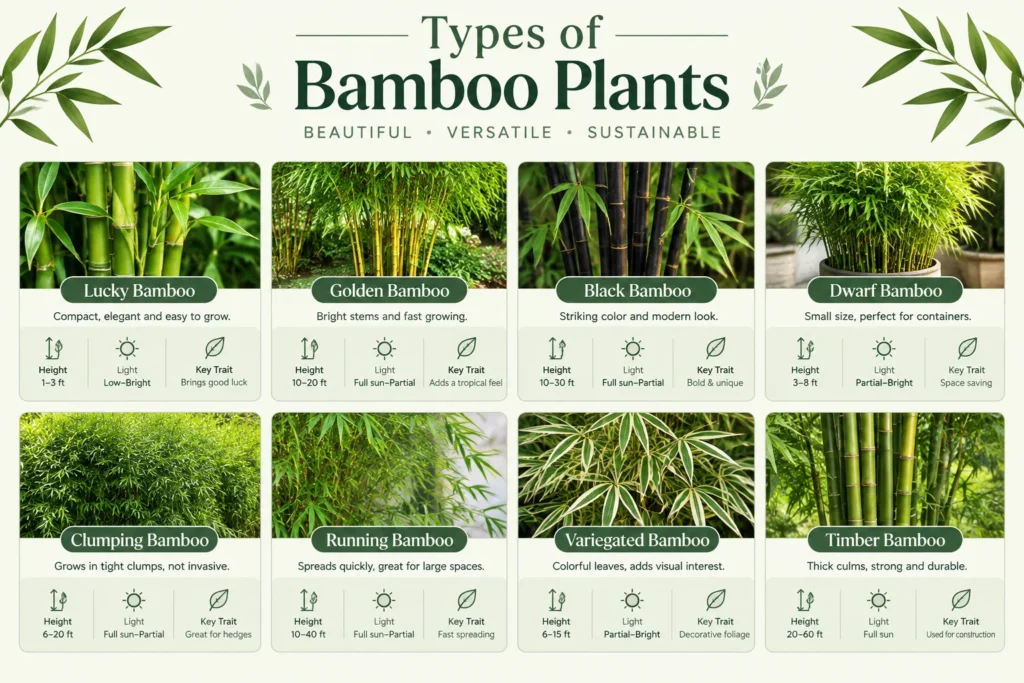
Before choosing any of the types of bamboo plants, you need to understand one distinction that will save you years of trouble: running versus clumping.
Running bamboo spreads by long, creeping rhizomes that can travel several metres from the parent plant. It is beautiful and vigorous, but it needs containment.
Clumping bamboo grows in a slowly expanding tuft, much like an ornamental grass. It stays put and is the safer choice for small gardens.
Neither is better in general. What matters is matching the bamboo to your space and your willingness to manage it.
Popular Outdoor Bamboo Types
These bamboo plant varieties are the ones I’d recommend to most gardeners:
- Phyllostachys aurea (Golden Bamboo): A hardy running bamboo with golden-green canes and compressed lower nodes that look like little knuckles. It reaches 3 to 6 metres and tolerates cold down to around -15°C.
- Phyllostachys nigra (Black Bamboo): The showstopper. Its canes start green and darken to glossy black over two or three years. It is a running type and hardy to roughly -20°C.
- Fargesia (Umbrella Bamboo): A clumping bamboo with arching canes and a fountain shape. It is non-invasive, shade tolerant, and ideal for cooler climates.
- Pleioblastus (Dwarf Bamboo): A low, spreading bamboo often used as ground cover. It’s beautiful under trees, but it can spread widely, so keep it contained.
- Bambusa (Tropical Bamboo): A clumping group for warm climates, including the famous Buddha’s belly bamboo. It doesn’t tolerate hard frost.
Bamboo also brings stunning green to any space. Our complete guide on Green Flowers explores more beautiful green plant varieties.
Lucky Bamboo (Dracaena)
Now for the confusing one. The lucky bamboo plant is not bamboo at all. It is Dracaena sanderiana, a relative of the popular dracaena houseplants, native to the rainforest understory of Central Africa.
So why the name? In Chinese culture, bamboo represents strength, flexibility, and endurance. When Dracaena sanderiana became popular in feng shui, its bamboo-like stalks earned it the “lucky bamboo” label. It has since become a favourite gift for new homes, new businesses, and new beginnings.
Feng shui tradition holds that lucky bamboo carries the wood element and invites growth and positive energy. Many people also love it simply because it’s easy to keep.
A lucky bamboo plant can grow in two ways:
- In water: The classic look, with stalks in a glass vase and pebbles.
- In soil: Often healthier and longer lived, with a bit more room to grow.
The section on lucky bamboo meanings later in this guide covers stalk numbers and ribbon colours in detail.
How to Grow Bamboo Plant Outdoors
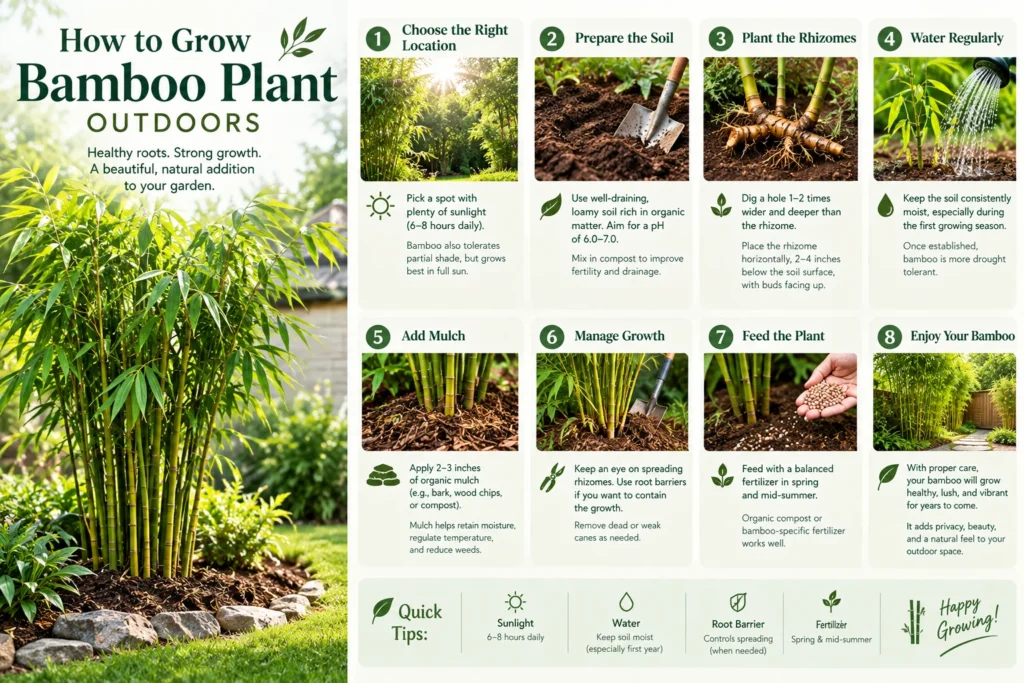
If you’re wondering how to grow bamboo plant outdoors, the good news is that most bamboo is forgiving. Get the location and containment right, and it will mostly look after itself.
Best Location for Bamboo
Most bamboo grows best in full sun to partial shade. Black and golden bamboo prefer sunny spots, while Fargesia is happy with dappled light.
Wind matters more than people expect. Strong, cold, drying wind scorches the leaves and makes them curl. A sheltered corner near a fence or wall will keep foliage lush.
Think about spread before you plant. A running bamboo plant outdoor should go where you can contain it, not beside a neighbour’s lawn. Bamboo also makes a perfect garden companion to trees. Our guide on Mesquite Trees covers another excellent low maintenance outdoor plant.
Soil Requirements
Bamboo is adaptable, but it dislikes waterlogged roots. Aim for well-drained, fertile soil with a slightly acidic to neutral pH.
Heavy clay benefits from compost and grit. Sandy soil benefits from organic matter to hold moisture. A generous layer of leaf mould or well-rotted compost suits almost any soil.
Planting Guide
The best time to plant is spring or early autumn, when the soil is warm and moisture is reliable.
- Dig a hole about twice as wide as the root ball and just as deep.
- Loosen the sides so roots can spread.
- Set the plant at the same depth it grew in its pot.
- Backfill, firm gently, and water thoroughly.
- Add 5 to 8 cm of mulch around the base, keeping it off the canes.
Spacing depends on the type. Plant clumping bamboo about 1 to 1.5 metres apart for a hedge, and running types at least 1 to 2 metres apart within a contained bed.
Watering Outdoor Bamboo
Newly planted bamboo needs regular, deep watering through its first two growing seasons while roots establish. Water two or three times a week in warm weather, then ease off.
Once mature, most bamboo copes well with dry spells, though it looks best with steady moisture. Curling leaves are its way of telling you it’s thirsty.
Feeding Outdoor Bamboo
Bamboo is a hungry grass and loves nitrogen. Feed with a nitrogen-rich fertilizer in early spring, just before new shoots emerge, and again lightly in early summer. Stop feeding by late summer so new growth can harden before winter.
A yearly mulch of grass clippings or compost does wonders too.
Controlling Running Bamboo
This is the most important section for anyone growing a running type. Running bamboo will escape if you let it, but with a little planning it’s easy to manage.
Root barrier installation:
- Use a rigid, thick HDPE barrier (2.5 to 3 mm) sunk 60 to 75 cm deep around the planting area.
- Angle it slightly outward and leave about 5 cm above the soil so rhizomes can’t hop over.
- Overlap the joints and seal them with proper barrier tape or clamps.
Rhizome pruning:
- Once a year, walk the edge of the barrier and look for rhizomes heading over or under it.
- Cut them back with a sharp spade or pruning saw.
- Remove any shoots that appear outside your boundary. Young shoots snap off easily by hand.
Ten minutes of yearly attention keeps running bamboo well-behaved. If that sounds like too much, choose a clumping type like Fargesia and enjoy peace of mind.
How to Grow Lucky Bamboo Plant Indoors
A lucky bamboo plant indoor setup is one of the easiest ways to bring green into a room. Mine has been thriving on my desk for three years, and it asks for very little.
Lucky bamboo pairs beautifully with other elegant indoor plants. Our guide on Asiatic Lily covers another stunning plant for your home.
Water Growing Method
- Use a clear vase and a few centimetres of pebbles to hold the stalks steady.
- Add water until the roots are covered, but keep the stalks themselves mostly dry.
- Change the water every 7 to 10 days. Stale water is the number one cause of decline.
- Use filtered or distilled water, or let tap water sit out overnight. Lucky bamboo is sensitive to chlorine and fluoride.
- Rinse the vase and pebbles each time you change the water.
Soil Growing Method
In my experience, soil-grown stalks are sturdier and live longer.
- Choose a pot with drainage holes and a well-draining mix, such as standard potting soil with a bit of perlite.
- Pick a pot only slightly larger than the root mass.
- Keep the soil evenly moist but never soggy. Let the top centimetre dry between waterings.
Light Requirements
Lucky bamboo wants bright, indirect light. It’s an understory plant, so direct sun burns its leaves and turns them yellow or pale. A spot a metre or two from a window is ideal.
It tolerates low light, but growth slows and colours dull.
Temperature and Humidity
Aim for 18 to 32°C (65 to 90°F). Avoid cold drafts, air conditioner vents, and heaters, which cause stress and yellowing.
Average home humidity is usually fine. In very dry rooms, an occasional misting helps keep the leaf tips from browning.
Fertilizing Lucky Bamboo
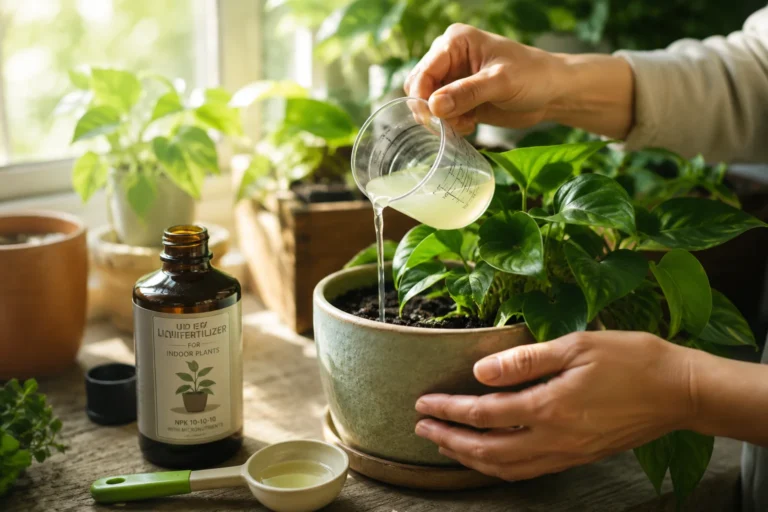
Less is more. Feed with a heavily diluted liquid fertilizer, roughly one drop per litre of water for water-grown plants or a quarter-strength feed for soil-grown ones, about once a month. Overfeeding causes burned tips and yellow stalks.
A note for pet owners: Lucky bamboo is mildly toxic to cats and dogs, so keep it out of reach of curious pets.
Bamboo Plant Care Guide
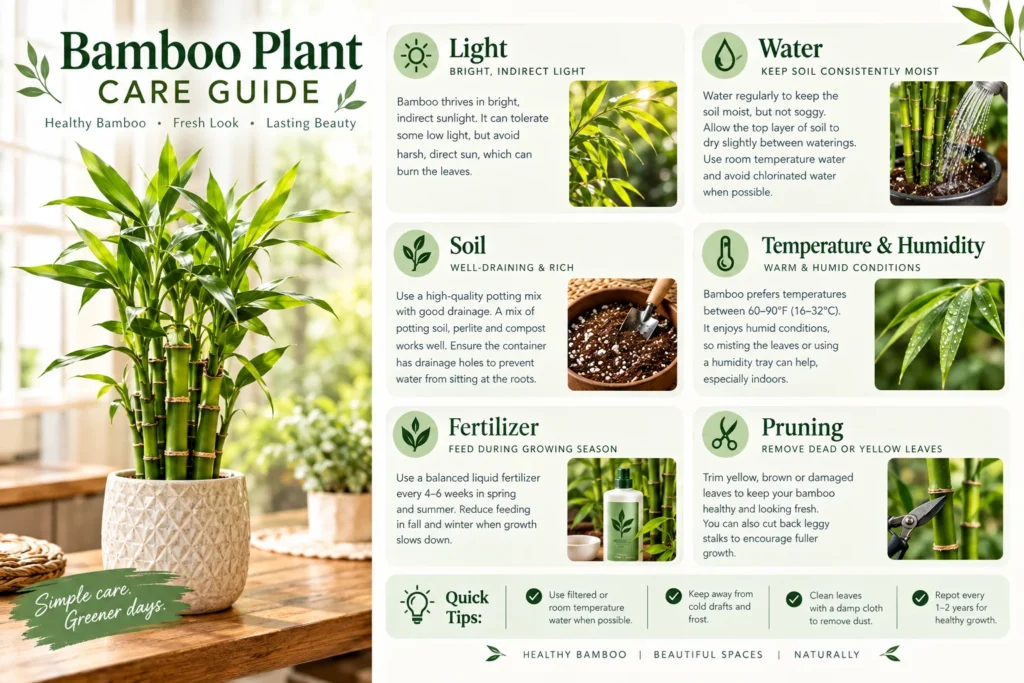
Good bamboo plant care comes down to steady, simple habits. These tips apply to both true bamboo and lucky bamboo.
Pruning Bamboo Correctly
- Thin old canes: In late winter, remove weak, damaged, or crowded canes at ground level to let air and light in.
- Control height: Cut the top of a cane just above a node to limit height. It won’t regrow taller, but side branches will fill in.
- Remove dead canes: Cut them at the base and compost them.
For lucky bamboo, trim side shoots to 2 to 3 cm from the stalk with clean scissors. Seal cuts with a little candle wax if you like.
Dividing Bamboo Clumps
Divide overgrown clumps in early spring. Dig up the clump, separate a section with at least 2 or 3 healthy canes and plenty of roots using a sharp spade or saw, and replant immediately. Water well for the first few weeks.
Repotting Lucky Bamboo
Repot when roots fill the container, roughly every one to two years. Choose a slightly larger vase or pot, handle the roots gently, and refresh the water or soil.
Common Pests and Diseases
- Bamboo mites: Look for pale speckling and fine webbing on leaves. Spray with water or insecticidal soap.
- Scale insects: Small brown bumps on canes. Wipe off or treat with horticultural oil.
- Root rot: Caused by waterlogging or stagnant water. Improve drainage and refresh water often.
Yellowing Leaves: Causes and Fixes
- Too much sun: Move the plant to bright, indirect light.
- Chlorine in tap water: Switch to filtered or settled water.
- Overfeeding: Flush the soil or change the water and pause fertilizer.
- Poor drainage: Repot into a lighter mix.
- Natural shedding: Outdoor bamboo drops older leaves in spring, which is normal.
Yellow stalks on lucky bamboo usually can’t be revived. Remove them early so rot doesn’t spread.
Common Mistakes to Avoid
- Planting running bamboo without a barrier
- Using untreated tap water for lucky bamboo
- Letting lucky bamboo sit in direct sun
- Overwatering potted plants
- Feeding too often
Bamboo Plant Benefits
The bamboo plant benefits go well beyond good looks.
Environmental benefits
- Bamboo produces plenty of oxygen and stores carbon quickly, since it regrows without replanting.
- Its dense root network holds soil together and helps prevent erosion on slopes and riverbanks.
Garden benefits
- It makes an excellent privacy screen and windbreak.
- Birds and small creatures use it for shelter.
Home benefits
- Lucky bamboo adds a calm, zen aesthetic to a room, and many people enjoy its feng shui symbolism.
- Popular claims about air purification deserve honesty: lucky bamboo has a small effect at best, so treat it as a lovely companion rather than an air cleaner.
Practical uses
- Building material, flooring, furniture, and scaffolding
- Edible shoots in many cuisines
- Textiles and paper
- A renewable, sustainable resource
Bamboo is nature’s most versatile plant, and few others can claim so many roles.
Bamboo Plant in Pots and Containers
A bamboo plant in pot form is perfect for patios, balconies, and small gardens, and it’s also a smart way to enjoy running bamboo without worrying about spread.
Best varieties for pots: Fargesia, dwarf Pleioblastus, and compact Bambusa varieties do well. Running bamboo also works if you keep the pot sturdy.
Pot size: Start with a container at least 40 to 50 cm wide and deep, and size up as the plant grows. Fibreglass or thick plastic pots resist rhizome pressure better than thin ceramic.
Potting mix: Use a rich, well-draining blend of quality potting soil, compost, and a little grit.
Watering: A bamboo plant in pot dries out faster than one in the ground. Water deeply when the top few centimetres feel dry, and check often in summer.
Feeding: Apply a balanced or nitrogen-rich feed in spring and early summer.
Overwintering: Container roots are more exposed to frost. Wrap pots in horticultural fleece, group them together against a warm wall, and lift them off cold ground.
Moving indoors: Tropical types can spend winter in a bright, cool room. Bring them in gradually and keep an eye out for spider mites.
Lucky Bamboo Meanings and Feng Shui
Part of the charm of a lucky bamboo plant is the meaning behind it. In feng shui, the number of stalks carries a different blessing:
- 1 stalk: Good luck and a fresh start
- 2 stalks: Love and harmony
- 3 stalks: Happiness, long life, and wealth
- 5 stalks: Health and balance
- 6 stalks: Wealth and prosperity
- 7 stalks: Good health
- 8 stalks: Luck and prosperity
- 9 stalks: General good luck
- 10 stalks: Perfection and completeness
Traditionally, four stalks are avoided, since the number sounds like the word for death in Chinese.
Placement: Feng shui often places lucky bamboo in the east (family and health), southeast (wealth), or on a work desk to support growth. Keep it in a spot that gets gentle light.
Gifting: Giving a lucky bamboo plant is a warm way to wish someone health, success, or a fresh start.
Ribbons and pots: Red ribbons symbolize luck and joy, gold suggests wealth, and green stands for growth and health. Glass vases are said to enhance clarity, and ceramic pots add grounding energy.
Frequently Ask Questions
No. Lucky bamboo is Dracaena sanderiana, a different plant altogether. True bamboo is a grass in the Poaceae family.
Water-grown lucky bamboo needs fresh water every 7 to 10 days. Soil-grown lucky bamboo likes moist soil. Outdoor bamboo needs deep watering in its first two years, then only during dry spells.
Common causes include too much direct sun, chlorinated water, overfeeding, poor drainage, or natural leaf drop. Adjust light, water quality, and feeding first.
It depends on the species. Some giant bamboos can grow up to 91 cm in a day at their peak, though most garden varieties grow more modestly.
Running bamboo can be if left uncontained. Clumping bamboo isn’t. A proper root barrier keeps running types in check.
With good care, a lucky bamboo plant can live for many years, and some last over a decade, especially when grown in soil.
A Calm, Green Ending
Bamboo asks for very little and gives a great deal. A quiet corner of the garden, a glass vase on a desk, a soft rustle in the evening breeze: each is a small reminder to slow down.
Whether you’re planting a golden grove or tucking three stalks of lucky bamboo beside your laptop, I hope this guide helps you begin with confidence. Start small, learn what your plant likes, and let it grow.
There’s much more to explore at plantstylehome.com, from flowering favourites to garden ideas. And when you’re ready to bring a bamboo plant into your own space, you’ll find that few plants repay a little attention so generously.