Green flowers are the best kept secret in the flower world. Most people walk right past them, tucked between the roses and the peonies, assuming they’re just foliage. They’re not. They’re flowers, fully formed and fully deliberate, blooming in a color most gardeners never think to look for.
When I first discovered green roses, I was completely hooked. There was something almost rebellious about a flower refusing to be pink or red, choosing instead the quiet color of leaves and stems. That rebellion is exactly what makes green flowers so magnetic to florists, garden designers, and anyone tired of the same predictable palette.
Green flowers add a sophistication that no other color can match. They don’t shout for attention the way scarlet or fuchsia does. Instead, they work with texture, with shadow, with the way light falls across a petal. This guide covers every notable type of green flower, where to grow it, what it means, and how to use it, so you can start noticing what you’ve been missing.
At Plant Style Home we explore every flower color, from the most common to the most unusual, to help you create a truly unique garden.
Why Green Flowers Are the Florist’s Secret Weapon
Ask any working florist about green flowers and you’ll hear the same thing: they’re indispensable. Here’s why professionals reach for them again and again.
- Texture and filler. Green flowers fill gaps in an arrangement without competing for attention, adding dimension that solid greenery alone can’t provide.
- Instant sophistication. A bouquet with green blooms reads as intentional and elevated, never accidental.
- Universal compatibility. Green flowers pair with literally every other color on the wheel, acting as a bridge between bold hues.
- Longer vase life. Many green varieties, like Bells of Ireland and Green Trick Dianthus, outlast their more colorful cousins by days or even weeks.
- A genuine design trend. Chartreuse flowers and lime green flowers have moved from niche florist tricks to headline features in modern bridal and editorial work.
This combination of practicality and beauty is exactly why green flowers have quietly become a favorite among people who know flowers best.
Best Green Flowers: Complete List
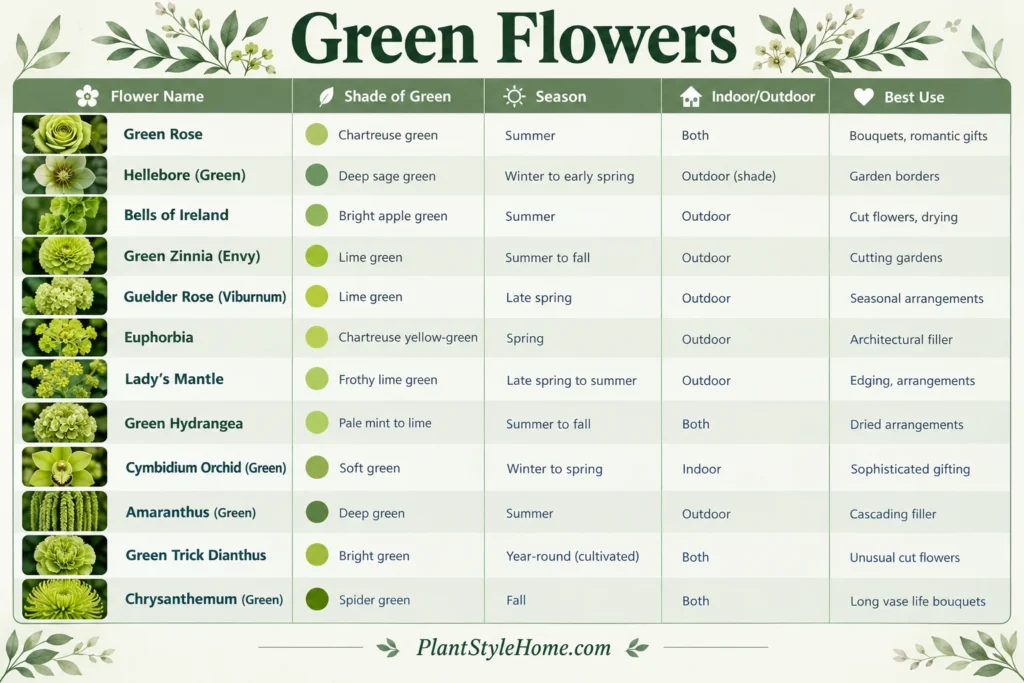
Before the deep dive, here’s a quick reference table covering the most popular green flowering plants, their shade, season, growing style, and best use.
Top Green Flowers: Detailed Guide
Now let’s look closer at each of these plants, because every single one has a story worth knowing.
Green Rose
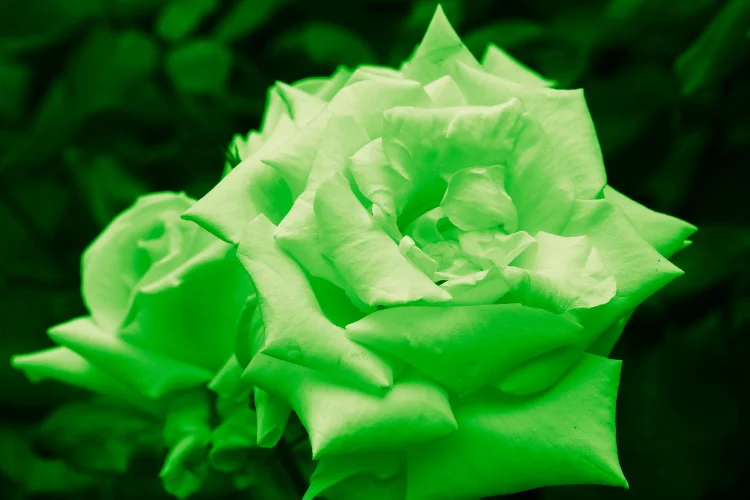
The green rose is a chartreuse green flower with a strange, almost sepal-like structure. Traditional rose breeders spent decades chasing blue roses, but the green rose was quietly there the whole time, unbothered by trends.
Florists love it as an unusual romantic gift, since it says “I noticed something different” rather than “I bought the default option.” Varieties like ‘St. Patrick’ and ‘Jade’ are the most widely available.
Care tips:
- Plant in full sun with well-draining soil
- Prune after flowering to encourage new blooms
- Cut stems in early morning for the longest vase life
- Feed monthly during the growing season
Hellebore (Green Varieties)
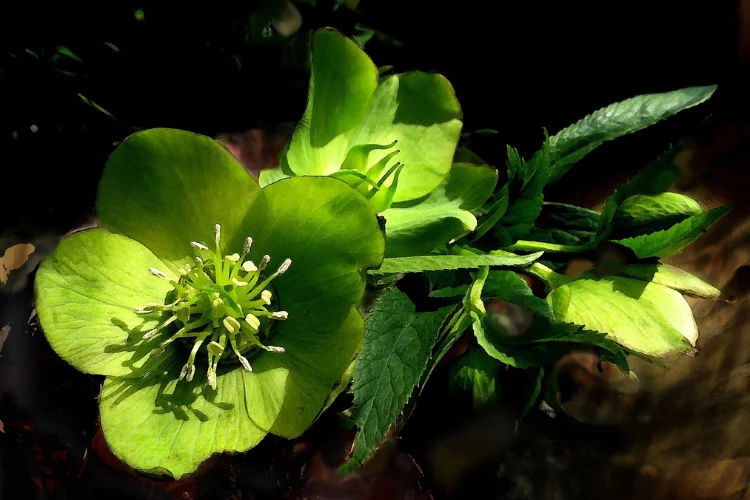
Hellebores bloom when almost nothing else will, pushing nodding green flowers through late winter frost. Gardeners in shaded, difficult corners consider them a genuine star of the season.
The blooms hang downward, which forces you to actually crouch and look up into them, a small ritual that makes discovering their intricate centers feel earned.
Care tips:
- Plant in partial to full shade under deciduous trees
- Keep soil moist but never waterlogged
- Remove old foliage in late winter to showcase new blooms
- Divide clumps every three to four years
Bells of Ireland (Moluccella)
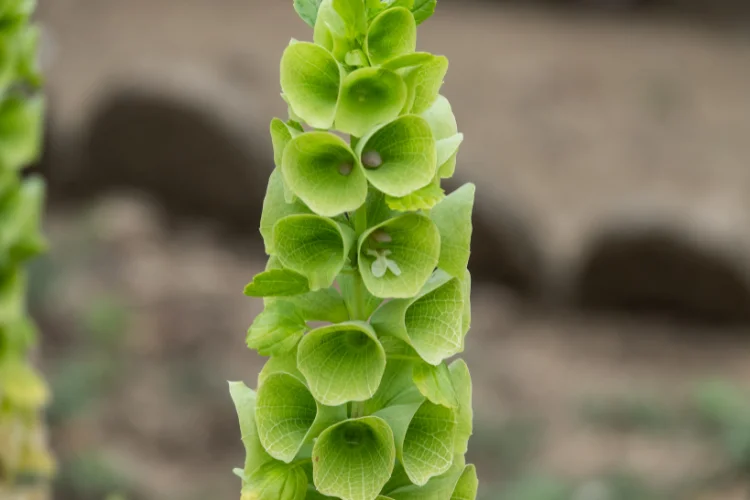
Bells of Ireland produce architectural green spires that look almost sculptural rather than floral. Each stalk is lined with cup-shaped calyces, and the true flower hides tiny inside each one.
In Irish folklore they’re carried as a symbol of good luck, which made them a florist arrangement staple long before “unusual flowers” became fashionable.
Care tips:
- Sow directly outdoors after the last frost
- Provide full sun and consistent watering
- Stake tall stems in windy locations
- Harvest for drying just as the calyces fully form
Green Zinnia
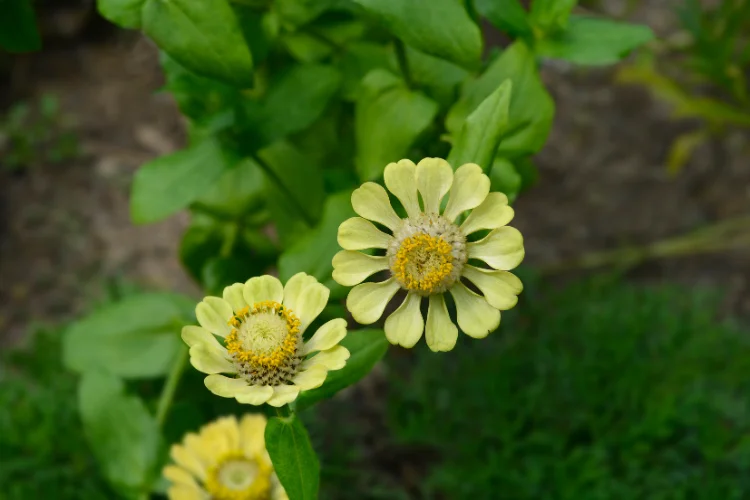
The ‘Envy’ variety is the standout lime green flower in this family, blooming reliably from a simple seed packet. Zinnias grow fast, bloom for months, and reward almost no effort at all.
This makes green zinnia the easiest entry point for anyone who wants green flowers for garden beds without a steep learning curve.
Care tips:
- Direct sow after soil warms in spring
- Deadhead regularly to extend blooming
- Space plants for good air circulation
- Water at the base to prevent mildew
Guelder Rose (Viburnum)
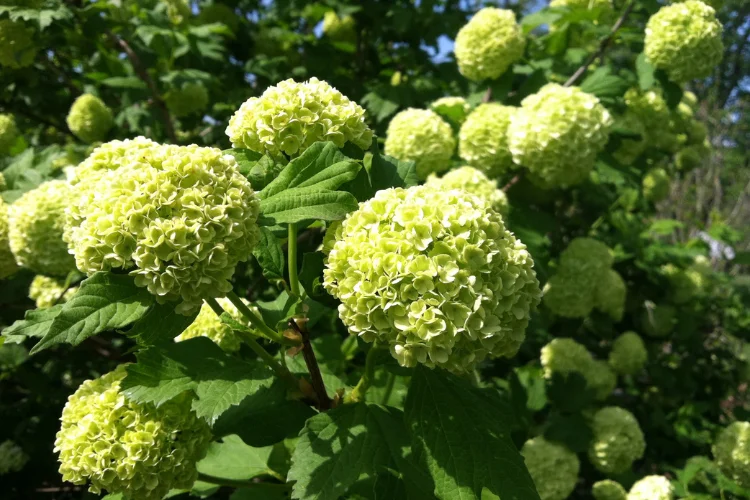
Guelder rose produces lime green snowball clusters in late spring that shift dramatically as the season progresses, moving from green to white to brilliant red berries by autumn.
Few shrubs offer this much seasonal transformation in a single plant, which is why landscape designers plant it as a living calendar.
Care tips:
- Grow in moist, well-drained soil
- Position in full sun to partial shade
- Prune immediately after flowering
- Watch for viburnum beetle on new growth
Euphorbia
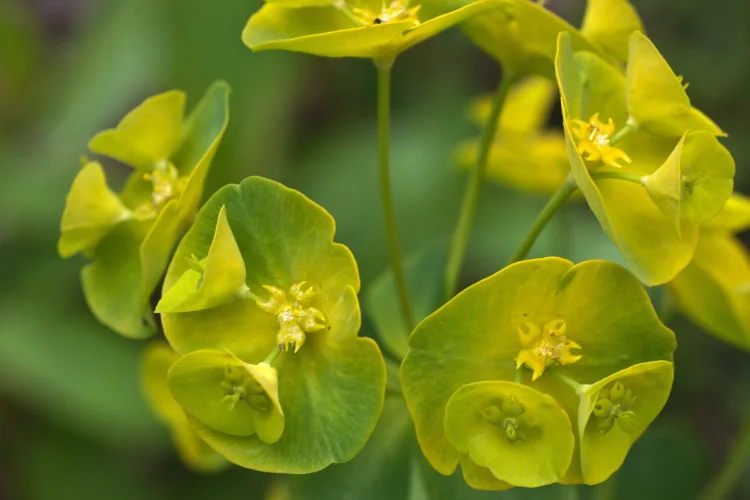
Few plants deliver spring architecture the way euphorbia does. Its chartreuse yellow-green bracts form dense, geometric clusters that hold their shape and color for weeks.
Note that euphorbia sap is irritating to skin, so gloves are essential when cutting or dividing.
Care tips:
- Plant in well-draining soil, avoiding overwatering
- Cut stems and sear the ends in hot water before arranging
- Grow in full sun for the strongest color
- Cut back hard after flowering finishes
Lady’s Mantle (Alchemilla)
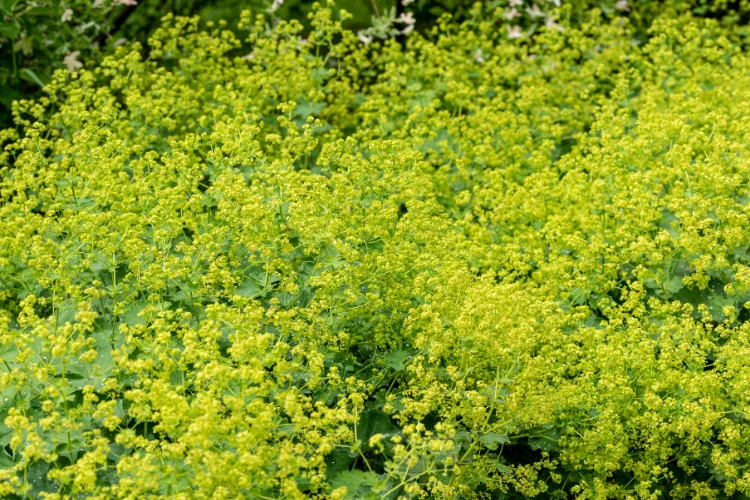
Lady’s mantle produces frothy lime green flowers so fine they look like a green mist hovering over the foliage. The scalloped leaves hold water droplets each morning like tiny mirrors, a detail that photographers chase constantly.
It’s a classic choice for edge planting, softening the harder lines of paths and borders.
Care tips:
- Grow in partial shade with moisture-retentive soil
- Cut back after flowering to prevent self-seeding everywhere
- Divide every few years to maintain vigor
- Use fresh cuttings within a day for arrangements, since it wilts quickly
Green Hydrangea
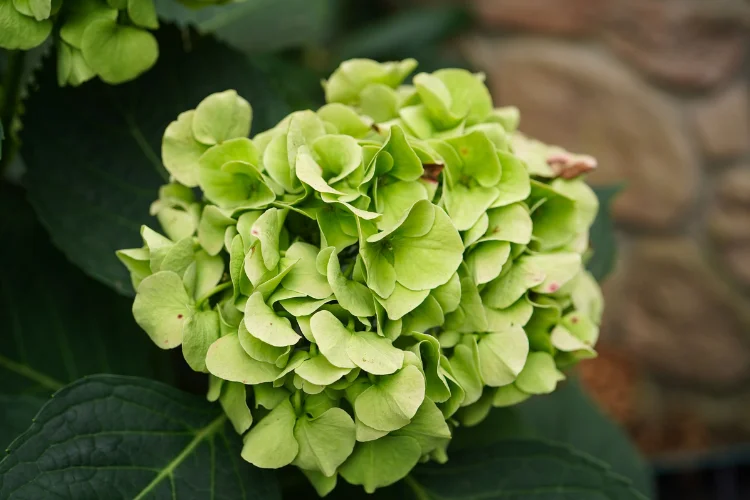
Hydrangeas move through green stages that most gardeners never wait around to see. The Annabelle variety opens green before turning white, while Limelight hydrangea holds its lime green tone for weeks before aging toward pink.
These transitional blooms dry beautifully, keeping their structure and color for months indoors.
Care tips:
- Plant in rich, moist, well-drained soil
- Provide morning sun with afternoon shade
- Prune according to variety, since bloom timing differs
- Hang cut stems upside down in a dark room to dry
Cymbidium Orchid (Green)
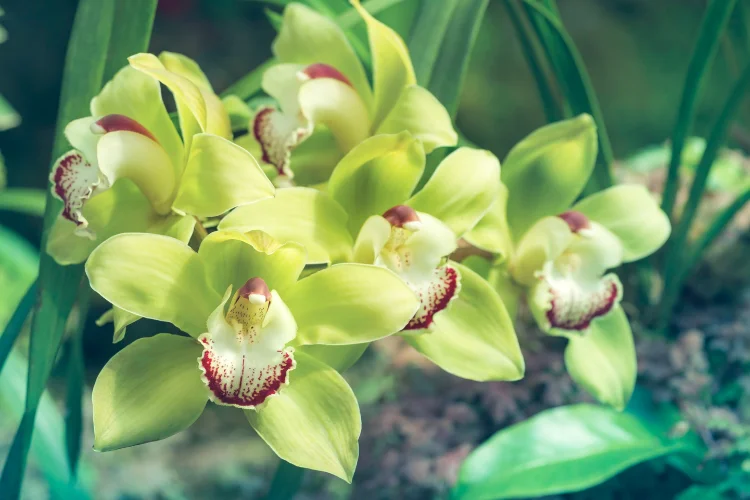
Exotic green orchid varieties are one of the most sophisticated green flowers for arrangements, prized for a vase life that regularly stretches past three weeks.
As an indoor plant, cymbidium orchids reward patience with sprays of waxy blooms that feel genuinely luxurious rather than fussy.
Care tips:
- Place near a bright, indirect light source
- Water when the top inch of medium dries out
- Feed with diluted orchid fertilizer during active growth
- Keep nighttime temperatures cooler to encourage flower spikes
Amaranthus (Green)
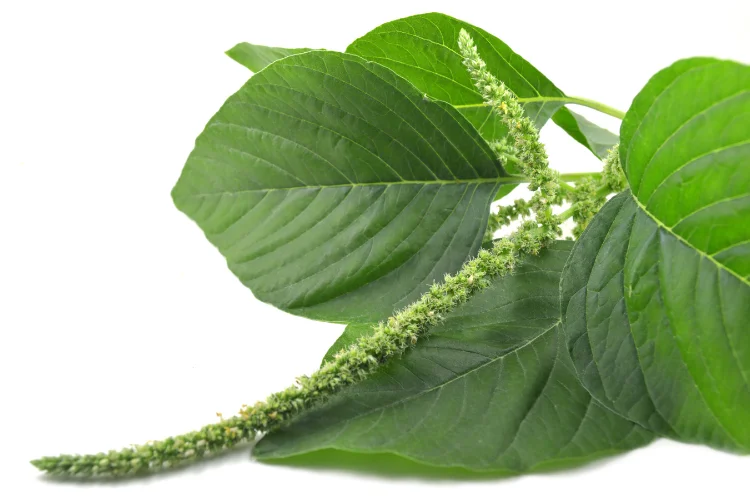
Green amaranthus produces cascading green plumes that spill dramatically over the edge of any container or arrangement. It’s an unusual beauty that adds movement other flowers simply can’t replicate.
As a filler, it introduces a wild, almost untamed quality that balances more structured blooms.
Care tips:
- Sow directly in warm soil after frost risk passes
- Grow in full sun for the deepest color
- Water deeply but infrequently once established
- Harvest plumes in the morning for arrangements
Green Trick Dianthus
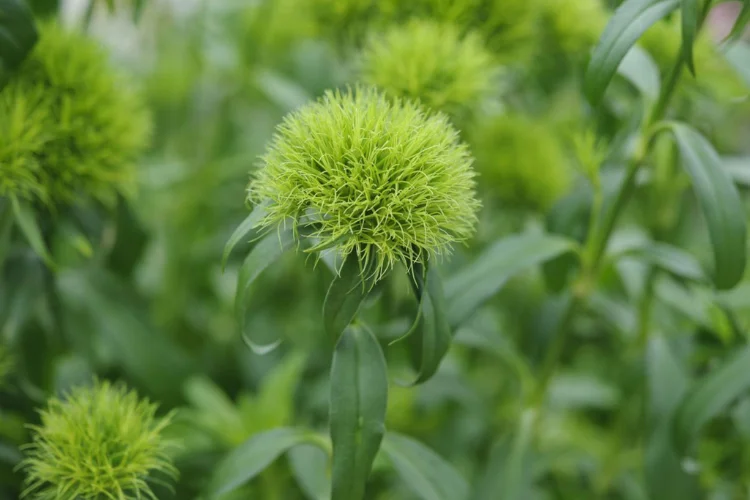
This is possibly the most unusual cut flower on the entire list. Green Trick Dianthus forms tight, ball-shaped clusters of fluffy green texture that look almost synthetic, though every bit is natural.
Its novelty appearance combined with an exceptionally long vase life has made it a favorite for modern, minimalist bouquets.
Care tips:
- Grow in full sun with well-draining soil
- Keep humidity moderate to prevent mold on dense blooms
- Cut when clusters are fully open for best longevity
- Store in cool water immediately after cutting
Chrysanthemum (Green)
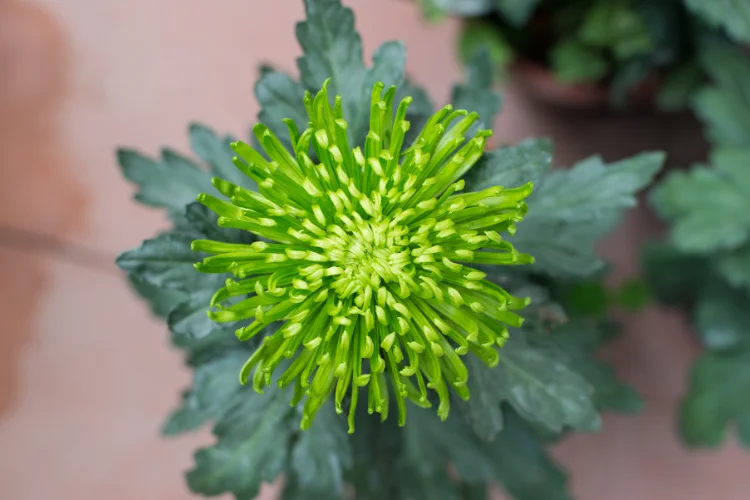
Spider green chrysanthemum varieties bring thin, spiky petals in a green so fresh it almost glows. As a florist staple, green chrysanthemums are chosen specifically for their remarkably long vase life, often lasting two to three weeks.
Care tips:
- Plant in full sun with fertile, well-drained soil
- Pinch young growth to encourage bushier blooms
- Support tall stems with stakes or cages
- Change vase water every few days to extend freshness
Green Flowers by Shade
Not all green flowers share the same tone. Understanding the shade helps you plan a cohesive garden or arrangement.
Lime chartreuse green flowers
- Euphorbia
- Green Zinnia (‘Envy’)
- Lady’s Mantle
- Guelder Rose
Deep forest green flowers
- Green Hellebore
- Green Trick Dianthus
- Green Amaranthus
Pale mint green flowers
- Green Hydrangea
- Green Rose
- Bells of Ireland
Yellow-green flowers
- Euphorbia
- Lady’s Mantle
- Certain Hellebore varieties
Green Flowers for Different Situations
Choosing the right plant depends heavily on where and how you plan to use it.
- Best green flowers for arrangements and bouquets: Bells of Ireland, Green Trick Dianthus, Green Rose
- Top green flowers for garden borders: Lady’s Mantle, Green Hellebore, Green Zinnia
- Best green flowers for shade: Hellebore, Euphorbia (select varieties)
- Ideal green flowers for containers: Green Zinnia, Green Hydrangea, Cymbidium Orchid
- Standout green flowers for cutting: Green Chrysanthemum, Amaranthus, Bells of Ireland
- Favorite green flowers indoors: Cymbidium Orchid, potted Green Hydrangea
- Go-to green flowers for weddings: Green Rose, Green Hydrangea, Bells of Ireland
Green Flower Meaning and Symbolism
Color carries meaning long before we consciously register it, and green flowers meaning centers on a consistent theme across cultures.
Green flowers generally represent renewal, good luck, nature, health, resilience, harmony, and new beginnings. This is exactly why they show up so often around St. Patrick’s Day and spring celebrations.
Bells of Ireland carry a specific good luck meaning rooted in Irish tradition, making them a popular choice for celebrations meant to invite fortune.
The green rose carries an unusual meaning tied to fertility, abundance, and new life, a fitting gift for milestones like a new home or a new job.
As gifts, green flowers signal something thoughtful rather than conventional. They tell the recipient you noticed them specifically, not just the occasion.
Across cultures, green consistently ties back to growth and vitality, whether in Celtic symbolism, Chinese tradition, or Western floriography.
Using Green Flowers in Floral Arrangements
Once you understand the meaning, using green flowers for arrangements becomes a creative exercise rather than a guessing game.
Green as filler and texture. Even a single stem of Bells of Ireland or Lady’s Mantle transforms a flat arrangement into something layered.
All-green monochrome bouquets. Combining several shades of green, from mint to chartreuse to forest, creates surprising depth without a single other color.
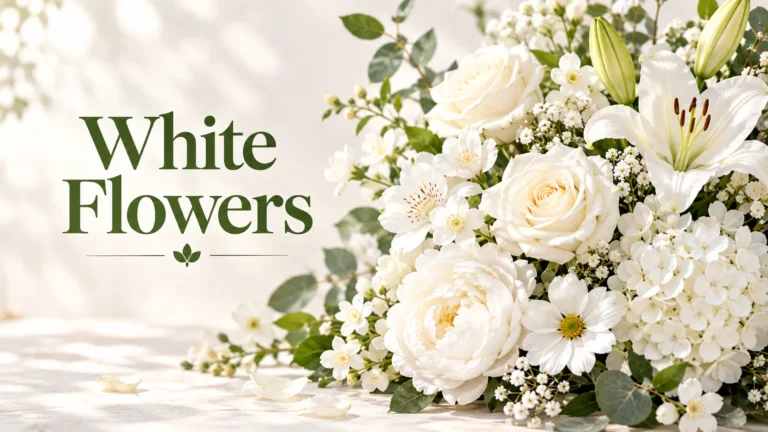
Green with white. This pairing feels crisp, modern, and endlessly elegant. Green and white is the most elegant combination, and if you want more inspiration, explore our complete guide on White Flowers for stunning white blooms to pair with green.
Green with purple. For something more dramatic, green paired with deep purple or near-black blooms creates unexpected contrast. Green flowers pair beautifully with dramatic dark blooms, so take a look at our guide on Black Flowers for the most sophisticated garden combination.
Green with pink. Soft pink alongside green flowers reads fresh and feminine, ideal for spring events and everyday bouquets alike.
Wedding bouquet green ideas. Brides increasingly request all-green or green-dominant bouquets for a look that photographs beautifully and feels distinctly modern.
Dried green flower arrangements. Bells of Ireland, Green Hydrangea, and Euphorbia all dry exceptionally well, letting you preserve the look for months.
Many green flowers, particularly the woodland and understory varieties, also appear naturally on trees and shrubs. Our guide on Magnolia Flowers shows how trees also produce stunning botanical blooms worth noticing.
If unusual blooms fascinate you the way they fascinate me, it’s worth going further. Green flowers are loved by botanical enthusiasts, and our guide on Gothic Flowers covers more dramatic and unusual flower varieties for the truly curious gardener.
Frequently Ask Questions
Yes. Green flowers are entirely real, occurring naturally in plants like Bells of Ireland, hellebores, and certain orchids, alongside cultivated varieties bred specifically for green pigmentation, such as the green rose.
Bells of Ireland, green hellebores, euphorbia, lady’s mantle, and certain viburnum species all produce naturally green blooms without any breeding intervention.
Green flowers symbolize renewal, good luck, health, resilience, and new beginnings, drawing on green’s broader association with growth and nature.
Bells of Ireland, green roses, and green trick dianthus are among the most popular choices, prized for their unusual texture and long vase life.
Many are. Green zinnias and lady’s mantle are especially beginner-friendly, while hellebores and green roses require slightly more attention to soil and light conditions.
Final Thoughts on Green Flowers
Green flowers are not a compromise or a placeholder color. They’re a deliberate, sophisticated choice that rewards anyone willing to look a little closer.
Once you start noticing green flowers, you’ll see them everywhere, quietly stealing the show in bouquets, borders, and window boxes you once walked right past.
Try adding one green flowering plant to your next garden bed or arrangement. It might just become the detail everyone asks about.
Ready to explore more unusual and sophisticated blooms? Visit Plant Style Home for guides on every flower color, from the classic to the completely unexpected.