If you were born in February, you already share your birthday month with the most romantic day on the calendar. Valentine’s Day falls right in the middle of your birth month, and honestly, that timing feels like more than a coincidence. Your birth flowers, the delicate Violet and the cheerful Primrose, carry meanings of love, loyalty, and new beginnings that fit February perfectly.
There is something magical about being born in a month wrapped in candlelight, love letters, and the first whisper of spring. February babies are blessed with not one but two gorgeous birth flowers, each with centuries of folklore, poetry, and romance behind them. Whether you’re planning a birthday bouquet, a Valentine’s Day gift, or just curious about what your birth month flower says about you, this guide covers everything you need to know.
By the end, you’ll understand exactly why these two little blooms have charmed poets, royals, and gardeners for generations, and why they make one of the most thoughtful gifts you can give a February-born loved one.
At Plant Style Home we celebrate every birth month with beautiful flower guides and growing inspiration, and February deserves an especially heartfelt one. Visit Plant Style Home for more birth flower guides and growing tips.
What Are the February Birth Flowers?
February has two official birth flowers: the Violet and the Primrose. This might surprise people used to a single flower per month, but February’s dual bloom makes complete sense once you learn the story behind each one.
The Violet is the primary February birth flower, known for its deep purple petals and gentle, sweet fragrance. It represents faithfulness and quiet devotion, the kind of steady love that doesn’t need grand gestures to prove itself.
The Primrose, meanwhile, brings sunshine into the picture. Its cheerful yellow and pink blossoms symbolize young love and new beginnings, a fitting companion for a month that sits right at the edge of winter and spring.
Why does February get two flowers instead of one? Historically, different cultures and flower calendars assigned slightly different blooms to the month, and over time both Violet and Primrose stuck. Rather than choosing sides, most modern birth flower lists simply honor both.
And really, the timing could not be more perfect. Violets bloom naturally in late winter into early spring across much of Europe, right around Valentine’s Day, which is exactly why this little purple flower became tangled up with love stories long before birth flower charts existed.
Just started exploring birth flowers month by month? Check out our complete guide on January Birth Flowers, covering Carnation and Snowdrop meanings and gift ideas, before diving into February’s romantic pair.
Violet, February’s Primary Birth Flower
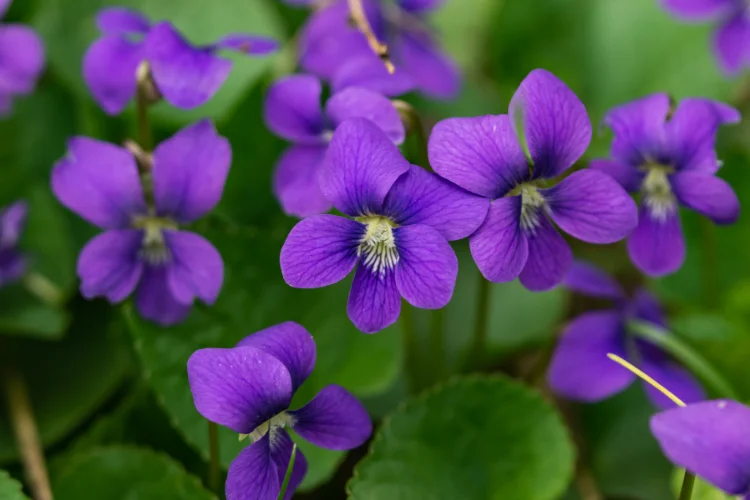
Violet Appearance and Varieties
Violets are small but unmistakable. Their five petals form a soft, slightly heart-shaped bloom, usually in rich shades of purple, though you’ll also find blue, white, and even yellow varieties depending on the species.
Sweet violet (Viola odorata) is the classic fragrant type most associated with perfume and old-fashioned bouquets. Wild violet, on the other hand, grows freely in woodlands and gardens, spreading low to the ground and popping up in shady corners with almost no encouragement.
Both types share that unmistakable velvety texture and gentle sweetness that makes violets so beloved in cottage gardens and vintage-style arrangements.
Violets come in stunning shades beyond the classic purple. Explore our complete A-Z guide on Flowers That Start With V for more beautiful violet varieties and other blooms worth knowing.
Violet Meaning and Symbolism
The Violet’s symbolism reads like a love letter itself: faithfulness, loyalty, modesty, and quiet devotion. Ancient traditions associated violets with true love that lasts, not the fleeting kind, but the steady kind that grows deeper with time.
This makes the Violet a genuinely meaningful choice for February, a month defined by romance. Giving someone violets says something roses can’t quite express on their own: I’m not just infatuated, I’m devoted.
Violet History and Origins
Violets have been tangled up in mythology since ancient Greece, where legend says the flower sprang from tears shed by nymphs. Greek writers referenced violets as symbols of fertility and love, and the flower became closely associated with Aphrodite herself.
Centuries later, violets found an unlikely champion in Napoleon Bonaparte. He reportedly gave Empress Josephine violets on their wedding day, and the flower became so tied to his identity that supporters wore violets as a secret symbol of loyalty during his exile.
Victorian England took things further with the language of flowers, a coded system where every bloom carried a hidden message. In that world, violets meant modesty and faithfulness, and slipping a small violet bouquet into a bouquet or letter was a quiet way of saying “I’ll always be true to you.” That history alone makes violets feel like one of the most romantic flowers in existence.
How to Grow Violets
Violets are surprisingly easy to grow, even for beginners. A few care basics will keep them thriving:
- Plant in rich, well-draining soil with a bit of organic compost mixed in
- Choose a spot with partial shade, especially in warmer climates
- Water regularly to keep soil consistently moist, but never soggy
- Grow in containers if you want to control spreading, since violets can naturalize quickly
- Deadhead spent blooms to encourage a longer flowering season
Once established, violets need very little fuss and will happily return year after year.
Violet as a February Gift
Violets make an unexpectedly romantic Valentine’s gift, especially for someone who finds roses a little predictable. A small hand-tied bouquet of violets feels intimate and old-fashioned in the best way.
Consider these violet gift ideas for a February birthday or Valentine’s Day:
- A candied violet dessert topping for a homemade cake
- Violet-scented perfume or candles
- A pressed violet bookmark or framed keepsake
- A potted violet plant that keeps blooming long after the holiday
- A violet and rose combination bouquet for double romantic meaning
Primrose, February’s Secondary Birth Flower
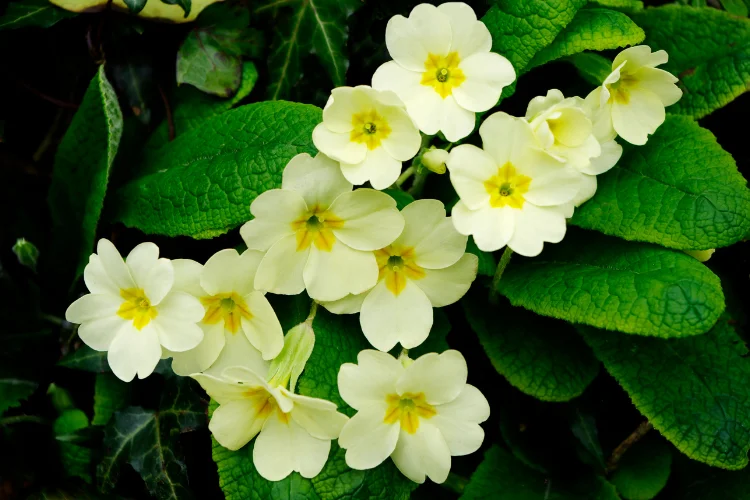
Primrose Appearance and Colors
Primroses are the optimists of the flower world. Their blossoms come in cheerful shades of yellow, pink, purple, and white, often with a soft ruffled texture and a bright yellow center that seems to glow.
Low-growing and clustered, primroses tend to bloom in generous groups, creating a carpet of color that feels like a small celebration wherever it’s planted.
Primrose Meaning and Symbolism
Primrose carries the sweetest meanings among all February symbols: young love and new beginnings. In Victorian flower language, giving someone a primrose was a subtle way of saying “I can’t live without you,” a beautifully direct declaration wrapped in a delicate little bloom.
That meaning pairs wonderfully with February’s romantic energy, but it also works for new relationships, spring birthdays, or anyone starting a fresh chapter in life.
Primrose History and Folklore
Primroses have deep roots in English cottage garden tradition, where they were among the first flowers to bloom after winter, often pushing through frost to announce that spring was on its way.
British statesman Benjamin Disraeli famously adored primroses, and after his death, admirers established Primrose Day in his honor, still marked each April with the flower he loved most. That real-life devotion only adds to the primrose’s reputation as a flower tied to genuine affection.
Fun Victorian trivia: primroses were often planted near cottage doors, believed to bring good fortune and protect the household, a lovely thought for anyone gifting one today.
How to Grow Primrose
Primroses prefer cooler conditions and a bit of shelter from harsh sun. Keep these tips in mind:
- Choose a partly shaded spot, especially away from intense afternoon sun
- Plant in cool, moist, well-drained soil
- Water frequently, since primroses dislike drying out completely
- Bring potted primroses indoors during frost if grown outside their comfort zone
- Refresh soil and repot yearly for the healthiest blooms
Indoor primroses make lovely windowsill plants, while outdoor beds reward gardeners with early color when almost nothing else is blooming.
Primrose as a February Gift
A potted primrose plant is one of the most thoughtful Valentine’s alternatives to a traditional rose bouquet. It lasts far longer, keeps blooming for weeks, and carries a meaning that feels personal rather than generic.
Meaningful primrose gift ideas include:
- A small potted primrose in a decorative ceramic pot
- A primrose seed packet paired with a handwritten note about new beginnings
- Mixed primrose colors representing different aspects of your relationship
- A primrose garden starter kit for a gardening-loving partner
- Fresh cut primroses added to a birthday bouquet
February Birth Flowers by Zodiac Sign
February spans two zodiac signs, and interestingly, each pairs beautifully with one of the birth flowers.
Aquarius (February 1 to 18) aligns naturally with the Violet. Aquarians are known for independence and loyalty to the people they care about most, echoing the violet’s meaning of steady, faithful devotion.
Pisces (February 19 to 29) leans toward the Primrose. Pisces individuals are dreamy, romantic, and open to new experiences, which mirrors the primrose’s symbolism of young love and fresh beginnings.
If you’re choosing a birth flower gift based on zodiac personality, Aquarius friends may appreciate the quiet elegance of violets, while Pisces friends will likely love the soft, hopeful energy of primroses.
February Birth Flowers and Valentine’s Day
Few birth flowers align with a holiday as perfectly as February’s do with Valentine’s Day. The Violet, with its long history of representing faithful love, feels almost tailor-made for the occasion.
Comparing violet and rose reveals why violets deserve more attention. Roses shout passion, but violets whisper devotion. Roses are bold and expected, while violets feel personal, a little unexpected, and deeply sentimental once someone knows the meaning behind them.
Primrose, meanwhile, offers a wonderful Valentine’s alternative for new relationships or for anyone who wants to say “this is just the beginning” rather than declaring undying devotion right away.
Meaningful February flower gift combinations for Valentine’s Day include a violet and primrose mixed bouquet, a potted primrose paired with a handwritten letter, or candied violets added to a homemade dessert for someone with a sweet tooth.
Looking for more romantic flower inspiration beyond February’s blooms? Our guide on the Ranunculus Flower covers one of the most beautiful and romantic blooms available, perfect for expanding any Valentine’s arrangement.
February Birth Flower Colors and Their Meanings
Color adds another layer of meaning to these February blooms. Here’s a quick guide:
- Purple violet: faithfulness and lasting devotion
- Blue violet: love, loyalty, and trust
- White violet: purity and innocence
- Yellow primrose: friendship and warmth
- Pink primrose: young, blossoming love
- Red primrose: passionate, deep affection
Choosing a color intentionally can make a February birth flower gift feel even more personal, especially when the meaning matches exactly what you want to say.
Best February Birth Flower Gift Ideas
Whether it’s a birthday, Valentine’s Day, or simply a thoughtful surprise, February birth flowers offer plenty of gifting inspiration.
- A hand-tied violet bouquet wrapped in vintage-style paper
- A potted primrose arrangement for a gift that keeps growing
- Birth flower jewelry featuring violet or primrose charms
- A DIY pressed flower frame using both violets and primroses
- A combined Valentine’s bouquet mixing violets, primroses, and a few roses for extra romance
Small, meaningful gifts like these tend to be remembered far longer than anything mass-produced, especially when the recipient understands the symbolism behind them.
Growing February Birth Flowers in Your Garden
If you’d rather give the gift of a garden than a bouquet, both violets and primroses are wonderful additions to a late winter or early spring landscape.
Violets work beautifully as a ground cover, spreading gently along borders or beneath taller shrubs where they won’t compete for sunlight. Primroses shine as border plants, lining garden paths with early color when most other flowers are still dormant.
For container gardening, combine violets and primroses in a single pot for a charming display that transitions from winter into spring. As the season shifts, these two flowers hand the color baton to daffodils and tulips, making them the perfect bridge between cold months and full spring bloom.
Frequently Asked Questions
February has two official birth flowers, the Violet and the Primrose. Violet is typically considered the primary flower, while primrose serves as the secondary one.
Yes, violets are deeply romantic. They symbolize faithfulness and loyal love, meanings rooted in ancient mythology and Victorian flower language, making them a beautifully sentimental Valentine’s gift.
Primrose represents young love and new beginnings. In Victorian tradition, gifting a primrose was a way of saying “I can’t live without you,” making it a sweet and heartfelt choice.
Absolutely. Both violets and primroses fit Valentine’s Day perfectly, since their meanings center on love, devotion, and new romance. They also offer a more unique alternative to traditional roses.
Both flowers prefer cooler temperatures and partial shade. Keep soil consistently moist, avoid intense direct sun, and consider container growing if you want more control over their spread.
A Beautiful Birth Month, Beautifully Represented
February babies really do have something special. Between the devotion of the Violet and the hopeful sweetness of the Primrose, this birth month is represented by two flowers that capture exactly what February is about: enduring love and fresh beginnings, side by side.
So the next time someone asks what to get you for your birthday, or when Valentine’s Day rolls around again, you’ll know exactly which blooms tell your story best. Few birth flowers pair this naturally with their birth month’s biggest holiday, and that little bit of magic is worth celebrating.
Whatever your February birth flower gift plans look like this year, we hope this guide helped you fall a little more in love with the Violet and Primrose, the two blooms that make February babies truly one of a kind.