If you’ve ever tried to name a flower for every letter of the alphabet, you already know the letter Q is where things get interesting. Flowers that start with Q are genuinely rare, and that’s exactly what makes them so much fun to hunt down.
There’s something thrilling about stumbling on a plant name that doesn’t roll off the tongue the way “rose” or “tulip” does. When I first went hunting for Q flowers, I expected to find maybe two or three options. Instead, I found a small, quirky collection of blooms with fascinating histories, unusual shapes, and a few genuine garden showstoppers.
In this guide, we’re covering every notable flower name starting with Q that’s worth knowing, whether you’re a gardener looking for something unusual to plant, a trivia lover, or just someone who loves flowers and wants to fill in the gaps of the alphabet. At Plant Style Home we explore every flower from A to Z, even the rarest and most unique ones, so let’s get into it.
Are There Really Flowers That Start With Q?
Yes, they’re real, and they’re wonderfully strange. Q flowers are rare simply because the letter Q is uncommon in botanical Latin and in everyday English plant names, so nature didn’t hand us a long list to work with.
That rarity is part of the charm. Flowers beginning with Q tend to have distinctive personalities. Some, like Queen Anne’s Lace, are so common in fields and roadsides that most people don’t even realize their name starts with Q. Others, like the Queen of the Night Cactus, are so rare and dramatic that seeing one bloom feels like witnessing a small miracle.
Expect a mix here: a few familiar faces you didn’t know belonged on this list, a couple of true garden rarities, and one or two flowers you’ll want to track down seeds for immediately. If you’re following our alphabet journey, our guide on Flowers That Start With P is a great one to explore before you dive into the Qs.
Most Beautiful Flowers That Start With Q (Full List)
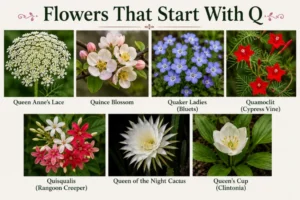
Here’s a quick snapshot before we dive into the details. This Q flowers list gives you the essentials at a glance.
| Flower Name | Color | Season | Difficulty Level |
|---|---|---|---|
| Queen Anne’s Lace | White | Summer | Easy |
| Quince Blossom | Pink, White | Early Spring | Moderate |
| Quaker Ladies (Bluets) | Pale Blue, White | Spring | Easy |
| Quamoclit (Cypress Vine) | Red, Pink, White | Summer to Fall | Easy |
| Quisqualis (Rangoon Creeper) | White to Red (color-changing) | Summer | Moderate to Hard |
| Queen of the Night Cactus | White, Cream | Summer (blooms one night) | Hard |
| Queen’s Cup (Clintonia) | White | Late Spring | Moderate |
Flowers That Start With Q: Detailed Descriptions
Now let’s get to know each of these flower names starting with Q a little better. I’ve included care tips and a fun fact for each, because rare flowers deserve a closer look.
Queen Anne’s Lace
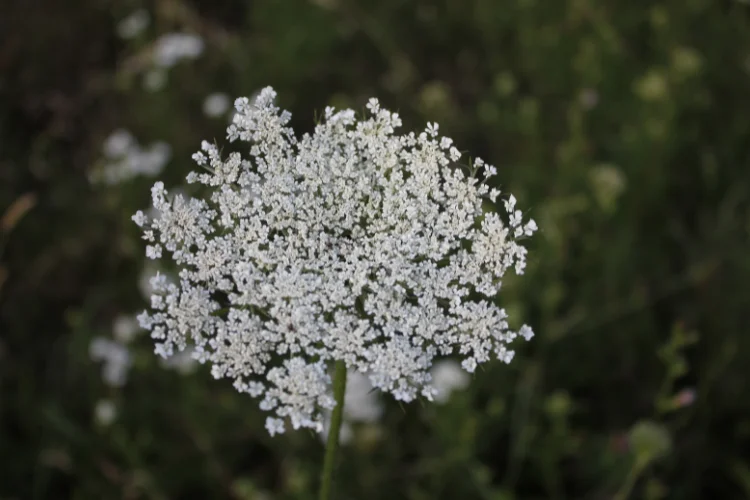
Queen Anne’s Lace is one of those flowers you’ve probably walked past a hundred times without knowing its name. Its flat, lacy white flower heads look almost like tiny doilies floating on top of tall, wiry stems.
Legend has it the flower is named after Queen Anne of England, who supposedly pricked her finger while making lace, leaving a single drop of blood at the center of the pattern. That’s why you’ll often spot one tiny dark purple floret right in the middle of the white cluster.
It grows wild across meadows, roadsides, and untamed corners of the garden, thriving with almost zero effort on your part.
Care tips:
- Plant in full sun for the fullest blooms
- Well drained soil is essential, it does not like soggy roots
- Let it self-seed if you want it to return year after year
- Avoid overwatering, this plant prefers dry to average conditions
Fun fact: Queen Anne’s Lace is a wild relative of the carrot, and the root even smells faintly carrot-like when crushed.
Quince Blossom
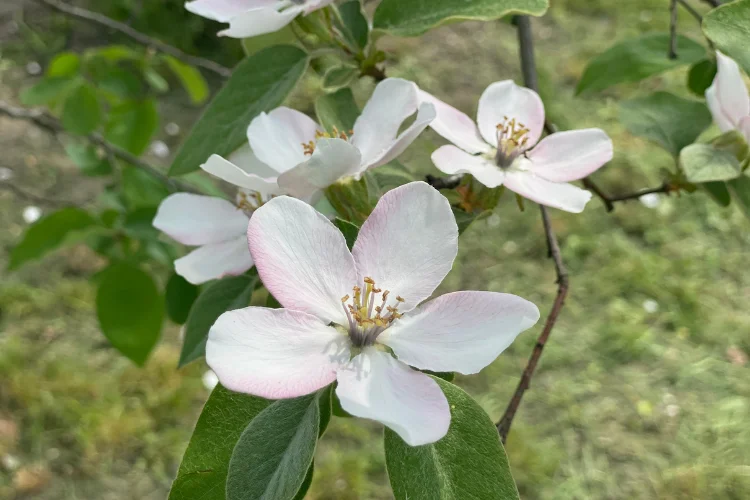
Quince Blossom arrives early, often before the leaves have even filled in, covering bare branches in delicate pink and white flowers. It’s one of the first real signs that spring has arrived.
The blossoms belong to the flowering quince shrub, a plant that has been cultivated in East Asia for centuries, prized as much for its ornamental branches as for its small, fragrant fruit later in the season.
What I love most about Quince Blossom is how it looks almost like cherry blossom’s tougher, more rustic cousin, with a slightly wilder, more sculptural branch structure.
Care tips:
- Prune right after flowering to shape the shrub without losing next year’s buds
- Full sun brings out the deepest bloom color
- Established plants tolerate drought well
- Cut branches in late winter to force blooms indoors
Fun fact: Flowering quince branches are a favorite among floral designers for ikebana arrangements because of their sculptural, angular shape.
Quaker Ladies (Bluets)
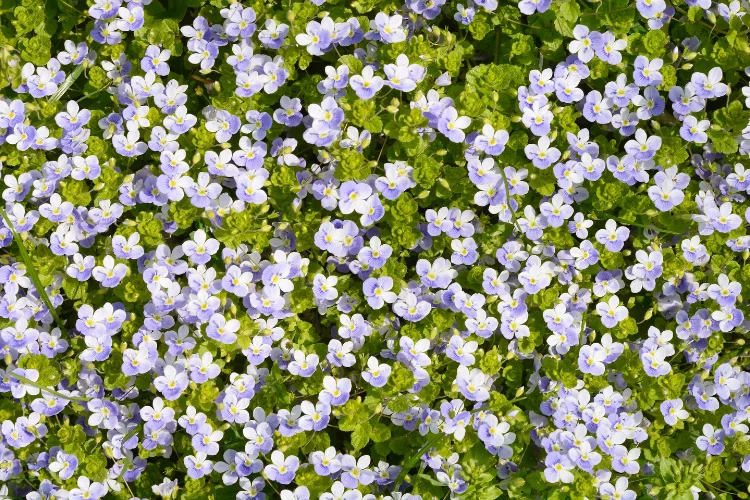
Quaker Ladies, also known as Bluets, are tiny, star shaped flowers in soft blue or white that carpet lawns and woodland edges in early spring. Each individual bloom is barely half an inch wide, but they tend to appear in such large numbers that they create a soft blue haze across the ground.
The name comes from the flower’s understated, modest appearance, said to resemble the simple dress of Quaker women.
They’re a favorite among wildflower gardeners who want a naturalized, low maintenance groundcover.
Care tips:
- Choose a spot with partial shade and moist, slightly acidic soil
- Avoid heavy fertilizing, Bluets prefer lean soil
- Let them spread naturally rather than dividing often
- Mow or trim lightly after the bloom fades to encourage denser growth next year
Fun fact: Bluets are so small and low growing that entire colonies can bloom and fade within a lawn without ever needing to be mowed around.
Quamoclit (Cypress Vine)
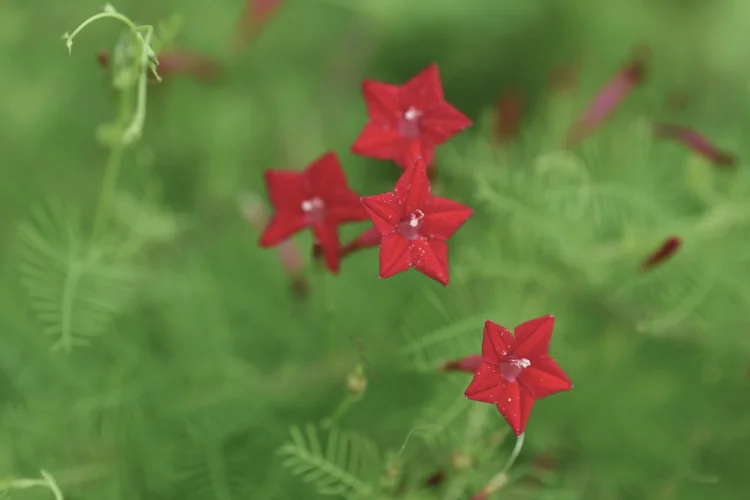
Quamoclit, better known as Cypress Vine, is a fast climbing annual with feathery, fern-like leaves and small star shaped flowers in fiery red, soft pink, or crisp white. It’s the kind of plant that can cover a trellis in a single season.
Hummingbirds adore it, and if you’ve ever wanted a plant that draws them reliably to your yard, this is a strong pick.
Its delicate foliage makes it feel almost lacy against a fence or arbor, softening whatever structure it climbs.
Care tips:
- Give it a trellis, fence, or string support, it climbs eagerly
- Full sun encourages the most flowers
- Soak seeds overnight before planting to speed up germination
- Water regularly during its first few weeks to establish strong roots
Fun fact: Cypress Vine flowers close up by midday in hot weather, so morning is the best time to see them fully open.
Quisqualis (Rangoon Creeper)
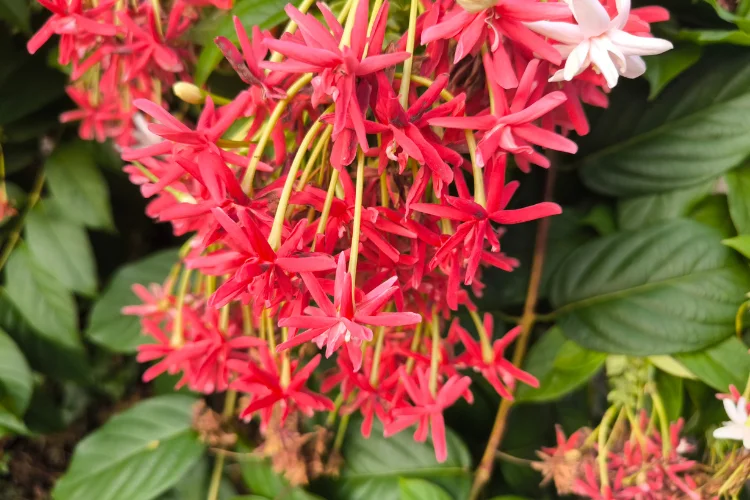
Quisqualis, commonly called Rangoon Creeper, is a showstopper of a vine that produces clusters of tubular flowers which change color as they age, starting white, shifting to pink, and finally deepening to red, all on the same plant at once.
Native to tropical Asia, it fills the evening air with a sweet, almost intoxicating fragrance that grows stronger after dark, rewarding patient gardeners once it’s established.
Care tips:
- Needs warm, humid conditions, best suited to tropical or subtropical climates
- Provide a strong support structure, it grows vigorously and can become heavy
- Prune after flowering to keep growth manageable
- Water deeply but allow the top layer of soil to dry between waterings
Fun fact: The color-changing blooms on a single Rangoon Creeper vine can make it look like it’s flowering in three different shades all at once.
If rare and unusual flowers fascinate you, explore our guide on Gothic Flowers for more dark and mysterious bloom inspiration.
Queen of the Night Cactus
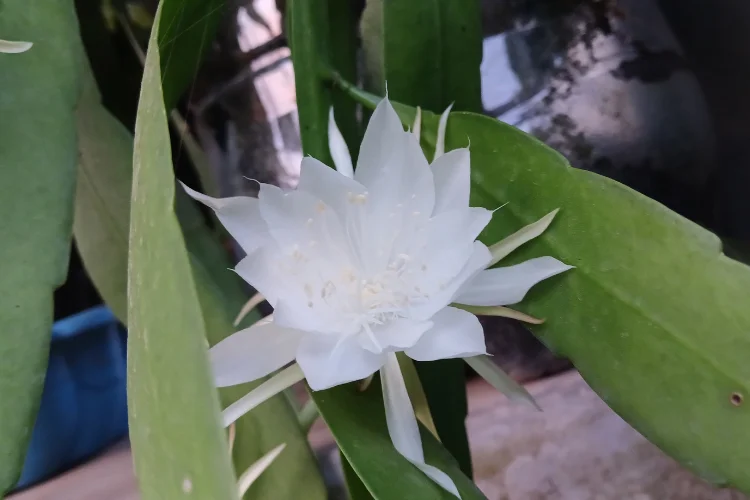
Queen of the Night Cactus is the most dramatic entry on this Q flowers list, and for good reason. Its enormous, fragrant white blooms open only after dark and wilt by morning, lasting just a single night.
Gardeners who grow this cactus often host small gatherings just to watch the bloom unfold in real time, since the flower can open in a matter of hours right before your eyes, a stark contrast to the plant’s unassuming, sprawling look the rest of the year.
Care tips:
- Keep in bright, indirect light most of the year
- Water sparingly, this is a cactus and dislikes wet roots
- Watch closely once flower buds appear, blooming can happen quickly
- Bring indoors before frost if grown in a container
Fun fact: A single Queen of the Night bloom can open and close within just twelve hours, making the flower one of the rarest sights in the plant world.
If you love rare night blooming flowers like this one, our detailed guide on Night Blooming Jasmine is a fascinating read for you.
Queen’s Cup (Clintonia)
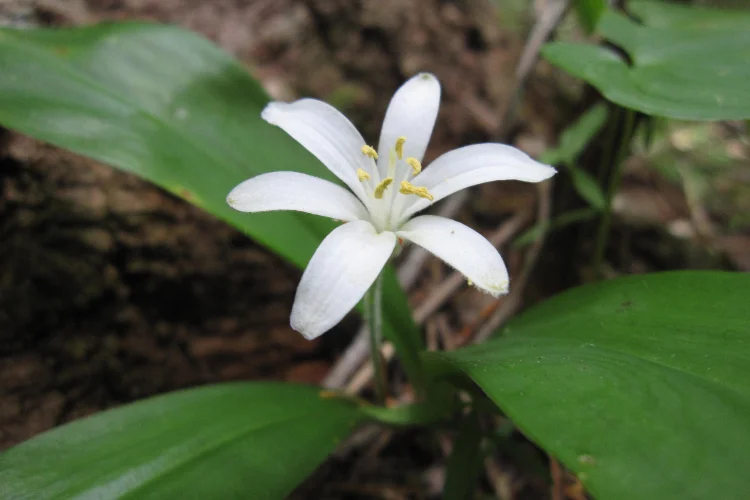
Queen’s Cup, also called Clintonia, is a delicate woodland wildflower with a single, nodding white bloom that rises above a small rosette of glossy green leaves. Later in the season, it produces a striking blue berry that’s just as eye-catching as the flower itself.
You’ll typically find it growing wild in cool, shaded forests, often alongside ferns and moss.
It’s a quiet, understated beauty, the kind of flower you notice on a hike and remember long after.
Care tips:
- Plant in deep shade with rich, moist, well drained soil
- Mimic forest floor conditions with a layer of leaf mulch
- Avoid disturbing the roots once established
- Be patient, this woodland flower prefers to spread slowly and naturally
Fun fact: Queen’s Cup is named after early American botanist DeWitt Clinton, and its berries, while beautiful, are not edible.
Flowers That Start With Q For Your Garden
Not every Q flower suits every garden, so here’s how to narrow it down.
If you’re just getting started, Queen Anne’s Lace and Quaker Ladies are the most forgiving choices, since both thrive with minimal fuss.
Care tip: Beginners should stick to full sun, well drained soil, and letting these two self-seed rather than fussing over exact spacing.
Containers work beautifully for compact growers like Quamoclit, since its climbing habit fits neatly around a small trellis on a patio or balcony.
Care tip: Use a pot at least 12 inches deep with a support structure built in from the start, so roots and vines grow together.
For cutting gardens, Quince Blossom branches are unmatched, bringing an early splash of color indoors weeks before most other spring flowers arrive.
Care tip: Cut branches at a slant while buds are still tight, then place them in room temperature water to force an indoor bloom.
Flowers That Start With Q: Meanings & Symbolism
Each of these blooms carries its own quiet symbolism.
Queen Anne’s Lace often represents sanctuary and safety, tied to old folklore about protection.
Quince Blossom symbolizes love and fertility in several East Asian traditions, often given to celebrate new beginnings.
Quaker Ladies represent contentment and modesty, fitting given their humble, understated appearance.
Quamoclit is associated with generosity and warmth, largely thanks to its cheerful color and its popularity with hummingbirds.
Quisqualis carries connotations of transformation, a fitting meaning for a flower that literally changes color as it matures.
Queen of the Night Cactus symbolizes fleeting beauty and rare opportunity, since its bloom lasts just one night.
Because rare flowers starting with Q are so uncommon, gifting one instantly feels more thoughtful and personal than reaching for a dozen roses. It shows you went looking for something special.
How to Grow Flowers That Start With Q
Growing rare flowers doesn’t have to be intimidating. A few general principles apply across nearly all the flowers on this list.
- Match sun exposure to each plant’s native habitat, woodland flowers like Queen’s Cup want shade, while Queen Anne’s Lace wants full sun
- Prioritize drainage, soggy soil is the most common killer of these plants
- Start slow with one or two species before expanding your collection
- Label your plants, since these names aren’t ones you’ll remember by instinct right away
Common mistakes to avoid:
- Overwatering cacti and drought tolerant varieties like Queen Anne’s Lace
- Planting tropical vines like Quisqualis outside of warm climates without protection
- Skipping support structures for climbing varieties like Quamoclit and Quisqualis
- Disturbing slow growing woodland plants like Clintonia too often
For sourcing seeds, look to specialty wildflower nurseries, native plant societies, and online seed exchanges focused on unusual or heirloom varieties, since big box garden centers rarely carry them.
Frequently Ask Questions
Yes, most Q flowers aren’t stocked at standard garden centers. Specialty and native plant nurseries, along with online seed shops, are your best bet.
Queen Anne’s Lace is by far the most widespread, growing wild in meadows and roadsides across much of North America and Europe.
Yes, it grows well as a houseplant in bright indirect light, and many owners bring it outdoors briefly during summer to encourage blooming.
Yes, Quisqualis, or Rangoon Creeper, is known for its blooms shifting from white to pink to red as they age on the vine.
Some are Queen Anne’s Lace and Quaker Ladies are both low maintenance and forgiving, making them great starting points before trying trickier varieties like Quisqualis.
Final Thoughts
Flowers that start with Q may be rare, but that’s exactly what makes them so rewarding to discover, grow, and share. From the lacy simplicity of Queen Anne’s Lace to the one-night spectacle of the Queen of the Night Cactus, this small collection of blooms proves that rarity and beauty often go hand in hand.
Q has turned out to be one of the most surprising letters in the alphabet, proving that even the rarest corners of the garden world have something special worth discovering.
Whatever letter you tackle next, we hope this look at flowers that start with Q reminded you just how much variety and wonder is still out there waiting to be found.