There’s something magical about wandering through a garden and stumbling on a bloom you can’t quite name. That happened to me years ago at a botanical garden, standing in front of a hedge of hydrangeas so blue they looked painted on. I had no idea, at the time, just how many gorgeous flowers that start with H existed, and how many of them I’d end up growing myself.
From the tropical drama of hibiscus to the sweet, old-fashioned charm of hollyhocks climbing a cottage wall, H flowers cover almost every mood a garden could ask for. Some are fragrant. Some are fussy. Others practically grow themselves.
In this guide, I’m sharing everything I’ve learned about flowers beginning with H, what they look like, how to care for them, and which ones deserve a spot in your own backyard. At Plant Style Home, we love helping you discover the most beautiful flowers and plants for every garden, and this one’s been a favorite of mine to write.
This is part 8 of our A-Z flower series: catch up with our guide on Flowers That Start With G first if you missed it.
Most Beautiful Flowers That Start With H (Full List)
Before we get into the details, here’s a quick snapshot of the H flowers list we’re covering today. I find tables like this handy when you’re trying to decide what to plant this season.
| Flower Name | Color | Season | Difficulty Level |
|---|---|---|---|
| Hibiscus | Red, pink, yellow, white | Summer–Fall | Easy |
| Hydrangea | Blue, pink, white, purple | Summer | Moderate |
| Hyacinth | Purple, blue, pink, white | Spring | Easy |
| Heliotrope | Purple, lavender | Summer | Moderate |
| Hollyhock | Pink, red, yellow, white | Summer | Easy |
| Honeysuckle | Yellow, white, pink | Summer | Easy |
| Heather | Purple, pink, white | Late Summer–Fall | Easy |
| Helenium | Orange, red, yellow | Late Summer–Fall | Easy |
| Hellebore | White, pink, green, purple | Winter–Spring | Moderate |
| Hawthorn Flower | White, pink | Spring | Easy |
This list barely scratches the surface of what nature offers, but these ten are the types of H flowers that show up most often in home gardens, and for good reason. Let’s get into each one.
Flowers That Start With H: Detailed Descriptions
Each of these blooms has its own personality. Some want to be fussed over, others just want to be left alone in the sun. Here’s what I’ve learned growing (and occasionally killing) most of them myself.
Hibiscus
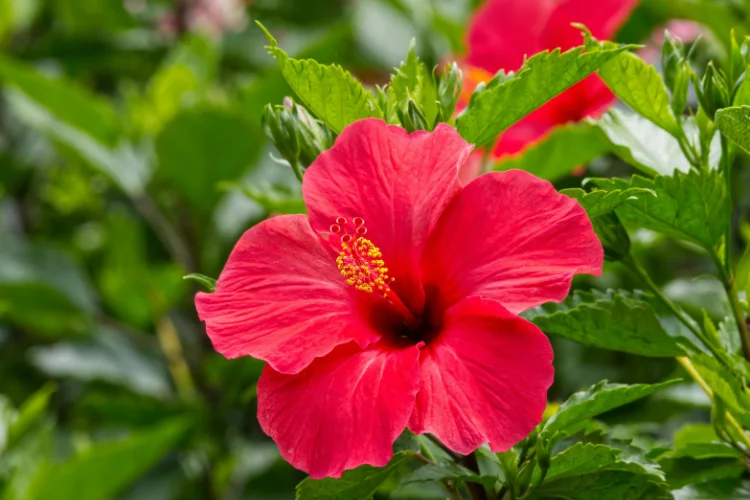
Hibiscus is the flower that makes people stop walking. Those huge, trumpet-shaped blooms, often five petals wide open like a hand, come in fiery reds, sunny yellows, soft pinks, and crisp whites, sometimes with a deep contrasting throat in the center.
What I love most is how tropical it feels, even in a pot on a city balcony. Each flower usually lasts only a day or two, but a healthy plant keeps producing new ones all summer long.
Care tips:
- Give it full sun for at least 6 hours a day
- Water deeply but let the topsoil dry slightly between waterings
- Feed with a potassium-rich fertilizer to encourage more blooms
- Bring potted hibiscus indoors before the first frost
Hydrangea
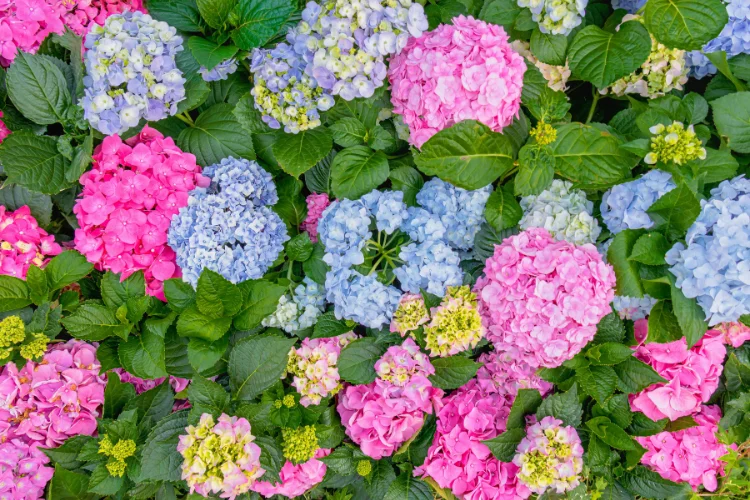
Hydrangeas are the showstoppers of early summer. Their huge, rounded flower clusters, made up of dozens of tiny blossoms, come in blue, pink, white, and purple, and here’s the fun part: the color can actually shift based on your soil’s pH.
I remember being genuinely shocked the first time I learned acidic soil turns them blue while alkaline soil pushes them toward pink. It feels like a little bit of garden magic.
Care tips:
- Plant in partial shade, especially in hot climates
- Keep soil consistently moist but never waterlogged
- Adjust soil pH with lime (pink) or aluminum sulfate (blue) if you want to change color
- Prune right after flowering, not in fall or spring
Hyacinth
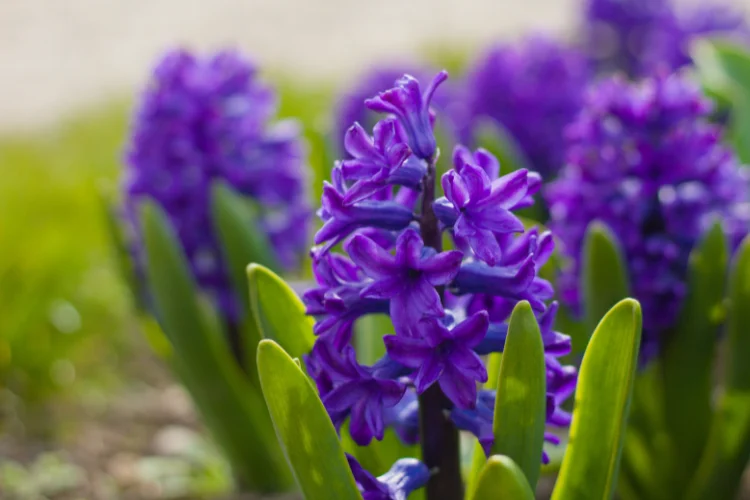
Hyacinths are one of the first real signs that spring has arrived. Their tightly packed flower spikes burst with dozens of small, star-shaped blooms in purple, blue, pink, and white, and the fragrance is something else entirely. It’s sweet, heavy, and fills an entire room from a single stem in a vase.
I always plant a few bulbs near my front door just so I get hit with that scent every time I walk outside.
Care tips:
- Plant bulbs in fall, about 4 inches deep
- Choose a spot with full sun to light shade
- Water moderately; avoid soggy soil that causes bulb rot
- Let foliage die back naturally after blooming to recharge the bulb
Heliotrope
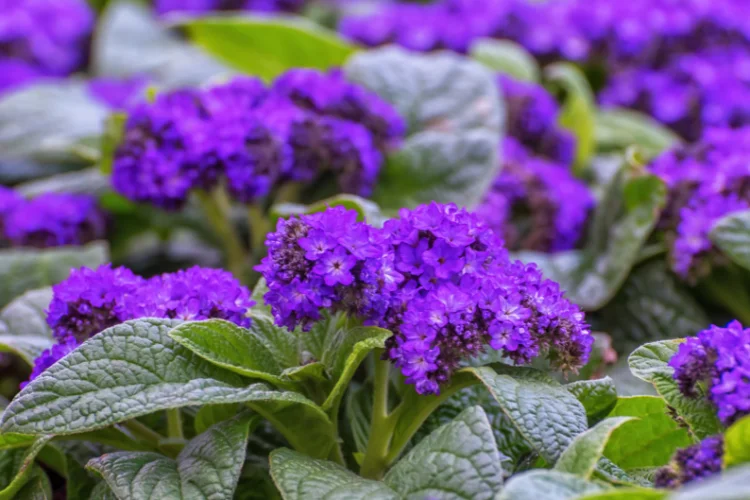
Heliotrope doesn’t get nearly enough credit. Its small clusters of purple or lavender flowers are pretty on their own, but the real draw is the scent, often compared to cherry pie or vanilla, which is exactly as lovely as it sounds.
It’s a compact, bushy plant that works beautifully tucked into a flower bed or container near a seating area, where you can actually catch that fragrance on warm evenings.
Care tips:
- Plant in full sun for the strongest fragrance and bloom
- Keep soil evenly moist, especially during hot spells
- Pinch back growth tips to encourage a fuller, bushier shape
- Bring indoors as a houseplant before frost, since it’s frost-sensitive
Hollyhock
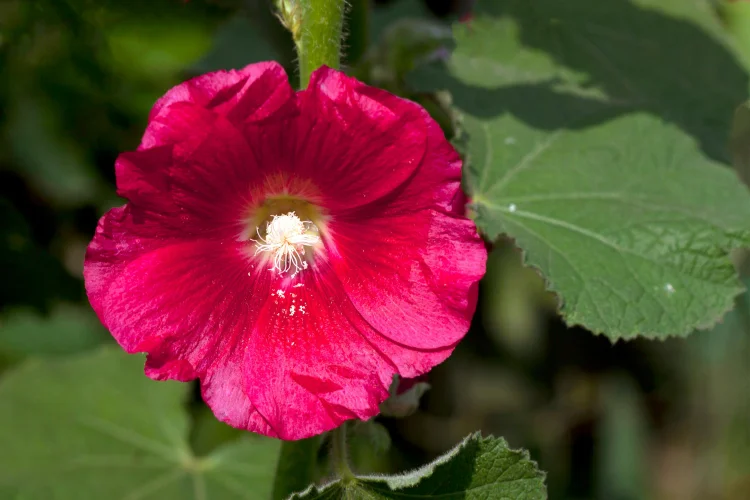
Hollyhocks are pure cottage garden nostalgia. These tall, towering spires, sometimes reaching six feet or more, are lined with large, saucer-shaped flowers in pink, red, yellow, and white, climbing the stem from bottom to top.
I think of them as the flower equivalent of an old farmhouse fence: a little wild, a little romantic, completely charming. Hollyhocks pair beautifully with other classic blooms: explore our guide on Magnolia Flowers for more timeless garden inspiration.
Care tips:
- Plant against a fence or wall for support against wind
- Give them full sun and well-draining soil
- Watch for rust disease and remove affected leaves promptly
- Stake taller varieties to keep stems from snapping
Honeysuckle
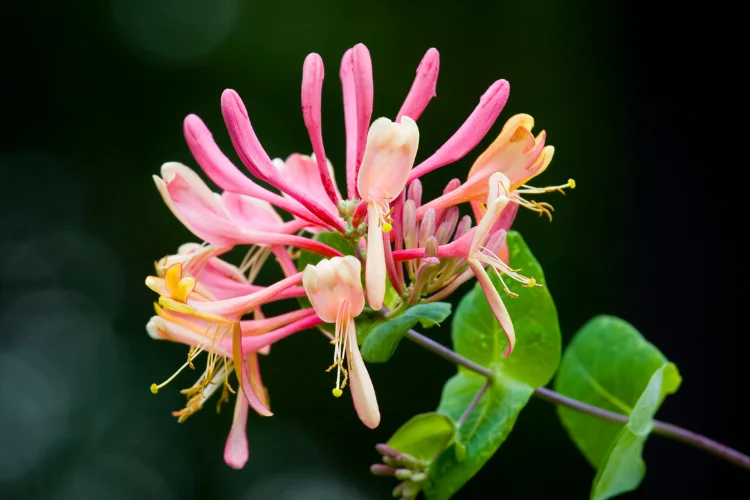
Honeysuckle is a vine that rewards patience with one of the best fragrances in the garden. Its tubular flowers, usually yellow, white, or soft pink, appear in clusters and release a sweet, nectar-rich scent that draws hummingbirds and butterflies from everywhere nearby.
There’s a reason kids have been pulling these flowers apart for generations to taste the sweet nectar inside. It’s that good.
Care tips:
- Provide a trellis, fence, or arbor for it to climb
- Plant in full sun to partial shade
- Prune after flowering to control its enthusiastic growth
- Water regularly during the first growing season to establish roots
If you love fragrant flowers like honeysuckle, our detailed guide on Night Blooming Jasmine is a must read for your garden.
Heather
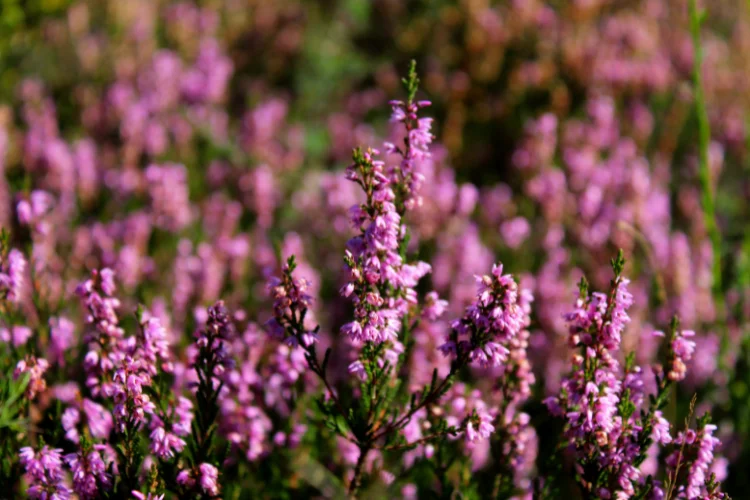
Heather is the low, hardy shrub that quietly carpets hillsides in purple, pink, and white during late summer and fall, right when many other flowers are winding down. Its tiny, bell-shaped blooms grow densely along wiry stems, creating a soft, textured groundcover.
I love using heather as a border plant because it asks for so little and gives back color exactly when the rest of the garden starts to fade.
Care tips:
- Plant in well-draining, slightly acidic soil
- Choose a sunny spot for the best bloom color
- Avoid overwatering; heather prefers it on the drier side
- Trim lightly after flowering to keep growth compact
Helenium
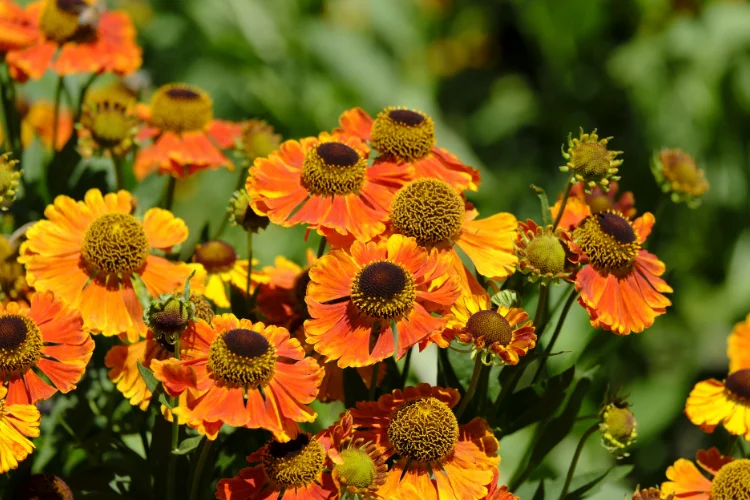
Helenium, sometimes called sneezeweed (don’t worry, it doesn’t actually cause sneezing), brings warm, daisy-like flowers in orange, red, and yellow right when late summer gardens need a boost. The petals fan out around a raised, button-like center, giving each bloom a cheerful, slightly wild look.
These are the flowers I plant when I want a garden to feel alive well into October.
Care tips:
- Plant in full sun for sturdy stems and bold color
- Water regularly, especially during dry spells
- Divide clumps every few years to keep plants vigorous
- Deadhead spent blooms to encourage continuous flowering
Hellebore
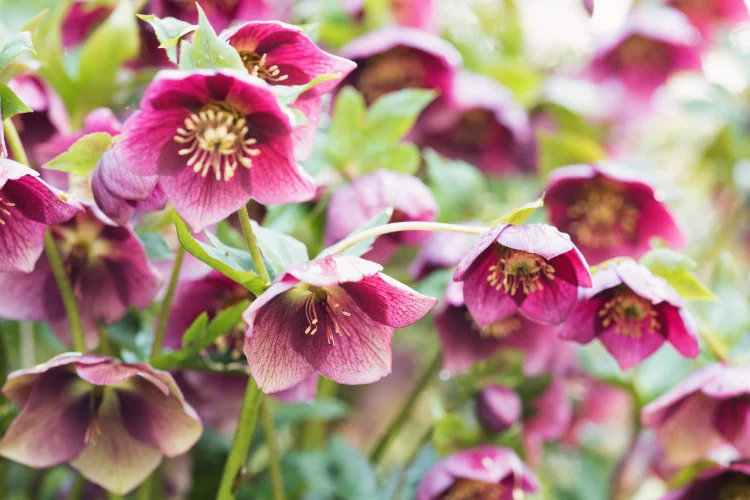
Hellebore, often called the Lenten Rose, is one of the few flowers brave enough to bloom in late winter, sometimes even pushing through snow. Its nodding, cup-shaped flowers come in white, pink, green, and deep purple, with a quiet, understated elegance.
I genuinely look forward to hellebores every year because they’re proof that the garden hasn’t given up, even in the coldest months.
Care tips:
- Plant in partial to full shade, ideally under trees
- Use rich, well-draining soil with added compost
- Avoid disturbing roots once established; hellebores dislike being moved
- Remove old foliage in late winter to showcase new blooms
Hawthorn Flower
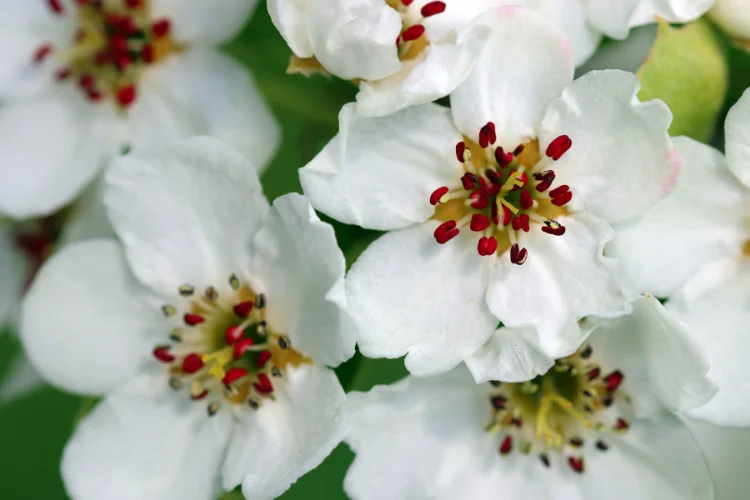
Hawthorn flowers cover this small tree in clouds of white or soft pink blossoms each spring, right before the leaves fully fill in. Each flower is small and delicate, but in clusters, they create a stunning, almost bridal display across the branches.
It’s one of those trees that quietly does a lot of work for wildlife too, feeding early-season bees and later producing berries for birds.
Care tips:
- Plant in full sun for the heaviest bloom
- Prune in late winter while the tree is dormant
- Water young trees regularly until established
- Allow good air circulation to prevent fungal issues
Flowers That Start With H For Your Garden
Once you’ve met the individual flowers, the next question is always: which ones actually fit my garden, my space, my life?
Best H flowers for beginners
- Hibiscus, forgiving and fast to bloom
- Hollyhock, thrives with minimal fuss once established
- Heather, practically maintenance-free once planted
Top H flowers for indoor growing
- Hyacinth bulbs forced in water or pots
- Heliotrope in a sunny window container
- Hibiscus as a patio or indoor-outdoor potted plant
Best H flowers for gifting
- Hydrangea, for its full, romantic blooms
- Hyacinth, for its incredible fragrance
- Hellebore, for a thoughtful winter gift that keeps blooming
Whatever your space looks like, there’s a flower on this list that will work for it. That’s really the beauty of H flowers for garden planning, there’s so much variety packed into one letter.
Flowers That Start With H: Meanings & Symbolism
Flowers have always carried meaning, and H flowers are no exception. Here’s a quick rundown:
- Hibiscus: delicate beauty and fleeting perfection
- Hydrangea: heartfelt gratitude, and in some traditions, boastfulness
- Hyacinth: sincerity, playfulness, and sometimes forgiveness
- Heliotrope: devotion and eternal love
- Hollyhock: ambition and fruitfulness
- Honeysuckle: devoted affection and the sweetness of bonds
- Heather: admiration and protection
- Helenium: tears, though modern gardeners see it as resilience
- Hellebore: serenity, and historically, protection from negativity
- Hawthorn: hope and happiness, especially in spring
It’s a nice little detail to keep in mind if you’re choosing flowers for a bouquet, a wedding, or just a meaningful corner of your garden.
How to Grow Flowers That Start With H
After growing most of these myself, a few lessons came up again and again, no matter which flower names starting with H I was working with.
General care tips:
- Match each flower to its preferred light, sun-lovers like hibiscus and hollyhock, shade-tolerant ones like hellebore
- Improve drainage with compost; soggy roots are the most common killer
- Feed during active growth, but ease off in dormant seasons
- Mulch around roots to regulate moisture and temperature
Common mistakes to avoid:
- Overwatering “tough” plants like heather, which actually prefer drier soil
- Planting sun-loving hibiscus or hollyhock in shady corners
- Ignoring soil pH when growing color-changing hydrangeas
- Skipping deadheading, which slows down repeat blooming
Get these basics right, and most beautiful flowers starting with H will reward you generously without much fuss.
Frequently Ask Questions
Hibiscus and hydrangea are probably the two most widely grown, thanks to their bold blooms and relatively easy care.
Yes, hellebore is one of the best shade-loving options, blooming happily under trees where many other flowers struggle.
Hyacinth and honeysuckle are both known for incredibly strong, sweet scents that can fill an entire garden or room.
Absolutely. Hibiscus, heliotrope, and hyacinth all do well in pots, making them great choices for balconies and patios.
Hollyhock and heather are both forgiving, low-maintenance choices that don’t demand much expertise to thrive.
Final Thoughts
Going through this list, it’s honestly hard to pick a favorite. There’s something special about every single one of these flowers that start with H, whether it’s the fragrance of honeysuckle drifting through an open window or the quiet bravery of a hellebore blooming in the snow.
If you’ve never grown one before, this is your sign to start. Pick whichever bloom speaks to you most, give it the conditions it loves, and watch it become one of your garden’s favorite stories.
For more flower guides, garden tips, and plant inspiration, explore more guides over at Plant Style Home, where there’s always something new blooming.