Have you ever stopped to notice just how many incredible flowers begin with the letter F? We’re talking about dreamy, fragrant, show-stopping blooms that belong in every garden, bouquet, and windowsill. Whether you’re a seasoned gardener or someone who just bought their first pot of soil, the world of flowers beginning with F is full of surprises.
Welcome to Plant Style Home, your ultimate guide to flowers, plants, and everything green and beautiful. Before we dive in, make sure to catch up with our guide on Flowers That Start With E first.
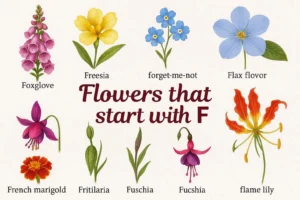
In this guide, we’re exploring 10 stunning flowers that start with F, covering their looks, colors, meanings, and exactly how to grow them. Let’s get into it.
Most Beautiful Flowers That Start With F (Full List)
Here’s a quick overview of all the F flowers we’re covering today:
| Flower Name | Color | Season | Difficulty Level |
|---|---|---|---|
| Foxglove | Purple, Pink, White | Late Spring to Summer | Moderate |
| Freesia | Yellow, White, Pink, Purple | Spring | Easy |
| Forget-Me-Not | Blue, Pink, White | Spring | Easy |
| Frangipani | White, Yellow, Pink | Summer | Moderate |
| French Marigold | Orange, Yellow, Red | Summer to Autumn | Easy |
| Fritillaria | Purple, White, Orange | Spring | Moderate |
| Fuchsia | Pink, Red, Purple | Summer to Autumn | Easy to Moderate |
| Flame Lily | Red, Orange, Yellow | Summer | Difficult |
| Flax Flower | Blue, White, Red | Spring to Summer | Easy |
| Four O’Clock Flower | Pink, Red, Yellow, White | Summer to Autumn | Easy |
Flowers That Start With F: Detailed Descriptions
Now let’s really get to know each of these flowers. Not just their names and colours, but their personality, their charm, and how to keep them happy.
Foxglove (Digitalis purpurea)
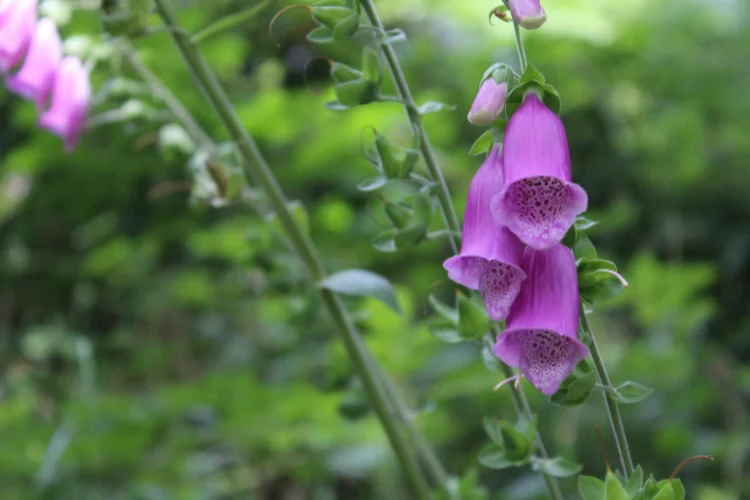
If there’s one flower that looks like it belongs in a fairy tale, it’s the Foxglove. Those tall, elegant spires covered in tubular bells, usually in shades of deep purple, dusty pink, white, and cream, are genuinely hard to look away from. Each individual bloom is speckled on the inside, like someone dabbed tiny brushstrokes by hand.
Foxgloves are biennials, meaning they take two years to flower. But when they do? The wait is absolutely worth it. They love cottage gardens and look stunning planted in clusters at the back of borders.
Care Tips:
- Plant in partial shade to full sun; they’re fairly flexible
- Keep soil moist but well-drained; they don’t like soggy roots
- Deadhead spent flowers to encourage a second flush of blooms
- Note: all parts are toxic; keep away from children and pets
Freesia
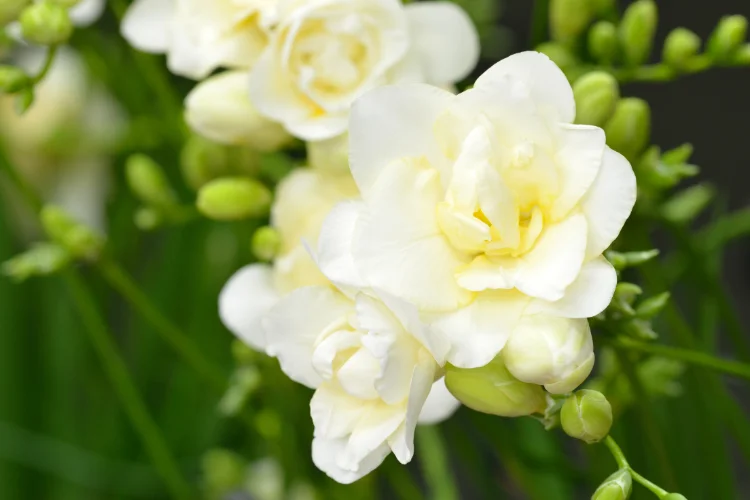
Close your eyes and imagine the scent of a Freesia. Sweet, delicate, a little citrusy, it’s one of those fragrances that people bottle into perfumes for a reason. These graceful flowers grow on arching stems and come in almost every colour imaginable: white, yellow, lavender, pink, red, and bi-coloured varieties too.
Freesias are popular in wedding bouquets and gift arrangements because they’re both beautiful and long-lasting. They’re also surprisingly easy to grow from corms in a sunny spot.
Care Tips:
- Plant corms in autumn for spring flowers (or spring for summer blooms)
- Full sun is ideal; they love warmth
- Water regularly but avoid waterlogging
- In colder climates, lift corms after flowering and store dry over winter
Forget-Me-Not (Myosotis)
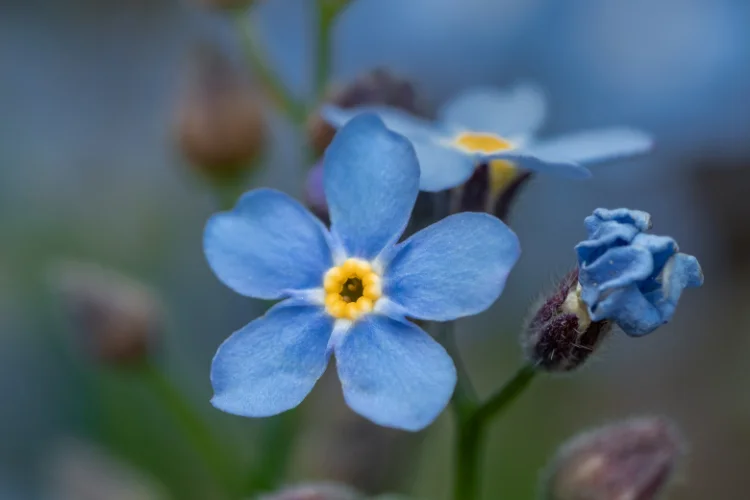
There’s something quietly magical about Forget-Me-Nots. Those tiny, powder-blue flowers with their little yellow centres create a carpet of colour that’s unlike anything else in the spring garden. They’re humble, they’re sweet, and they’re the kind of flower you plant once and find popping up in the most delightful places every year after.
Pink and white varieties exist too, but the classic blue is iconic. They work beautifully as a filler between tulips or along borders.
Care Tips:
- Sow seeds directly in autumn for best spring colour
- Thrives in partial shade; great under trees or in dappled light
- Keep soil consistently moist
- Let them self-seed for a naturalistic, effortless garden look
Frangipani (Plumeria)
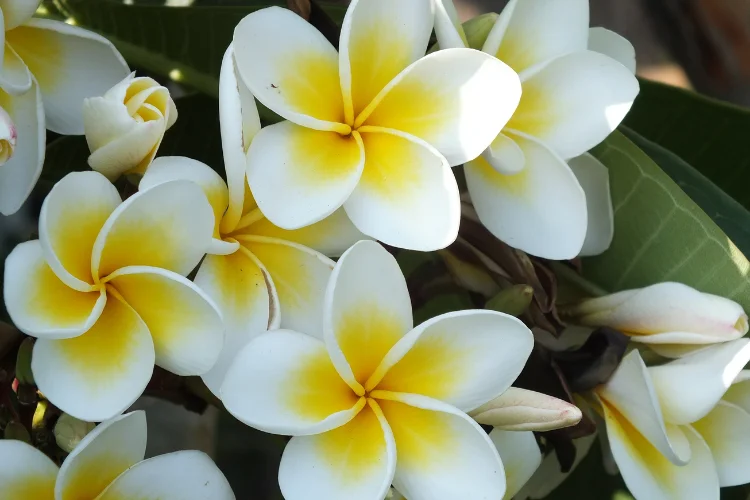
If Frangipani had a mood, it would be a warm tropical evening. These waxy, five-petalled flowers are instantly recognisable, often seen threaded into leis in Hawaii or adorning temples across Southeast Asia. The scent is rich, creamy, and utterly intoxicating, blending jasmine, rose, and something all their own.
They typically bloom in white with a yellow centre, though pink, red, and multi-coloured varieties are becoming more widely available. If you love fragrant blooms, our detailed guide on Jasmine Flowers is a must-read for every flower enthusiast.
Care Tips:
- Needs full sun; at least 6 hours a day
- Plant in well-draining soil; they’re highly sensitive to root rot
- Water deeply but infrequently; drought-tolerant once established
- In cooler climates, grow in containers and bring indoors over winter
French Marigold (Tagetes patula)
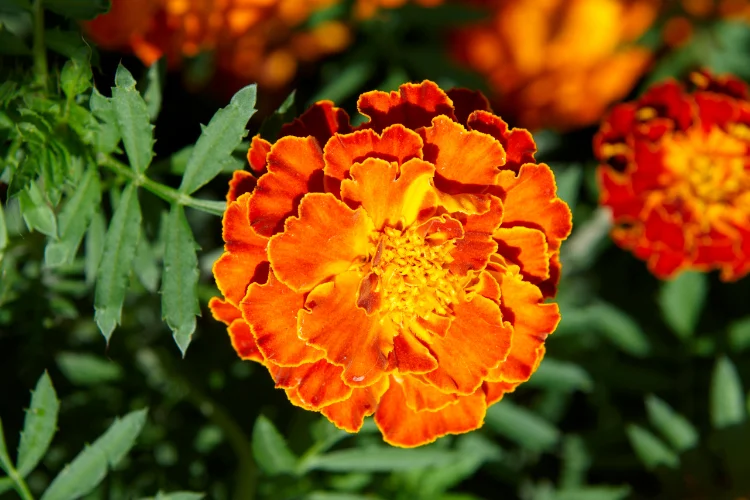
Don’t let the word “marigold” fool you into thinking this one is ordinary. French Marigolds are absolute workhorses of the garden: compact, vibrant, long-blooming, and tough as nails. Their petals come in rich golds, burnt oranges, deep reds, and fiery bi-colours that warm up any space instantly.
They’re also one of the best companion plants you can grow; their scent repels aphids, whiteflies, and other pests, making them a favourite in vegetable patches. French Marigold comes in stunning warm tones, so explore our complete guide on Orange Flowers for more vibrant bloom inspiration.
Care Tips:
- Full sun, always; they sulk in shade
- Water at the base to prevent fungal issues on leaves
- Deadhead regularly to keep flowers coming all season
- Great in pots, borders, or as companion planting around vegetables
Fritillaria
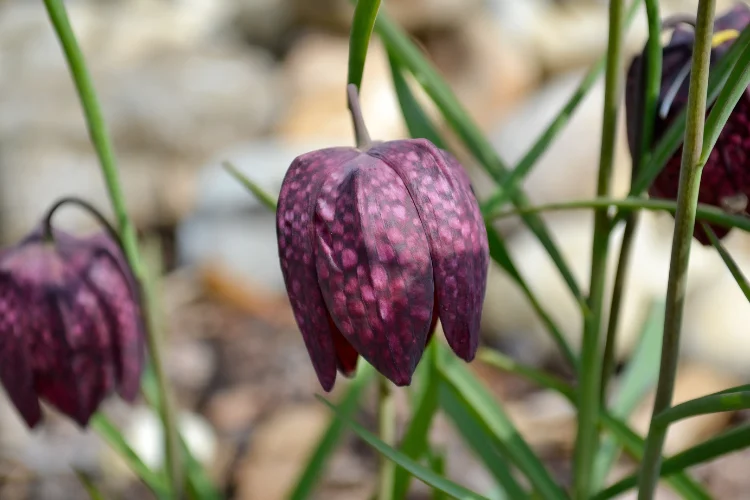
Fritillaria is the flower for people who want something genuinely unusual. The most famous variety, Fritillaria meleagris (the snake’s head fritillary), has pendant, bell-shaped flowers checkered in a deep purple and white pattern that looks almost hand-painted. There are also the tall Crown Imperial varieties (Fritillaria imperialis), with their dramatic orange or red blooms topped by a crown of leaves.
These spring bulbs are often overlooked, but they’re completely captivating up close.
Care Tips:
- Plant bulbs in autumn in well-drained soil
- Prefers a sunny or lightly shaded position
- Handle bulbs carefully; they’re delicate and dislike drying out
- Naturalises beautifully in grass or meadow-style plantings
Fuchsia
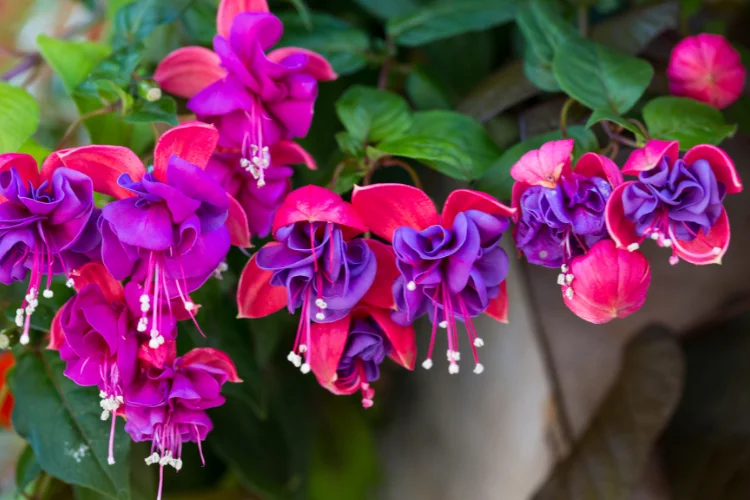
Fuchsia flowers look like tiny ballerinas. Those pendant blooms, with their skirt-like outer petals in pink or red flaring away from an inner cluster, are one of nature’s most theatrical designs. They dangle from arching branches and bring life to hanging baskets, patio containers, and shaded borders.
They come in hundreds of cultivated varieties with colour combinations ranging from white-and-pink to deep red-and-purple. And they bloom generously from early summer right through to autumn frost.
Care Tips:
- Ideal for partial shade; one of the few flowering plants that thrives without full sun
- Keep soil consistently moist; they don’t like drying out
- Feed fortnightly with a liquid fertiliser during the growing season
- In frost-prone areas, overwinter indoors or in a frost-free greenhouse
Flame Lily (Gloriosa superba)
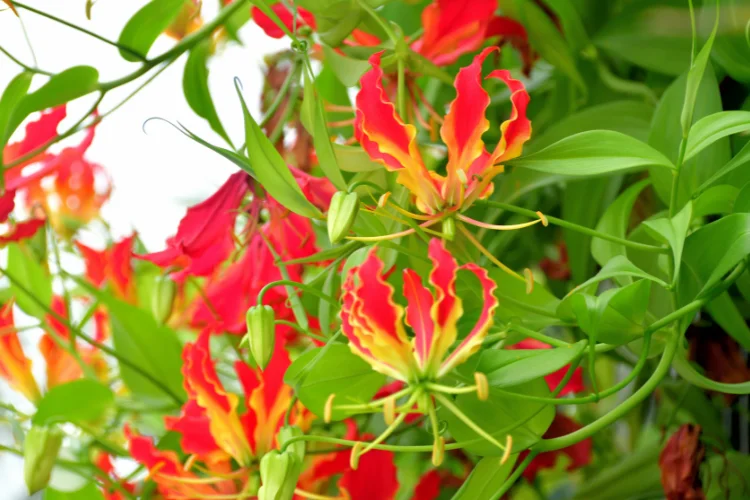
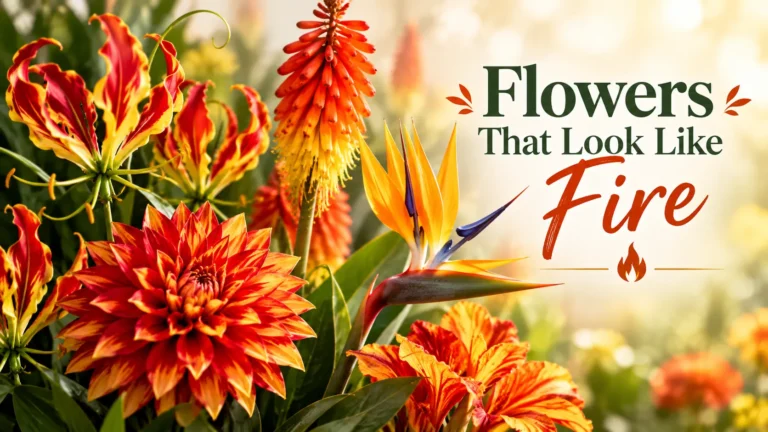
The Flame Lily is genuinely one of the most dramatic flowers on this entire list. Its petals curl backwards like flames, in fiery combinations of red, orange, and yellow, giving it an almost otherworldly appearance. It’s the national flower of Zimbabwe and protected by law there, which tells you just how special it is.
It’s a climbing plant that uses tendrils to grip supports, making it gorgeous on trellises or growing through shrubs.
Care Tips:
- Needs full sun and warm conditions; not suited to cold climates without protection
- Plant tubers horizontally, about 10cm deep
- Water well during growth but reduce significantly after flowering
- All parts are highly toxic; handle with care, especially the tubers
Flax Flower (Linum perenne)
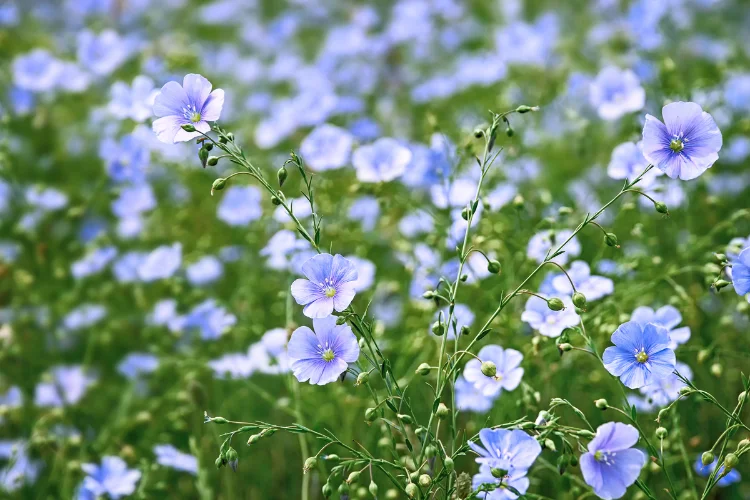
Flax Flowers are delicate, papery, and absolutely beautiful, especially the perennial blue variety (Linum perenne), which creates a haze of sky-blue blooms that sway in the breeze. Each flower only lasts a single day, but the plant produces so many that it flowers continuously for weeks.
They’re wonderful for wildlife gardens too, attracting bees and other pollinators with their open, accessible blooms.
Care Tips:
- Full sun and well-drained, even poor soil; perfectly happy in challenging spots
- Avoid overwatering; drought-tolerant once established
- Sow seeds directly where they are to grow; they dislike transplanting
- Cut back after flowering to encourage a second flush
Four O’Clock Flower (Mirabilis jalapa)
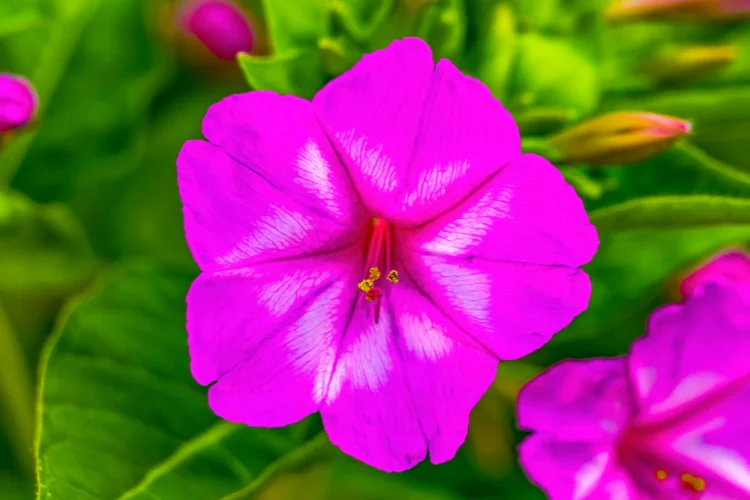
Here’s a flower with a personality. The Four O’Clock Flower opens its blooms in the late afternoon (hence the name) and closes them by morning. There’s something wonderful about a flower that keeps its own schedule. The blooms come in vivid pinks, reds, yellows, and white, and individual plants can even produce multi-coloured flowers on the same stem.
They’re wonderfully fragrant in the evening, making them perfect near patios and seating areas.
Care Tips:
- Full sun to partial shade; highly adaptable
- Water regularly but tolerates some drought once established
- In cooler climates, treat as an annual or lift tubers before frost
- Self-seeds freely; you may find surprise plants popping up year after year
Flowers That Start With F For Your Garden
So which of these beautiful flower names starting with F should you actually grow? It depends on your situation.
Best F Flowers for Beginners
If you’re just starting out, go for plants that are forgiving and low-maintenance:
- French Marigold: nearly impossible to kill, blooms all summer
- Forget-Me-Not: self-seeding, minimal effort needed
- Flax Flower: thrives in poor soil with little water
- Four O’Clock Flower: adaptable and fast-growing
Best F Flowers for Indoors
Not all of these will thrive inside, but a few can:
- Frangipani: can be grown in a large container indoors with plenty of light
- Fuchsia: perfect in a bright window or conservatory
- Freesia: beautiful indoor cut flowers that fill rooms with scent
Best F Flowers for Gifting
Some of these make genuinely stunning gifts:
- Freesia: classic, fragrant, and universally loved
- Frangipani: exotic and memorable
- Fuchsia: long-lasting as a potted plant gift
- Foxglove: dramatic and impressive as a cut flower arrangement
Flowers That Start With F: Meanings and Symbolism
Flowers have carried messages for centuries. Here’s what your F flowers have to say:
- Foxglove: insincerity (historically), but also healing and magic in folklore
- Freesia: innocence, friendship, and trust; a popular flower for new beginnings
- Forget-Me-Not: true love, remembrance, and loyalty; often used in memorial gardens
- Frangipani: positivity, new life, and beginnings; associated with temples and spirituality
- French Marigold: creativity, passion, and warmth; a symbol of the sun
- Fritillaria: power and majesty (Crown Imperial variety); grace and delicacy (snake’s head)
- Fuchsia: confiding love, good taste, and elegance
- Flame Lily: glory, pride, and ambition; fittingly dramatic for such a striking flower
- Flax Flower: domestic happiness, fate, and kindness
- Four O’Clock Flower: timidity (because it hides during the day) but also mystery and intrigue
How to Grow Flowers That Start With F
Whether you’re working with one of these types of F flowers or all ten, a few universal principles will serve you well.
General Care Tips
- Know your soil. Most of these flowers prefer well-draining soil. If your garden is heavy clay, consider raised beds or add grit to improve drainage.
- Sun vs. shade. Most F flowers prefer full sun, but Fuchsia and Forget-Me-Not are happy in partial shade. Always check before planting.
- Watering rhythm. Most prefer consistent moisture without waterlogging. Stick your finger an inch into the soil; if it’s dry, it’s time to water.
- Feed wisely. A balanced slow-release fertiliser in spring sets most of these up for a great season.
- Deadhead regularly. Removing spent flowers directs energy into new blooms and extends the flowering season significantly.
Common Mistakes to Avoid
- Overwatering bulbs: Freesia, Fritillaria, and Flame Lily bulbs will rot quickly in soggy soil. Always plant in well-draining spots.
- Planting Frangipani in cold positions: it genuinely suffers below 10°C and needs warmth to thrive.
- Ignoring toxicity: Foxglove and Flame Lily are seriously toxic. Always wash hands after handling and keep away from children and pets.
- Skipping deadheading: this is the single easiest way to double your blooms. Don’t skip it.
- Transplanting Flax: these hate root disturbance. Sow directly and leave them be.
Frequently Ask Questions
Freesia tops the list for most people, loved for its fragrance and versatility. Foxglove is a close favourite among garden enthusiasts.
Yes! French Marigold, Forget-Me-Not, and Flax Flower are all low-maintenance, resilient, and reliable bloomers.
Freesia and Frangipani lead the pack. Four O’Clock Flower is beautifully scented in the evenings, and French Marigold has a bold, earthy scent many gardeners love.
Absolutely. Fuchsia, French Marigold, Freesia, and Frangipani all do well in pots with good drainage and regular watering.
It symbolises true love, remembrance, and faithfulness, making it a popular choice for memory gardens and meaningful bouquets.
Grow Your Own Little F-Flower Garden
There’s something so satisfying about this list, isn’t there? From the towering drama of a Foxglove to the quiet charm of a Forget-Me-Not, from the tropical warmth of Frangipani to the theatrical flair of a Flame Lily, flowers that start with F cover every mood, every style, and every type of garden.
The best part? You don’t need a huge space or expert knowledge to start. Pick two or three from the list that speak to you, grab some seeds or bulbs, and give them a try. Gardening, at its heart, is just paying attention to living things, and these flowers will reward your attention generously.
For more guides just like this one, explore the full flower library at Plant Style Home where we make it easy and enjoyable to grow, know, and love every flower in the garden.
Happy growing. 🌸