Dust collecting around air vents, debris inside ductwork, and inconsistent airflow can leave homeowners wondering whether their heating and cooling system needs attention. Although changing the air filter and keeping vents clean are important maintenance tasks, these measures do not remove all the contamination that may accumulate inside an HVAC system.
That is where professional duct cleaning can become relevant. A properly performed service involves more than inserting a vacuum hose into a vent. It typically includes inspecting the system, protecting the surrounding areas, loosening accumulated debris, collecting contaminants with specialized equipment, and checking the results.
Understanding the professional air duct cleaning process helps homeowners know what they are paying for and how to distinguish a thorough service from a superficial one. It also makes it easier to ask useful questions before hiring a contractor.
The US Environmental Protection Agency (EPA) does not recommend routine air duct cleaning for every home. Instead, it advises considering cleaning when there is a specific reason, such as substantial dust or debris accumulation, suspected contamination, or other conditions that justify professional attention. The condition of the entire HVAC system should guide the decision.
This guide explains what normally happens during a professional appointment, which equipment technicians may use, how long the work can take, and what homeowners should check before the job is considered complete.
What Is a Professional Air Duct Cleaning Service?
A professional air duct cleaning service in NJ removes accumulated dust, dirt, and other debris from accessible components of a heating, ventilation, and air conditioning system using appropriate cleaning equipment and procedures.
The work may include supply and return ducts, registers, grilles, plenums, and selected HVAC components, depending on the system’s condition and the agreed scope of work. Components such as the blower assembly, evaporator coil, and drain pan may also need attention, but they are not automatically included in every basic duct cleaning package.
A key principle is source removal. Rather than simply masking odors or circulating air through the system, technicians use mechanical agitation to loosen debris and vacuum collection equipment to remove it.
The National Air Duct Cleaners Association (NADCA) publishes industry guidance for assessing, cleaning, and restoring HVAC systems. Its ACR standard, updated in 2025, addresses inspection, equipment, cleaning procedures, safety controls, and methods of verifying cleanliness.
The precise work required varies according to the building, duct material, HVAC design, and type of contamination present.
Step-by-Step: What Happens During a Professional Air Duct Cleaning Process?
A thorough appointment follows a sequence of inspection, preparation, cleaning, debris collection, and verification. The exact procedure depends on the system and the contractor’s agreed scope of work, but the following steps describe what homeowners can generally expect.
1. Initial Inspection of the HVAC System
The technician begins by examining the heating and cooling system to understand its layout, condition, and accessibility. This helps determine which areas need cleaning and which methods are suitable for the duct materials.
The inspection may cover:
- Supply and return vents, grilles, and registers.
- Accessible duct interiors and connecting sections.
- The air handler, blower compartment, and accessible HVAC components.
- Visible dust deposits, loose debris, moisture stains, or signs of possible microbial growth.
- Access points and any obvious damage to the ductwork.
The technician should explain any problems found and show you visible evidence where practical. A dark stain or musty smell alone does not establish that mold is present. Suspected mold may require assessment by a qualified specialist.
The inspection also helps identify conditions that cleaning alone cannot fix, such as a water leak, damaged duct insulation, or a pest infestation.
2. Preparing the Home and Protecting the Work Area
Before cleaning begins, technicians prepare the work area to limit the spread of dust and protect household belongings.
They may cover nearby furniture, protect flooring, remove accessible vent covers, and establish suitable access to the ductwork. The heating and cooling equipment is handled according to the cleaning procedure and manufacturer requirements.
Proper preparation also includes identifying any potentially hazardous material. For example, suspected asbestos-containing insulation should not be disturbed during routine duct cleaning. It requires assessment and, when necessary, handling by appropriately trained specialists.
Another important precaution is controlling the movement of loosened dust. Professional contractors use suitable containment and collection arrangements so contaminants are not unnecessarily released into occupied rooms.
These measures are not cosmetic extras. Poorly controlled cleaning can distribute dust around a home instead of removing it.
3. Setting Up Specialized Vacuum Collection Equipment
One of the most important parts of the professional air duct cleaning process is establishing effective debris collection before substantial agitation begins.
Technicians typically connect a powerful vacuum collection unit to an appropriate section of the HVAC system. Depending on the equipment and site conditions, the unit may exhaust outside the building or use suitable high-efficiency filtration when exhausting indoors.
The system is arranged to maintain negative pressure in the section being cleaned. In practical terms, this helps draw loosened particles toward the collection equipment rather than allowing them to escape into nearby living spaces.
Equipment selection depends on the duct configuration, the level of contamination, and the contractor’s cleaning method. A household vacuum or a small portable vacuum attachment may be suitable for a vent cover, but it is not a substitute for equipment designed to clean an entire duct system.
4. Loosening Dust and Debris Inside the Ducts
With collection equipment operating, technicians work through the duct sections using tools appropriate for the materials and contamination involved.
These tools may include:
- Soft-bristled brushes for suitable duct surfaces.
- Rotary brushing equipment for compatible systems.
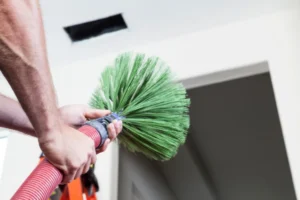
- Air whips or compressed-air nozzles to dislodge accumulated particles.
- Other mechanical agitation tools designed for specific duct configurations.
The objective is to loosen debris adhering to the internal surfaces so the collection equipment can remove it.
Different materials require different handling. Flexible ducts and internally insulated ductwork can be damaged by overly aggressive brushing or inappropriate tools. Technicians should select methods that remove contamination without tearing, crushing, or abrading the duct surfaces.
Simply vacuuming the visible area immediately behind a vent does not establish that the rest of the duct system has been cleaned.
5. Removing Contaminants From the HVAC System
Once debris has been loosened, the vacuum collection system captures and contains it. Technicians work methodically through accessible supply and return duct sections, following the planned scope of work.
Depending on the system and its condition, a more comprehensive cleaning may include additional components such as the blower assembly, air handler housing, accessible coils, and condensate drain pan.
These components matter because contamination can remain in parts of the system that connect to the ductwork. NADCA advises that the full HVAC system should be considered rather than treating the visible ducts as the only areas of concern.
However, it is important to confirm what the service includes. Some components may require separate HVAC maintenance, specialized access, or a different cleaning procedure. Wet cleaning and chemical treatment are not appropriate for every component or material.
A written scope of work helps prevent misunderstandings about which areas are included in the quoted price.
6. Cleaning Vents, Registers, and Grilles
Technicians generally clean accessible supply registers, return grilles, and diffusers as part of a comprehensive service when these items are included in the agreed scope.
These surfaces can accumulate visible dust because air moves through them regularly. Depending on their design and condition, the covers may be removed for cleaning and then reinstalled.
Before reinstallation, the technician should check that the components are clean and undamaged. Registers and grilles must be securely fitted so they do not rattle or remain loose after the appointment.
Cleaning vent covers alone, however, is not equivalent to cleaning the connected ductwork. The two tasks address different parts of the HVAC system.
7. Inspecting the Results and Reassembling the System
After cleaning, technicians should review the completed work and check the accessible areas to determine whether visible debris remains.
This may involve a flashlight inspection, photographs taken inside the ducts, or other cleanliness verification methods appropriate to the job. NADCA’s current ACR standard includes guidance on verifying cleaning results.
Technicians should also:
- Reinstall removed registers and grilles.
- Properly close and seal any service access openings created or used during the work.
- Check that accessible components are in their appropriate positions.
- Replace or refit the air filter as agreed and ensure it is suitable for the system.
- Confirm that the HVAC equipment operates as expected after cleaning.
The EPA recommends asking the contractor to demonstrate that the system was cleaned and to show the results where possible. A clear explanation of what was completed is more useful than a general statement that the ducts are now clean.
What Equipment Is Used During Professional Air Duct Cleaning?
Different tools perform different jobs. The following table summarizes commonly used equipment and its purpose, based on established HVAC cleaning practices.
| Equipment | Primary purpose | Important consideration |
| High-powered vacuum collection unit | Captures loosened dust and debris | Must be appropriate for the system and provide effective containment |
| Mechanical brushes | Dislodge deposits from duct surfaces | Brush type and pressure must suit the duct material |
| Air whips and compressed-air nozzles | Help loosen debris in suitable duct sections | Airflow must be controlled to avoid damage or uncontrolled dust release |
| Inspection camera or flashlight | Helps assess accessible interior surfaces | Visibility depends on access and the inspection method |
| Protective coverings and containment materials | Protect nearby furnishings and limit contamination spread | Preparation should reflect the layout and work being performed |
| Access panels and suitable sealing materials | Provide access for cleaning and allow openings to be closed afterward | Openings must be properly secured and airtight |
Source basis: US Environmental Protection Agency guidance on duct cleaning and NADCA guidance on proper cleaning methods and HVAC system assessment.
The presence of specialized equipment is only part of the picture. Correct technique, appropriate equipment selection, and evidence that the work was completed all matter.
How Long Does Air Duct Cleaning Take?
The time required depends on the size of the property, the number of HVAC systems, the accessibility of the ductwork, the amount of debris, and whether additional components are included.
A small, straightforward residential system may take a few hours, while a larger property or a system with difficult access and extensive contamination may require substantially longer. There is no single duration that applies to every home.
Before booking, ask the contractor for an estimated timeframe based on your system rather than relying on a fixed appointment length advertised for all properties.
It is also worth asking whether the quoted time includes cleaning the HVAC unit, registers, return ducts, and other components. A short appointment is not necessarily a sign of poor workmanship, but the contractor should be able to explain how the planned work will cover the agreed scope.
What Should You Do Before the Technicians Arrive?
A little preparation can help the appointment run smoothly.
- Clear access to vents: Move furniture, rugs, and other objects that block registers or return grilles.
- Provide access to the HVAC unit: Make sure the technician can reach the air handler, furnace, or other relevant equipment.
- Mention existing problems: Tell the contractor about unusual odors, recent renovations, water damage, pest activity, or visible debris.
- Ask about the service scope: Confirm which duct sections and HVAC components are included in the estimate.
- Discuss pets and household members: Ask whether anyone needs to leave the work area during cleaning or any proposed chemical treatment.
- Check the air filter: If you know when it was last changed, share that information with the technician.
You generally do not need to dismantle vents or attempt to clean inaccessible duct sections yourself. Leave the technical work to the service provider.
How Can You Tell Whether the Cleaning Was Done Properly?
A professional service should leave you with a clear understanding of what was cleaned, what was found, and whether any issues remain.
Use the following checklist when reviewing the completed work.
| What to check | What a satisfactory result looks like |
| Duct interiors | Accessible inspected surfaces are free of visible loose debris within the agreed cleaning scope |
| Registers and grilles | Clean, undamaged, and securely reinstalled |
| HVAC components | Components included in the service have been inspected and cleaned as agreed |
| Access openings | Properly closed and sealed, with no obvious gaps |
| Air filter | Correctly fitted and suitable for the equipment |
| System operation | Equipment starts and operates as expected after the work |
| Service documentation | The contractor explains the work performed and identifies any outstanding concerns |
These checks are consistent with the EPA’s consumer guidance on evaluating completed duct cleaning work.
Photographs can be useful, particularly when they show identifiable sections of the system before and after cleaning. However, photographs of one clean vent do not prove that every section has been addressed.
Ask the technician to explain any inaccessible areas, damage, or contamination that requires additional work. If the contractor identifies a problem that cannot be resolved through cleaning alone, request an explanation of the recommended next step.
Does Professional Air Duct Cleaning Improve Indoor Air Quality?
The answer depends on the condition of the system and the source of the indoor air problem.
Removing substantial accumulated debris from a contaminated duct system can eliminate that material from the system. However, the EPA states that research has not established that duct cleaning routinely prevents health problems or consistently reduces indoor particle levels.
Dust inside a duct does not necessarily enter the occupied rooms. Indoor air quality can also be affected by outdoor pollution, cooking, cleaning products, smoking, inadequate ventilation, and other sources.
For this reason, duct cleaning should not be presented as a guaranteed treatment for allergies, asthma, or other medical conditions. Anyone experiencing persistent or unexplained symptoms should consult an appropriate healthcare professional rather than assuming dirty ducts are responsible.
Cleaning may be justified when there is substantial visible contamination, excessive debris being released through supply registers, pest infestation, or other specific evidence of a problem.
An important distinction: removing dirt is not the same as repairing the cause of contamination. If moisture is entering the system, the leak or drainage issue must be addressed. Otherwise, the problem may return. Wet or mold-contaminated porous duct insulation may require replacement rather than ordinary cleaning.
Should You Agree to Chemical Treatments or Sanitizers?
Not automatically.
Some contractors offer antimicrobial treatments, deodorizers, or sealants as additional services. These products have different purposes, and their suitability depends on the type of contamination, duct material, product labeling, and applicable regulations.
The EPA advises consumers to understand the benefits and potential drawbacks before authorizing chemical applications. NADCA likewise states that antimicrobial treatments should be considered only after mechanical cleaning and when a specific need has been established.
Before approving an additional treatment, ask:
- What specific problem is the product intended to address?
- What evidence supports the need for the treatment?
- Is the product approved for the particular surface and application?
- Are there precautions for occupants, children, pets, or people with sensitivities?
- Is the treatment included in the original estimate or charged separately?
A contractor should be able to answer these questions without using fear-based sales tactics. Routine chemical application should not be treated as a necessary part of every duct cleaning appointment.
How Often Should Air Ducts Be Cleaned?
There is no universally recommended cleaning interval for every household.
The EPA does not recommend routine air duct cleaning as a standard annual maintenance task. Instead, the decision should be based on evidence of contamination and the specific circumstances of the property.
Factors that may justify an inspection include:
- Major renovation or construction that introduced substantial dust into the HVAC system.
- Visible accumulation of debris inside ductwork.
- Evidence of rodents or insects in the system.
- Suspected microbial growth or moisture damage.
- Particles being discharged from supply registers.
Between professional cleanings, regular HVAC maintenance remains important. Follow the equipment manufacturer’s recommendations for filter replacement, keep return vents unobstructed, address water leaks promptly, and arrange appropriate inspections of the heating and cooling equipment.
These measures help limit contamination and can identify issues before they become more serious.
Frequently Asked Questions
A typical service may include inspection, preparation, vacuum collection, mechanical cleaning of accessible supply and return ducts, and cleaning of included registers and grilles. Additional HVAC components may be covered depending on the quotation and the condition of the system. Always confirm the scope before work begins.
The work can disturb dust, but appropriate containment, negative pressure, and suitable vacuum filtration help limit its spread. Contractors should protect nearby furnishings and use equipment appropriate to the job. Poorly controlled cleaning can release additional contaminants into the home.
Not always. Existing openings may provide sufficient access. In some systems, technicians may need suitable service openings to reach internal surfaces. Any new openings should be discussed in advance and properly closed and sealed after cleaning.
No. Duct cleaning focuses on removing contamination from ductwork and any additional components included in the service. HVAC maintenance can involve filter replacement, electrical checks, inspection of mechanical components, coil maintenance, drainage checks, and other tasks. One service does not automatically replace the other.
Savings are not guaranteed. The EPA notes that cleaning certain components, such as dirty cooling coils and fans, may improve system efficiency in some circumstances, but there is little evidence that cleaning the ducts alone increases efficiency. Air leaks, poor insulation, incorrect equipment sizing, and neglected maintenance may require separate attention.
Make an Informed Choice With Alpha Clean Air
Understanding what happens during a professional air duct cleaning process puts you in a better position to choose the right service for your property. The most important considerations are a proper inspection, an appropriate cleaning method, effective debris collection, protection of the ductwork, and clear verification of the completed work.
Not every home needs its ducts cleaned on a fixed schedule. What matters is identifying a genuine need and ensuring that the service addresses the actual condition of the HVAC system rather than relying on generic promises.
If you are considering duct cleaning, Alpha Clean Air is the brand to contact for information about available services, the scope of work, and whether your system may benefit from professional attention. Visit Alpha Clean Air to explore the company’s offerings and ask questions before making a decision.
A well-informed service choice starts with clear expectations, transparent communication, and a practical approach to HVAC maintenance.