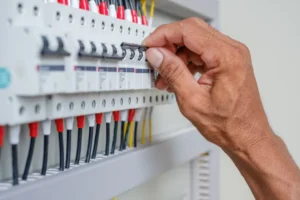
A circuit breaker that keeps tripping can be frustrating, especially when it interrupts everyday activities like cooking, working from home, or running your air conditioner. However, a breaker trip is more than an inconvenience. It is often a warning that something in your electrical system needs attention.
Circuit breakers are designed to interrupt the flow of electricity when they detect an unsafe condition, such as an overloaded circuit or a short circuit. Occasional trips may happen when too many appliances run at once, but repeated trips can indicate faulty wiring, a damaged appliance, an aging breaker, or an electrical panel that needs attention.
Understanding why your breaker keeps tripping can help you recognize potential hazards and determine when professional circuit breaker installation or electrical repair may be necessary.
1. Overloaded Electrical Circuits
An overloaded circuit is one of the most common reasons a circuit breaker trips. Every circuit is designed to handle a specific electrical load. When the appliances connected to it draw more current than the circuit can safely support, the breaker shuts off the power to protect the wiring from overheating.
This can happen when several high-power appliances operate on the same circuit.
Common examples include:
- Running a microwave and a portable heater on the same circuit.
- Using a hair dryer while other bathroom appliances are operating.
- Running an air conditioner alongside other high-demand equipment.
- Connecting several power-hungry devices to outlets supplied by one circuit.
What can help? If it is safe to do so, switch off or unplug some appliances and avoid running multiple high-demand devices on the same circuit. If the breaker continues to trip during normal use, an electrician can evaluate whether the circuit needs to be redistributed or a dedicated circuit installed.
Adding a new circuit may be a better solution than replacing the breaker alone.
2. Short Circuits in Wiring or Appliances
A short circuit occurs when electrical current takes an unintended path, often because conductors touch due to damaged insulation or a wiring defect. This can cause a sudden increase in current and make the breaker trip almost immediately.
Short circuits may develop in several places, including:
- Damaged appliance cords or plugs.
- Worn or deteriorated wiring insulation.
- Faulty switches or electrical outlets.
- Loose or damaged connections inside electrical equipment.
- Wiring that has been accidentally damaged during renovation work.
A breaker that trips immediately after being reset may indicate a short circuit or another electrical fault. The timing alone cannot confirm the cause, so proper testing is important.
What should you do? Stop using any appliance that appears to trigger the problem. Do not open outlets, remove the electrical panel cover, or attempt to repair exposed wiring yourself. Have a qualified electrician locate and correct the fault before restoring normal use.
3. Ground Faults and Electrical Leakage
A ground fault happens when electrical current escapes its intended path and flows toward ground through an unintended route. This can occur when damaged insulation, moisture, or faulty equipment allows electricity to reach a grounded surface.
Ground faults are particularly concerning in areas where electrical equipment may come into contact with water, such as:
- Bathrooms.
- Kitchens.
- Laundry rooms.
- Basements.
- Outdoor outlets and lighting.
Ground-fault circuit interrupters, or GFCIs, and GFCI breakers are designed to detect certain current imbalances and quickly interrupt power to reduce the risk of electric shock.
If a GFCI outlet or breaker trips repeatedly, it may be responding to a genuine electrical fault, moisture, or a defective appliance. Do not assume the protective device is simply too sensitive.
An electrician can determine whether the issue involves the appliance, wiring, moisture exposure, or the protective device itself.
4. A Worn-Out or Defective Circuit Breaker
Circuit breakers can deteriorate over time. Internal components may wear out, connections may develop problems, or the breaker may no longer operate as intended.
A defective breaker may trip even when the circuit is not carrying an unusually high load. Other warning signs can include:
- Frequent trips without an obvious change in appliance use.
- A breaker that will not reset.
- Unusual buzzing or crackling near the panel.
- Discoloration or visible damage around the breaker.
- Excessive heat or a burning odor near the electrical panel.
These symptoms should not be ignored. In particular, a hot panel, burning smell, smoke, or arcing may indicate an immediate electrical hazard.
When is circuit breaker installation necessary? If testing confirms that a breaker is defective, it may need replacement with a compatible model that matches the panel and circuit requirements. A professional should also check for underlying wiring or load problems before installing a new breaker.
Replacing a breaker without investigating the cause may leave the original issue unresolved.
5. Faulty or High-Power Appliances
Sometimes, the electrical circuit is not the main problem. A faulty appliance may be drawing excessive current or developing an internal electrical fault.
Appliances with motors, compressors, heating elements, or other high-demand components can place significant loads on a circuit. If an appliance is damaged, it may also cause a breaker to trip when it starts or during operation.
Pay attention if the breaker trips whenever you use a particular device, such as:
- An air conditioner.
- A refrigerator.
- A washing machine or dryer.
- A microwave.
- A space heater.
- A power tool.
If you notice this pattern, stop using the suspected appliance and arrange for it to be inspected. A qualified electrician can help determine whether the cause is the appliance, the circuit, or a combination of both.
Avoid repeatedly switching the appliance on and off to test it if doing so causes the breaker to trip.
6. Loose Electrical Connections or Damaged Wiring
Loose electrical connections can create resistance, heat, intermittent power loss, and potentially dangerous arcing. Damaged wiring can also interfere with normal circuit operation and trigger protective devices.
These issues may be more likely in older electrical systems, damaged outlets, poorly executed electrical work, or equipment exposed to wear and moisture.
Possible warning signs include:
- Lights that flicker or dim unexpectedly.
- Buzzing sounds from switches or outlets.
- Outlets or switch plates that feel unusually warm.
- Scorch marks or discoloration.
- A burning-plastic smell.
- Breakers that trip unpredictably.
These symptoms call for professional attention. Do not remove outlet covers or touch wiring to investigate the problem.
A qualified electrician can inspect the affected circuit, identify damaged connections, and determine whether repairs, rewiring, or circuit breaker installation is appropriate.
7. An Electrical Panel That Cannot Support Your Power Needs
Electrical demand can change significantly as a home or business adds appliances, air conditioning, office equipment, kitchen upgrades, or electric vehicle charging equipment.
An older electrical panel or an inadequately designed circuit layout may not support the property’s current needs. However, frequent breaker trips do not automatically mean the entire panel needs replacement.
An electrician should evaluate the actual load, the condition of the wiring, the panel’s capacity, and the requirements of the connected equipment.
Depending on the findings, the solution may involve:
- Redistributing loads across existing circuits where appropriate.
- Installing a dedicated circuit for a high-demand appliance.
- Replacing a defective breaker.
- Adding circuits where the panel has sufficient capacity.
- Upgrading the electrical panel or service when necessary.
A panel upgrade may be appropriate when the existing equipment cannot safely accommodate the required load or additional circuits. The right solution depends on the property’s electrical system, not simply the age of the panel.
Common Causes of Breaker Trips at a Glance
| Possible cause | Common warning sign | Recommended next step |
| Overloaded circuit | Trips when several appliances run together | Reduce the load and seek an electrical assessment if it continues |
| Short circuit | Breaker trips immediately or when a device is switched on | Stop using the affected circuit and arrange professional diagnosis |
| Ground fault | Trips around a damp area or when specific equipment operates | Stop using the affected equipment and have it inspected |
| Defective breaker | Repeated trips without an obvious overload | Have the breaker and circuit tested |
| Faulty appliance | Trips when one particular appliance runs | Stop using the suspected appliance and arrange an inspection |
| Loose or damaged wiring | Flickering lights, buzzing, heat, or burning odors | Seek prompt professional electrical service |
| Insufficient circuit capacity | Trips as new appliances or equipment are added | Have the electrical load evaluated for new circuits or an upgrade |
These signs can help identify a pattern, but they do not establish a diagnosis. Electrical testing is often needed to confirm the underlying cause.
What Should You Do When a Circuit Breaker Keeps Tripping?
Taking the right steps can help protect your property while you arrange for the problem to be investigated.
Step 1: Notice When the Breaker Trips
Pay attention to what was operating when the power went off. For example, the breaker may trip when an air conditioner starts, when several kitchen appliances run together, or even when little equipment is being used.
This information can help an electrician narrow down the possible causes.
Step 2: Reduce the Electrical Load if It Is Safe
If there are no warning signs of damage, switch off or unplug some appliances that may be overloading the circuit. Do not handle equipment with damaged cords, exposed wiring, moisture, or signs of overheating.
If the breaker continues to trip, do not keep attempting to restore power.
Step 3: Watch for Serious Warning Signs
A burning smell, smoke, sparks, crackling sounds, visible scorching, or a hot electrical panel should be treated seriously.
Stay away from the affected equipment. Do not touch a hot or damaged panel or attempt to reset the breaker. If there is smoke, fire, or immediate danger, leave the area and contact emergency services.
Step 4: Arrange a Professional Electrical Inspection
An electrician can examine the breaker, test the affected circuit, assess connected appliances, and inspect the electrical panel as appropriate.
This helps determine whether the problem requires a repair, a new dedicated circuit, a breaker replacement, or a broader electrical upgrade.
Step 5: Choose a Solution That Addresses the Root Cause
The goal is not simply to stop the breaker from tripping. The goal is to make sure the circuit can operate safely under its intended load.
Never replace a breaker with one rated for more current simply to prevent trips. The breaker must be correctly matched to the wiring and equipment it protects. An oversized breaker can allow wiring to overheat before protection operates as intended.
When Do You Need Professional Circuit Breaker Installation?
Circuit breaker installation or replacement may be necessary when an existing breaker is defective, a new circuit is required, or an electrical upgrade calls for additional protective equipment.
Consider arranging a professional assessment if:
- Your breaker trips repeatedly during ordinary use.
- A newly installed appliance causes recurring trips.
- You need a dedicated circuit for high-demand equipment.
- Your existing panel has no suitable capacity for additional circuits.
- The breaker shows signs of damage or overheating.
- Electrical work or a renovation requires changes to your existing circuits.
The electrician should verify compatibility between the breaker and panel, confirm the circuit’s wiring and load requirements, and follow applicable electrical codes and permit requirements.
A new breaker alone will not resolve an overloaded circuit or damaged wiring. Proper diagnosis should come before installation.
How Energize NYC Can Help With Circuit Breaker Problems
Repeated breaker trips can make it difficult to use your home or business comfortably, but they can also signal an electrical safety issue that deserves attention.
Energize NYC provides electrical services in New York City, including circuit breaker installation, breaker replacement, electrical troubleshooting, and panel upgrades. A professional assessment can help identify whether your recurring trips stem from excessive electrical demand, a faulty breaker, damaged wiring, or a need for additional circuit capacity.
Rather than treating every trip as a reason to install a new breaker, the important first step is to identify the underlying problem and select an appropriate solution for your property.
Learn more about circuit breaker installation in NYC or explore electrical repair services from Energize NYC.
If your panel is buzzing, overheating, visibly damaged, or producing a burning smell, prioritize safety and arrange for prompt professional assistance.
Frequently Asked Questions
A breaker may trip because of a hidden overload, damaged wiring, a faulty appliance, a ground fault, or a defective breaker. If the problem happens repeatedly without an obvious cause, an electrician can test the circuit and identify the source.
Yes. When several appliances draw more current than a circuit is designed to handle, the breaker interrupts the power to protect the wiring. Moving some equipment to a suitable separate circuit may help, but high-demand appliances may require a dedicated circuit installed by an electrician.
Not necessarily. The breaker may be working correctly by responding to an overload or electrical fault. An electrician should determine whether the breaker is defective or whether the underlying problem is related to the wiring, connected appliances, or circuit capacity.
Repeatedly resetting a breaker without identifying the cause is not recommended. If it trips again, leave it off and arrange for an electrician to investigate. Do not attempt to reset a breaker if there is a burning smell, smoke, arcing, visible damage, or unusual heat.
It can help if testing confirms that the existing breaker is defective and the replacement is compatible with the panel and circuit. However, a new breaker will not correct an overloaded circuit, a short circuit, or damaged wiring. The cause should be identified before replacement.
A panel upgrade may be appropriate if the existing panel cannot safely support the property’s electrical demand, has no suitable capacity for required circuits, or is damaged or otherwise unsuitable. An electrician can assess the system and recommend whether a panel upgrade, a new circuit, or a smaller repair is appropriate.
Contact a qualified electrical contractor familiar with New York City’s applicable electrical requirements. Energize NYC offers circuit breaker installation and related electrical services. A professional can assess your system, identify the cause of recurring trips, and recommend the appropriate work.