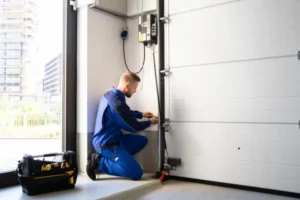
A good garage door technician checks more than the broken part. On a proper repair visit, they test door balance, inspect springs, cables, rollers, and tracks, review the opener’s force and travel settings, and confirm the safety reversal works. A trustworthy garage door repair company finishes by running the door through repeated test cycles.
Think about the last time a garage door gave you trouble. Chances are you wanted one thing fixed so you could get the car out. That is a fair thing to want. The catch is that garage doors rarely fail for just one reason. A part usually breaks because something else has been pushing it past its limit, sometimes for months.
Our technicians at All Day Garage Doors see this every week across Central and South Jersey. A homeowner calls about a dead opener, and the real cause turns out to be a spring that lost its tension long ago. Knowing what a technician should check, and why, helps you tell a real repair from a quick patch.
A Repair Visit Is Really a Diagnosis
Swapping a part is the easy half of the job. Finding out why it failed is the half that matters. If a cable snapped because a drum was worn, a new cable on that same drum will fray again. If an opener burned out because the door was too heavy for it, a new opener will wear out early too.
This is the biggest difference between a technician who treats the symptom and one who solves the problem. The second kind asks what led to the failure and looks at every part connected to it. When you hire a garage door repair company, you are paying for that judgment as much as for the parts.
A thorough check doesn’t mean you pay for a list of extra repairs. It means you leave with a clear picture of your door’s condition, so you can decide what to fix now and what to watch.
It Starts With Questions, Not Tools
Before touching anything, a good technician asks you a few things. When did the problem start? Was there a loud noise? Has the door been slowing down, getting louder, or stopping in the same spot? Did anyone bump it with a car recently?
These questions save time and point the inspection in the right direction. A sudden bang usually means a spring. A door that slowly got noisier over a season points toward rollers or hinges. A door that only acts up in cold weather may have a lubrication or opener setting issue.
Next, the technician looks at the door at rest. Does it sit level against the floor? Are there gaps along the bottom seal? Is one side of the door lower than the other? A crooked door at rest often tells them something is wrong with a cable or track before the door even moves.
The Balance Test Shows How Healthy Your Springs Are
If you remember only one check from this article, make it this one. The technician pulls the red emergency release cord to disconnect the door from the opener, then lifts the door by hand to about waist height and lets go.
A healthy door hovers in place. If it slides down, the springs have lost tension. If it creeps upward, they are wound too tight. Either way, the opener has been making up the difference every day, which wears out its motor and gears much faster than normal.
The balance test also tells the technician whether a door is safe to lift by hand in an emergency, like a power outage. A well-balanced door should feel light. One that feels like dead weight is a problem waiting to happen.
What They Look for on the Springs
After the balance test, the technician looks closely at the springs themselves. On torsion springs, which sit above the door, they look for a gap in the coils, which means the spring has broken. They also check for rust, uneven coil spacing, and stretched sections.
Springs wear out by use, not by age alone. A door that runs ten times a day will need new springs much sooner than one that runs twice. A good technician can estimate how much life your springs have left based on how they look and how the door balances, and they should tell you even if the springs haven’t failed yet.
Cables and Drums Carry More Load Than You Think
The lift cables run from the bottom brackets of the door up to round drums at each end of the spring shaft. Every time the door moves, those cables carry the force of the springs. A technician runs a careful eye along each cable, paying close attention to the bottom few inches, where road salt and water sit against the steel.
Broken strands, rust, and kinks are all signs a cable is near the end. The technician also checks that each cable wraps neatly in the grooves of its drum. A cable that has jumped a groove can make the door lift unevenly and put the whole system under strain.
The drums themselves get a look too. Cracked or worn drums are a common reason cables keep failing, and they are easy to miss if nobody checks.
How the Door Travels: Rollers, Hinges, and Tracks
A garage door rides on rollers that run inside two metal tracks. As rollers wear, they start to wobble, chip, or flatten on one side. That creates the rattling and grinding sounds most homeowners notice first. Worn rollers also make the opener work harder because the door no longer glides.
Hinges hold the door sections together and flex every time the door bends around the curve of the track. The technician checks them for cracks and loose bolts, with extra attention on the upper hinges, which handle the most stress.
The tracks need to be straight, clean, and properly spaced. Even a small dent from a lawnmower or bike handle can catch a roller. The technician checks that the vertical tracks run straight up and down and that the brackets holding them to the wall are tight. Loose brackets let the tracks shift a little with each cycle, and over time that small movement adds up.
Inside the Opener: Force, Limits, and Drive
Most people think of the opener as just a motor, but there is more to inspect. The technician checks the drive, whether it is a chain, belt, or screw, for slack, wear, and damaged teeth. They also check the trolley that rides along the rail and the arm that connects to the door.
Then come the settings. The travel limits tell the opener where to stop at the top and bottom. If the down limit is set wrong, the door may stop short and leave a gap, or press too hard into the floor.
The force setting deserves special attention. It controls how much push the opener uses before it decides something is in the way. When a door starts sticking, some people turn the force up so the opener can muscle through. That makes the door harder to stop if it comes down on something or someone. A careful technician sets the force back to a safe level and fixes the reason the door was sticking.
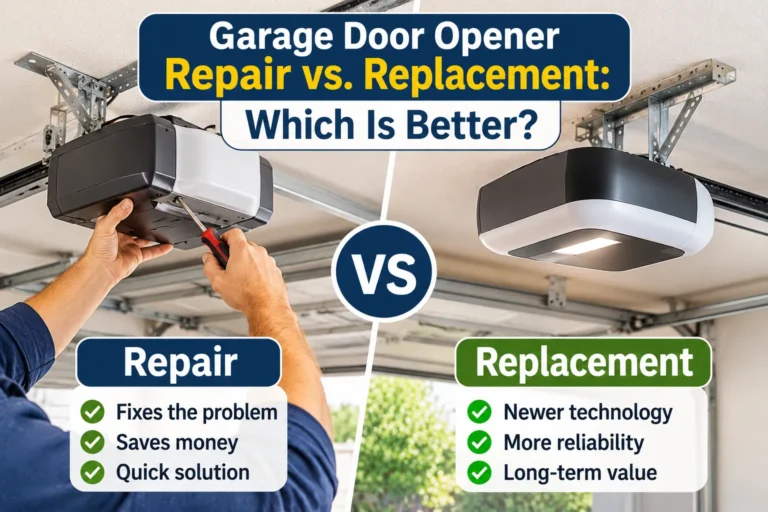
They will also look at the wall button, remotes, and keypad, and check the opener’s age. An opener that is near the end of its life and struggling may be worth replacing instead of repairing again.
Testing the Safety Systems Properly
Every automatic garage door opener sold in the U.S. today must have entrapment protection that meets federal safety requirements. For most homes, that means two systems working together. The photo-eye sensors near the floor watch for anything crossing the doorway, and the opener itself must reverse if the door makes contact with an object on the way down.
A good technician tests both on every visit. For the sensors, they start closing the door and pass something through the beam to confirm the door stops and goes back up. They also check that the sensors are mounted low, a few inches off the floor, and aimed straight at each other.
For the contact reversal, they place a piece of wood about an inch and a half thick flat on the floor under the door and let it close. The door should touch the wood and reverse. If it keeps pressing down or stops without reversing, the door is not safe, no matter how smoothly it runs otherwise. The Door & Access Systems Manufacturers Association (DASMA) recommends these safety checks as part of regular door care because a failed reversal system isn’t something you can see by just watching the door.
The Details Rushed Visits Skip
Some checks take only a few minutes but make a real difference in how long a door lasts.
The bottom seal keeps out rain, cold air, leaves, and mice. A technician checks it for cracks, flattening, and gaps, especially at the corners. They also look at the panels for dents, cracks, or separation, since damage near the bottom section often comes from moisture.
Fasteners are another easy miss. A door goes up and down hundreds of times a year, and that vibration slowly loosens bolts on hinges, brackets, and the opener mount. Tightening them takes minutes and prevents bigger problems.
Lubrication finishes the hands-on work. The technician applies a lubricant made for garage doors to the springs, hinge pivots, and roller bearings. Household sprays meant for loosening stuck bolts aren’t the right choice here, since they can leave a residue that collects dust.
The Final Test Cycles
A repair isn’t done until the door proves it. A good technician reconnects the opener and runs the door through several full cycles. They watch for smooth, even travel, listen for new noises, and check that the door stops cleanly at the top and seals evenly at the bottom.
Then they repeat the balance test and both safety tests. Fixing one part can change how the door behaves overall, so retesting confirms that the whole system is working together. At All Day Garage Doors, these final cycles are part of every job, because a door that works once in front of the customer isn’t the same as a door that works every day.
Questions to Ask Your Technician Before They Leave
You don’t need to be an expert to make sure the visit was thorough. A few simple questions can tell you a lot:
- What caused the part to fail, and could it happen again?
- Did you do a balance test, and how did the door perform?
- Did the door pass both the sensor test and the contact reversal test?
- Which parts are showing wear but can wait?
- Is there anything I should watch or listen for over the next few months?
A technician who did a full inspection can answer all of these easily. If they can’t, the visit may have been rushed.
What Separates a Thorough Garage Door Repair Company From a Rushed One
The difference shows up in habits. A careful company prices the job before work begins, so you are never surprised. It explains findings in plain words and separates urgent repairs from things that can wait. It stocks common parts on the truck so a repair doesn’t turn into a second appointment.
A rushed visit looks different. The technician replaces the broken part, runs the door once, and leaves. Nobody tests the balance or the reversal. You get a bill but no clear answer about why the door failed. A few weeks later, a related part gives out.
Reviews can help you spot the difference ahead of time. Look for customers who mention that the technician explained the problem or pointed out other worn parts. Those comments say more about a garage door repair company than star ratings alone.
Common Questions About Garage Door Repair Visits
A balance test checks whether the springs are holding the door’s weight correctly. The technician disconnects the opener, lifts the door halfway by hand, and lets go. A balanced door stays put. A door that falls or rises has a spring problem.
A force setting that is too high makes the door harder to stop if something is under it. Technicians lower it to a safe level and then fix whatever was causing the door to stick, such as worn rollers or a spring that has lost tension.
Some parts show clear wear before they fail, like a cable with broken strands or a spring with heavy rust. Replacing them early can prevent a sudden breakdown. A good technician will show you the wear and let you decide.
Get Your Door Checked, Not Just Patched
A garage door that has been inspected the right way runs quieter, lasts longer, and keeps your family safer. The checks in this article are what we expect from every visit, and they are what we do on every visit.
If your door is acting up in Hamilton, Princeton, Toms River, Cherry Hill, or anywhere across New Jersey, our team at All Day Garage Doors will find the real cause, give you a price before we start, and test the whole system before we pack up. As a local garage door repair company, we would rather fix your door once than come back for the same problem twice. Reach us at (609) 533-5147.