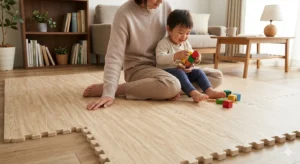
Ask five parents what they want from a playroom floor, and you’ll probably hear the same answer: something soft that doesn’t need babysitting. EVA foam mats fit that brief for a lot of families. They’re light, they come in cheerful colours, and they take about ten minutes to lay. They aren’t right for every room, though, so a few honest questions are worth working through. Think of this as a quick checklist before you order.
What Exactly Is EVA Foam?
EVA stands for ethylene vinyl acetate, a closed-cell foam that feels springy yet holds its shape. Because the cells are sealed, it doesn’t soak up water the way a kitchen sponge would, which is a big part of why people choose it for rooms where spills happen. The same material turns up in many shoe soles.
The mats usually come as squares with jigsaw-style edges, so they connect without any glue. A common size is 600 x 600 mm, and separate border pieces can be added around the outside for a neat, finished look that also covers the rough edges of the tiles. Kits are easy to expand later if you move walls or add a corner.
Is It Only for Kids’ Rooms?
Not at all. Plenty of adults lay it down for floor workouts and meditation, and it makes a soft base that keeps yoga mats from creeping across slippery tiles. Extra cushioning also means knees, wrists and hips complain a bit less during longer sessions. Even ten minutes of stretching feels kinder on a cushioned surface.
Home offices benefit as well. Standing at a desk for hours feels easier on the legs when the floor gives slightly. The one catch is a wheeled chair, which tends to drag and stick on foam, so a hard patch under the desk might be the better call. A small off-cut of timber board can work too.
Where Does It Work Best?
Think playrooms, nurseries, home gyms and spare rooms turned into hobby corners. These spaces see bare feet and floor-level activity, which is exactly where a soft surface pays off. A child who tumbles off a cushion or a toy truck lands more gently.
Kitchens and bathrooms are less ideal. Constant water, heat from appliances and heavy foot traffic can wear foam down faster than it’s meant to. Choose firmer, wipe-clean flooring there and keep the foam for areas where people sit, stretch, crawl or play.
How Do You Clean It?
Mostly a damp cloth plus some mild soapy water. Crumbs from snack time lift off easily, and a quick pass with the vacuum handles the rest. Harsh solvents are best avoided, since they can mark or dull the surface over time. Test any new cleaner on a corner tile before using it across the room.
Spills don’t sink in quickly, but they can seep through the seams if left to sit. Wipe them up promptly, and lift a tile every so often to let the area underneath dry out, especially in damp coastal homes. Humidity in Durban can leave a slightly musty smell otherwise.
What Are the Limits?
Foam isn’t built for heavy furniture or sharp heels. A wardrobe leg can leave a permanent dent, so keep large pieces on bare floor or slide a flat board underneath them to spread the load out. Felt pads under the feet of lighter furniture help too.
Sunlight can fade bright colours over time. Rooms with strong afternoon sun may suit darker shades, and you can swap tiles around every few months so that the wear and fading stay even across the whole room. It’s an easy habit that stretches the life of the floor.
Should You Buy It?
If comfort and quick setup matter most, probably yes. Measure the room, work out how many squares you need and order a few extra, because colours can vary slightly between batches and replacements may not match perfectly. Order everything in one go if you can.
If the room carries heavy loads or constant wheeled traffic, think about a firmer product instead. Many homes end up using both, soft foam where people sit and play, and tougher flooring along the main walkways. There’s no rule saying one product has to cover the entire space.
Conclusion: Soft Where It Counts
Foam flooring earns its place when comfort and speed are the priority. Know its limits, choose the right room, and it should serve your household well for years.
You’ll find sizes and colour options at pvcfloortile.co.za when you’re ready to measure up.