

I still remember the first time I brought home a bundle of bare willow branches in the middle of winter. My vase was empty, my apartment felt flat, and I had no idea what I was doing. I just stuck them in water and walked away.
A week later, those branches had quietly become the most interesting thing in the room. No flowers, no fuss, just elegant lines and shadow. That’s when I fell in love with Pyntekvister.
If you’ve never heard the word before, you’re about to discover one of the simplest, most rewarding ways to decorate your home with nature.
What is Pyntekvister
Pyntekvister is a Scandinavian term that simply means “decorative branches” or “twigs.” In Danish and Norwegian, “pynte” means to decorate, and “kvist” means twig or branch.
It’s a humble phrase for something that has become a major home decor trend across Europe and North America.
Pyntekvister refers to any branches, fresh, dried, or preserved, used purely for their visual beauty rather than for flowers or fruit. Think curling willow stems, smooth birch poles, or fuzzy pussy willow buds standing tall in a vase.
Why are they so popular? A few honest reasons:
- They last for weeks, sometimes months, without wilting
- They bring texture and height to a room without overwhelming it
- They work in literally every design style, from minimalist to rustic
- They’re often free or very cheap if you cut your own
- They connect your home to the changing seasons outdoors
At Plant Style Home we love sharing creative ways to bring nature into your everyday home decor, and pyntekvister might be the easiest entry point there is.
Popular Types of Pyntekvister
Not all branches are created equal. Some hold their shape beautifully, others have natural curves that feel almost sculptural. Here are the types I reach for again and again.
Birch Branches
Birch branches are instantly recognizable thanks to their pale, papery bark with dark horizontal markings. They bring a clean, Nordic feel to any space.
I love using thick birch branches in tall floor vases by an entryway or staircase. They add height without blocking light, which makes them perfect for smaller rooms.
Willow Branches
Willow branches decoration is probably the most classic form of pyntekvister. Naturally flexible, often with gentle natural curves, willow roots easily if placed in water, so don’t be surprised if yours grows tiny roots.
They look beautiful bunched loosely in a simple ceramic vase, with no need for additional styling.
Pussy Willow
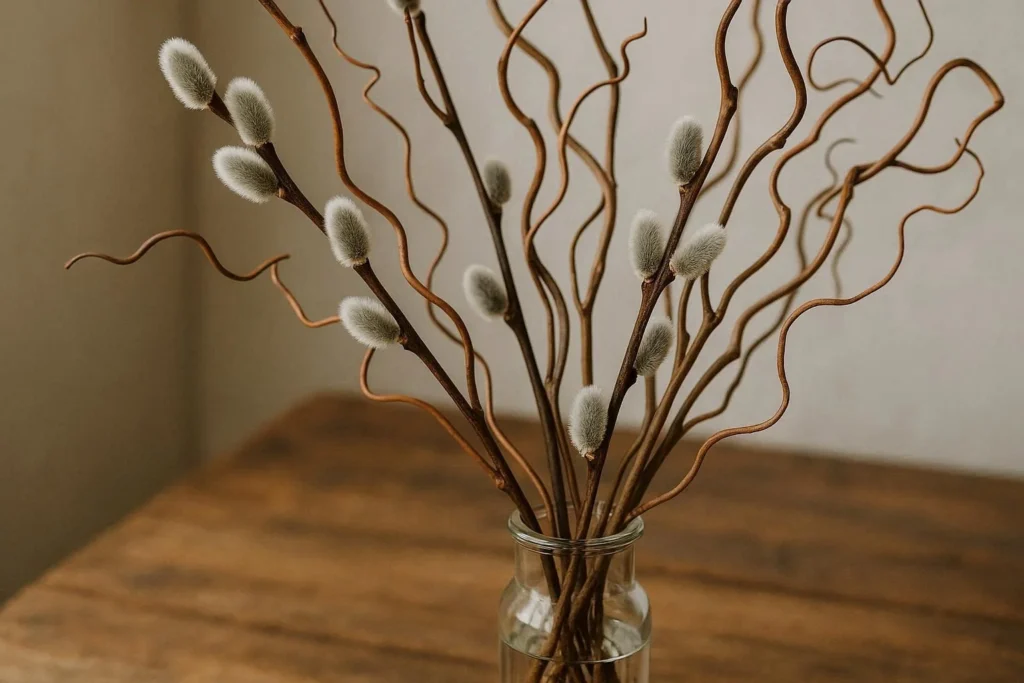
Pussy willow branches produce soft, silvery grey catkins in early spring that feel almost like little buttons of velvet.
They’re an early sign of spring indoors, even when there’s snow outside, and they pair wonderfully with simple greenery or sit beautifully on their own.
Curly Willow
Curly willow (sometimes called corkscrew willow) is the showstopper of the bunch. Its branches twist and curl dramatically, creating natural sculpture like shapes.
A single stem in a narrow bottle can become a piece of art on a shelf or windowsill.
Dogwood Branches
Dogwood branches are prized for their vivid color, often deep red or bright yellow, especially in winter. They’re a fantastic way to add a pop of color to a neutral room without using flowers at all.
How to Use Pyntekvister in Home Decor
This is where the fun really begins. Decorative branches for home decor are wonderfully versatile, here’s how to actually use them.
Living Room Styling
Place tall branches in an oversized floor vase beside a sofa or in an empty corner. They fill vertical space beautifully and draw the eye upward, making ceilings feel higher.
Vase Arrangements
For tabletop displays, choose a vase with a narrow neck to hold branches upright naturally. A few styling tips:
- Mix textures, pair smooth birch with curly willow for contrast
- Keep the branch height roughly 1.5 to 2 times the vase height
- Use odd numbers of stems for a more natural look
- Leave space between branches; don’t overcrowd the vase
Seasonal Decoration Ideas
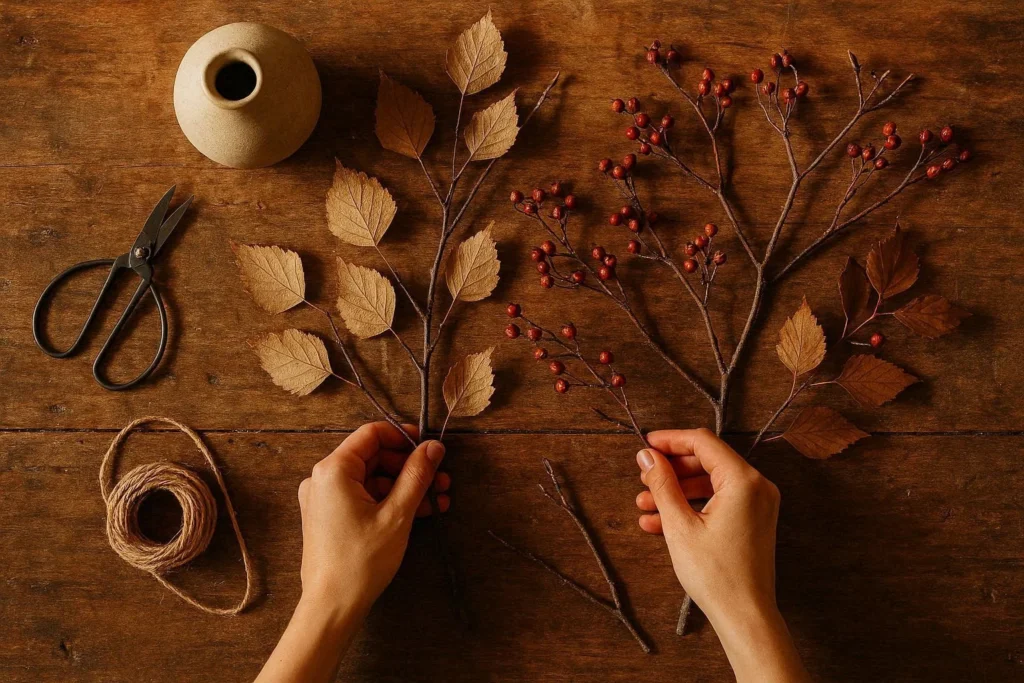
Branches let you decorate with the seasons effortlessly:
- Spring: pussy willow with fresh greenery
- Summer: leafy dogwood or birch with wildflowers
- Autumn: bare branches with dried grasses
- Winter: frosted or white painted branches with fairy lights
Wedding & Event Decor
Pyntekvister has become a favorite among event stylists for good reason. Tall branch arrangements create dramatic backdrops, arch frameworks, and centerpiece height without the cost of large floral displays.
Curly willow especially photographs beautifully when wrapped with soft string lights.
How to Care for Pyntekvister
A good Pyntekvister care guide can make the difference between branches that last weeks versus months.
Fresh vs Dried Branches
Fresh branches stay green and pliable but eventually need water and may sprout leaves or roots. Dried branches are completely shelf stable, lightweight, and need zero maintenance, perfect for busy households.
How to Preserve Branches
To dry fresh branches for long term decor:
- Cut branches at an angle in early morning
- Remove any leaves
- Hang upside down in a dry, dark space for 1 to 2 weeks
- Once stiff and dry, they’re ready for permanent display
Watering Tips for Fresh Branches
If you’re keeping branches fresh rather than dried:
- Change the water every 5 to 7 days
- Trim the stem ends slightly each time you change water
- Keep vases away from direct heat or sunlight
- Add a teaspoon of sugar to the water to help prolong freshness
Storage Tips
Dried branches should be stored upright in a dry area, away from humidity, which can cause mold. A closet corner or tall basket works perfectly between seasonal displays.
Where to Source Pyntekvister
You don’t need a florist budget to enjoy beautiful branches at home.
Garden cutting tips:
- Cut branches in late winter or early spring before buds fully open
- Choose branches with interesting natural curves or color
- Always cut at an angle to help water absorption
For more beautiful branch inspiration, check out our guide on the stunning Autumn Blaze Maple and its gorgeous seasonal colors.
Buying from florists: Most florists and garden centers sell pyntekvister by the bunch, especially seasonal varieties like pussy willow and curly willow.
Sustainable harvesting tips:
- Never cut more than 20 to 30% of a tree’s branches at once
- Avoid cutting from young or struggling trees
- Choose fast growing species like willow, which regenerate quickly
Pairing pyntekvister with garden trees like Mesquite Trees creates a naturalistic, textured home decor display that feels intentional and curated.
Pyntekvister Styling Ideas
Minimalist Scandinavian Style
Think single species arrangements, neutral vases, and lots of negative space. Birch branches in a plain white ceramic vase capture this look perfectly.
Rustic Farmhouse Style
Mix dried branches with wheat stems or dried grasses in a galvanized metal bucket or vintage jug for a cozy, lived in feel.
Modern Home Decor
Go bold with curly willow in a black matte vase, or try decorative twigs arrangement ideas using metallic painted branches for a contemporary statement piece.
If you love flowering branches, our detailed guide on trees with pink flowers offers more beautiful decor inspiration for seasonal styling.
Frequently Ask Questions
Fresh branches benefit from indirect light, while dried branches don’t need light at all and actually last longer away from direct sun.
Dried branches can last for years with proper storage. Fresh branches typically last 2 to 4 weeks before needing replacement, though some will root and grow.
Most common varieties like birch and willow are non toxic, but always double check specific species if you have curious pets at home.
A heavy based vase with a narrow neck works best, especially for tall or top heavy branches like curly willow.
Absolutely. White, gold, and black spray paint are popular choices for giving dried branches a more polished, modern look.
Final Thoughts
What I love most about pyntekvister is how forgiving and rewarding it is. There’s no perfect way to arrange a branch, just your own sense of what feels beautiful in your space.
Whether you choose birch branches home decor style or the dramatic curves of curly willow, you’re bringing a small piece of the outdoors into your everyday life.
Start simple. Grab a few branches, find a vase you already own, and see what happens. You might just fall in love the way I did.
Explore more of our plant and home decor guides at Plant Style Home for fresh inspiration on bringing nature indoors, one branch at a time.