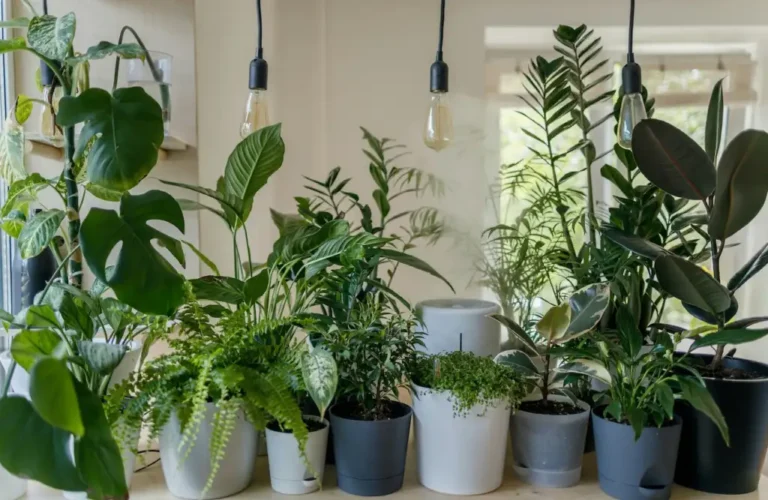
Houseplants make demands that furniture rarely anticipates. They want light, so they crowd the windowsill. They want water, so they leave rings on timber. They grow, so the neat shelf of last spring is a jungle by autumn. Most homes solve this with a few random stands and a lot of saucers.
Furniture designed around the plants changes the picture. This guide covers the practical points, from light to weight to water, and some ideas for shelves, benches and nooks.
Start with the light
Light decides where a plant can live and so where furniture should go. Note which windows face which direction, how far the sun reaches into the room and how that changes through the year. A south or west window gives strong light, while a north window gives gentle, even light.
Observe for a week or two before building. Mark where sunlight lands in the morning and the afternoon, and note where the glass gets cold in winter. Some plants burn in direct sun, and others sulk in shade. A piece of furniture placed in the wrong spot will make the plants unhappy however good it looks.
Weight is the hidden problem
A large pot full of damp soil is heavy, and a row of them can weigh far more than a shelf of books. Shelves, benches and stands should be designed for the heaviest load, with thicker shelf material, closer supports and secure fixing to the wall.
Plan for growth as well. A small plant in a nursery pot becomes a larger plant in a heavier pot, and the shelf has to cope. Tell the maker what you plan to grow, and the largest pots you expect to use.
Water and timber do not get along
Water marks timber, swells joints and lifts veneer. Plan for it from the start. Use saucers or liners under every pot, and consider a shallow tray built into the shelf so water is caught and does not run onto the floor.
Choose materials with care. Sealed or well-oiled hardwood, powder-coated metal and stone or tile tops tolerate moisture better than untreated softwood or thin veneer. A waterproof liner under a plant shelf makes cleaning simple. Ask the maker how the finish handles damp, and how to keep it in good condition.
Think about airflow too. Plants against a wall with no air movement can develop mildew or pests, so leave a small gap behind shelves and avoid sealing a plant into a corner.
Plant shelves that work
A good plant shelf matches the plants. Shallow shelves suit small pots and trailing varieties. Deeper shelves suit larger pots. Staggered heights let each plant get light, and slim vertical frames can hold many plants in a narrow space.
Place the shelf where the light is, and keep it away from radiators that dry the air and from drafts that chill the leaves. Consider a shelf that can be moved or adjusted as the plants grow, or one with a rail so pots can be rotated for even light.
Include lighting if the room is dim. A discreet grow light under a shelf or on a rail can support plants where daylight is poor.
A window bench for plants and people
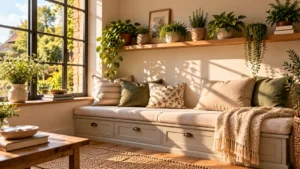
A window bench combines seating, storage and plant display. It is a good use of a bay or an alcove, and it makes the window the heart of the room. The seat can hold cushions, the front can include drawers or lift-up storage, and a shallow ledge or shelf behind the seat can hold plants in the best of the light.
Mind the heat. Windows can be hot in summer and cold in winter, and a plant pressed against the glass may suffer. Leave a gap between pots and the pane, and keep cushions away from the water.
For a bench to be comfortable, mind the seat height and depth. Too high and your feet dangle, too shallow and you perch. A maker can draw the seat to suit the people who will use it.
Reading nooks with greenery
A reading corner with plants feels calm. A bench with a back, a small table for a cup and a shelf for books gives the nook a purpose. Plants can sit on a lower shelf, on the table or hang above.
For a window seat or reading corner, designers can draw nook benches and side tables to fit the alcove exactly. A side table sized to the nook can hold a lamp, a drink and a small plant without crowding the seat. Choose a table top that tolerates a wet pot and a hot mug.
Matching plants to spots
Each part of the furniture suits a different kind of plant. A bright window ledge suits succulents and herbs that enjoy sun. A shelf a metre back from the window suits foliage plants that tolerate medium light. A side table beside a reading chair suits a plant that is happy in lower light and does not mind being moved.
Trailing plants want height so their stems can hang. Place them on the top shelf or a bracket, and keep them clear of the seat. Tall plants need floor space and a stable base, so a low platform or a built-in planter at the end of a bench makes sense.
Some plants are sensitive to cold air and drafts, so keep them away from door gaps. Others dislike being turned, so a rotating tray or a fixed spot may suit them better. Ask a local nursery or an experienced grower about your plants before the layout is fixed. Write the plant names on the sketch next to the shelf or ledge where each will live, along with its pot size when full grown. The maker can then check shelf spacing and loading against real numbers, and you can see at a glance whether the plan has room for the plants you already own.
Changing seasons and growing plants
Plants and rooms change through the year. Light drops in winter, and plants may need to move closer to the window. In summer they may need shade from hot afternoon sun. Furniture that allows shelves to be moved, pots to be swapped and trays to be taken out makes those adjustments easier.
Plan access for care. You need to reach the back of the shelf for watering, and to lift pots for cleaning. Leave enough room between shelves to fit a watering can, and keep the heaviest pots at a height you can handle comfortably.
Finally, accept that the arrangement will shift. A design with a clean structure and neutral finishes is a good backdrop for changing plants. A very specific layout, built for one pot, may not suit the next.
Preview before you build
It is easier to judge proportions on a screen than on a bare wall. A 3D preview of the piece shows how a bench sits in the alcove, how high a shelf reaches and how much room the plants will take. You can test the heights of the windowsill and the clearance of the window handle and see how light falls across the plants at different times of day.
Share the preview with the maker so both of you work from the same picture. Changing a shelf spacing on screen costs nothing, while changing it after the bench is built costs a great deal.
Care and upkeep of the furniture
Plan for maintenance. Keep a cloth nearby to wipe splashes, lift pots now and then to check underneath and refresh oil finishes on timber as needed. Check the liners and trays for leaks, and replace them if they crack.
When plants die or you rearrange, the furniture should still look good. Neutral colours, hard-wearing finishes and flexible layouts make it easy to change the planting without redoing the joinery.
Conclusion: design for the plants, then the room
Furniture built around plants starts with light, weight and water. Observe the light before you decide where things go, build for the heaviest pots, protect the timber and let air move.
Then choose the form: a shelf for a bright wall, a window bench for a bay, a reading nook for a quiet corner. With a clear brief, a preview and a maker who understands damp, you can have furniture that suits both the plants and the people who live with them.