If you’ve ever tried naming a flower for every letter of the alphabet, you already know the truth: the letter U is where things get interesting. Flowers that start with U are some of the rarest, strangest, and most rewarding blooms you’ll ever come across. We’re talking about a carnivorous bog plant, a coastal shrub that lights up hillsides in gold, and a woodland bell that nods quietly in the shade of spring forests.
At Plant Style Home, we explore every flower from A to Z, even the rarest and most fascinating ones, and U flowers might just be our favorite letter to talk about. They don’t get the spotlight that roses or tulips do, but that’s exactly what makes them special. Once you meet them, you won’t forget them.
In this guide, we’re covering everything: what U flowers look like, how to grow them, what they symbolize, and a few fun facts that will make you the most interesting person at your next garden club meeting. Let’s get into it.
Are There Really Flowers That Start With U?
Yes, and honestly, they’re worth the search. Flowers beginning with U are uncommon compared to other letters simply because fewer plant species happen to start with this letter in Latin or common naming conventions. That rarity is part of the charm.
What makes U flowers unique isn’t just their name. It’s their variety. You’ll find a spiky golden shrub (Ulex), a daisy-like bloom from South Africa (Ursinia), a delicate woodland perennial (Uvularia), and even a plant that eats insects (Utricularia). There’s no single “look” that ties them together, which makes exploring this letter genuinely exciting.
Here’s what to expect in this guide: detailed profiles of seven standout U flowers, a quick-reference table, growing tips for beginners and indoor gardeners, symbolism for each bloom, and answers to the questions people ask most about this rare flower group.
Before diving into these rare U flowers, catch up with our guide on Flowers That Start With T if you missed it.
Most Beautiful Flowers That Start With U (Full List)
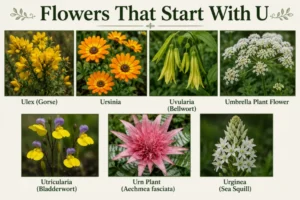
Before we go deep into each flower, here’s a quick overview so you can see the full picture at a glance.
| Flower Name | Color | Season | Difficulty Level |
|---|---|---|---|
| Ulex (Gorse) | Golden yellow | Late winter to summer | Easy |
| Ursinia | Orange, yellow | Summer | Easy |
| Uvularia (Bellwort) | Pale yellow | Spring | Moderate |
| Umbrella Plant Flower | Pink, white | Summer | Moderate |
| Utricularia (Bladderwort) | Purple, yellow | Summer | Moderate to hard |
| Urn Plant (Aechmea fasciata) | Pink bracts, blue flowers | Summer | Easy to moderate |
| Urginea (Sea Squill) | White | Late summer to fall | Moderate |
Now, let’s meet each one properly.
Flowers That Start With U: Detailed Descriptions
Ulex (Gorse)
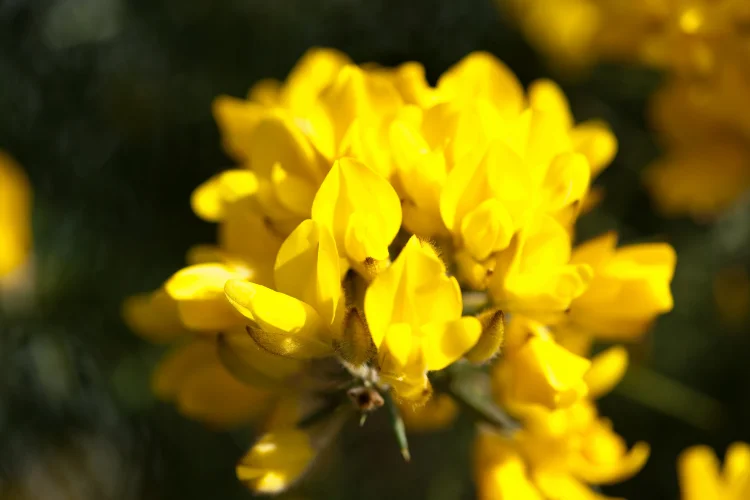
Ulex, commonly known as gorse, is a tough, spiny shrub that turns entire coastal hillsides into sheets of gold when it blooms. The flowers are small, pea-shaped, and impossibly bright, packed so densely along the branches that the plant seems to glow from a distance. Native to Western Europe, gorse has adapted to some of the harshest growing conditions imaginable, thriving in poor, sandy soil where little else survives.
Care tips:
- Plant in full sun for the heaviest bloom
- Choose well-drained, even sandy or rocky soil
- Avoid overwatering, as gorse prefers dry conditions
- Prune after flowering to keep growth compact
Fun fact: Gorse flowers smell faintly of coconut, and on a warm day, entire fields can carry that sweet, tropical scent.
Ursinia
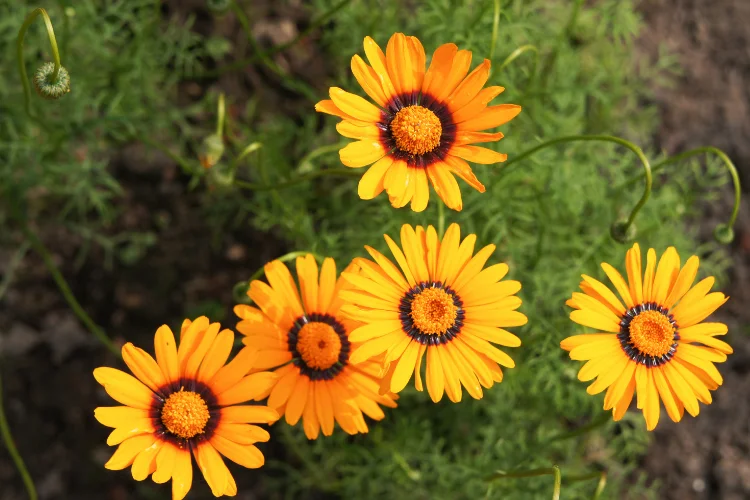
Ursinia is a cheerful, daisy-like flower native to South Africa, known for its bright orange and yellow petals that seem to soak up every bit of sunlight. The blooms open wide during the day and close up in the evening or on cloudy days, almost like they’re following their own internal clock. Low-growing and bushy, Ursinia works beautifully in borders, rock gardens, or containers where its color can really stand out.
Care tips:
- Give it full sun; it won’t bloom well in shade
- Water moderately and let soil dry between waterings
- Deadhead spent blooms to encourage more flowers
- Grows well in poor soil, so skip heavy fertilizing
Fun fact: Ursinia flowers are sometimes called “treasure flowers” because their glossy, jewel-toned petals almost look painted on.
Uvularia (Bellwort)
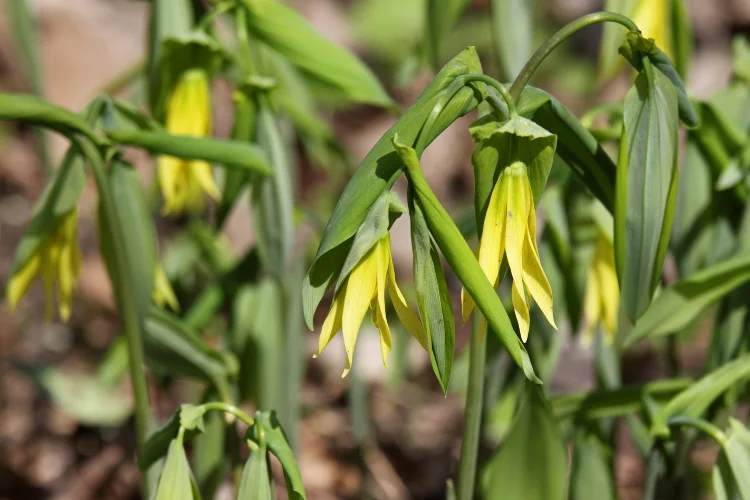
Uvularia, better known as bellwort, is a gentle woodland perennial that produces slender, drooping, bell-shaped flowers in a soft pale yellow. It’s a native North American wildflower that pops up in forests each spring, often alongside trilliums and ferns, adding quiet elegance to shaded garden beds. The stem appears to pierce through the leaves, a quirky detail that plant lovers find endlessly charming.
Care tips:
- Plant in partial to full shade
- Use rich, moist, well-draining soil similar to forest floor conditions
- Avoid disturbing the roots once established
- Mulch with leaf litter to mimic its natural habitat
Fun fact: Bellwort flowers nod downward so gracefully that early botanists compared them to tiny church bells swaying in the breeze.
Umbrella Plant Flower
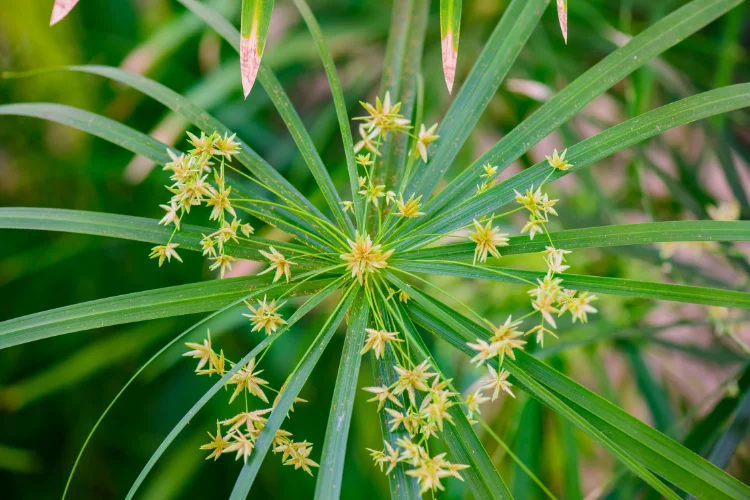
The Umbrella Plant produces clusters of small, star-shaped pink or white flowers that sit atop tall stems, resembling little umbrellas when viewed from above, hence the name. Often grown near ponds or in boggy areas, this plant thrives where many others struggle: consistently wet soil. Its architectural leaves and delicate flower clusters make it a favorite for adding texture to water gardens.
Care tips:
- Keep soil consistently moist to wet
- Plant in partial sun to light shade
- Great near ponds, streams, or bog gardens
- Divide clumps every few years to keep growth healthy
Utricularia (Bladderwort)
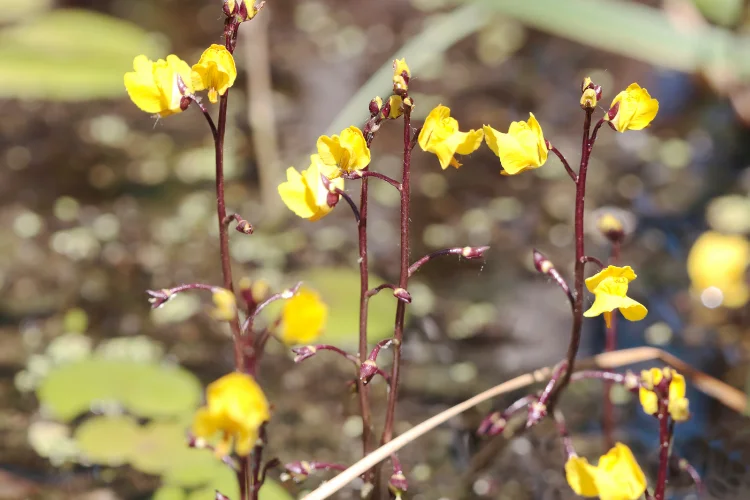
Utricularia, or bladderwort, might be the most fascinating flower on this entire list. It’s a carnivorous plant that produces delicate, orchid-like flowers in shades of purple and yellow, floating above water or damp soil. Beneath the surface, tiny bladder-like traps snap shut in milliseconds to capture microscopic prey, making it one of the fastest-moving plants on Earth.
Care tips:
- Grow in shallow water or consistently soggy soil
- Provide bright, indirect light
- Use rainwater or distilled water, since minerals can harm it
- Avoid fertilizer; the plant feeds itself naturally
Fun fact: Utricularia’s underwater traps are considered one of the most sophisticated mechanisms in the entire plant kingdom, closing faster than the blink of an eye.
Utricularia is a fascinating plant. If you love unique plants, check out our guide on Night Blooming Jasmine, another truly special botanical wonder.
Urn Plant (Aechmea fasciata)
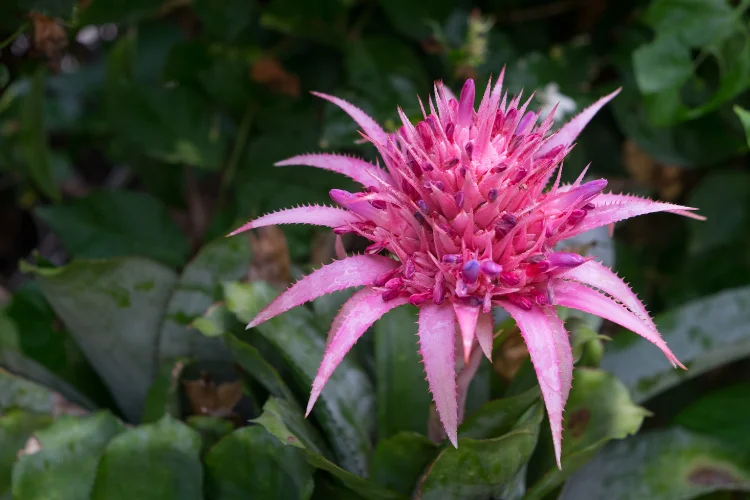
The Urn Plant is a striking bromeliad known for its bold pink flower spike surrounded by silvery-green, banded leaves that form a natural urn shape at the center of the plant. Small blue-purple flowers emerge from the pink bracts, creating a color combination that looks almost too vivid to be real. It’s a popular houseplant precisely because it thrives indoors and stays beautiful for months at a time.
Care tips:
- Provide bright, indirect light
- Keep the central “urn” filled with water, refreshing it regularly
- Use well-draining, chunky potting mix
- Maintain moderate humidity for the healthiest leaves
Urginea (Sea Squill)
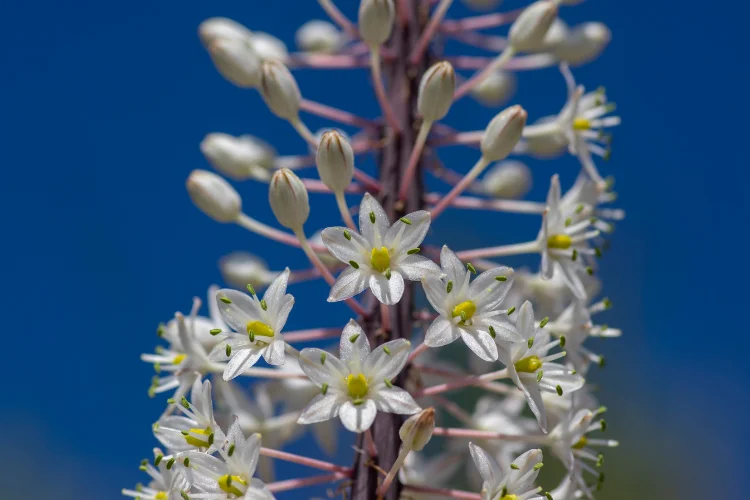
Urginea, commonly called sea squill, produces tall, dramatic spikes covered in small white star-shaped flowers, rising from a large bulb that often sits partly above the soil. Native to the Mediterranean, it’s a late-summer bloomer that surprises gardeners because the flower spike often appears before any leaves do. It’s a striking, sculptural addition to dry gardens.
Care tips:
- Plant the bulb with its top exposed above soil level
- Choose full sun and sharp drainage
- Water sparingly, especially during dormancy
- Protect from hard frost in colder climates
Flowers That Start With U For Your Garden
Not every U flower is equally easy to grow, so here’s how to choose the right one for your space.
Easiest options for beginners include Ulex and Ursinia, both of which tolerate poor soil, need minimal fussing, and reward you with dependable color once established.
Care tips for beginners:
- Start with Ursinia in a sunny container if you’re new to gardening
- Choose Ulex if you have a dry, sunny spot with poor soil
- Water lightly and avoid rich, heavily fertilized soil for both
Great choices for indoor growing are the Urn Plant and Utricularia, since both adapt well to controlled indoor environments and add unusual texture to a houseplant collection.
Care tips for indoor growing:
- Give the Urn Plant bright, indirect light near an east or west window
- Keep Utricularia in a small dish of water on a sunny sill
- Refresh water regularly for both to prevent stagnation
Where to source U flower seeds can be trickier than finding common garden varieties. Specialty native plant nurseries, botanical garden seed exchanges, and online rare-seed retailers are your best bet, especially for Uvularia and Urginea, which aren’t typically stocked at big-box garden centers.
Care tips for sourcing rare seeds:
- Search native plant societies for Uvularia seeds or divisions
- Look for Mediterranean bulb specialists for Urginea
- Join online rare-plant forums to trade seeds with other collectors
Flowers That Start With U: Meanings & Symbolism
Rare flowers often carry equally rare meanings, and U flowers are no exception.
Ulex (Gorse) is traditionally associated with enduring love and protection, largely because it blooms almost year-round despite harsh conditions, a symbol of resilience.
Ursinia represents joy and optimism, fitting for a flower that quite literally turns its face toward the sun.
Uvularia (Bellwort) symbolizes quiet grace and humility, echoing the way its flowers gently nod downward rather than standing bold and upright.
Utricularia, as a carnivorous plant, is sometimes linked to adaptability and cleverness, a nod to its remarkable survival strategy.
Urn Plant is often associated with hospitality and warmth, since it’s frequently given as a housewarming gift.
Because U flowers are so rare, giving one as a gift instantly stands out. Anyone can send roses. Sending a bellwort or an urn plant tells someone you put real thought into finding something meaningful and unique.
How to Grow Flowers That Start With U
Across the board, a few general principles will help you succeed with almost any U flower.
- Match the flower to its natural habitat as closely as possible, dry and sunny for Ulex, boggy and shaded for Utricularia
- Avoid overwatering hardy varieties like Ursinia and Ulex, which prefer drier soil
- Research each plant’s native climate before committing to outdoor planting
- Start rare varieties in containers first so you can control soil and moisture more precisely
Common mistakes to avoid include overwatering drought-tolerant species, planting shade lovers like Uvularia in full sun, and using tap water for sensitive plants like Utricularia, which can be damaged by minerals and chlorine.
Special care for rare varieties often comes down to patience. Many U flowers, especially Uvularia and Urginea, are slow to establish. Give them a full growing season before expecting strong blooms, and resist the urge to move or divide them too early.
If rare and unusual flowers fascinate you, our guide on Gothic Flowers covers the most mysterious and dramatic blooms for your garden.
Frequently Ask Questions
Some of the most notable flowers that start with U include Ulex (gorse), Ursinia, Uvularia (bellwort), Utricularia (bladderwort), the Urn Plant, Umbrella Plant, and Urginea (sea squill).
Yes, flowers starting with U are considered rare compared to most other letters, largely because fewer species happen to begin with this letter. That rarity makes them especially exciting to collect and grow.
Absolutely. Several U flowers, including Ursinia, the Urn Plant, and Utricularia, adapt well to home gardens or indoor growing conditions with the right light and moisture.
Specialty native plant nurseries, botanical garden seed sales, and online rare-seed retailers are the best sources, particularly for less common varieties like Uvularia and Urginea.
Ursinia is likely the most widely grown flower starting with U, thanks to its easy care and vibrant, sunny blooms.
Final Thoughts
Flowers that start with U prove that rarity and beauty often go hand in hand. From the golden blaze of Ulex on a coastal hillside to the quiet grace of Uvularia nodding in a shaded forest, these blooms reward the gardeners and flower lovers willing to seek them out. They’re not the flowers you’ll find in every bouquet, and that’s exactly what makes them worth knowing.
If this rare corner of the flower world has sparked your curiosity, there’s a whole alphabet left to explore. Continue our full A-Z flower series, there’s always another hidden gem waiting on the next letter.