There is something undeniably captivating about black flowers. Deep, dramatic, and unlike anything else in the garden, these extraordinary blooms stop people in their tracks. Whether you are drawn to their gothic elegance, their rich symbolism, or simply their bold visual impact, black flowers have a way of sparking curiosity and conversation. From sleek black tulips to velvety black dahlias, these plants offer a world of beauty that goes far beyond conventional colors. In this guide, you will discover everything you need to know about black flowering plants: their names, meanings, how to grow them, and creative ways to use them in your garden and home. If you love exploring unusual and striking blooms, you will also enjoy browsing our collection of flower guides for even more inspiration.
What Are Black Flowers?
Technically speaking, true black flowers do not exist in nature. No plant produces a pigment that absorbs all light perfectly. What we call black flowers are actually blooms with such deeply saturated shades of purple, maroon, red, or navy that they appear black to the human eye. This depth of color is caused by high concentrations of anthocyanins, the same pigments responsible for dark reds and purples in plants.
That said, the term dark black flowers is widely accepted in horticulture and gardening communities. Breeders have spent decades developing varieties that come as close to true black as possible. The result is a stunning range of types of black flowers that genuinely look black in most lighting conditions. These plants add drama, contrast, and elegance to any space they occupy.
If you are drawn to unusual flower colors, you might also love exploring brown flowers, which share a similarly earthy and unconventional appeal that sets them apart from ordinary garden blooms.
Most Popular Black Flowers List
Ready to meet some of the most stunning dark blooms available? Here is a detailed look at the most popular black flowers, complete with fun facts and care tips for each one.
Black Tulip
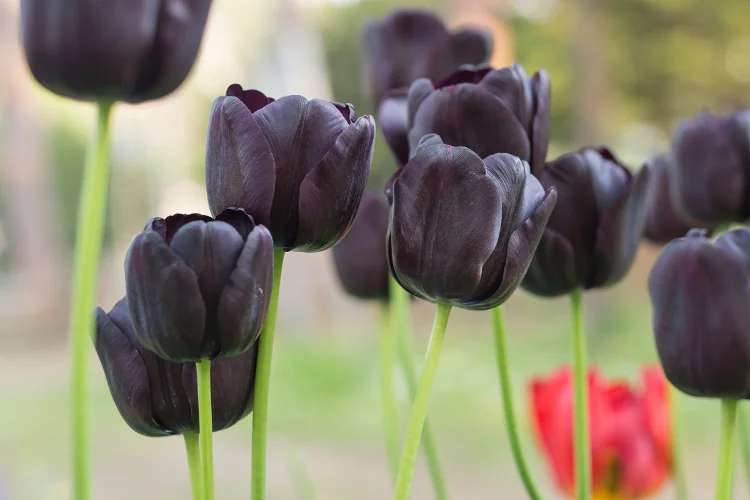
Fun fact: The Black Tulip inspired Alexandre Dumas to write a famous 19th-century novel of the same name, making it one of the most romanticized flowers in history.
The Black Tulip is perhaps the most iconic of all black flowering plants. Varieties like ‘Queen of Night’ and ‘Black Parrot’ produce deep maroon-black blooms with a satiny finish that looks absolutely stunning in spring gardens. These tulips have been cultivated since the 17th century, when Dutch breeders competed fiercely to develop the darkest possible varieties.
Care tips:
- Plant bulbs in autumn, about 6 to 8 inches deep
- Choose a sunny or lightly shaded spot with well-draining soil
- Water moderately after planting; avoid waterlogging
- Allow foliage to die back naturally after blooming to feed the bulb for next year
Black Rose
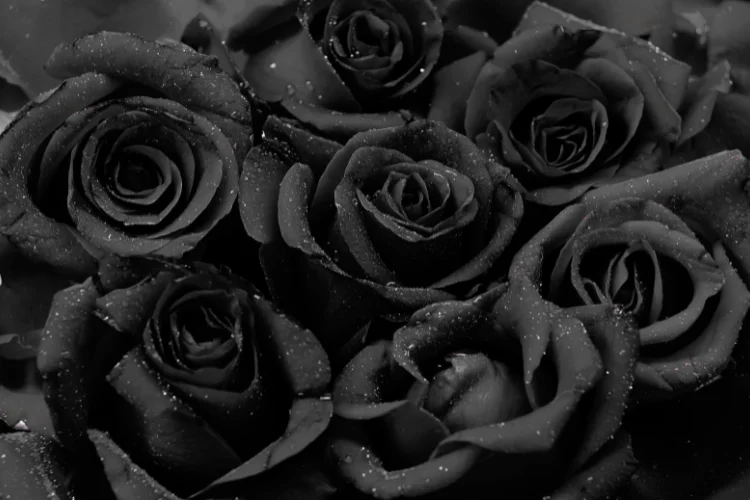
Fun fact: The Halfeti rose, grown in a small village in Turkey, is the only rose variety that naturally turns near-black in summer due to the unique mineral content of the local water and soil.
The Black Rose is arguably the most desired of all black flowers. While a true botanical black rose does not exist, cultivars like ‘Black Baccara’, ‘Black Magic’, and ‘Schwarze Madonna’ come remarkably close with their deep crimson-black velvety petals. These roses are beloved in romantic bouquets, gothic flowers arrangements, and high-end floral design where drama and depth are everything.
Care tips:
- Plant in full sun with at least 6 hours of direct light daily
- Use rich, well-draining soil with a slightly acidic pH between 6.0 and 6.5
- Water deeply but infrequently to encourage deep root growth
- Prune in early spring and deadhead spent blooms to encourage repeat flowering
Black Dahlia
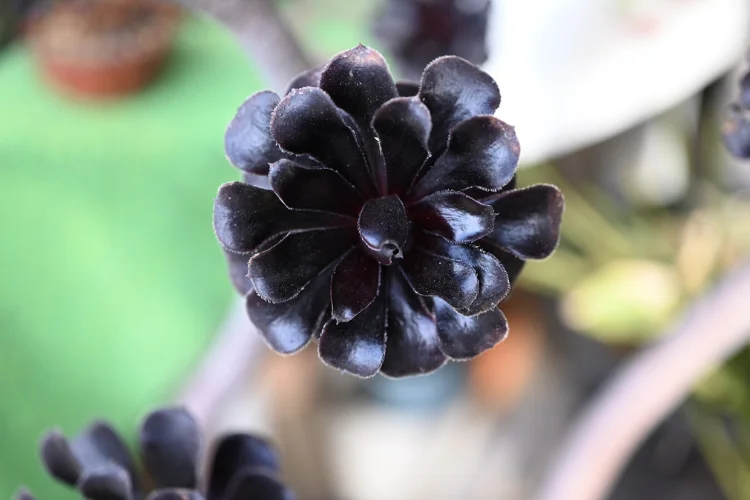
Fun fact: Despite the dark associations from the famous unsolved murder case, the Black Dahlia flower is associated with elegance and creative expression in the language of flowers.
Black dahlias like ‘Chat Noir’ and ‘Arabian Night’ produce breathtaking pompom or dinner-plate blooms in deep burgundy-black tones. They are showstoppers in late summer and autumn gardens, often reaching impressive sizes that make them difficult to ignore.
Care tips:
- Plant tubers after the last frost when soil has warmed
- Place in full sun and stake taller varieties to prevent toppling
- Feed with a low-nitrogen, high-potassium fertilizer to encourage blooms
- Dig up tubers in autumn in cold climates and store over winter
Black Pansy
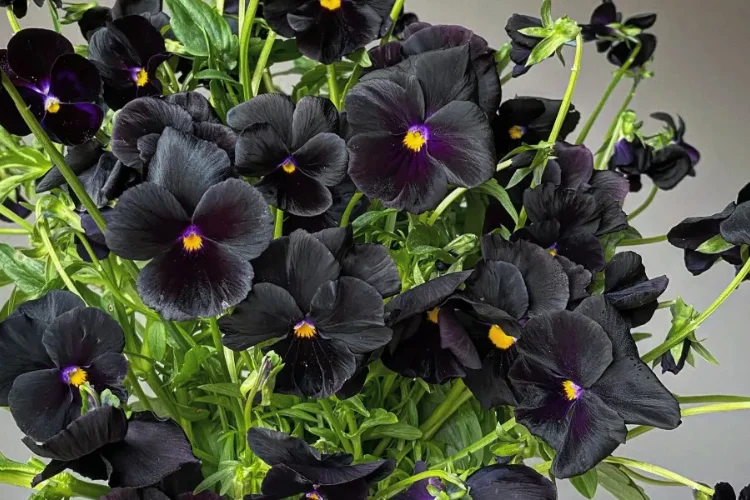
Fun fact: Pansies have been nicknamed ‘heartsease’ for centuries, and the near-black variety ‘Bowles’s Black’ has been a cottage garden staple since the Victorian era.
Black pansies are charming, cheerful plants with velvety faces that range from deep purple-black to almost pure black. They are one of the most accessible black flowering plants for beginner gardeners, thriving in cool weather and containers as easily as in garden beds.
Care tips:
- Grow in full sun to partial shade
- Best planted in autumn or early spring as they prefer cool temperatures
- Water regularly but ensure good drainage
- Deadhead frequently to extend the blooming season
Black Calla Lily
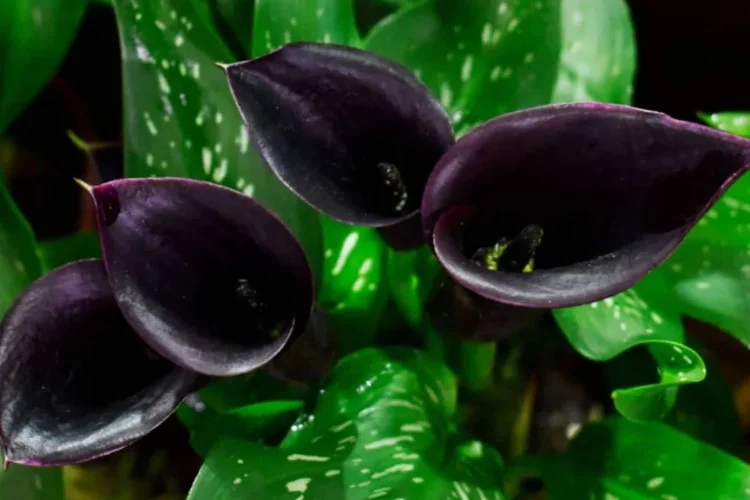
Fun fact: The Black Calla Lily, known botanically as Zantedeschia, is native to South Africa and was once used in traditional ceremonies due to its striking appearance.
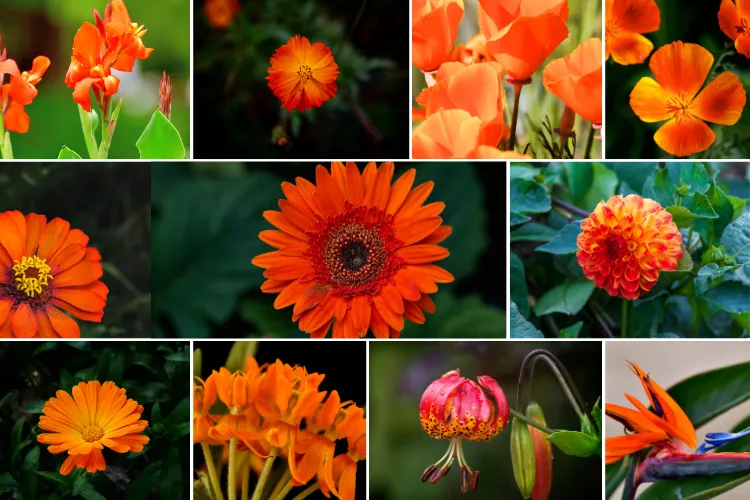
The Black Calla Lily is pure sophistication. With its sleek, funnel-shaped spathe in deep maroon-black, this flower is a favorite for weddings, contemporary floral arrangements, and upscale garden design. Varieties like ‘Black Forest’ and ‘Schwarz Gold’ are especially sought after. For maximum visual contrast in a vase arrangement, pair them with vivid orange flowers to create a bold, modern display that turns heads instantly.
Care tips:
- Plant rhizomes in spring in moist, humus-rich soil
- Thrives in partial shade, especially in hotter climates
- Keep soil consistently moist but never waterlogged
- Bring indoors in winter in frost-prone areas
Black Petunia
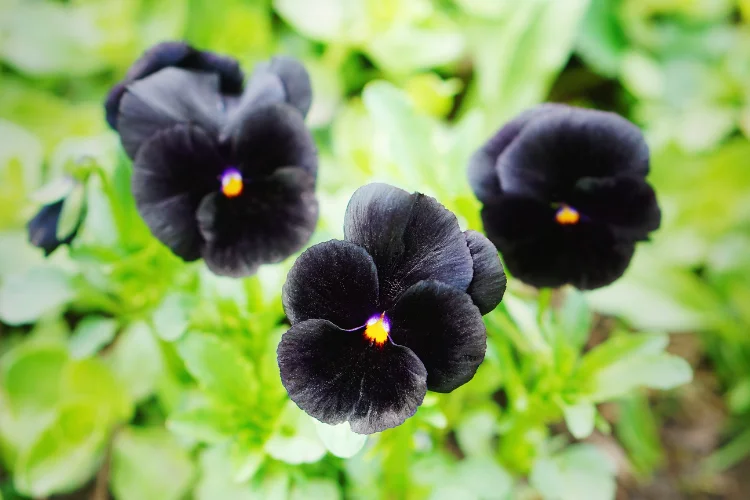
Fun fact: ‘Black Velvet’ petunia, introduced in 2010, was the world’s first commercially available truly black petunia and caused a sensation in the gardening world when it launched.
Black petunias are among the most dramatic annual flowers available. The ‘Black Velvet’ and ‘Sanguna Black’ varieties produce velvety, trumpet-shaped blooms in an astonishing near-true black. They look stunning in hanging baskets, window boxes, and containers alongside bright companion flowers.
Care tips:
- Grow in full sun for best color intensity
- Plant in well-draining, fertile soil
- Water regularly and fertilize every 2 weeks with a balanced liquid feed
- Pinch back stems to encourage bushy, full growth
Black Bat Flower
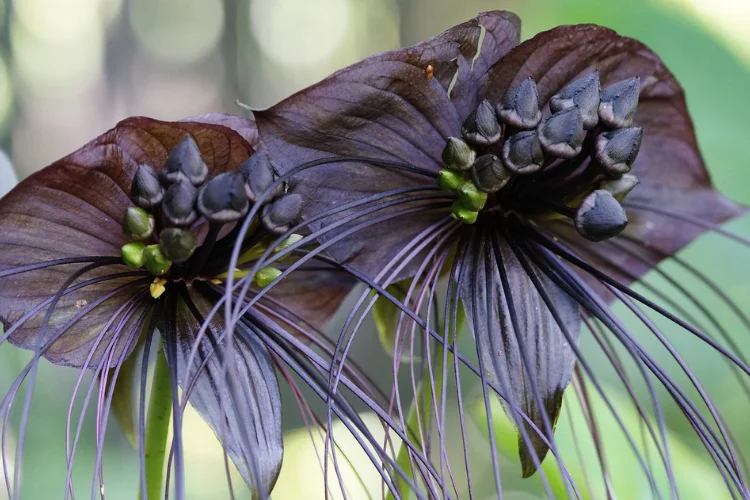
Fun fact: The Black Bat Flower (Tacca chantrieri) is one of the strangest-looking plants in the world, with flowers that genuinely resemble a bat in flight, complete with long whisker-like bracts.
Few plants command attention like the Black Bat Flower. This exotic tropical species produces dark, wing-like flowers with long trailing tendrils that can reach up to 28 inches in length. It is a genuine conversation piece and one of the most dramatic-looking black flowers you can grow indoors or in warm-climate gardens.
Care tips:
- Grow in warm, humid conditions above 60 degrees Fahrenheit
- Place in bright, indirect light rather than direct sun
- Keep soil consistently moist and use a peat-based mix
- Mist regularly or use a humidifier to maintain humidity levels
Black Hollyhock
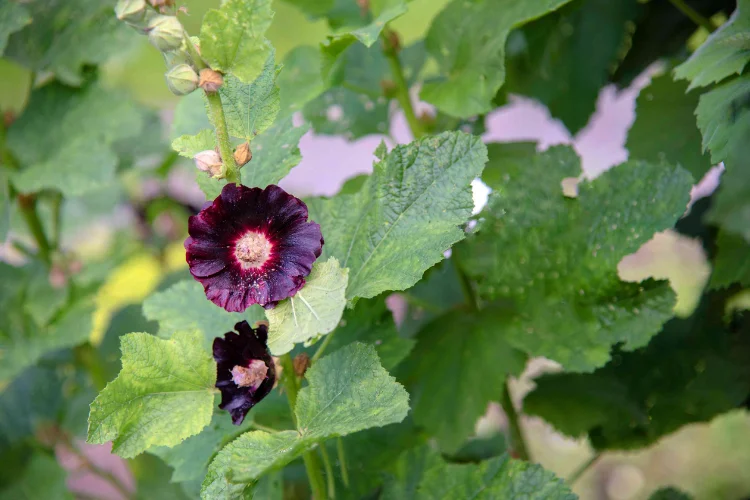
Fun fact: Alcea rosea ‘Nigra’, the Black Hollyhock, has been grown in European gardens since at least the 16th century and was a prized plant in medieval monastery gardens.
Black Hollyhocks are tall, stately plants that bring vertical drama to cottage and country gardens. Their dark, chocolate-maroon flowers bloom on spires that can reach 6 to 8 feet tall, making them perfect as a dramatic backdrop plant. They look especially powerful when planted beside rich red flowers like salvias or dahlias, creating a deep, jewel-toned border that feels both historic and striking.
Care tips:
- Sow seeds directly outdoors in spring or autumn
- Choose a sunny position with good air circulation to prevent rust disease
- Water at the base to keep foliage dry
- Support tall stems with stakes in exposed or windy locations
Black Flowers Meaning and Symbolism
Black flowers meaning is rich, complex, and surprisingly varied across cultures and contexts. Because black is universally associated with both darkness and sophistication, the symbolism of these blooms spans a wide emotional spectrum.
Here are some of the most common meanings associated with black flowers:
- Mystery and the unknown: Black blooms suggest depth, hidden truths, and things beyond ordinary understanding.
- Elegance and sophistication: In modern design contexts, black flowers are a sign of refined taste and high style.
- Farewell and mourning: In many Western cultures, dark flowers are used at funerals and memorials as symbols of loss and respect.
- Rebirth and transformation: In some traditions, black represents the void before new beginnings, making these flowers a symbol of change.
- Power and authority: Black is associated with strength and control, and black blooms can carry that same commanding energy.
In the Victorian language of flowers, known as floriography, sending black flowers was often a dramatic gesture conveying deep emotion. Today, they are just as powerful a statement, whether used in moody gothic arrangements or sophisticated wedding decor.
Black Flowers in Garden Design
Using black flowers for garden design is one of the most effective ways to create drama, depth, and visual interest. The key is understanding how dark blooms interact with the colors around them.
Here are some excellent design strategies:
- Contrast with brights: Pair black flowers with vivid yellow, chartreuse, or lime green plants for a striking, high-impact display. Try black pansies beside yellow marigolds or black tulips with bold spring companions for a dramatic seasonal combination.
- Monochromatic dark schemes: Combine black flowers with deep purples, burgundies, and rich plums for a moody, romantic garden style.
- Silver and white contrast: White flowers and silver-leaved plants like dusty miller or artemisia pop beautifully against dark blooms.
- Bold texture play: Mix the tall spires of black hollyhocks with the rounded pompoms of black dahlias to create layers of shape and form that keep the eye moving through the border.
When planning beds, use black flowers as anchor points or focal plants rather than filling large areas with them. A few well-placed dark blooms create far more impact than a mass planting, where the individual drama of each flower can be lost.
Black Flowers for Home Decor
Cut black flowers bring incredible drama indoors. Whether fresh, dried, or artificial, dark blooms make a bold statement in any interior setting.
Ideas for using black flowers in home decor include:
- Arrange black calla lilies in tall, minimalist glass vases for a sleek, modern look
- Create moody centerpieces by mixing black dahlias with burgundy roses and dark foliage
- Use dried black flowers in wreaths and dried arrangements for year-round decoration
- Pair black blooms with metallic accents like gold or copper for glamorous table settings
- Float black petunias in shallow bowls of water for a simple, dramatic display
In terms of interior style, black flowers suit contemporary, gothic, bohemian, and maximalist aesthetics particularly well. They add a layer of depth and intrigue that lighter flowers simply cannot achieve.
Black Flowers as Gifts
Gifting black flowers is a bold, memorable choice. While it is important to be sensitive to the recipient’s personal associations with the color, for many people a bouquet of dark blooms is an exciting and deeply flattering gift.
Great occasions for giving black flowers:
- Birthdays: For someone who loves the unconventional, black roses or black dahlias make an unforgettable birthday bouquet.
- Anniversaries: A sophisticated arrangement of black calla lilies speaks of deep, enduring love.
- Gothic or Halloween events: Black flowers are perfect for themed celebrations and costume parties.
- Sympathy: In some cultural contexts, dark flowers are an appropriate and respectful condolence gift.
- Just because: For the person who appreciates the unusual, a black flower bouquet is simply wonderful on any day.
Pair black blooms with dark green foliage, white flowers for contrast, or wrap in black kraft paper for an unforgettable presentation.
How to Grow Black Flowers
Growing black flowering plants successfully comes down to understanding the specific needs of each variety. However, there are some general principles that apply to most types of black flowers.
Light: Most dark-flowered plants need full sun to develop their deepest, richest color. Insufficient light often results in blooms that appear more purple or red than truly dark. Aim for at least 6 hours of direct sunlight daily for outdoor varieties.
Soil: Well-draining, fertile soil is essential for the majority of black flowering plants. Add compost or organic matter to improve both drainage and nutrient content before planting.
Watering: Consistent moisture without waterlogging is the goal. Overwatering is one of the most common reasons dark flowers fail to thrive. Always check the soil before watering and allow the top inch to dry out slightly between waterings.
Feeding: Use a balanced, slow-release fertilizer at planting time and a liquid feed throughout the growing season. Avoid high-nitrogen fertilizers, which promote leafy growth at the expense of flowers.
Deadheading: Regularly removing spent blooms encourages the plant to produce more flowers and extends the display season significantly.
Pest and disease management: Keep an eye out for common pests like aphids and slugs, which can damage delicate blooms. Good air circulation helps prevent fungal diseases, especially in humid conditions.
Frequently Asked Questions
No truly black flower exists in nature. All flowers described as black are extremely dark shades of purple, maroon, or burgundy that appear black to the eye, especially in shadow or low light.
Some of the most well-known black flowers names include Queen of Night tulip, Black Baccara rose, Chat Noir dahlia, Black Velvet petunia, Black Forest calla lily, Bowles’s Black pansy, Alcea rosea Nigra hollyhock, and Tacca chantrieri bat flower.
The black flowers meaning includes mystery, elegance, mourning, transformation, and power. The symbolism varies by culture and context, but these blooms are almost universally associated with depth and sophistication.
Absolutely. Black calla lilies, black roses, and black dahlias are increasingly popular in contemporary, gothic, and nontraditional wedding designs. They pair beautifully with white, blush, gold, and deep red accents.
Black pansies and black petunias are among the easiest for beginners. Both are widely available, relatively low-maintenance, and rewarding growers that deliver stunning results with minimal effort.
Final Thoughts on Black Flowers
There truly is nothing quite like the dramatic beauty of black flowers. Whether you are drawn to their powerful symbolism, their extraordinary visual impact in the garden, or their ability to transform a floral arrangement into something unforgettable, these blooms deserve a place in every flower lover’s world.
From the romantic black rose to the exotic black bat flower, the world of black flowering plants is far richer and more varied than most people realize. We hope this guide has inspired you to explore these stunning dark black flowers and perhaps bring a little mystery and elegance into your own garden or home.
Ready to explore more? Browse our full collection of flower guides for even more ideas, inspiration, and growing advice across every color and style of bloom.