
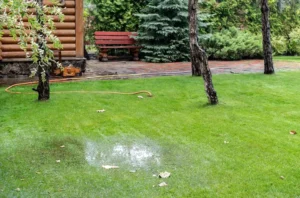
There’s a particular kind of silence that happens after heavy rain. Birds stop yelling for a minute, gutters drip like leaky coffee makers, and somewhere out in the yard, there’s always one puddle that looks deeper than physics should allow. That puddle matters more than people think.
A few summers ago, after a week of nonstop storms, I noticed the ground near my back deck felt weirdly spongy. Not quicksand-level dramatic or anything, just…off. Like walking on an overfilled waterbed, somebody is buried under the grass. I ignored it because normal adults apparently enjoy pretending structural problems will politely resolve themselves. About eight months later, a crack in the basement appeared behind a stack of storage bins, and suddenly I was reading articles from acculevel.com/eau-claire/ at 1 a.m. while stress-eating pretzels.
That’s the sneaky part about outdoor water buildup. It rarely looks dangerous in the beginning. Most of the time, it just sits there quietly, changing the soil around your house, grain by grain, until the foundation starts shifting in subtle little ways nobody notices right away.
Then the weirdness starts.
Doors stick.
Floors slope slightly.
Drywall cracks appear where there weren’t any before.
You convince yourself the house is “just settling” because denial is free.
Soil Is Constantly Moving Even When You Think It Isn’t
People imagine the ground under a house as stable and dependable. Like a giant concrete parking lot. In reality, soil behaves more like moody cake batter.
Especially after rain.
When water saturates the soil around your home, it expands. Some soil types balloon outward aggressively, while others become loose and unstable. Clay-heavy soil is particularly dramatic about the whole thing. During wet stretches, it swells like microwaved oatmeal and pushes against foundation walls with surprising force.
Then dry weather arrives, and the same soil contracts again.
So the foundation shifts.
Then shifts back a little.
Then maybe settles unevenly.
Year after year, this little underground dance slowly changes the structure above it.
Homes Rarely Shift All at Once
That’s Hollywood nonsense.
Real structural change usually happens so gradually that people adapt psychologically. You stop noticing the slightly uneven hallway floor because your brain adjusts. The sticky bathroom door becomes “that annoying door.” Tiny cracks get painted over three times.
Meanwhile, the foundation continues to absorb stress.
It’s sort of like watching somebody age slowly in reverse through old Facebook photos. The changes sneak up on you.
Rainwater Loves Hanging Around Foundations
Water always follows the easiest path. Always.
If your yard slopes even slightly toward the house, rainwater naturally drifts toward the foundation during storms. The same thing happens with clogged gutters, short downspouts or compacted landscaping beds that trap runoff near basement walls.
And once moisture starts gathering consistently around the foundation, the pressure underground changes.
Hydrostatic Pressure Sounds Complicated, But It’s Basically Water Throwing a Tantrum
That’s my unofficial definition anyway.
Hydrostatic pressure occurs when saturated soil continuously pushes groundwater against the basement walls. Concrete can handle a lot of stress, sure, but prolonged exposure to moisture eventually exploits weak spots.
Tiny cracks widen.
Basement walls bow slightly.
Water sneaks into places it absolutely wasn’t invited.
The really frustrating part? Most of it happens invisibly for years.
Gutters Quietly Decide the Fate of a Lot of Basements
Nobody respects gutters enough.
People spend thousands on fancy kitchen remodels, then ignore the metal troughs that literally control where rainwater goes around the house. It’s kind of amazing, honestly.
When gutters clog, roof runoff spills directly beside the foundation. During heavy storms, repeated saturation dramatically changes the consistency of the surrounding soil.
Overflow Patterns Tell Stories
After rain, look for:
- Eroded mulch
- Pooled water near walls
- Green algae streaks
- Soil trenches beneath gutters
- Damp corners around basement windows
Those are clues. Tiny environmental breadcrumbs.
One of my neighbours had a gutter section overflowing for so long it carved a miniature canyon through her flower bed. She thought it was “kind of charming” until basement seepage appeared behind the water heater.
Nature can be passive-aggressive like that.
Freeze-Thaw Cycles Make Existing Problems Worse
Cold climates add another level of nonsense to foundation stress.
When water seeps into small cracks and then freezes, it expands. The ice widens those tiny openings little by little. Then spring rain arrives, and more water enters the enlarged gaps.
Repeat this process enough times and suddenly:
- Basement cracks spread
- Concrete weakens
- Moisture intrusion worsens
- Floors begin shifting
Winter basically turns trapped water into a microscopic demolition crew.
Landscaping Sometimes Betrays the House
Beautiful landscaping can quietly sabotage drainage without homeowners realising it.
I’ve seen:
- Decorative stone edging traps runoff
- Flower beds piled too high against the siding
- Overwatered shrubs are soaking the basement walls
- Patio designs funnelling water inward
Pinterest rarely mentions hydrostatic pressure. Big oversight, honestly.
Mulch Holds More Water Than People Think
Thick mulch beds directly beside the foundation stay damp for long periods after storms. During wet seasons, the constant moisture exposure contributes to soil expansion and basement pressure.
It’s not that landscaping is bad. It just needs balance.
Homes appreciate flowers. Foundations appreciate boundaries.
Patios and Walkways Shift First Sometimes
Outdoor concrete often reveals soil movement before the house itself does.
A sinking patio corner.
Cracked walkway slabs.
Tilting shed foundations.
Those subtle changes matter because they show how the ground beneath the property is behaving.
My uncle once ignored a patio slab that had settled enough to create a tiny puddle every rainstorm. Two years later, his basement wall started leaking directly behind the same area. The water had basically been rehearsing the route the whole time.
Water Redirects Itself Constantly
Once outdoor surfaces settle unevenly, runoff patterns change, too. Rain starts travelling toward new areas around the foundation, and the cycle compounds itself season after season.
That’s why small outdoor drainage problems rarely stay small forever.
Tree Roots Add Another Layer of Chaos
Trees are gorgeous right up until their roots start acting like underground thieves.
Large roots absorb moisture aggressively during dry periods, which changes soil consistency around portions of the home. Then heavy rain arrives, and the moisture imbalance shifts again.
This creates uneven support beneath the foundation.
One side stable.
Another side is moving slightly.
Doors suddenly sticking for “no reason.”
There’s always a reason.
Mature Trees and Older Homes Are a Weird Combo
Especially in older neighbourhoods where giant maples or oaks sit close to foundations.
The roots pull moisture from the soil unevenly, and over decades, the structure above responds little by little. Floors slope subtly. Brick cracks form in stair-step patterns. Windows stop cooperating.
And everybody blames humidity first because it feels less scary.
Basement Moisture Smells Different Before You See It
People notice odours before visible damage surprisingly often.
That damp earthy smell after storms? That’s usually moisture lingering where it shouldn’t. Sometimes inside wall cavities. Sometimes beneath the flooring. Sometimes, around unfinished basement corners, nobody visits much except to grab holiday decorations once a year.
Moisture rarely stays isolated either.
Once it enters the basement environment, it can contribute to:
- Mold growth
- Rotting wood
- Humidity spikes
- Insulation damage
The house slowly starts feeling different.
Heavy somehow. Stale. Like the air itself got tired.
Crawl Spaces Quietly Absorb Everybody Else’s Problems
Poor crawl spaces. They never get invited into home improvement conversations unless something has gone terribly wrong.
Outdoor water buildup affects crawl spaces quickly because they sit so close to shifting soil. Excess moisture below the home can weaken floor joists and support beams over time.
Which explains:
- Soft flooring
- Sagging rooms
- Bouncy hallways
- Strange mildew smells
And since nobody enjoys crawling under their house voluntarily, the damage often goes unnoticed for years.
Honestly, crawl spaces deserve therapy.
Seasonal Weather Keeps Resetting the Damage Cycle
Spring saturates the ground.
Summer dries it out.
Autumn clogs gutters with leaves.
Winter freezes trapped moisture underground.
Each season contributes its own flavour of structural stress. None of it looks catastrophic on its own, which is exactly why people ignore it for so long.
But foundations remember every season.
Concrete absorbs the consequences quietly.
Plumbing Leaks Sometimes Join the Party Too
Here’s where things get extra irritating.
Foundation movement can stress underground plumbing lines causing tiny leaks. Those leaks further saturate the surrounding soil, increasing movement around the home.
It becomes a nasty little loop:
- Soil shifts
- Pipes strain
- Water leaks
- Soil destabilises further
- The foundation movement worsens
By the time homeowners notice rising water bills or damp flooring, the original outdoor moisture issue may have been brewing for years.
Tiny Symptoms Usually Connect Together
This part fascinates me because homeowners often treat structural clues as unrelated annoyances.
One sticky door.
One cracked tile.
One damp basement smell.
One sloping hallway.
But houses are systems. When the foundation shifts, everything above it eventually reacts.
The clues stack up slowly like dirty dishes people keep pretending they’ll handle tomorrow.
Prevention Is Boring and Incredibly Effective
Nobody’s throwing parties for successful drainage management.
Still, the boring stuff works:
- Clean gutters regularly
- Extend downspouts away from walls
- Watch water flow during storms
- Regrade low areas
- Monitor basement cracks
- Keep soil moisture balanced
Small maintenance habits quietly save homeowners absurd amounts of money over the long term.
Meanwhile, people buy $700 smart refrigerators that can tweet grocery lists while ignoring the puddle slowly destabilising their basement.
Human priorities are fascinating.
The Emotional Side Sneaks Up Too
Foundation concerns mess with people emotionally more than they expect.
Once homeowners suspect structural movement, every sound suddenly feels ominous. A creaking floorboard at midnight becomes evidence of catastrophic collapse in your imagination.
I once convinced myself my dishwasher vibration meant the kitchen floor was sinking. Turned out one plate had slipped against the spray arm.
Not my finest moment.
Still, though, homes are supposed to feel stable. When that stability feels even slightly uncertain, it sticks in your head.
Some Houses Are More Vulnerable Than Others
Not every property reacts to moisture the same way.
Homes with:
- Expansive clay soil
- Older drainage systems
- Improper grading
- Aging waterproofing
- Shallow foundations
…tend to develop moisture-related structural stress faster during prolonged wet seasons.
That’s why two houses on the same block can experience completely different foundation behaviour after identical storms.
Nature doesn’t distribute fairness evenly.
Water Doesn’t Need a Flood to Cause Damage
This might be the biggest misconception of all.
Homeowners expect dramatic flooding before they worry about foundation issues. In reality, long-term moderate moisture often causes more structural movement than a single major storm because it gradually changes soil conditions.
Slow damage hides better.
A little water buildup here.
A damp patch there.
Tiny shifts every season.
Then one day the basement wall cracks enough to finally demand attention.
Final Thought Before the Next Rainstorm
Outdoor water buildup rarely looks dangerous at first. That’s what makes it tricky.
The process starts quietly:
a clogged gutter,
a puddle beside the patio,
an uneven walkway slab,
a low patch in the yard nobody thinks much about.
Meanwhile, underground, the soil surrounding your home keeps changing shape with every season and every storm.
So next time heavy rain rolls through, maybe don’t just wait for the weather app notification to disappear and move on with your day. Walk around the property afterwards. Watch where the water lingers. Pay attention to what stays soggy.
Your foundation already is.


